
The latest bridesmaid dresses lean toward fluid satin, structured bodices, rich earthy colors and styles that can be worn again. This guide explains what is trending now, what is only retail marketing, and how to choose for your own bridal party.
Quick answer
The latest bridesmaid dresses center on liquid satin and crepe, corset-style or architectural bodices, one-shoulder and cowl necklines, midaxi lengths, and mismatched or convertible styles in one color family. Popular shades for 2026 and 2027 include dusty and slate blue, olive and moss green, mocha, rosewood and butter yellow. Pick the fabric for your season, the length for your dress code, and a budget your bridesmaids can afford.
Every year, retailers announce a new set of looks, and every year the same worry follows: will the dresses you pick today look dated in your photos? The latest bridesmaid dresses are, in fact, easier to choose than they used to be, because the biggest shift is not a single color or cut. It is the permission to let each bridesmaid wear something that suits her, inside a shared color story.
This guide is written for couples planning a wedding in the United States in 2026 or 2027, and for bridesmaids who have been handed a link and a deadline. It covers silhouettes, necklines, fabrics, colors, lengths, prices, timing and etiquette. It also separates the trends that have real staying power from the ones that mostly sell dresses.
One honest note first. Almost all public trend coverage comes from bridal retailers, designers and magazines that sell or promote dresses. That does not make it wrong, but it does mean the “latest” looks are a direction, not a measurement. Where we can, we point to the shapes and colors that several independent sources agree on, and we flag where something is only one brand’s view.
The latest bridesmaid dresses at a glance
If you only have a minute, here is the shape of the current market. Across the 2026 trend roundups from Kennedy Blue, 100 Layer Cake, ASOS and independent stylists, a few themes keep appearing.
- Satin first. Fluid, body-skimming satin and charmeuse, often in champagne and other soft neutrals, is the single most repeated idea. ASOS, for example, opens its 2026 bridesmaid list with satin and champagne.
- Structure and shape. Corset-style bodices, drop waists and asymmetric necklines are replacing the plain A-line as the “interesting” choice.
- Color with depth. Moody earth tones such as chocolate, olive, burgundy and teal sit alongside soft blues, buttery yellows and rosy pinks.
- Mix and match. Same color, different dress is now an ordinary request, not a rebellion.
- Rewearability. Convertible dresses, adjustable fits and midaxi lengths answer a real complaint: that bridesmaids spend money on a dress they never wear again.
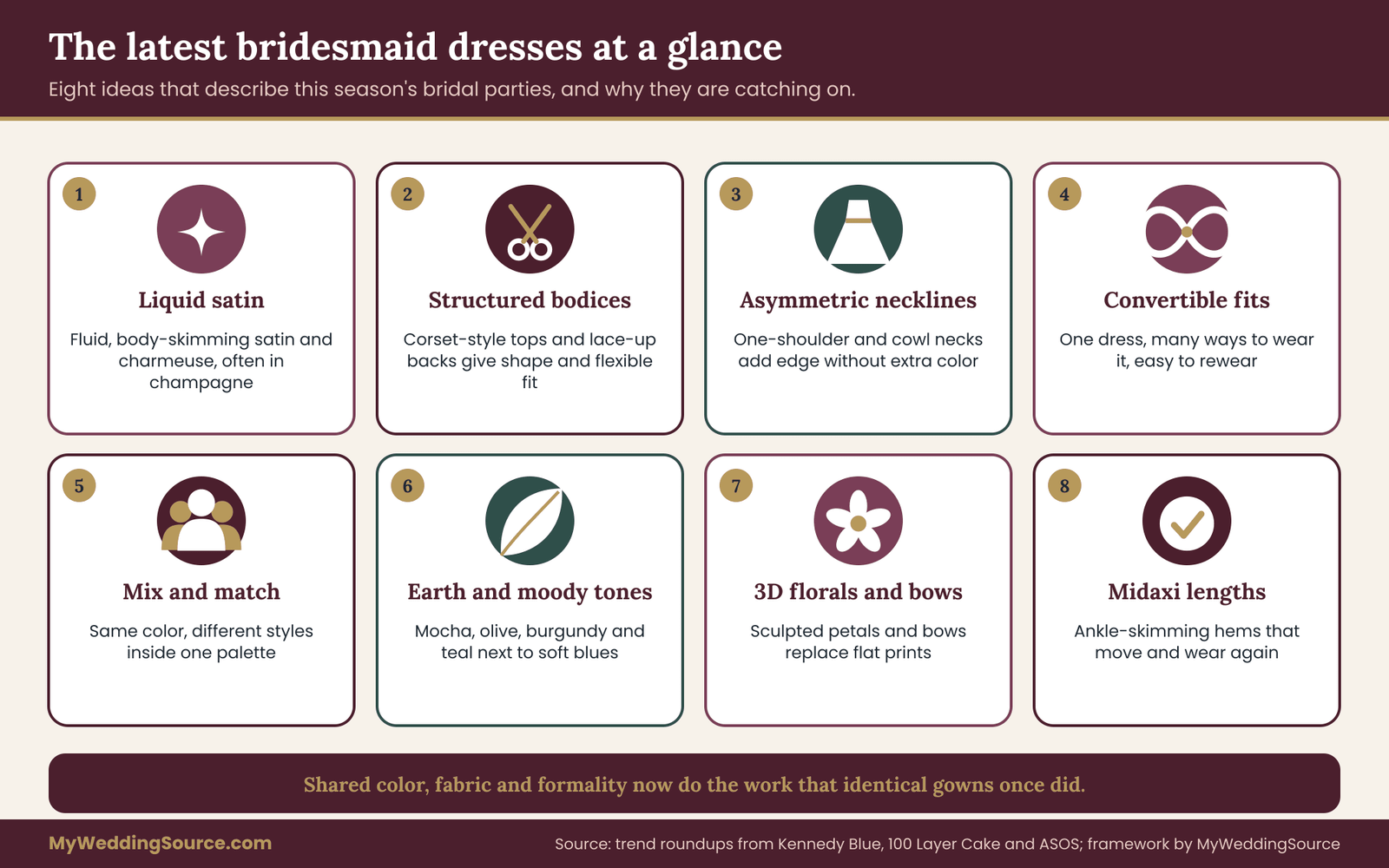
Notice that none of these eight ideas is a rule. Together they describe a loosening of the old “everyone in the same gown” model, with shared color, fabric and formality doing the work that identical dresses once did.
Why the latest bridesmaid dresses look different now
To choose well, it helps to understand why the latest bridesmaid dresses are changing. Three pressures are pushing the market in the same direction.
Cost. Bridesmaids usually pay for their own dress, and the dress is only part of the bill. A style that fits many budgets, bodies and tastes spreads that burden more fairly. We cover the numbers later in this guide.
Photography and social media. Dresses are now chosen partly for how they look in a feed. That favors fabrics that catch light, such as liquid satin, and color palettes that look intentional on camera, such as tonal blues or layered greens.
A more individual wedding. Younger couples in particular treat the bridal party as a group of friends rather than a uniform. The Knot has described mismatched bridesmaid dresses as a Gen Z favorite, and the Australian marketplace Easy Weddings reports that 58 percent of couples now choose the same color but allow different styles. That is a local figure, not a U.S. one, but it matches what stylists describe here.
The result is that the question “what are the latest bridesmaid dresses?” has a flexible answer. The look is a palette, a fabric and a level of formality, not one specific gown.
What is trending and what is likely to last
Trends have different life spans. A silhouette tied to a cultural moment can feel dated in two years, while a fabric or a neutral color can stay useful for a decade. Here is a rough way to sort the latest bridesmaid dresses.
Likely to last: satin and crepe fabrics, champagne and mocha neutrals, dusty and slate blues, convertible and adjustable fits, midi and midaxi lengths, one-shoulder and cowl necklines. These show up across the years and across brands.
Strong now, but more tied to this moment: oversized bows, pearl trims, visible corsetry, feather accents, drop waists, bold sunset gradients and very bright mint or lavender. They can be lovely, but check how they look in black-and-white and in color before you commit.
Worth a second look: anything that is hard to alter, hard to clean or hard to find in extended sizes. Beaded and feathered pieces are the usual examples, because they cost more to tailor and may need dry cleaning.
A useful test for any trend is the “five-year photo” question. Imagine the album on a shelf in 2031. Would the dresses look deliberate, or specifically like 2026? Neither answer is wrong, but it helps you decide how much of the budget to spend on the trend.
How to read the retailer lists
Because most trend lists are published by sellers, a few habits help you read them fairly.
- Look for agreement. If five unrelated sources name olive green, olive green is a real signal. If one brand names a color nobody else mentions, treat it as that brand’s view.
- Check the date. Several 2026 articles have been updated for 2027, so read the “last updated” line.
- Ask who is shown. A trend photographed on one body type may not translate to your party. Look for extended sizes, adjustable fits and sleeves.
- Separate color from cut. A color can change from one season to the next with no change in the shapes that work for your bridesmaids.
With that foundation, the next sections go through the latest bridesmaid dresses piece by piece, starting with silhouettes.
Silhouettes in the latest bridesmaid dresses
Silhouette is the outline of the dress, and it is where the latest bridesmaid dresses differ most from the past. One stylist’s 2026 roundup describes the year as one of architectural shapes, with a move away from the plain A-line toward cuts that are, in her words, more interesting. That is one opinion, but the specific silhouettes below appear again and again across brands.
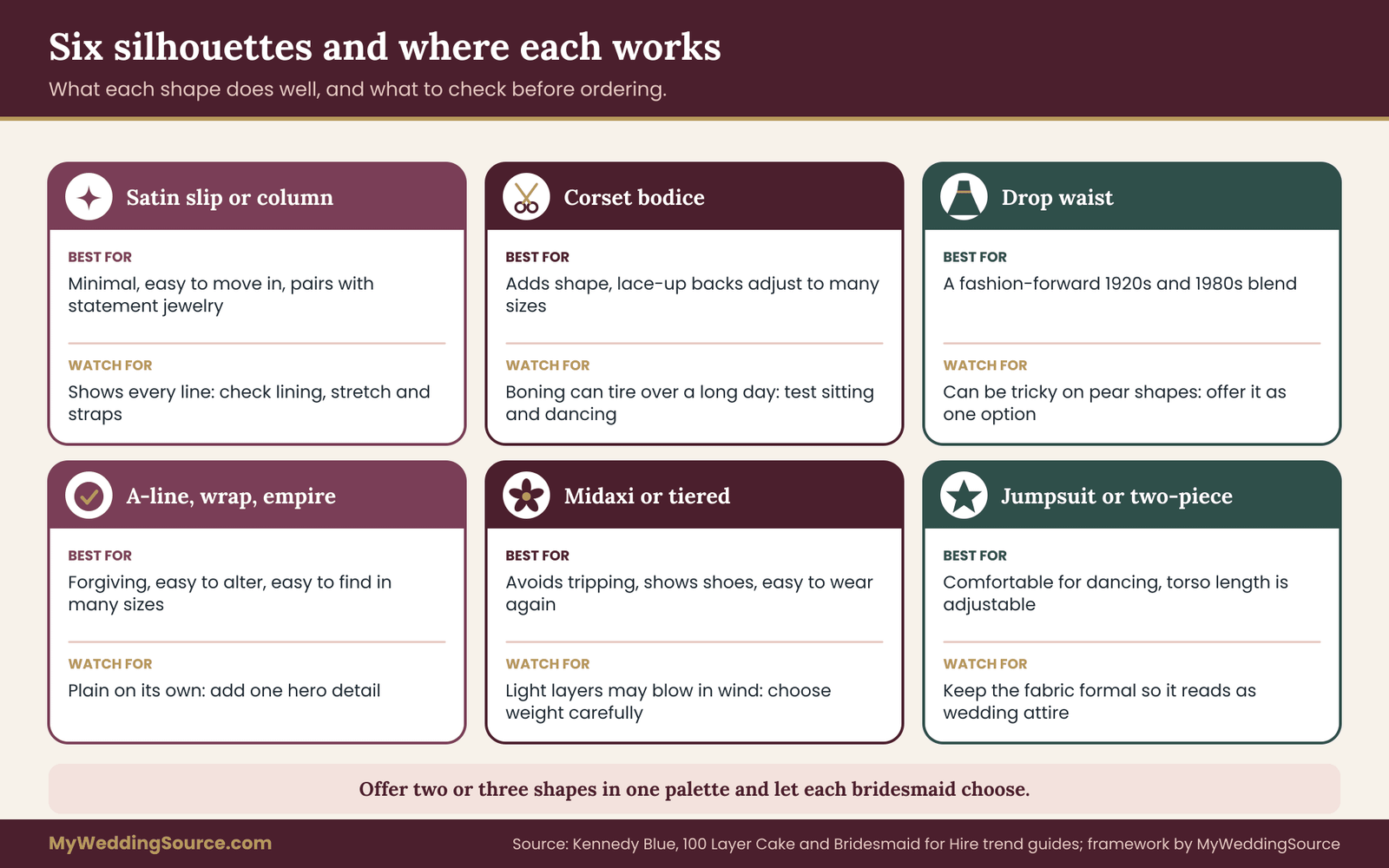
Here is how each of the six main families works in practice.
The satin slip and column
The slip dress is the quiet center of the latest bridesmaid dresses. Kennedy Blue ties it to a 1990s revival, with minimalist satin and slip styles in many colors, including black. The appeal is simple: a clean line, a fluid fabric and very little to go wrong.
A column or slip suits bridesmaids who want to move easily and who like a minimal look. It also pairs well with statement jewelry or an interesting back. The trade-off is that a close-fitting satin shows every line, so undergarments and fit matter more than they do with a gathered skirt. Ask whether the dress has stretch, a lining and an adjustable strap, and order swatches or a try-on before you commit.
Corset and structured bodices
Corset-inspired tops, lace-up backs and boned bodices are one of the clearest signs of the latest bridesmaid dresses in 2026. 100 Layer Cake describes them as architectural tops that give shape and a polished finish regardless of the skirt. Kennedy Blue points out a practical benefit: a lace-up or adjustable back lets one dress fit a range of sizes, and it allows for small changes in measurements before the wedding.
The caution comes from the stylist side. Visible boning gives strong support but can become uncomfortable over a long day of standing, sitting and dancing. If you choose a structured bodice, look for stretch panels or a lace-up back, and ask your bridesmaids to sit, raise their arms and walk in the dress before the wedding.
The drop waist
A drop-waist bodice dips to the hips before the skirt flares. It blends 1920s and 1980s influences and is one of the more fashion-forward silhouettes in the latest bridesmaid dresses. It is also one of the trickiest to wear: one stylist notes that it can be difficult on a pear-shaped figure because it draws the eye to the widest point.
If you love the look, offer it as one option within a mix-and-match palette rather than as the only dress. That way each bridesmaid can say yes to a shape she likes, and you keep the architectural feel in the group photo.
The A-line, wrap and empire families
These are the classics, and they are not going away. The A-line, the wrap and the empire waist are forgiving on many body types, easy to alter and easy to find in extended sizes. They are the practical backbone of the latest bridesmaid dresses, even if they rarely headline a trend list.
Their strength is flexibility. A wrap adjusts at the waist, an empire cut accommodates a changing figure and an A-line skirt gives room to move. They are also an excellent base for the more current details described below, such as bows, flutter sleeves or a high slit. If your party is large and varied, this family is the safest place to start.
The midaxi and tiered skirt
The midaxi, a hem that stops just above the ankle, is one of the most useful ideas in the latest bridesmaid dresses. A stylist notes that it avoids tripping, shows off shoes and is easier to wear again later. It also looks equally at home at a garden ceremony and a ballroom reception.
Tiered and textured skirts in chiffon or georgette add volume without stiffness. 100 Layer Cake lists tiered and textured dresses among its ten trends for 2026 weddings, describing soft flowing layers that feel occasion-worthy without feeling stiff. For a summer wedding they are an easy, comfortable choice.
Jumpsuits and two-piece sets
Wide-leg jumpsuits and coordinated two-piece sets are the most practical of the latest bridesmaid dresses. A jumpsuit looks gown-like when standing still but moves freely on the dance floor, and it avoids the thigh chafing some skirts can cause. Two-piece sets let each bridesmaid fit her own torso length, and the pieces can be worn separately afterward.
These are best for modern venues, relaxed formality and bridesmaids who simply do not wear dresses. Keep the fabric formal, such as satin or crepe, so the outfit still reads as wedding attire. For a ceremony with a long processional, check how the garment moves when walking slowly, which is a different test from standing for a photograph. Our guide to the processional order explains how the walk down the aisle usually works.
Convertible and adjustable styles
Convertible dresses, sometimes called multiway or infinity dresses, deserve their own section because they solve a particular problem. One dress, one color, tied or wrapped in several ways, lets each bridesmaid choose a neckline she likes. The Knot calls them one of the simplest ways to get a mismatched look, and Lulus suggests starting with a convertible dress in a single color, then letting each person style it her own way.
Adjustable fits, with wrap bodices, lace-up backs, stretch fabrics and smocked panels, serve a similar purpose. Kennedy Blue notes that they spare bridesmaids from worrying about exact measurements or small weight changes before the wedding.
The latest bridesmaid dresses in this category are well suited to a large party spread across several cities, because the dress is forgiving of different bodies and of delivery timelines that do not line up exactly. They are also the easiest to rewear, which is a real benefit when the dress is paid for by the bridesmaid.
Necklines and sleeves
If silhouette is the outline, the neckline is the frame. Retailers agree that a handful of necklines are in demand in the latest bridesmaid dresses.
Cowl. A draped neckline that falls softly at the collarbone. Kennedy Blue says cowls are still trending and look good in all its favorite 2026 colors. They are comfortable and need no special bra, which makes them popular for satin dresses.
One-shoulder and asymmetric. A single strap or an angled neckline gives a high-fashion edge. One stylist warns that these can be hard to pair with undergarments, so ask about built-in support. They work well in a mix-and-match group because they stand out without adding color.
Halter. A halter flatters arms and shoulders and suits summer. It is also adjustable at the neck, which helps fit.
Strapless and sweetheart. These are the most formal and structured necklines, according to Dessy. They tend to frame the collarbone and flatter a fuller bust, but they need a well-fitted bodice to stay in place.
Scoop, square and high neck. These are comfortable and easy to fit. A square or scoop neckline with wide straps is often the most forgiving for people who do not want to think about their bra.
Sleeves
Sleeves are one of the most welcome developments in the latest bridesmaid dresses. 100 Layer Cake names flutter, bishop, cold-shoulder and cap sleeves among its 2026 trends, noting that they add softness, dimension and coverage for outdoor or religious venues. For a church ceremony, or for bridesmaids who simply prefer more coverage, sleeves make the choice easier. Detachable sleeves, capes and overskirts, mentioned in one stylist’s list, can turn one dress into two looks.
Details that define the latest bridesmaid dresses
Small details can date a dress quickly, so use them with a plan. The ones now appearing most often are these.
Bows. 100 Layer Cake describes them as playful yet romantic additions to backs, straps, necklines and bodices. A large bow can make a simple dress look expensive. Keep it on one part of the dress, not several.
3D florals and petal details. Instead of printed flowers, blooms are sculpted into the fabric with appliqué, embroidery and raised petals. 3D tulle embroidery, with raised flowers or pearls, is another version. These suit whimsical, garden or romantic weddings and cost more to alter.
Pearl trims. Straps or necklines made of pearls act like built-in jewelry. They pair well with satin and with soft neutral colors.
Slits. A high slit adds movement and airflow, which helps in summer. Kennedy Blue notes that a slit is also a chance to show off matching heels. Check that the slit does not gape when sitting down.
Feathers. These add playful texture at cuffs and hems but need delicate care and often dry cleaning.
Editorial florals. Bold botanical, toile-inspired or embroidered prints are trending for 2026 and 2027. A single print for the whole party can set the visual theme of the wedding.
A simple rule keeps these details from taking over: choose one hero detail per dress, and let the color, fabric and silhouette do the rest.
Fabrics in the latest bridesmaid dresses
Fabric decides how a dress moves, photographs, wrinkles and feels at hour six of the wedding day. It also decides whether your bridesmaids will be comfortable, which matters more than any trend. The latest bridesmaid dresses use a mix of familiar fabrics and a few newer textures, and the safest approach is to match the fabric to the season and the venue first, then to the look.
The core fabrics, in plain language
The Knot’s fabric guide breaks bridesmaid dress materials into 13 types. Here are the ones you will meet most often in the latest bridesmaid dresses, with the practical points that matter.
Satin. Sleek, photogenic and available at nearly every price. The Knot notes that many satins are polyester and are often mistaken for silk. Revelry calls satin and crepe the most versatile year-round fabrics. Satin shows water spots and creases, so ask how it steams and whether it has a lining.
Charmeuse. A more polished cousin of satin that drapes well and flatters many bodies. Some versions add stretch for easier fit, which The Knot highlights as a benefit across body types. It is the fabric behind many of the fluid satin maxis in this year’s trend lists.
Chiffon. Light, airy and romantic, chiffon is a classic for spring and summer, especially garden weddings. It is easy to steam but has little stretch, snags more easily and usually needs a lining. David’s Bridal notes it works best indoors or in mild outdoor settings.
Crepe. Stretchy, comfortable and resistant to wrinkles, crepe is a strong choice for long days and for travel. The Knot says it works year-round and suits black-tie cuts or semi-formal styles with a slit. Its slightly textured surface suits some designs better than others.
Velvet. Plush, with a soft shine in photographs, velvet is a fall and winter favorite, and Lulus calls it a Fall 2026 favorite. It is too warm for summer. Many velvet bridesmaid dresses are actually knit polyester with a velvet finish, according to Bella Bridesmaids, which makes them softer and stretchier than woven velvet.
Tulle and net. Floaty and whimsical. Because tulle is transparent, it is usually layered over a lining or used as an overlay on a bodice or skirt.
Georgette. A matte, softly draping fabric with less float than chiffon. It suits summer and bias-cut styles, but its sheerness usually requires a knit lining.
Jacquard and brocade. Textured, luxurious and flattering in fit-and-flare shapes, with a rich look for formal fall and winter weddings. They are heavy and warm, so avoid them for hot weather.
Jersey and knit. Very soft, comfortable and maternity-friendly. Knits cling, so choose seamless undergarments.
Mikado. A lustrous, structured fabric that gives a sculptural shape, suited to classic, polished events.
Silk. The most formal and the most delicate, usually reserved for simple designs, and priced above satin.
Embellished fabrics. Sequins, beading and embroidery make a statement for bold or black-tie weddings but can cost more to alter.
Newer textures worth knowing
Beyond the classics, several textures appear in the latest bridesmaid dresses of 2026.
- Liquid satin. A fluid, heavy-drape satin that is softer and more forgiving than the stiff satin of older prom dresses, and one that catches light well in golden-hour photos.
- Burnout velvet. A semi-sheer patterned velvet that brings fall or winter texture without the weight of solid velvet.
- Eco-linen blends. Breathable, structured linen blends with an understated look for daytime and garden weddings. Check wrinkle behavior before you order, because linen creases.
- Ribbed knits. Fine-gauge knitwear that hugs the body and moves freely and can be dressed up with heels or dressed down afterward.
- 3D tulle embroidery. Tulle with raised flowers or pearls for a whimsical, wedding-specific look.
These come from one stylist’s list, so treat them as options to consider rather than industry standards, and always confirm the exact fabric content with the retailer.
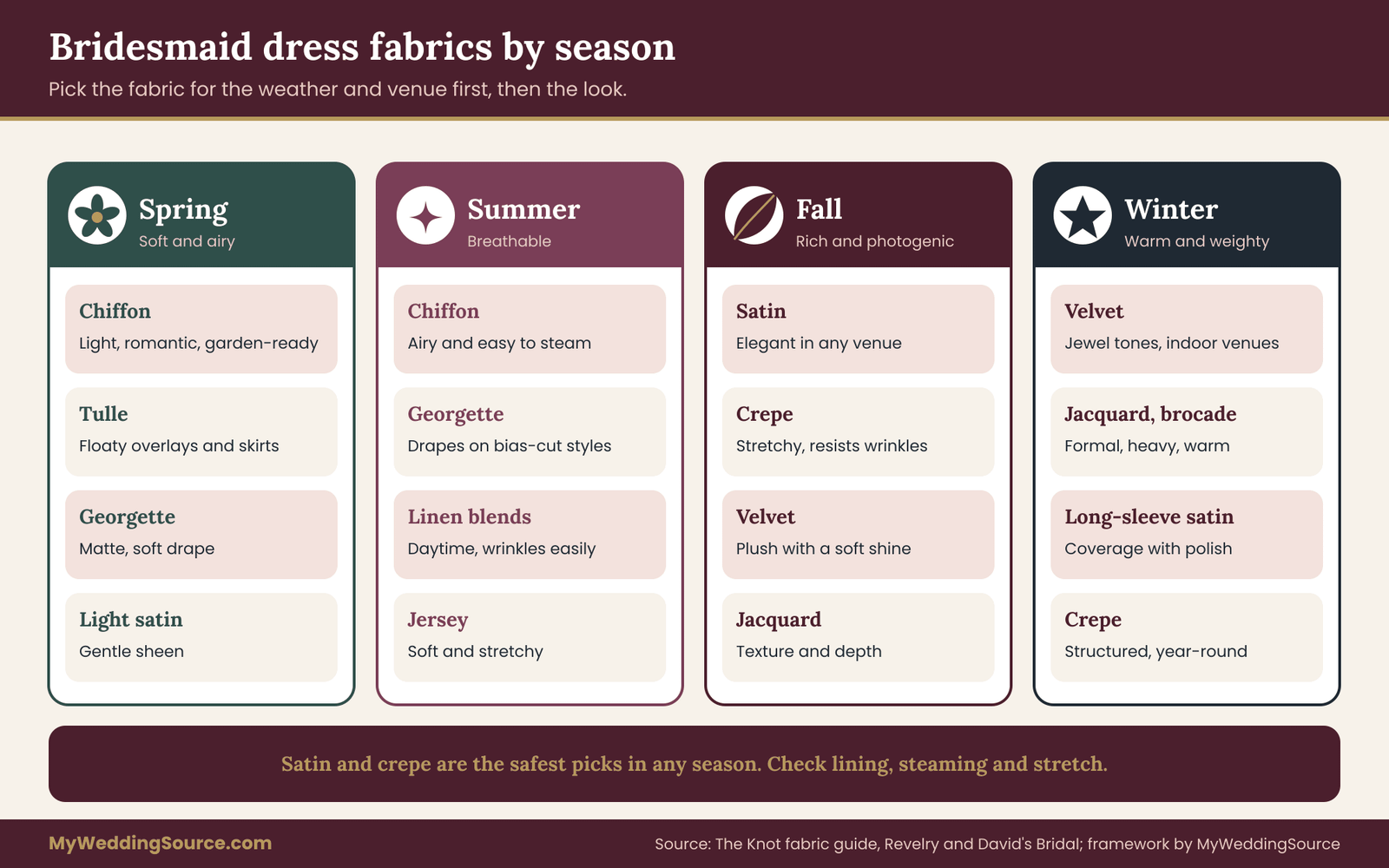
Match the fabric to the season
The most common mistake with the latest bridesmaid dresses is choosing a look from a gallery photo and ignoring the weather at the venue. This is the simple season-by-season logic.
Spring. Chiffon, tulle, georgette and lightweight satin. Pastels and florals feel natural here. Bring a wrap for cool evenings.
Summer. Chiffon, georgette, lightweight linen blends and jersey. Breathable fabrics and open necklines keep bridesmaids comfortable. For an outdoor ceremony in heat, avoid layers and heavy lining.
Fall. Satin, crepe, velvet and textured fabrics in deep colors. Lulus describes cozy fabrics meeting liquid shine as a Fall 2026 theme, and David’s Bridal observes that velvet, satin and chiffon all photograph well in fall light.
Winter. Velvet, jacquard or brocade, long-sleeve satin and crepe. The Knot recommends rich, weighty fabrics in deep jewel tones for winter, which would be too heavy for warm-weather weddings.
When in doubt, satin and crepe are the fabrics most likely to work in any season, because they are medium weight and available in a wide range of cuts. If your wedding is in a region with extreme heat or cold, ask local boutiques what bridesmaids actually wear there.
Fabric, venue and photography
Season is only one part of the equation. The venue changes how a fabric behaves.
- Outdoor ceremonies with wind. Lightweight chiffon, georgette and tulle can blow around. A fluid skirt can look beautiful in motion, but a hem that wraps around legs is a nuisance. Choose a slightly heavier crepe or satin if the venue is exposed.
- Grass, sand and gravel. A midaxi hem avoids dragging, and a satin hem can pick up marks. Consider a shorter hemline or a detachable overskirt.
- Indoor ballrooms and churches. Almost any fabric works, but a venue with strong air conditioning can make a bare-shoulder chiffon dress chilly. David’s Bridal notes that velvet suits indoor and covered outdoor spaces, satin adapts to any venue, and chiffon works best indoors or in mild outdoor settings.
- Flash and bright sun. Shiny satin reflects light, which can look glamorous or harsh. A matte crepe can be easier to photograph evenly.
If you are planning photographs with bouquets and flowers, remember that the bouquet is part of the outfit. Our guide to wedding bouquet weight explains why heavier bouquets and delicate fabrics deserve a quick test together.
Care, steaming and wear
The practical side of fabric is often forgotten until the week of the wedding.
- Ask about steaming. Chiffon and many polyesters steam easily. Satin can show water spots, so use a gentle steamer and keep it a few inches from the fabric. Velvet should be steamed from the inside.
- Ask about lining. Sheer fabrics such as chiffon, georgette and tulle usually need a lining. A poor lining can change the way the dress hangs and shows underwear.
- Ask about dry cleaning. Feathers, heavy beading and some embellished pieces may need professional cleaning after the wedding.
- Ask about stretch. Stretch satin and stretch crepe forgive minor fit differences and are friendlier for many bodies, which suits larger parties.
- Pack a small repair kit. Safety pins, fashion tape, a small sewing kit and a travel steamer solve most last-minute issues.
With the fabric in place, the next big decision for the latest bridesmaid dresses is color.
Colors in the latest bridesmaid dresses for 2026 and 2027
Color is the quickest way to tell when a wedding photo was taken, and it is where the latest bridesmaid dresses are changing fastest. The big picture is a move from the washed-out pastels that dominated a few years ago toward colors with more depth, alongside a few soft shades that remain popular. One stylist notes that the newer colors look good on a wider range of skin tones than the pastels of 2025 did. That is an opinion, but it matches what several retailers describe.
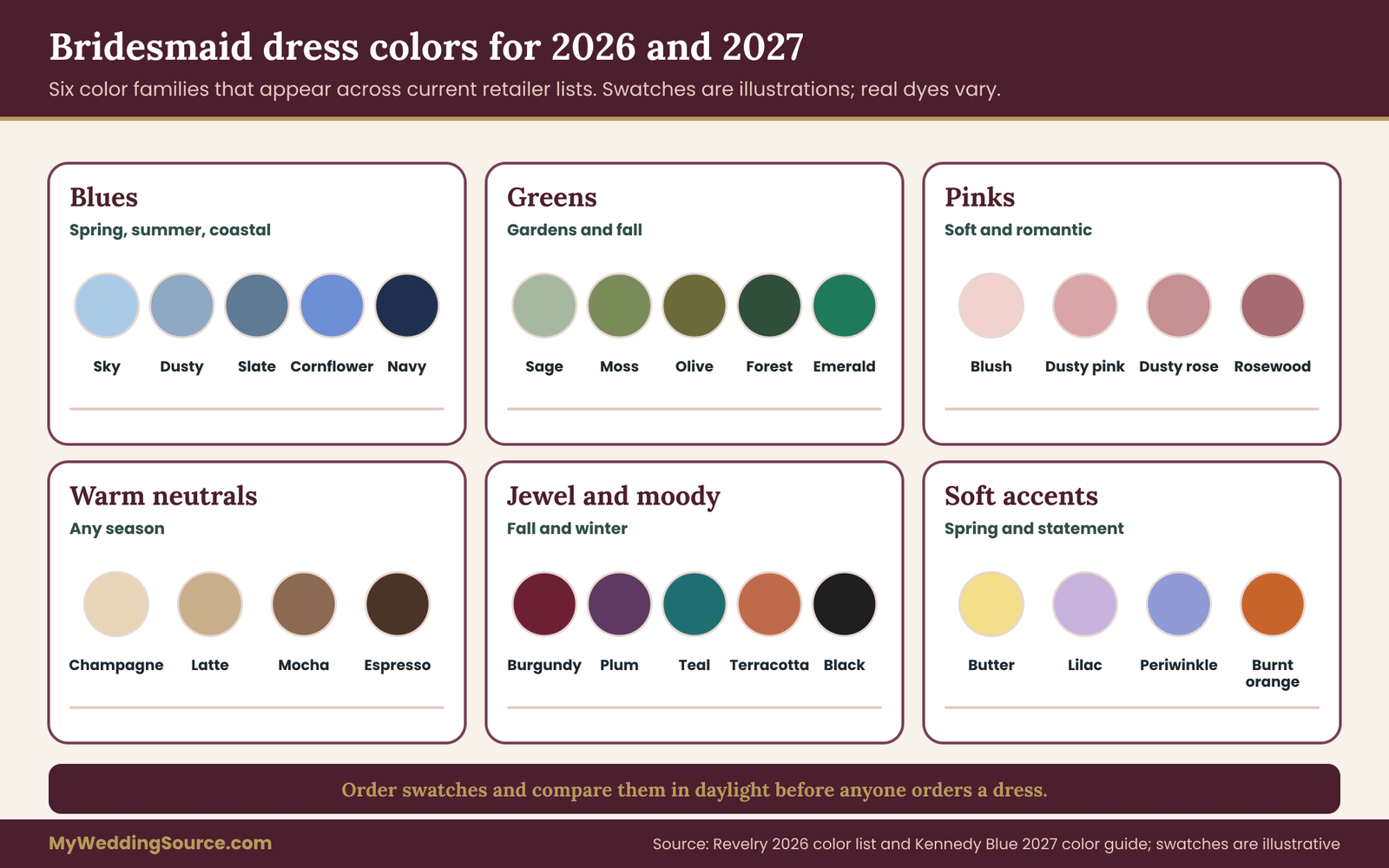
The palettes above combine two sources: Revelry’s list of ten popular 2026 colors, and Kennedy Blue’s ten colors to know for 2027. The swatches are illustrations, so real dyes vary by brand and fabric. Always order fabric swatches before you finalize.
The shortlist most sources agree on
Revelry ranks the best bridesmaid dress colors for 2026 as dusty blue, sage green, champagne, terracotta, burgundy, dusty rose, navy, emerald, warm brown and black. That is a useful reference because it spans soft neutrals to jewel tones. Other retailers name overlapping shades: dusty and frosted blue, sage and pastel greens, rose pink and soft blush, burgundy, plum, merlot and navy.
If you want a color the most people will find flattering and easy to coordinate, start from this list.
Blues
Blue is the strongest family across 2026 and 2027 lists.
- Dusty blue. Revelry calls it the most searched bridesmaid dress color going into 2026, based on its own data, and says it shows no signs of fading. It suits spring, summer, outdoor ceremonies and coastal venues.
- Sky blue. Kennedy Blue sees light blue as one of the clearest 2027 signals, tied to spring 2027 collections. It pairs with white flowers, soft greenery or navy.
- Slate blue. A muted, cooler take on dusty blue. Kennedy Blue suggests pairing it with champagne and dusty pink, or using it as the deeper shade in an all-blue party.
- Cornflower blue. A brighter, more saturated blue that Kennedy Blue names as a 2026 favorite.
- Navy. The dependable classic for formal and evening weddings.
A tonal blue party, with sky, dusty and slate in one group photo, is a graceful way to use the latest bridesmaid dresses without matching exactly.
Greens
Green has quietly become the second major family.
- Sage. Soft and earthy, still widely requested, though some stylists see it giving way to deeper greens.
- Moss. A year-round green between sage and forest, which Kennedy Blue suggests using alone or as the middle shade in a tonal palette.
- Olive. A warm, earthy green for natural palettes. It pairs well with moss for two-tone greens or with champagne as a neutral break.
- Forest and emerald. Deep greens for fall, winter and formal weddings.
For a wedding with greenery in the florals, a green party can disappear into the setting. If you want the bridesmaids to stand out, choose a neutral or a warm shade instead.
Pinks and warm neutrals
- Dusty pink and blush. Soft pinks remain popular for spring, and Kennedy Blue names dusty pink as a spring 2027 shade.
- Rosewood. A deeper, muted pink or mauve that pairs with dusty pink for a tonal look or works alone with neutral accents.
- Champagne. A soft metallic neutral that ASOS ranks first in its satin-and-champagne trend. It flatters many skin tones and suits any season.
- Mocha and latte. Warm browns. Rocky Mountain Bride calls mocha the most requested bridesmaid color for 2025 and 2026, and Kennedy Blue lists mocha and latte as 2027 neutrals that balance olive, slate blue or rosewood.
- Espresso. A deeper coffee shade that one stylist sees replacing black for a warm, expensive look.
Jewel tones and moody colors
Rich colors are the other half of the story. 100 Layer Cake describes moody earth tones such as chocolate, olive, burgundy and teal as a way to create a sophisticated, cohesive party. Plum, burnt orange, periwinkle and teal appear as bolder “unexpected color moments” in the same list. Burgundy, merlot, emerald and navy suit fall and winter weddings, and terracotta suits warm, desert or rustic palettes.
Soft yellows, lilacs and accents
- Butter yellow or buttercup. Kennedy Blue calls butter yellow the sweetest shade of 2026 and names buttercup as a spring 2027 color. It looks beautiful with white and green florals, but it can be hard to wear against some skin tones, so check in natural light.
- French lilac. A pastel purple that appears in spring and is forecast for autumn and winter.
- Neo-mint and digital lavender. Brighter, more modern shades noted by one stylist, who also warns that they can be harder to wear after the wedding or less flattering on some skin tones.
- Black. Rocky Mountain Bride says black bridesmaid dresses are always chic, and it remains the most formal and the most rewearable choice.
Mixing tones of one color
A growing idea is the tonal palette: several shades of one color in the same party. Kennedy Blue gives mismatched pinks, from dusty pink to rosewood, as a 2026 example. The Knot describes shades of one color, light to dark, as a mix-and-match approach that works especially well for large parties. A tonal palette gives each bridesmaid a shade that suits her skin, while the group still reads as one color story.
Five palettes to borrow
Sometimes the easiest way to use the latest bridesmaid dresses is to start from a ready-made combination. These five palettes draw on pairings that retailers suggest, and each can be matched or mixed.
Tonal blues. Sky blue, dusty blue and slate blue in one party, with white flowers and soft greenery. Kennedy Blue suggests slate blue as the deeper shade in a tonal blue group, or paired with champagne and dusty pink. This palette suits spring and summer weddings, and it photographs calmly.
Layered greens. Moss, olive and forest, with champagne as a neutral break. Kennedy Blue describes using moss and olive for two-tone greens, and adding forest for a three-shade green palette. It works well for gardens, vineyards and fall weddings, and it pairs with warm metallic jewelry.
Rosy neutrals. Dusty pink, rosewood and champagne. This is a gentle, romantic palette that suits spring and early summer, and it sits comfortably beside ivory and blush wedding gowns.
Earthy warmth. Mocha, latte and olive, with a touch of rosewood or slate blue. The warm browns act as a supporting neutral, and the mix feels grounded and modern. It suits rustic, barn and desert venues as well as fall celebrations.
Moody jewels. Burgundy, plum, forest and espresso in velvet or satin. This is a winter and fall palette for formal indoor weddings, and it pairs with candlelight, dark wood and rich florals.
Whichever you pick, check that the palette works with the groomsmen’s suits, the flowers and the venue. If you are unsure, take a swatch from each shade to the venue and look at them together in the light that will be there on the day. A palette that looks wonderful on a screen can feel flat in a warm, dim room, so this step is worth ten minutes.
How to choose a color for your wedding
With so many options, a simple process helps.
- Start with the season and the venue. Dusty blue and sage suit spring gardens, while burgundy, forest and mocha suit fall ballrooms. A venue with strong colors, such as red brick or dark wood, changes how a shade looks, so photograph a swatch in the room if you can.
- Look at your flowers. Kennedy Blue publishes a guide to coordinating flowers with bridesmaid colors. As a general rule, pick bouquets that contrast with the dress or sit in the same family, not an exact match.
- Consider skin tones across the party. Deep, saturated colors tend to flatter a wider range than very pale pastels. A tonal group with a light, medium and dark option can help.
- Think about the groomsmen. Many suit and dress collections are built around the same color families, so check that the palette works for both.
- Test the swatches together. Order swatches, place them side by side and look at them in daylight and indoor light.
Beyond that, remember that the best choice is a color your bridesmaids would actually wear again. A mocha, navy, forest or black dress has a second life at holiday parties and other weddings, while a very bright shade rarely does.
Common color mistakes
- Choosing from a screen only. Colors on a phone can look different from the real fabric, and different fabrics take dye differently. Order swatches.
- Mixing very different fabrics in the same color. Satin, chiffon and velvet in one color can look like three colors. Keep the fabric consistent, or deliberately vary tone.
- Ignoring undertones. A warm shade such as terracotta or butter yellow next to a cool shade such as slate can clash if they are not chosen as a pair.
- Following a trend that the party will not wear again. A dress is often paid for by a bridesmaid, so consider her closet as well as your photos.
- Forgetting the maid of honor. Many couples use a slightly different shade, fabric or style to set her apart. The Knot suggests varied textures such as sequins or embroidery for this purpose.
Mismatched and mix-and-match: the biggest shift in the latest bridesmaid dresses
If one idea defines the latest bridesmaid dresses, it is that the party no longer has to wear the same gown. The Knot has described mismatched bridesmaid dresses as all the rage for Gen Z weddings, and the logic is simple: each person chooses something she feels good in, and the shared color or fabric makes the group look intentional.
Done well, a mismatched party looks like a designed palette. Done carelessly, it can look like a group of guests who forgot to coordinate. The difference is in the rules you set.
Six ways to mix and match
The Knot describes six approaches, and they are a helpful menu for the latest bridesmaid dresses.
- Same color, different styles. Everyone wears one shade, but lengths, necklines and silhouettes vary. This is the easiest approach and the most common one.
- Shades of one color. Lighter and darker versions of a single hue, for an ombré effect. It works well for large parties.
- Different colors from the wedding palette. Each bridesmaid wears a different color, but all of them come from the theme.
- Solids with one patterned dress. Pick a pattern first, then take its colors for the solid dresses.
- Varied textures. Add sequins, beading or embroidery. This is a good way to set the maid of honor apart.
- Different prints in a similar color scheme. Each person wears a different print that shares a palette.
The rule that keeps it cohesive
The Knot gives one clear piece of advice for avoiding a disjointed look: vary only one or two things per dress, such as silhouette or print, and keep the rest consistent. If the color and fabric are fixed, let neckline and length vary. If the silhouette is fixed, let the color vary within a family.
Practical steps
- Share a vision board. Collect inspiration images and approved dress options so everyone understands the venue, the dress code and the mood.
- Shop from one retailer. Many brands sell the same fabric in several styles and shades that work together, and some provide stylists.
- Order swatches. Compare color, pattern and texture side by side.
- Set one unifying element. This can be a color family, a specific shade, a fabric or a print theme.
- Ask for input. Preferences show what will make each bridesmaid comfortable and confident.
- Pre-approve styles. Reviewing picks before anyone orders prevents a surprise at the fitting.
Convertible dresses are the shortcut. One dress in one color, tied several ways, produces variety without any coordination at all. And if you want a middle path, same-fabric sets in different cuts keep the photographs polished.
When matching still makes sense
Matching dresses are not out of date. A classic black-tie wedding, a very small party, a strict religious ceremony or a couple who simply loves a uniform look are all good reasons to choose one dress. The latest bridesmaid dresses include plenty of single-style options in the trending fabrics and colors. The point is that you now have a choice, not that matching is wrong.
Length and dress code in the latest bridesmaid dresses
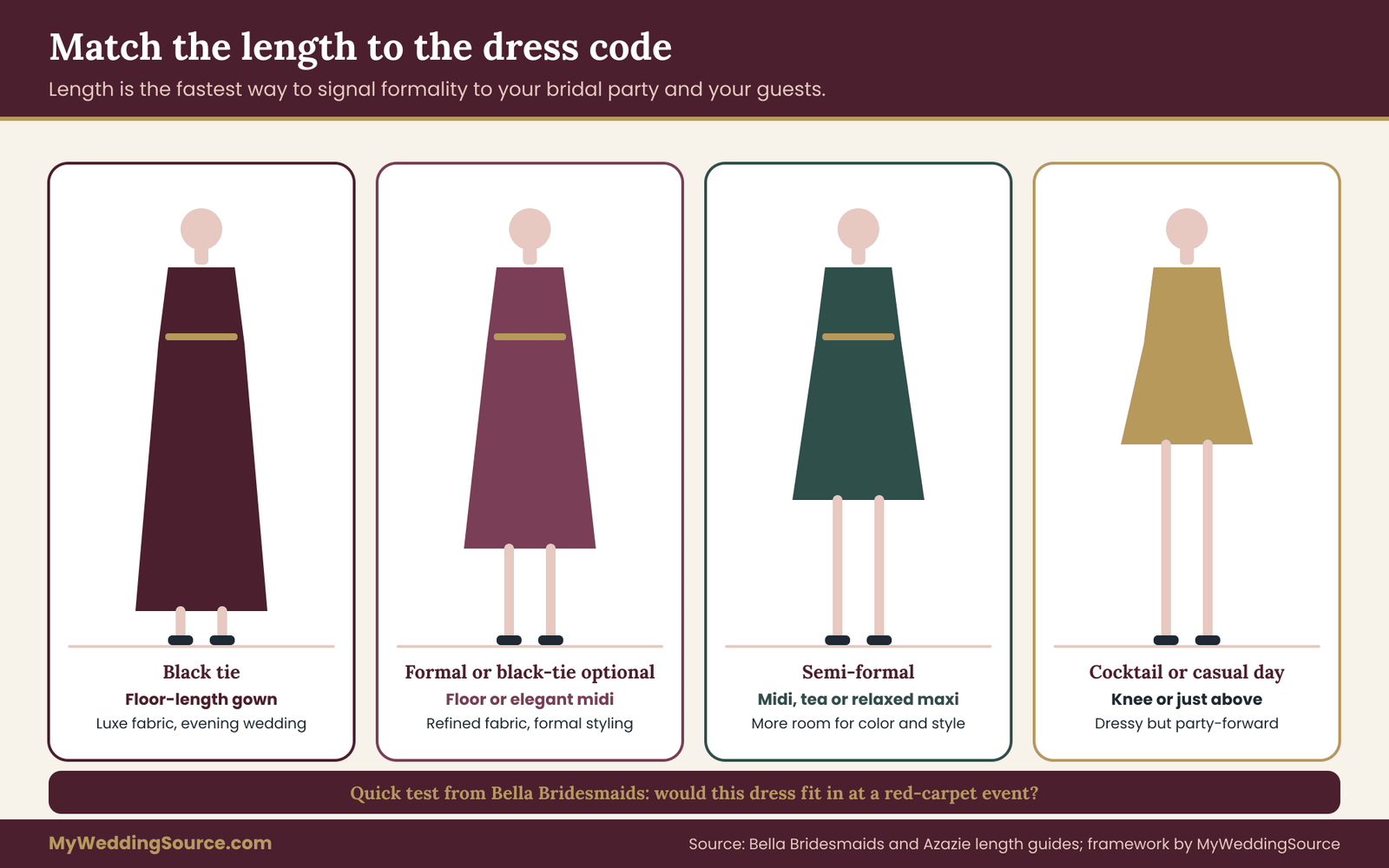
Length signals formality, and it is the quickest way to make sure the bridal party matches the tone of the wedding. The latest bridesmaid dresses range from floor-length satin gowns to knee-length chiffon, and the dress code on your invitation is the best guide to which to choose.
How the ladder works
Black tie. Floor-length gowns in luxe fabrics are the classic choice. Bella Bridesmaids says a floor-length bridesmaid dress adds an air of sophistication, and Azazie notes that shorter lengths can look too casual for an evening formal event. A useful test from Bella is to ask whether the dress would fit in at a red-carpet event.
Formal or black-tie optional. Azazie lists elegant midi, maxi or floor-length dresses in refined fabrics. Bella adds that some couples choose tea-length or midi dresses even for formal weddings, as long as the fabric and styling are formal and the dress passes that same red-carpet test.
Semi-formal. Polished midi, knee-length or relaxed maxi dresses, with more room to play with color and styling.
Cocktail or casual daytime. Dressy, party-forward styles around the knee, or a little above for casual receptions. Azazie places cocktail dresses two to four inches above the knee and the easiest to alter.
If you pick a floor-length dress, Azazie suggests it should sit about an inch above the floor in heels, because too long a hem is a tripping hazard and too short looks unfinished. For hemming, ask whether the dress needs a professional tailor, since floor-length styles often do.
Why midi and midaxi are everywhere
The middle of the ladder is where the latest bridesmaid dresses are most active. Zola notes that mid-calf styles are rapidly growing in popularity, from silk slip dresses with a cowl neck to classic strapless styles with a tulip hem. A midi or midaxi can be dressed up with heels and formal fabric for a black-tie optional wedding, and dressed down with sandals for a garden one. It is also the easiest length to wear again.
Train and hem etiquette
Your bridesmaids should never upstage the wedding dress, and length is part of that. If your gown has a long train, a floor-length bridesmaid dress is a natural companion, while a very short dress next to a cathedral train can look mismatched. Our guide to wedding dress train lengths explains how train length changes the look of the whole processional.
The latest bridesmaid dresses by wedding style
It can help to translate all of the above into a few common wedding types. These are suggestions, not rules.
Garden or outdoor spring wedding. Chiffon or georgette midaxi dresses in dusty blue, sage, blush or butter yellow. Flutter or cap sleeves add softness. Choose a hem that will not drag on grass.
Black-tie ballroom wedding. Floor-length satin or crepe in navy, forest, burgundy, champagne or black. One-shoulder or cowl necklines and a corset-inspired bodice add structure. Keep embellishment minimal so it feels formal.
Rustic or barn wedding. Olive, terracotta, mocha or moss in crepe, linen blends or soft satin. A midaxi length and a flexible fit make it easier to move around uneven floors.
Beach or destination wedding. Lightweight chiffon, georgette or jersey in sky blue, coral or sand. Convertible styles pack easily and shorter lengths avoid wet hems. Avoid heavy fabrics and long, trailing skirts.
Winter wedding. Velvet, jacquard or long-sleeve satin in forest, burgundy, plum or espresso. Sleeves, wraps and covered shoulders help with cold venues.
Modern minimalist or city wedding. Satin slip dresses, wide-leg jumpsuits or two-piece sets in champagne, mocha, black or slate blue. A single hero detail, such as a bow or an asymmetric neckline, is enough.
Boho or romantic wedding. Tiered chiffon or tulle with 3D florals or embroidered details in blush, rosewood, French lilac or sage. Flutter sleeves and soft prints suit the style.
Courthouse or intimate wedding. Short, simple dresses in satin or crepe in any color. With only a few people, one or two dress styles are enough.
Matching the bridesmaids to the bridal gown
A good bridal party looks designed alongside the bride, not in competition with her. A few rules help:
- Keep the formality of the gown and the bridesmaid dresses aligned.
- Echo one element of the wedding dress, such as satin, lace or a neckline, in the bridal party.
- Avoid very pale shades that can be mistaken for the wedding dress in photographs, particularly ivory and white.
- If the bride wears color, build the bridal party palette around it.
The latest bridesmaid dresses make this easier, because champagne, mocha and tonal blues sit comfortably next to most bridal fabrics.
What the latest bridesmaid dresses cost
Price is the part of the conversation that most often goes wrong, so it deserves real numbers. The Knot’s 2025 Real Weddings Study found that the average bridesmaid dress cost $128 per person for weddings in 2024, roughly unchanged since 2021. The study surveyed nearly 17,000 couples married in 2024.
The average hides some interesting patterns.
- By generation. Gen X weddings averaged $146 per dress, millennial weddings $131 and Gen Z weddings $118, according to The Knot.
- By region. Costs were highest in the Mid-Atlantic and Northeast, at about $140.
- By style. Floor-length gowns in satin, velvet or crepe cost more than knee-length chiffon, and lace overlays, beading and boning add to the price, according to a 2026 cost guide from Paperlust.
That cost guide places typical bridesmaid dresses at $100 to $300, with online brands such as Azazie and Birdy Grey often offering on-trend styles for $89 to $150, and designer boutiques charging $300 to $600. Treat those ranges as a snapshot, because retailer prices change often, and always check the current price of the dress you want.
The dress is not the whole bill
A bridesmaid’s real cost is the outfit, not the dress alone. The Knot reminds readers to budget for dressy shoes, jewelry, a clutch and undergarments, including shapewear or a special bra for strapless, backless or adhesive styles. Alterations are another cost, and they rise with the number of changes: hemming, tailoring the bust, waist or hips, or shortening straps. Heavily embellished fabrics, such as sequins, beads and pearls, are harder to tailor and cost more.
Hair and makeup depend on whether the couple covers them. Some guides estimate the total outfit cost for each bridesmaid at $300 to $500, though that figure is an estimate from a single guide and will vary widely by city and style.
The takeaway for the latest bridesmaid dresses is that a $130 dress can easily become a $350 commitment. Share that math with your bridesmaids before they say yes.
Saving money without losing the look
The Knot’s saving tips apply directly to the latest bridesmaid dresses.
- Talk about the budget first. Settle it with the couple before anyone shops.
- Use swatches or at-home try-on services. This avoids buying several full-price dresses to find one.
- Choose mismatched dresses. If the couple allows different styles inside their color and length guidelines, each bridesmaid can find a dress at her own price.
- Rent. Rental services reduce the cost of a dress that may not be worn again.
- Buy secondhand. Inspect the dress carefully and budget for possible alterations.
- Watch the sales. The Knot lists Black Friday, Cyber Monday, Presidents’ Day and Memorial Day weekend as common sale periods.
Other cost savers are simple: choose a fabric that does not need dry cleaning, pick a style that needs few alterations, and ask whether a retailer offers custom sizing, which can reduce tailoring costs.
Who pays for the latest bridesmaid dresses
In the United States, bridesmaids traditionally pay for their own dresses and accessories. Zola notes that if the budget allows, a couple may choose to cover the cost to lighten the burden. Other guides describe a middle route: the couple sets a maximum per dress and covers up to that amount, and a bridesmaid who prefers a pricier style pays the difference.
A few guidelines keep things fair, and they matter most when you choose the latest bridesmaid dresses from boutique designers.
- If the couple picks the exact dress, consider helping with the cost. The Wed notes that if the bride chooses a specific designer or high price point, etiquette suggests she should consider contributing or covering the cost.
- Ask each bridesmaid privately for a comfortable price range. A group message makes it hard for someone to say a number is too high.
- Let bridesmaids choose within limits. Zola describes an option where bridesmaids pick their own dress in a color the bride chooses, which keeps everyone within her budget.
- Choose versatile styles. If you ask your bridesmaids to pay, pick dresses they can wear again.
For more on the broader rules of who pays for what, see our guide to wedding etiquette.
Words that help
Money conversations are easier with a script. A few examples:
- “I would love you to stand with me. The dress budget I have in mind is around $150. Does that work for you, and is there a number you would feel more comfortable with?”
- “I am covering the dress itself. You are welcome to choose any style in this color and length.”
- “Please tell me privately if the price is a stretch. I would rather change the plan than lose you from the party.”
The ordering timeline for the latest bridesmaid dresses
Timing matters because many dresses are made to order, and alterations take time. The Knot recommends starting to look for inspiration about eight months before the wedding and ordering about six months before. Dresses can take up to three months to arrive, and you want extra time for alterations. Azazie advises ordering at least four to six months before the wedding for similar reasons: alterations are rarely optional, shipping delays happen and group coordination takes time, especially if bridesmaids live in different places.
A sensible timeline for the latest bridesmaid dresses looks like this.
- Eight to nine months before: Share inspiration, agree on the color family, fabric and length, and set the budget.
- Seven months before: Order swatches, hold at-home try-ons and collect sizes and measurements.
- Six months before: Place the order. Order all dresses at the same time.
- Three to four months before: Dresses arrive. Check each for size, defects and color.
- Two to three months before: Alterations. Bring shoes, undergarments and any accessories to the fitting.
- One month before: Final fitting, hem check and wrinkles. Plan how the dresses will travel.
- The week of: Steam or press, and pack a repair kit.
For help placing this into the wider schedule, see our wedding planning timeline.
The dye lot question
Retailers often advise ordering every dress in the party at the same time so they come from the same dye lot. The Knot warns that the same dress can vary slightly in color depending on the dye lot, and Bella Bridesmaids says the same, recommending that orders go in together even when the dresses are different styles in the same color. Some people argue that this matters less with modern synthetic fabrics, but because ordering together costs nothing, it is a sensible default. For natural fibers, it matters more.
Alterations and fit
Most bridesmaid dresses need at least minor tailoring. Typical changes include hems, straps and bust or waist adjustments. If a dress has stretch, a lace-up back or a wrap front, fewer changes are needed. Because bridesmaids are often scattered, ask each to book a local tailor, send her measurements early and keep receipts. Our guide to dress fit and alterations covers fittings in more detail, and most of the advice applies to bridesmaid dresses as well.
Comfort, inclusivity and coverage
The latest bridesmaid dresses are most successful when everyone in the party feels good wearing them. That sounds obvious, but it is where plans often fail.
Size range. Check that the brand offers the full range of sizes your bridesmaids need, and that larger sizes are not priced higher. Several retailers now offer extended sizing, and some offer custom sizing, which can reduce alteration costs. A dress that exists in a size 24 but costs more in that size is not truly inclusive.
Adjustable styles. Wrap fronts, lace-up backs, stretch fabrics and convertible designs make one dress work for many bodies. This is one reason these styles feature in so many trend lists.
Pregnancy and postpartum. Jersey and knit styles are maternity-friendly, and many brands make maternity bridesmaid dresses. If a bridesmaid may be pregnant, ask early, and order later or use adjustable styles.
Coverage. Sleeves, higher necklines and longer hems can matter for religious ceremonies and for personal comfort. Flutter, bishop and cap sleeves, and detachable sleeves or wraps, are easy ways to add coverage without changing the style.
Disabilities and mobility. Consider easy closures, comfortable shoes, and fabrics that do not restrict movement. Ask rather than assume.
Undergarments. One of the most common complaints is finding the right bra or shapewear for a strapless or low-back style. Ask early and consider a built-in bra or a style with straps.
Skin tones. Rich, medium-depth colors tend to flatter many skin tones, while pastels can look washed out on some. A tonal palette with several shades lets each person choose.
Heat and weather. Lightweight fabrics, breathable linings and the option to add a wrap keep people comfortable.
The best question to ask your party is simple: “What would make you feel your best in this dress?” The answers will usually guide you more than any trend list.
Rent, resell and rewear: making the latest bridesmaid dresses last
One of the loudest complaints about bridesmaid dresses is that they are worn once. The latest bridesmaid dresses answer that complaint in several ways, and they are worth planning for from the start.
Rewear it. Dresses in black, navy, forest, mocha, champagne or a deep jewel tone are easy to wear again, and a midi or midaxi hem is more useful afterward than a floor-length gown. One-shoulder, slip and crepe styles also dress up or down. Convertible dresses can be worn in a new way each time. A stylist’s list recommends two-piece sets for the same reason, because the pieces can be worn separately.
Rent it. The Knot lists rental services as a way to reduce cost, which suits a dress that is unlikely to be worn again. Check the rental window, the cleaning policy, the late fee and the return deadline, and plan for the event date rather than the date of delivery.
Buy secondhand. The Knot also suggests buying secondhand, inspecting the dress closely and budgeting for possible alterations. Check for stains, loose seams, missing beads and hem wear. Ask for the original tags, the size and the fabric, because sizing varies between brands.
Resell afterward. Some bridesmaids recover part of the cost by reselling a dress that has been worn once, as Modern MOH notes. Clean it, photograph it in natural light and list it in the size and color it was sold in.
Share the dresses. For a close group, a dress can move from bridesmaid to bridesmaid between weddings.
The idea running through all of these is that the latest bridesmaid dresses are chosen as clothes, not costumes. If a dress is one the person would wear to another event, the cost feels very different.
Accessories and finishing touches
The dress is only part of the picture. A few decisions about accessories make a bridal party look coordinated without extra spending.
Shoes. Choose a color, such as nude, metallic or the same shade as the dress, and let each bridesmaid pick a style that is comfortable. For a long day, block heels, wedges and dressy flats are all reasonable. Zola’s shoe guidance for bridesmaids ties the shoe style to the overall wedding mood, from whimsical to modern.
Jewelry. Ask bridesmaids to wear a single color metal, such as gold, silver or pearl, and keep pieces simple. Pearl trims on a dress already act as jewelry, so a plain earring is usually enough.
Hair and makeup. Decide whether you are paying and set a time. A consistent hairstyle is less important than a comfortable one.
Wraps and layers. For evening or cool venues, add matching shawls, jackets or wraps in a coordinating fabric.
Bouquets. Choose flowers that suit the dress colors and avoid very heavy arrangements. The latest bridesmaid dresses in moody colors look striking with a lighter bouquet, and pastel dresses can handle richer flowers.
Gifts. Many couples give a small gift to bridesmaids, such as a piece of jewelry to wear on the day or a robe. Our guide to wedding ceremony step by step shows where bridesmaids appear in the ceremony, which helps you decide what they need on the day.
Special roles: maid of honor, junior bridesmaids and others
Bella Bridesmaids notes that many couples choose a different dress for the maid of honor so that she stands out, and that when the whole party wears mismatched dresses the look can be even more chic. Here are a few ways to handle special roles within the latest bridesmaid dresses.
- Maid of honor. Choose a different shade, fabric or silhouette, or add a texture such as sequins or embroidery.
- Junior bridesmaids. Choose a modest, age-appropriate version of the same color and fabric. David’s Bridal notes that its collections include coordinating options for a junior bridesmaid.
- Expecting bridesmaids. Choose a stretch fabric or a wrap style in the same color.
- Bridesmen and mixed parties. Many couples now include friends of any gender. Suits and jumpsuits in the same color family can match the dresses, and Revelry’s collections are built around shared color families for both dresses and suits.
- Out-of-town bridesmaids. Send fabric swatches, set a shared deadline and agree on a local tailor.
Common mistakes with the latest bridesmaid dresses
After looking at the trends, the rules and the numbers, a handful of mistakes come up again and again.
- Choosing the trend before the party. A dress that flatters a model may not flatter your best friend. Ask for input before choosing.
- Ignoring the budget conversation. Money is the most common source of friction. Settle it early and privately.
- Ordering too late. Made-to-order dresses and alterations take time. Follow the six-month guideline where you can.
- Ordering at different times. Order everyone together to avoid color variation.
- Skipping swatches. Screens misrepresent color.
- Overlooking the venue. A long chiffon dress on a windy beach, or velvet at a summer wedding, is a poor match.
- Forgetting the undergarments. Ask about bras, slips and shapewear early.
- Not testing for comfort. Ask bridesmaids to sit, bend, raise their arms and dance in the dress.
- Ignoring the bridal gown. Keep formality and color aligned.
- Being rigid. The best of the latest bridesmaid dresses leave room for personal choice.
A simple decision framework
If the choices still feel overwhelming, work through these questions in order. The answers will narrow the latest bridesmaid dresses to a short list.
- What is the dress code? This sets the length and the formality.
- What is the season and the venue? This sets the fabric.
- What is the color story? Choose one family, then decide whether to match or mix.
- What is the budget? Agree it with your bridesmaids before shopping.
- What is the fit plan? Decide whether dresses are adjustable, custom-sized or tailored.
- What is the timeline? Work back from the wedding date.
- What will they wear again? Choose at least one element, such as color or length, that makes the dress reusable.
Write the answers down. When a trend or a sale tempts you away from them, return to the list.
What the latest bridesmaid dresses say about the next few years
Trend articles often include forecasts, and it is worth treating them carefully. Some themes look durable.
- Flexibility. Mix-and-match, convertible and adjustable styles answer real needs, and they are likely to continue.
- Natural and earth tones. Brown, olive and moss have moved from accent to mainstream, and the Kennedy Blue 2027 list keeps them.
- Blues. Dusty, sky and slate blue appear across both years.
- Satin and crepe. These fabrics have stayed popular for years.
- Practical lengths. Midi and midaxi hems are comfortable and wearable.
Other ideas may be more fleeting, such as very bright mints, feathered hems or extremely structured corsetry. None of that is bad, but the more specific the trend, the more it will say “2026” in a photograph.
The safest way to use the latest bridesmaid dresses is to be loyal to your own palette and let one or two current details, such as a cowl neckline or a bow, signal the year.
How to ask and brief your bridesmaids
The best-planned latest bridesmaid dresses can still go wrong if the communication is thin. A little structure keeps everyone informed and relaxed.
Ask early, and ask kindly. Invite people to be bridesmaids before you show them a dress. Make it clear that saying no is acceptable, and mention costs up front so nobody feels trapped.
Send one clear brief. A single message or shared page should include the date and location, the dress code, the color story, the fabric and length guidelines, the budget, the order deadline and the contact for questions. Include a small inspiration board with approved examples.
Use a group chat with rules. Decide what the group discusses openly and what happens privately, such as budgets and sizes. Keep deadlines in one place.
Set deadlines early. Give bridesmaids a date for choosing and a date for ordering, with a buffer. A friendly reminder a week before each date helps.
Offer help. A video call with a stylist, a swatch kit or an at-home try-on can save people time, and many retailers provide these services.
Check in on comfort. After the dresses arrive, ask whether anyone needs a different size, a tailor recommendation or help with shipping.
Keep the tone generous. The Knot’s advice on mismatched dresses includes asking bridesmaids for input, because their preferences show what will make them comfortable and confident. That advice applies to every choice about the latest bridesmaid dresses, not only mismatched ones.
Day-of tips for dresses
A few practical steps on the wedding day prevent small crises.
- Steam or press early. Do it the day before if the dresses are wrinkled from travel.
- Hang them well. Use padded or wide hangers, and keep them away from sunlight and heat.
- Pack a kit. Safety pins, fashion tape, a sewing kit, stain remover, a lint roller, blister plasters and a portable steamer solve most problems.
- Do a final check. Look at zippers, hems and straps before leaving for the ceremony.
- Keep water and snacks nearby. A comfortable bridesmaid is a happier one.
- Plan for the dance floor. Change into flat shoes or lift a long hem with a small loop if needed.
Then enjoy it. The point of choosing the latest bridesmaid dresses carefully is that, on the day, nobody has to think about them.
FAQ
What are the latest bridesmaid dresses for 2026 and 2027?
The latest bridesmaid dresses center on fluid satin and crepe, corset or structured bodices, cowl and one-shoulder necklines, midaxi lengths, bows and 3D floral details. Mismatched and convertible styles in one color family are widely popular. Colors include dusty, sky and slate blue, olive and moss green, mocha, rosewood and butter yellow. Most trend information comes from retailers, so treat it as direction, not statistics.
What color bridesmaid dresses are most popular right now?
Retailers name dusty blue, sage green, champagne, terracotta, burgundy, dusty rose, navy, emerald, warm brown and black as popular 2026 choices. For 2027, Kennedy Blue highlights sky blue, slate blue, moss, olive, forest, dusty pink, rosewood, buttercup, French lilac and mocha and latte. Blue and green families appear most consistently.
How much do bridesmaid dresses cost?
The Knot’s 2025 Real Weddings Study reports an average of $128 per bridesmaid dress for 2024 weddings, with Gen Z weddings averaging $118 and Gen X weddings $146. Typical retail ranges are higher or lower depending on the brand, and alterations, shoes, accessories and undergarments add to the total.
Who pays for bridesmaid dresses?
In the United States, bridesmaids traditionally pay for their own dresses and accessories. A couple may choose to pay for the dresses, or to cover a set amount per dress. If the couple chooses an expensive designer or a specific dress, etiquette suggests they consider contributing. Discuss the budget before anyone orders.
When should bridesmaids order their dresses?
The Knot suggests ordering about six months before the wedding, and starting to look for inspiration around eight months before. Dresses can take up to three months to arrive, and alterations need extra time. Azazie recommends at least four to six months. Order every dress at the same time to avoid color differences between dye lots.
Do bridesmaid dresses have to match?
No. Same color with different styles, shades of one color, different colors from one palette and mixed prints are all common ways to mix and match. The Knot advises varying only one or two elements per dress to keep the look cohesive. Matching dresses remain a good choice for formal or traditional weddings.
What length should bridesmaid dresses be?
Match the dress code. Floor-length gowns are the classic choice for black-tie weddings, while midi, tea-length or relaxed maxi dresses suit semi-formal events, and knee-length styles suit casual or cocktail weddings. Midi and midaxi lengths are especially popular because they work across several dress codes and are easy to wear again.
Which fabric is best for bridesmaid dresses?
It depends on the season. Chiffon, georgette and tulle suit spring and summer, while velvet, jacquard and heavier satin suit fall and winter. Satin and crepe work in nearly any season. Choose stretch or adjustable styles for comfort, and check lining, steaming and cleaning needs.
Your next steps
Start with four small actions this week. First, write down the dress code, the season and the venue, because these three facts narrow the latest bridesmaid dresses faster than any trend list. Second, choose one color family and order swatches to compare in daylight. Third, have a private, honest conversation about budget with each bridesmaid. Fourth, set an order date about six months before the wedding and share it.
Then keep the decision simple. Choose a fabric that suits the season, a length that suits the dress code and one current detail that you love. The rest is a matter of letting your bridesmaids feel comfortable and like themselves. A bridal party that looks happy in photographs will always look better than one that looks perfectly matched and miserable.
Sources
- Bridesmaid trends 2026, ASOS Fashion Feed
- Ten bridesmaid dress trends for 2026 weddings and beyond, 100 Layer Cake
- Bridesmaid dress trends 2026, Kennedy Blue
- 2026 bridesmaid dress colors guide, Kennedy Blue
- 2027 bridesmaid dress color trends, Kennedy Blue
- Bridesmaid dress trends, Bridesmaid for Hire
- Best bridesmaid dress colors for 2026, Revelry
- Trending bridesmaid dress colors for 2026, Rocky Mountain Bride
- Bridesmaid dress fabric guide, The Knot
- Mix and match bridesmaid dress trend, The Knot
- Average bridesmaid dress cost, The Knot
- How much do bridesmaid dresses cost, Paperlust
- Who pays for bridesmaid dresses, Zola
- Should bridesmaids pay for their expenses, The Wed
- Bridesmaid dress timeline, Bella Bridesmaids
- When to order bridesmaid dresses, Azazie
- Right length for a bridesmaid dress, Bella Bridesmaids
- Ideal length for a bridesmaid dress, Azazie
- Guide to bridesmaid dress styles, Zola
- Bridesmaid dress fabrics, Bella Bridesmaids
- Choosing bridesmaid dresses, Bella Bridesmaids
- Fall 2026 bridal and bridesmaid styles, Lulus
- Velvet, satin and chiffon for fall, David’s Bridal
- Bridesmaid necklines, Dessy
- Who pays for what in your wedding party, Easy Weddings
- Who buys the bridesmaid dresses, Modern MOH