
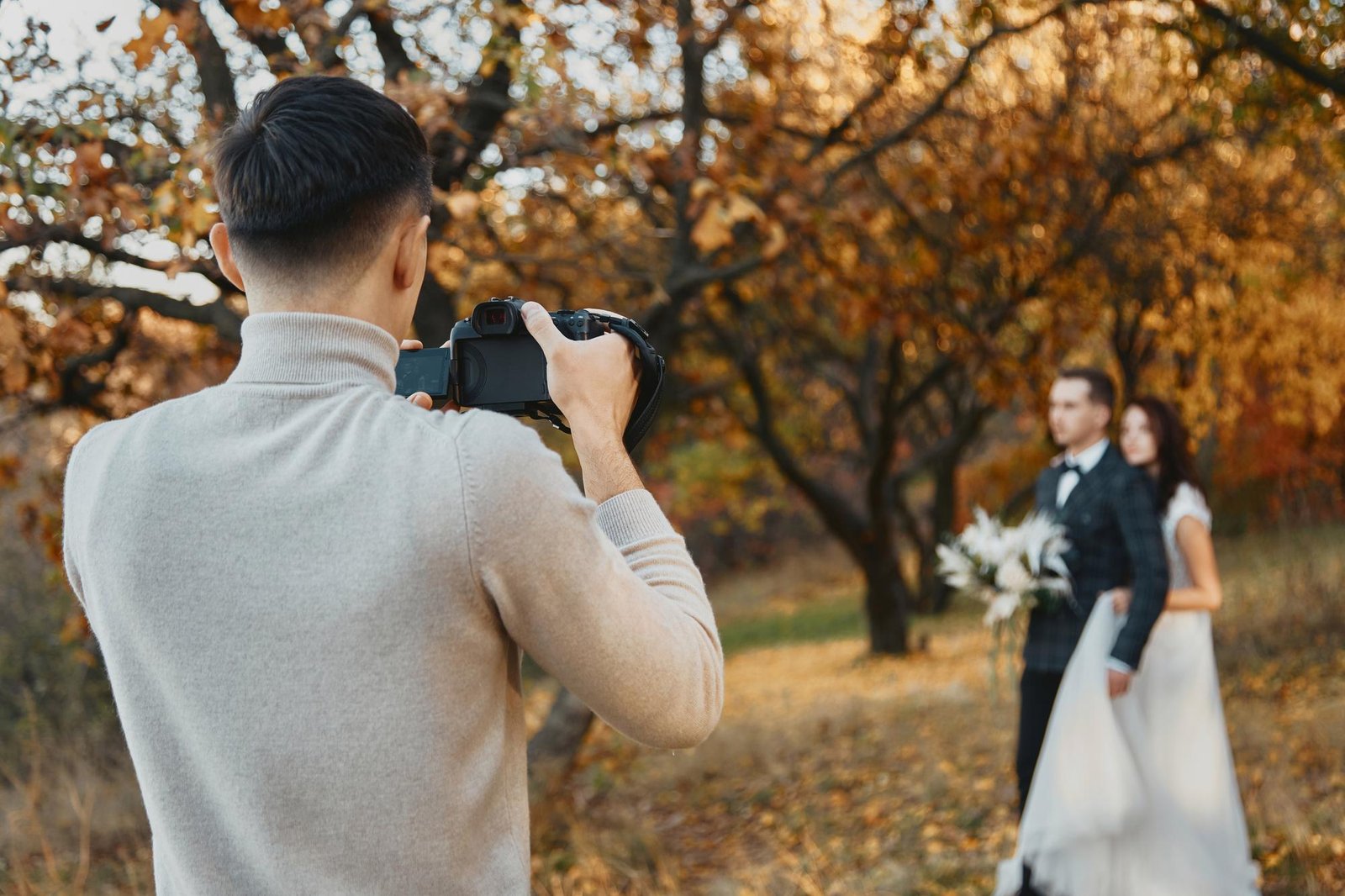
Wedding videography is the one vendor line that keeps your vows, toasts and voices as moving sound, and the way to buy it well is to decide which films and raw files you want, how the audio will be captured, who owns the footage, and when it arrives, before you compare a single price.
A videographer quote usually arrives as a few lines: eight hours, one highlight film, maybe a “ceremony edit,” and a price that sits somewhere near the cost of a good photographer. What the quote does not tell you is whether anyone will clip a microphone to your officiant, whether the drone footage in the sample reel will be allowed at your venue, how many months the edit takes, or whether you can post the film without the platform muting the music. Those details decide whether you end up with a four-minute film you replay on anniversaries or a folder of silent clips you cannot share. They also explain why two quotes that look alike on the surface can differ by thousands of dollars.
This guide focuses on the video product itself instead of the whole photography and video budget. It starts with what a package can contain and whether you need one, then covers cost layers, how video coverage fits your timeline, audio, drone rules, music licensing and usage rights, delivery and backups, and the contract questions to settle before you pay a deposit. Second-shooter pricing and the overlap between photo and video teams are covered in our guide to second photographers and videographers, so we point there instead of repeating it. The price figures below come from The Knot and Zola surveys and are national averages, not quotes for your city, and the durations and delivery windows are editorial planning ranges, labeled as such, because videographers publish very different package definitions.

What Does Wedding Videography Include, and What Will You Actually Receive?
The word “videography” covers a range of products, and the same phrase can mean a three-minute social-ready film at one company and a 25-minute documentary at another. Before price enters the picture, it helps to know the vocabulary so you can compare packages item by item. This section separates the deliverables, then explains how a videographer’s style predicts what your film will feel like.
Which films and files can a wedding video package contain?
What is a highlight film, and how long should it run?
A highlight film is the short edit set to music that most couples picture when they say “wedding video.” It pulls the vows, a few lines of toasts, the first dance, and the details and reactions around them into a single story, often with a voiceover from the audio recorded that day. Vendors define its length differently, and published package pages commonly describe highlight films in the range of roughly three to eight minutes, which is an editorial summary rather than an industry standard. Ask for the length in minutes, because “short film” and “cinematic trailer” are marketing labels that can mean anything from two minutes to twelve. If you want to share the film on social media, a shorter cut also tends to hold viewers longer, and many videographers will make a vertical or teaser version if you ask.
What is the difference between a ceremony edit, a full-length film and raw footage?
A ceremony edit is the ceremony from the processional to the recessional, cut with two or more camera angles and clean audio, and it is usually the piece relatives watch when they could not attend. A full-length or feature film runs longer than a highlight and may include the speeches, the full first dance and parts of the reception, and videographers often describe these in the range of 15 to 30 minutes, again as a planning range rather than a rule. Raw footage is the unedited material straight from the cameras, and it is the item most likely to be excluded or sold as an add-on, because it exposes unfinished work and takes storage and handling. The practical difference is time: an edit tells a story you will rewatch, while raw footage is an archive that few couples sit through. Decide which you want, because the contract has to name each item as a separate line.
What are same-day edits, teasers and social clips?
A same-day edit is a short film produced during the wedding and shown at the reception, which requires an editor working while the day continues, so it often means an extra team member or hours and shows up as an add-on. A teaser is a 30- to 90-second preview delivered in days or weeks, well before the full film, which is a useful compromise if the main edit takes months. Social clips are vertical cuts sized for Instagram or TikTok, and Zola’s 2026 report notes that a share of couples plan to create their own social-first content, which makes this a growing conversation with videographers. Treat each of these as a separate deliverable with its own length, delivery date and music terms. If a package says “includes social content,” ask how many clips, what length and whether the audio is licensed for posting.
How do a videographer’s style and sample reels predict your film?
What is the difference between documentary and cinematic styles?
A documentary approach tends to record the day as it unfolds with minimal direction, keeps more full-length ceremony and speeches, and uses natural sound to carry the film. A cinematic approach leans on slow motion, stabilized gimbal movement, shallow depth of field and music-led editing, and it can ask for staged moments such as a few minutes of couple portraits. Many videographers blend both, and the labels are marketing terms with no formal definitions. The difference matters to you because the style sets how often the videographer will ask you to pause, repeat or relocate, and how much of the day they stay out of your way. Watch for the style that fits how you want to feel on the day, since the most visible footage in a film is rarely the footage you thought about while planning.
How should you read a sample reel?
A reel is a highlight of highlights, so it shows what the videographer wants you to see, which is why a full film matters more. Ask for one complete highlight film and one full ceremony from recent weddings, ideally in a venue or light similar to yours, such as a dim church or a bright outdoor ceremony at midday. Listen as closely as you watch: if you cannot hear vows or a toast clearly in the samples, that is a preview of your own audio. Check whether the music in the sample is a popular song, which can signal that the film is private-only, and look at how many angles appear in the ceremony. Finally, ask which person shot and edited each sample, since a studio’s website can mix work from several team members.
Do You Need a Videographer, or Is a Strong Photo Gallery Enough?
Not every couple needs video, and choosing none is a defensible decision when the budget is tight or neither of you rewatches things. Still, many couples find that the one thing a still photograph cannot hold is sound and motion, and they regret it after the day is over. This section helps you decide with a few concrete tests instead of a general feeling.
When does video earn its place in your budget?
Which moments does video capture that photos cannot?
Photos freeze the face when someone says “I do,” while video keeps the pause before it, the shaky laugh, and the whole of a toast you may remember only in pieces. Voices matter more than most people expect: the cadence of a grandparent’s blessing, a parent’s cracked voice during a speech, a friend’s story that gets the whole room laughing. If your wedding includes written vows, a long processional, a cultural ritual with music, or a dance that is the center of the evening, motion adds information a photograph cannot. The test is simple: list the three moments you would most hate to lose, and count how many of them involve sound or movement.
Is video worth it when relatives may not be there later?
Many couples find video matters most for the people who age or travel: grandparents who may not be around in ten years, relatives who live abroad, a child who will not remember the day. A ceremony edit with clean audio also lets guests who could not come watch the vows, which a livestream or a recorded edit can serve. This is an emotional judgment and not a statistic, so there is no right answer, but it is a sharper question than “Do we need video?” Ask yourselves who you would want to hear from again, and whether a single video recording of them would be worth part of a photography budget.
How do you choose between photo only, video only, and both?
Should one company or two separate vendors cover photo and video?
A single studio that sells both often coordinates the two teams, shares one timeline and one contract, and sometimes discounts the bundle, though the quality of each half may not match. Two separate vendors let you choose the style you prefer on each side, at the price of more coordination and two contracts, two deposits and two sets of insurance paperwork. The decisive factor is how the teams share space: photographers and videographers can block each other’s frames in a ceremony, so ask each vendor how they work around the other. Our wedding photographer questions guide includes how to ask about coordination with a videographer.
Can a friend, a livestream or guest footage replace a videographer?
A friend with a camera can capture the ceremony from one angle, but audio is almost always poor, the friend misses the wedding as a guest, and a stable file with a backup is unlikely. A livestream through a platform like Facebook or YouTube lets remote relatives watch live, and a recording may remain afterward, but it will not be a produced film. Guest phone clips and a shared album are valuable extras when you invite them, and they help capture reactions a professional would miss. Treat these as supplements instead of replacements if the vows and speeches matter to you, and set an unplugged ceremony expectation if you do not want screens blocking the aisle.
What Does Wedding Videography Cost, and Why Do Quotes Vary So Much?
Pricing in this category is complicated, and the confusion is rarely about vendors being evasive: a “package” bundles hours, people, deliverables and rights in different proportions at every studio. The national averages are useful for a sanity check, but they say little about the quote on your screen. This section gives the figures that exist, shows what pushes a quote up or down, and lays out a way to compare two offers on equal terms.
What do couples pay for wedding videography on average?
What does The Knot’s average of $2,300 actually tell you?
The Knot’s 2026 Real Weddings Study, which surveyed 10,474 U.S. couples married in 2025, reports an average videographer spend of $2,300, set beside $3,000 for a photographer. An average like this presumably reflects only the couples who hired a videographer, and The Knot does not publish a breakdown by package type or coverage hours. That means the figure can describe a four-hour ceremony-and-toasts package and a twelve-hour feature film in the same number. Use it as a midpoint for sanity checking, since a quote far above or below it can be reasonable once you know the hours, team and deliverables. Our wedding photography cost guide covers the photographer side of the comparison.
Why does Zola’s index show a higher number?
Zola’s Wedding Cost Index lists videography at about $3,993, which is roughly $1,700 above The Knot’s figure, and the gap is an example of why national averages should be read with their sources. The two organizations survey different couples, count different services and may treat packages, add-ons and tips differently, and we could not confirm from the summaries available how either figure is built. A third explanation is timing: indexes can reflect different years and different mixes of markets. Rather than picking one number, treat the span from about $2,300 to about $4,000 as the zone where many couples land, and ask what your quote includes that the lower number probably does not.
What changes the price of a wedding video quote?
How do coverage hours and the number of operators affect price?
Hours and people are the two largest drivers, because a videographer sells time and skill. A package that starts at the ceremony and ends after the first dance may run four to six hours, while a day that includes getting ready and runs through the reception can reach ten or more, and the difference in editing time follows. A second operator doubles the labor on the day and adds a second set of footage to sort, so many studios price a two-person team as a distinct tier. Our second photographer and videographer cost guide gives the add-on ranges we found for a second shooter, so compare any extra-camera line against them.
How do deliverables and editing time change the quote?
Editing is often the largest block of labor, and a quote that promises a ceremony edit, a highlight film and a full-length reception edit includes many hours behind the screen. Each additional film multiplies sorting, color, audio cleanup and revision time, and each separate deliverable should appear as its own line. A teaser, a vertical social cut or a same-day edit are add-ons that cost more because they pull editing forward in the schedule. When you compare quotes, count the finished minutes you receive, not the number of films, since a studio may deliver three short films and another may deliver one longer one.
Which extras raise the total: drone, audio, raw footage, travel?
Several add-ons commonly appear on videography quotes: a drone pilot, extra microphones or a lighting setup, raw footage on a drive, rush delivery, and travel and lodging beyond a stated radius. The price of each varies by vendor and market, and we did not find reliable national figures for them, so we leave them as questions in the table below instead of inventing numbers. A drone line may need extra insurance and the pilot’s FAA certificate, which you can confirm, and raw footage may be priced as a flat fee or bundled at a higher tier. Ask each vendor whether the line is included, optional or unavailable, and get the answer in the contract.
How do you compare two videography quotes apples-to-apples?
What does a true-cost layer table look like?
The table below uses The Knot’s average as a starting number and shows the layers that move a final bill. It is an illustrative structure with placeholders, not a quote, and the amounts you will see depend on your vendor and market. Fill in each row for every quote you receive, and leave a row blank if the vendor cannot answer it, since an unanswered row is information.
| Layer | What to ask | Illustrative figure |
|---|---|---|
| Sticker price | Hours, operators, films, minutes of finished video | $2,300 (The Knot average) |
| Required extras | Travel, second operator, audio kit, insurance certificate | $300 to $900 for a second operator (our guide); others vary |
| Realistic extras | Raw footage, drone, teaser, same-day edit, rush delivery | Ask for each line; no national data |
| Taxes and fees | Whether tax or a processing fee applies to services | Varies by state and vendor |
| Failure cost | What you recover if the vendor cancels or footage is lost | Ask for the refund and replacement terms |
How do you turn a package price into a price per hour or per finished minute?
Dividing the price by hours of coverage gives you a rough hourly number you can use for overtime planning. As arithmetic, not a vendor rate, a $2,300 package that covers eight hours implies about $288 an hour, and a $4,000 package over the same eight hours implies about $500 an hour. The finished-minute view is useful too: if one quote delivers a 5-minute highlight and a 20-minute ceremony and another delivers a 12-minute highlight only, the cost per finished minute tells you where the editing effort goes. Do not treat either calculation as a negotiating tool, since a vendor’s price covers editing, equipment, insurance and business costs beyond the hours on site.
How Should Video Coverage Fit Your Wedding Timeline?
A videographer needs a schedule that gives them time and positions, and a day plan that treats video as an afterthought often loses the moments that matter. Coverage hours, the order of events and the light all change what ends up in the edit. This section shows how to plan hours, rank the shots and handle the real-world delays.
Which hours of the day should video cover?
What is the minimum block for a useful film?
For most couples, the core block runs from the ceremony through the toasts and first dance, because those moments carry the audio and the story. A ceremony-through-first-dance block gives the videographer the processional, vows, kiss and recessional, plus the speeches and a dance, which can be enough for a highlight film and a ceremony edit. Add the cocktail hour if you want detail shots and candid interactions, and add getting ready if you want the quiet beginning of the day. Coverage hours are the largest lever on price, so choose the minimum block that holds your top three moments and add time only where it earns its place.
How should video hours line up with your photographer’s hours?
If the two vendors arrive and leave at different times, one of them may miss a moment the other captures, and the edit can end up with a gap. Share the same timeline with both and ask them to talk before the wedding about who stands where during the ceremony, the first look and the toasts. Our wedding photography timeline guide shows how to build a schedule around photography blocks, and the same blocks work for video. For a first look, our first look photos guide explains how to decide who is present and whether the videographer wears a microphone.
What are the shot priorities for wedding video?
Which moments need sound, and which can be silent?
The sound moments are the vows, the ring exchange, the officiant’s words, the toasts and any speech or reading, and the video is only as good as the audio on those. Silent moments such as the processional, the kiss, dancing and the details of the room can be covered with music in the edit. That split helps you decide where to place microphones and what to protect from background noise. When you plan the ceremony, ask the officiant and readers to speak from a spot where a microphone can capture them, and avoid moving the lectern at the last minute.
What is a sensible priority list for a first conversation with your videographer?
Start with the moments you would most hate to lose, then rank them in three tiers: essential footage, strong supporting footage and optional extras. The first tier usually holds vows, ring exchange, kiss, toasts and the first dance, the second includes the processional, parent reactions, the room before guests arrive and cocktail hour details, and the third includes getting ready, interviews, a send-off and guest messages. Bring the list to the videographer and ask which tier their package covers, since tier three is often what separates a four-hour package from a ten-hour one. A written list also protects you from a misunderstanding after the day.
| Tier | Typical moments | Why it ranks here |
|---|---|---|
| Tier 1: protect | Vows, rings, kiss, toasts, first dance | Sound and emotion that cannot be repeated |
| Tier 2: strong | Processional, reactions, room and details, cocktail hour | Context and texture for the edit |
| Tier 3: optional | Getting ready, interviews, guest messages, send-off | Extra hours or people; nice to have |
How do light, sunset and delays change coverage?
Why does an early sunset matter for video?
Video relies on light as much as photography does, and in November the sun sets early enough that an afternoon ceremony can slide into dusk by the toasts. A videographer can use lights indoors, but a dark outdoor ceremony produces noisy footage, so the time of the ceremony affects image quality. Our November wedding timeline guide shows how to plan the day around earlier sunsets, and the same logic applies to any cold-season wedding. Ask the videographer how they handle low light, and look at their sample footage from a dim venue.
What happens when the ceremony starts late or the schedule slips?
A late ceremony is common, and it can eat into the coverage window if the clock started at the contract time. Ask the videographer whether the end time is fixed or tied to an event, such as the first dance, and how long they can stay without an overtime fee. Our wedding day timeline failure points guide lists the places where a schedule tends to break, and it helps you add buffers around the ceremony and toasts. If a delay seems likely, decide in advance whether to shorten something or pay for an extra half hour.

How Will Your Vows and Toasts Actually Be Recorded? Audio Plans That Protect the Film
A wedding film can survive an ordinary camera angle, but it rarely survives vows nobody can hear. Audio is also the part couples forget to ask about, because the sample reel plays under music and hides the problem. This section explains the equipment in plain language, what usually goes wrong, and the questions that tell you whether a videographer treats sound as seriously as picture.
What audio setup protects your vows and speeches?
What is a lavalier microphone, and who should wear one?
A lavalier, often called a lav, is a small clip-on microphone attached to a transmitter the size of a deck of cards, and it records a voice from a few inches away instead of across a room. The usual placements are on the officiant, who speaks the longest and sets the pace, and on one or both partners, so the vows come through clearly. The transmitter has to go somewhere, such as a jacket pocket, a waistband or a small pouch, and some outfits make that difficult, so raise it early instead of at a fitting the morning of. If you prefer not to wear a mic, ask whether the videographer can place a recorder on the lectern or the arch as an alternative.
What is a backup audio recorder, and why does it matter?
A backup recorder is a separate small device that records the same speech in a different place, so a dead battery or a radio-signal dropout does not erase the vows. Many videographers place one on the officiant, a lectern or the arch, and use a lav as the primary source, and then sync both to the video in editing. The cost to the vendor is small, while the cost of lost audio to you is large, which makes it one of the most useful questions you can ask. Phrase it plainly: “If the wireless mic fails during the vows, what is your second source?”
Can the DJ’s system or the venue’s microphone feed the video?
At receptions, the cleanest audio for toasts often comes from the microphone the speaker is already holding, and many sound systems can send a direct line to the videographer’s recorder. That feed avoids the echo and crowd noise a camera microphone would pick up. It requires the DJ or venue sound technician to agree, to have an output available and to be told in advance, so make it a short three-way conversation instead of a day-of surprise. If the venue uses a house system, ask who runs it and whether the videographer can connect during the sound check.
What can go wrong with audio, and how do you reduce the risk?
How do wind, echo and outdoor locations affect sound?
Wind is the enemy of outdoor audio, and even a gentle breeze can produce a rumble across a microphone unless it wears a fuzzy cover, which is a standard accessory and an easy question to ask. Hard-surfaced rooms such as stone churches or warehouse venues add echo, and a mic close to the speaker handles that better than a distant one. Open fields, beaches and rooftops all call for a wind plan and, ideally, a ceremony spot sheltered from traffic and music from another event. When you tour the venue, stand where you would say your vows and listen for what a recording would pick up.
How do clothing, hair and mic placement interact?
A lavalier clipped to a lapel or a collar usually works, but fabric that rustles against it, long hair that brushes it and a dress without a place to hide a transmitter can all create trouble. Tell the videographer what each person will wear and ask where they would place the equipment, because a solution that takes five minutes in the morning can take twenty when you are in the middle of hair and makeup. If you wear a sleeveless dress or a fitted outfit, a small belt pouch, a garter pocket or a recorder held by a trusted friend can be the answer. Ask for a test the morning of the wedding, with the recording played back, rather than assuming it works.
What do officiants, houses of worship and venues allow?
Some officiants are comfortable with a clip-on microphone, and others have their own system and a rule about outside gear, and houses of worship may restrict where cameras can stand or whether flash and lights are allowed. This is an area where policies vary by institution, so you cannot assume what yours allows. Ask the officiant and the venue coordinator early, and ask for the policy in writing so you can pass it to the videographer. If the officiant objects to a mic, a lectern recorder and a camera with a short shotgun microphone are common alternatives that you can discuss with your videographer.
Are Drones Allowed at Your Wedding, and Who Can Legally Fly One?
Drone footage looks dramatic in a sample reel, which is why couples ask for it, and the rules around it are less simple than the add-on line suggests. Federal aviation rules, venue policies and common sense all apply. This section explains what we could verify, what you should confirm with the pilot and the venue, and what to do when the answer is no.
What does federal law require for a paid drone flight at a wedding?
Who needs an FAA Remote Pilot Certificate?
The FAA’s commercial drone operator page says that flying a drone for commercial purposes generally requires a Remote Pilot Certificate under Part 107 of the federal aviation regulations, and a pilot who is paid to film your wedding is flying commercially. The certificate is obtained by passing an FAA knowledge test, so a vendor who holds one has met a baseline standard. Ask any videographer who offers aerial footage for a copy of the certificate and confirm whether the pilot is the videographer or a subcontractor. This is general education and not legal advice, and the FAA’s requirements can change, so check the agency’s site before relying on this summary.
What other FAA rules can affect the flight?
Beyond the certificate, the FAA has rules on aircraft registration, on identifying the aircraft electronically through Remote ID, on altitude and visual line of sight, and on flying over people who are not part of the operation, and the details have changed in recent years. Flights near airports can fall in controlled airspace, where authorization from the FAA may be needed before takeoff. We did not retrieve each of these rules for this guide, so treat the list as questions for the pilot instead of conclusions. A professional drone operator should be able to explain how each applies to your venue in a few sentences.
What should you ask a drone pilot to show you?
Ask for the Remote Pilot Certificate, the aircraft registration, proof of liability insurance and a recent sample flight at a similar venue. Ask which airspace your venue sits in, whether the flight needs FAA authorization and where the pilot will take off and land. Ask how the pilot keeps the aircraft away from guests, what the wind and weather limits are and what happens if the flight is canceled. Put the answers into the contract, so the drone line is a service with named conditions rather than a hopeful extra.
What do venues, parks and neighbors add on top of federal rules?
How do venue policies treat drones?
Many venues restrict drones in their rules or contracts, and some prohibit them entirely, because of guest safety, noise, neighboring properties and insurance. Rocky Mountain National Park’s wedding page, for example, lists drones among the things that are prohibited at ceremonies in the park, which shows how a public land manager can say no even when a pilot is certified. Ask your venue directly whether drones are allowed, who approves them and whether the venue requires proof of insurance. Get the answer in writing, because a verbal yes from a staff member who later leaves is hard to prove.
What about public land, parks and city rules?
Public land and parks add a second layer: a national or state park may prohibit launching drones within its boundaries, and cities and counties may have their own ordinances or event-permit conditions. If your ceremony is at a beach, a trailhead or a lakeshore, check the land manager’s permit page before you book the drone line. A pilot who regularly shoots in your area will often know the local rules, and a pilot who does not is a signal to ask more questions. If the answer is no, a photographer’s long lens and a videographer’s elevated tripod or gimbal can produce a similar wide shot from the ground.
What are the practical limits of drone footage at a wedding?
A drone adds the most to an outdoor setting with a view, such as a vineyard, a beach or a mountain lodge, and almost nothing to a ballroom ceremony. Flights are short, battery limited and weather dependent, and they take time from the day, so the pilot will want a window such as before guests arrive or during cocktail hour. Noise is a real constraint, since the aircraft is audible, and most pilots avoid flying during the ceremony or toasts. Ask for a realistic plan with a suggested time for the flight and a backup if the wind is too strong, and decide whether the extra cost is worth a few seconds of film.
Who Owns Your Wedding Video, and What Music Can It Use?
This is the part of the contract most couples skim and later wish they had read. It controls whether you can share the film, whether a platform will remove it, whether you can hire someone else to re-cut it and whether the vendor can use your footage in ads. The summary below is general education about U.S. copyright, not legal advice, and terms and state laws vary.
Who owns the footage, and what are you licensed to do with it?
What does U.S. copyright law say about who owns a wedding video?
The U.S. Copyright Office explains that copyright generally belongs initially to the person who creates the work, and a transfer of ownership, outside limited exceptions, must be in a signed writing, as the statute puts it. In plain terms, a videographer who is an independent contractor usually keeps the copyright to the film, and the couple receives permission to use it. There is a “work made for hire” route in which a commissioned work can belong to the person who hired the creator, but it applies only to nine statutory categories and only when both parties sign a written agreement. Audiovisual work is one of those categories, unlike photographs, though wedding contracts rarely use that route, so read the clause instead of assuming.
What license terms should you look for?
A license should say what you may do and for how long: personal and family viewing, sharing with guests, posting on social media, and whether it is perpetual and non-revocable. Look for whether you can download the files, whether you can make copies, whether a relative may share them and whether commercial use is excluded. If the contract says nothing about posting, ask in writing and have the vendor add a sentence. Our photographer portfolio and contract guide explains how vendors use portfolio rights and what to ask, and the same questions apply to a videographer.
Can the videographer use your footage for marketing?
Most contracts include a clause that lets the vendor use clips in a portfolio, on a website and on social media, sometimes with your name. You can ask to limit it, such as no use of the vows, no minors, or no posting before the wedding, and you can ask for a private-link film if you want it kept off public pages. If a guest is a public figure, a child or someone who wants privacy, tell the videographer so they can edit around them. The clause is ordinary and negotiable, so read it and ask for the limits you want.
What music can your wedding film use, and what happens when you post it?
Why can’t a popular song simply go under the video?
Putting a recording under a video is a separate right from performing it in a room. One licensing vendor’s wedding-video guide explains that a popular song generally needs a sync license for the composition and a master license for the recording, and these are often held by different parties. That page is marketing and its price estimates for chart songs are unverified, so we use it only as a sign that famous songs are not priced for wedding films. The U.S. Copyright Office’s basics circular separates musical works from sound recordings, which helps explain why two rights holders can be involved.
What happens when you post the film on Instagram, TikTok or YouTube?
Platforms scan uploads for copyrighted music and may mute the audio, block the video or direct revenue to the rights holder, and even a private or unlisted post can be scanned, according to a licensing vendor’s guide that is itself marketing. This means a film that plays well on your television can fail when you try to share it. Ask the videographer for a version with licensed music if you want to post, and test with a short private upload before the film goes to relatives. If your film contains the song from your first dance in the room, ask how the videographer handles it.
How do live music, a DJ and livestreams fit in?
The music you hear in the room is a separate question from the music in the edit, since a performance license held by a venue or a DJ is not the same as permission to record it in a film. The ASCAP licensing page says that a performance streamed through a licensed platform such as YouTube or Facebook does not need an additional ASCAP license for that streaming activity, while streaming through your own platform requires a separate license. Sources differ on how these rules apply to private weddings, so treat the table below as a list of questions rather than answers.
| Situation in your film | Who usually clears it | Question to ask |
|---|---|---|
| Library track chosen by the videographer | Videographer’s license | “Which service, and does it cover my posted copy?” |
| Popular song you request | Needs sync and master permission | “Will you use it in a private-only film?” |
| Music playing in the room during footage | Sources differ; venue and DJ cover performance | “How do you handle recorded music in the edit?” |
| Livestream on YouTube or Facebook | Platform license applies (per ASCAP) | “Is the stream public, and is it recorded?” |
| Posting the film afterward | Platform scanning decides | “Can you give me a platform-safe version?” |
How Long Does Delivery Take, and How Is Your Footage Protected?
Editing a wedding film takes far longer than shooting it, and the gap between the wedding and the finished film is where couples become anxious. A clear delivery schedule and a clear backup plan turn that wait into a known process. This section explains what happens behind the scenes, which dates to write into the contract and how to protect the files before and after they reach you.
What happens between the wedding and the finished film?
Why does editing a wedding film take weeks or months?
A full wedding day can produce many hours of footage from multiple cameras and audio recorders, and an editor has to sync the angles, clean the audio, choose the moments, grade the color, select music and build the story. Busy seasons create backlogs, since the same editor may be working through several weddings from the same weekend, and revisions add rounds. This is an editorial explanation of how the work flows, and it is why a delivery window is more honest than a promise of instant results. Photography galleries move faster by comparison: one regional magazine’s question guide cites six to eight weeks as a standard for a full photo gallery, so expect video to take longer.
Which delivery milestones belong in the contract?
A strong contract names each deliverable with its own date or window, instead of a single line that says the film will be delivered “within a reasonable time.” The table below shows the milestones to ask about and our editorial planning assumptions, which are not industry standards and which you should replace with your vendor’s numbers. If a vendor gives a range, ask what causes the long end of it and whether the contract provides a remedy, such as a discount, if the date passes.
| Milestone | What to confirm | Planning assumption (editorial) |
|---|---|---|
| Sneak peek or teaser | Length, format, whether it is shareable | Days to a few weeks |
| Highlight film | Length in minutes, music, revision count | Several weeks to a few months |
| Ceremony and speeches edit | Angles, audio source, full or trimmed | Often later than the highlight |
| Raw footage | Included or add-on, drive or download, license | Varies; ask for a date |
| Final files and hosting | Format, resolution, how long links stay live | At delivery |
What delivery format, resolution and hosting should you expect?
Ask for the film in a file you can keep, not only a streaming link, and ask about the resolution, since a family member with a large television may want more than a social-media file. Many studios deliver through a download link that stays active for a limited time, and some also provide a USB drive or an online gallery. Ask how long the link remains live, whether the studio keeps an archive of your footage and for how long, and what it costs to retrieve files later. The answers matter for years from now, when a vendor may have closed or moved.
How is your footage protected before and after delivery?
What equipment backups should a videographer carry?
Equipment backup means a second camera body, spare batteries and cards, and a second audio source, because any one of them can fail on the day. Cameras with two memory card slots can record the same footage to both cards at once, so a corrupted card does not end the project. The Professional Photographers of America acknowledges in a member article that even experienced photographers can have a memory card fail, and the same risk applies to video. Ask directly: “If a camera or card fails during the ceremony, what is your backup?”
What file backups protect the footage after the wedding?
After the wedding, the footage should exist in at least two places before the editor begins, often a pair of drives and a cloud or off-site copy. Ask the videographer how soon the files are copied and how long they are stored after delivery. Some studios keep the project for a limited time, such as a year, and then delete it, so you should keep your own copies. This is an area where practices vary, so use your vendor’s description as the baseline and ask for it in the contract.
What if the lead videographer is sick or has an emergency?
A substitution clause says what happens if the person you booked cannot work, and it should name a process: a replacement from the same studio, a notice period and a refund if no one can be provided. Ask whether the studio has other trained shooters and how often they cover each other’s events. A solo operator may have a network of colleagues, and a larger studio may have employees, and either answer is acceptable if the contract describes it. If the answer is “that has never happened,” ask again for the written process, since the question is about the contract, not about the history.
Which Contract Questions Matter Most Before You Pay a Deposit?
A videography contract is the place where your quote, your priorities and the vendor’s policies become enforceable. It deserves the same careful read as the venue contract, and it should repeat every promise made in the sales conversation. This section walks through the clauses that matter most, and it is general education, not legal advice. Terms and state laws vary.
Which clauses protect you before you pay?
Does the scope section list hours, operators and deliverables in specific terms?
The scope should state the dates, start and end times, the number of operators, the locations covered and each deliverable with a length in minutes. A line such as “cinematic wedding film” is a marketing phrase, and it leaves the length, the content and the audio to the vendor’s judgment. Ask for the scope in plain language and check it against the quote, because a mismatch between the two is the first sign of trouble. Our wedding vendor contract guide gives a general read-through that applies to any vendor.
What do the payment, cancellation and rescheduling clauses say?
Look at the deposit amount and whether it is refundable, the due dates for the remaining balance, the cancellation schedule and what happens if you move the date. Ask whether the studio will transfer your booking to a new date if it is available, and whether the deposit carries over. These terms vary by vendor and by state, so read yours carefully and ask for plain-language explanations of anything you do not follow. If you are considering a payment method, ask about card fees and the vendor’s policy on disputes.
What do the substitution, illness and liability clauses say?
Check that the contract names the process if the videographer cannot work, including a notice period and a refund, and that it covers equipment failure and file loss. Many venues require vendors to carry liability insurance and may ask for a certificate of insurance, so ask the vendor whether they have one. Our vendor contract red flags guide covers clauses that deserve a second look, such as one-sided cancellation terms and broad liability waivers. If a clause limits the vendor’s liability to the fee you paid, understand that it caps your remedy.
How do you read the contract for red flags?
What question checklist should you run through for every quote?
Use the table below with each videographer you consider, and mark each answer green, yellow or red. A yellow answer is one the vendor can fix by adding a sentence, while a red one is a gap in service or a term you cannot accept. Share the filled-in table with your partner so you both see the same picture before you pay a deposit.
| Contract area | A strong answer sounds like | A red flag sounds like |
|---|---|---|
| Deliverables | “A 5 to 7 minute highlight and a full ceremony edit” | “A cinematic film of your day” |
| Audio | “Lav on the officiant and a partner, plus a backup recorder” | “We use the camera mic” |
| Delivery | “Highlight by a named date, with a credit if late” | “We deliver when it’s done” |
| Rights and music | “Personal license, posting allowed, licensed library music” | “Do not post online” or no mention of music |
| Backup | “Two cameras, dual cards, a named substitute” | “That has never happened to us” |
| Drone | “Certified pilot, insurance, venue approval in writing” | “We will figure out permission there” |
How do you make sure verbal promises become written terms?
Anything promised on a call, such as a second microphone, a teaser or a shorter delivery time, should appear in the contract or in a signed addendum, since a later staff change can erase a verbal agreement. Send a recap email after each call and ask the vendor to confirm. If the contract is a standard form, ask whether it can be edited, and note that many vendors will add a sentence or two. For anything involving large sums or unusual terms, consider asking a local attorney to review it, since this guide gives general education only.

FAQ: Wedding Videography Questions Couples Ask
Planning and cost questions
How much should we budget for wedding videography?
The Knot’s 2026 Real Weddings Study reports an average videographer spend of about $2,300 for couples married in 2025, while Zola’s cost index lists videography near $3,993, so a reasonable planning range runs from about $2,300 to about $4,000. Neither number describes your market, and neither tells you the hours, the operators or the deliverables, so ask each vendor to price against the same scope. The Knot’s budget guidance gives photography and video together about 10% of a typical budget. Treat these numbers as sanity checks and decide your own split after you rank your priorities.
Do we need both a photographer and a videographer?
No, and many couples choose one. Photographs give you prints, albums and shareable images, while video holds vows, voices, toasts and movement, so the better choice depends on which you will use more. If the budget allows only one, decide which three moments you would most hate to lose and note whether they involve sound. A shorter video block, such as the ceremony and toasts, can be a compromise, and a hybrid shooter can cover both for a smaller wedding, with the trade-offs of one shooter covering two jobs.
Can one person shoot both photos and video?
Some professionals offer both, and it can reduce cost and coordination, but one person cannot be in two places or hold two cameras at the same moment. During the ceremony, kiss and toasts, a single shooter must choose between stills and motion, and audio often suffers. Ask for sample photos and films from weddings where one person did both, and ask whether a second shooter is available for the ceremony. For a short, single-location wedding, it can be a reasonable choice.
Contract and rights questions
Can we post our wedding video on social media?
It depends on the license and on the music. Your contract should say whether you may post the film and in what form, and the film’s music should be licensed for posting, since platforms scan uploads and may mute or block a video that contains copyrighted songs. Ask the videographer for a platform-safe version and test a short private upload first. If the film uses a popular song you requested, ask whether it is for private viewing only.
Who owns our wedding video?
Under U.S. copyright law, the creator generally owns a work unless a signed writing transfers it, so the videographer usually keeps the copyright and you receive a license that spells out your uses. The U.S. Copyright Office notes a work-made-for-hire route for certain commissioned works, which requires a written agreement, and wedding contracts rarely use it. Read the license clause for what you may do with the film, including posting, copying and editing. This is general education, and terms and state laws vary.
Are drones allowed at our venue?
Not automatically. A paid drone pilot generally needs an FAA Remote Pilot Certificate under Part 107, and your venue, park or city may add its own restrictions or ban drones entirely, as Rocky Mountain National Park does for its wedding ceremonies. Ask the venue directly, get approval in writing and ask the pilot for the certificate, the registration and proof of insurance. If the answer is no, a gimbal or an elevated tripod can capture a wide shot from the ground.
Your Next Steps
The plan below keeps the work small and ordered. You can finish the first group in an evening and the second group before the first deposit leaves your account. Each step produces something you can attach to an email or a contract, which is the point.
This week
Write your top three moments and your deliverables list
Open a shared note and list the three moments you would most hate to lose, then mark which involve sound. Next to them, write the films you want, such as a highlight of a stated length, a ceremony edit and the speeches, and note whether you want raw footage. This single page becomes the brief you send to every videographer, and it makes quotes comparable. If your partner’s list differs from yours, resolve it now, since a disagreement at the contract stage is expensive.
Ask your venue and officiant four questions
Ask the venue whether drones are allowed and who approves them, where video operators may stand, whether the house sound system can feed a recorder and whether the venue requires a certificate of insurance from vendors. Ask your officiant whether a clip-on microphone is acceptable and where the cameras may stand. Put the answers in an email thread and forward it to your videographer and photographer.
Before you pay a deposit
Run each quote through the contract checklist
Take the table above and fill it in for each videographer, asking for sample full-length films and one complete ceremony. Mark every answer green, yellow or red and ask the vendor to add a sentence for each yellow. Compare the quotes on finished minutes, coverage hours, operators and delivery date instead of on the headline price, and use the true-cost layer table to find missing lines. Pay the deposit only when the contract matches the answers you were given.
Confirm the delivery date, backup plan and music terms in writing
Make sure the contract names the date or window for each deliverable, the backup for equipment, files and the lead shooter, and the license that covers your posted film. Ask for a sample of the drone pilot’s certificate and the venue’s written approval if you are adding aerial footage. Put the date of the wedding, the delivery date and the date your link expires on one calendar so you can act on them. After the wedding, download and back up the film within the first week.
For a closer look, read Wedding Family Photo List: Cost, Timeline, Shot Priorities, and Contract Questions.
Sources & methodology
- The Knot, average wedding vendor costs — 2026 Real Weddings Study of 10,474 couples married in 2025; photographer $3,000 and videographer $2,300 averages.
- The Knot 2026 Real Weddings Study data read-out — study scope and sample.
- The Knot, ideal wedding budget breakdown — the roughly 10% share for photography and videography.
- The Knot, 2026 wedding photography trends — professional forecasts, including drone work as a premium add-on requiring special skills and licensing.
- Zola, how much does a wedding cost — 2026 Wedding Cost Index, including the videography average of $3,993.
- Zola, The First Look Report 2026 — couple survey on video, social-first content and planning behavior.
- FAA, commercial drone operators — Part 107 Remote Pilot Certificate requirement for commercial drone flights.
- National Park Service, Rocky Mountain National Park weddings — example of a public land manager that prohibits drones at weddings.
- U.S. Copyright Office, Circular 30: Works Made for Hire — nine categories for commissioned works and the written-agreement requirement.
- U.S. Copyright Office, Title 17, Chapter 1 — definitions, including works made for hire and public performance.
- U.S. Copyright Office, Title 17, Chapter 2 — initial ownership and the signed-writing rule for transfers.
- U.S. Copyright Office, Circular 1 — musical works versus sound recordings.
- ASCAP, licensing help — public performance and streaming through licensed platforms.
- Artyfile, wedding video music licensing guide — sync and master rights and platform scanning risks; vendor marketing, used with caution.
- Professional Photographers of America, wedding photography resources — memory cards can fail; the role of professional insurance.
- Rocky Mountain Bride, 12 questions about wedding photography — six to eight weeks cited as a photo-gallery delivery standard.
Methodology: The vendor averages and percentages are survey findings from The Knot and Zola, and neither organization’s published pages explained how each figure was calculated; the $288 and $500 hourly figures are our own arithmetic. Statements about U.S. copyright and FAA rules summarize the agencies’ pages and are general education, not legal advice, and the audio practices, tiers, durations, delivery windows and checklists are editorial judgment and planning assumptions, not industry standards, because we found no national dataset on videography package contents, delivery times or add-on prices.
Freshness note: recheck The Knot and Zola averages when each publishes its next annual study, normally early in the year, and recheck the FAA’s Part 107, registration, Remote ID and operations-over-people rules, the ASCAP and Copyright Office pages and your venue’s drone and filming policies before you sign. Confirm delivery windows, music licensing and the license clause with each vendor at the time of booking.