
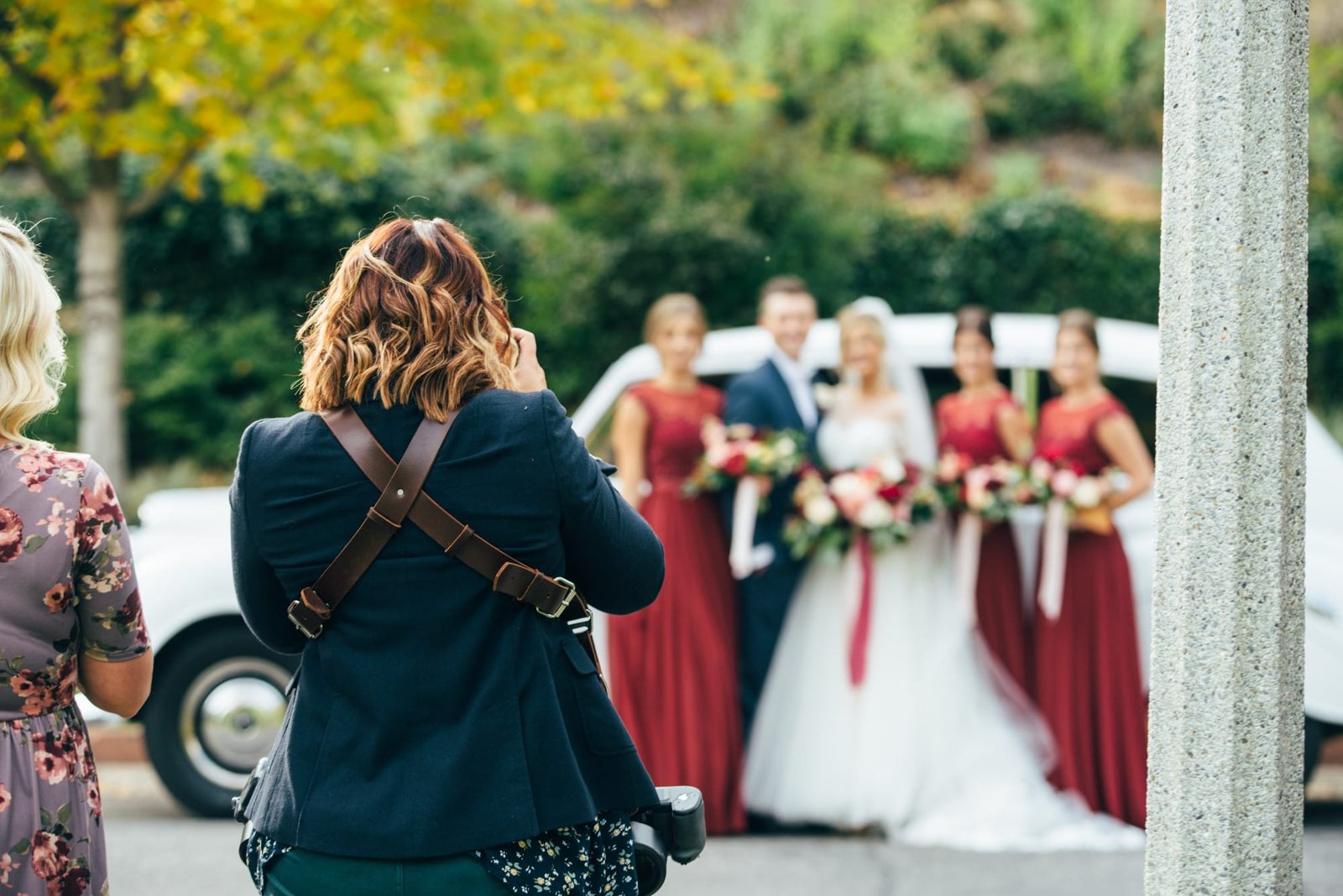
This exact scenario is why a wedding photographer portfolio contract needs to protect against more than a beautiful gallery. A couple falls in love with a photographer’s portfolio: golden-hour portraits, a beautifully lit reception, a first look that looks like a movie still. They book based on that gallery, sign the contract without reading past the price and date, and move on to the next vendor. Eight months later, the photographer who shows up is not the one from the consultation.
A studio’s standard substitution clause, buried in paragraph twelve, allowed a different, less experienced shooter to cover the wedding when the original photographer had a scheduling conflict. The portfolio was real. It just was not a guarantee of who would actually be there.
A well-drafted wedding photographer portfolio contract ensures that the couple understands what to expect on their special day.
Nothing about this scenario reflects a scam. A stunning gallery says almost nothing about coverage hours, backup equipment, file delivery timelines, image rights, or what happens if the photographer cancels, gets sick, or simply runs a chronically disorganized business behind a beautiful Instagram feed. The portfolio sells the vendor. The contract determines what you actually get.
The details in your wedding photographer portfolio contract can make all the difference when it comes to the quality of the photography received.
This guide walks through what to verify. How to check whether a portfolio reflects the specific person who will show up. Timeline and lighting planning that protects moments that cannot be repeated. Coverage and deliverables specifics, backup equipment and file redundancy, image rights and privacy terms, and weather or location contingency planning. It closes with the exact contract clauses worth reading twice before you sign.
When reviewing your wedding photographer portfolio contract, pay attention to the specifics of the coverage offered.
Wedding Photographer
Quick Answer: What a Wedding Photographer Portfolio Contract Actually Needs
Understanding your wedding photographer portfolio contract is key to a successful photography experience.
Four checks catch most of what actually goes wrong with wedding photography, and none of them require legal training.
Use this guide to ensure your wedding photographer portfolio contract covers all necessary aspects for peace of mind.
Start by confirming the portfolio reflects the specific photographer in your contract. Do not assume it reflects a broader studio team you may or may not actually get.
Confirm that all components of your wedding photographer portfolio contract are clear and well-understood.
Coverage hours, deliverable counts, and delivery timeline belong in writing. A vague “full day coverage” without real numbers attached protects nobody.
The wedding photographer portfolio contract should explicitly mention the photographer you are hiring.
Backup equipment and file redundancy are non-negotiable. A wedding cannot be reshot if a card fails or a camera breaks.
Make sure you go over your wedding photographer portfolio contract with your partner to ensure understanding.
Image rights and usage terms deserve explicit confirmation. Copyright defaults may surprise couples who assume they automatically own their own photos.
Each wedding photographer portfolio contract should detail the deliverables you can expect after the wedding.
The rest of this guide builds out each of these into something you can actually verify before signing, starting with the portfolio itself.
Ensure your wedding photographer portfolio contract addresses how image rights are handled.
What Nobody Mentions Until It Happens
A comprehensive wedding photographer portfolio contract will save you from misunderstandings later on.
These are not dramatic photography disasters. They are small, specific gaps between a beautiful portfolio and the actual contract terms behind it.
You want to be confident that your wedding photographer portfolio contract supports your expectations.
The portfolio built from a team, not one photographer
Read every section of your wedding photographer portfolio contract to avoid surprises.
Some studios market a single curated portfolio drawn from multiple photographers’ work. Couples booking based on that gallery sometimes discover their contract allows any studio photographer to be assigned, not the specific person whose style they fell in love with.
The importance of a wedding photographer portfolio contract cannot be overstated in planning your special day.
The substitution clause that permits a replacement shooter
A clear wedding photographer portfolio contract sets the foundation for your photography experience.
A contract’s standard substitution clause, allowing the studio to send a different photographer if the original is unavailable, is common industry practice. It is also easy to miss entirely if a couple never reads past the price and date.
Incorporating every detail into your wedding photographer portfolio contract will ensure clarity and confidence.
The “full day coverage” that was never actually defined in hours
Familiarize yourself with your wedding photographer portfolio contract before the big day.
A package advertised as full-day coverage sometimes means eight hours, sometimes ten, sometimes something the contract never specifies at all, leaving the couple to discover the actual cutoff time only once it arrives.
Understand the parameters of your wedding photographer portfolio contract to mitigate any issues.
The image rights assumption that turns out to be backward
Every couple should feel informed about their wedding photographer portfolio contract.
Many couples assume they automatically own full copyright to their wedding photos. Photographers, under standard copyright law, typically retain copyright by default, granting the couple a usage license instead, a distinction that matters considerably for printing, sharing, and future use.
Make sure to clarify any unclear points in your wedding photographer portfolio contract.
Portfolio Proof Check
A detailed discussion of the wedding photographer portfolio contract will lead to a smoother experience.
A portfolio is marketing. Verifying it reflects reality is your job, not the photographer’s.
Be proactive in addressing any concerns related to your wedding photographer portfolio contract.
Confirm who actually shot the images you love
Review your wedding photographer portfolio contract with your coordinator for additional insights.
At a multi-photographer studio, ask directly which specific photographer shot the images in the gallery you responded to. Confirm this same person is named explicitly in your contract.
Engage with your wedding photographer about their portfolio to ensure it aligns with your contract.
Ask to see full, unedited wedding galleries, not just highlights
Read through your wedding photographer portfolio contract multiple times for thorough understanding.
Curated highlight reels show only the best dozen images from an entire day. Request two or three complete galleries to see genuine consistency across hundreds of real, unfiltered moments.
Having a clear wedding photographer portfolio contract promotes a positive working relationship.
Confirm the portfolio includes difficult lighting conditions
Ensure your wedding photographer portfolio contract aligns with what you want for your big day.
Dim reception halls, harsh midday sun, and poorly lit ceremony spaces test a photographer’s real skill far more than a golden-hour portrait session. Ask specifically for examples in challenging light.
Having everything in your wedding photographer portfolio contract documented helps avoid confusion.
Watch for heavily recycled locations or setups
A solid wedding photographer portfolio contract gives you peace of mind about your photography.
A portfolio dominated by the same handful of venues can reflect genuine specialization, or it can reflect limited real-world adaptability. Ask how the photographer approaches an unfamiliar venue.
Stay informed about the terms of your wedding photographer portfolio contract to ensure satisfaction.
Timeline and Lighting Conditions
All key aspects should be clearly outlined in your wedding photographer portfolio contract.
Some moments cannot be reshot, and a good photography timeline protects exactly those moments.
Make your wedding photographer portfolio contract a priority when planning your wedding.
Build your timeline around actual light, not just the clock
A well-structured wedding photographer portfolio contract is essential for a successful outcome.
Confirm your photographer factors in sunset time, indoor lighting quality, and the specific light at your ceremony and portrait locations, not just a generic hour-by-hour schedule.
References from previous clients can help clarify the reliability tied to your wedding photographer portfolio contract.
Build in real travel buffers between locations
Understanding your wedding photographer portfolio contract is vital in ensuring your expectations are met.
A timeline assuming zero travel time between a getting-ready location and the ceremony creates real risk of missing the images you actually wanted. Confirm realistic buffers are built in.
Confirm your photographer’s experience matches the expectations outlined in the wedding photographer portfolio contract.
Identify your unrepeatable moments explicitly
Leverage your wedding photographer portfolio contract to establish clear deliverable expectations.
The first kiss, the ring exchange, and specific family combinations cannot be restaged later. Confirm your photographer has a clear plan for exactly these moments, discussed directly, not assumed.
Your wedding photographer portfolio contract should stipulate the agreed image rights clearly.

Coverage and Deliverables: The Core of Your Wedding Photographer Portfolio Contract
Discuss any clauses in the wedding photographer portfolio contract that may seem ambiguous.
This is where a beautiful portfolio meets the actual numbers you are paying for, worth spelling out precisely.
Your wedding photographer portfolio contract should reflect both parties’ expectations to avoid confusion.
Confirm exact coverage hours, not a vague package name
Address any discrepancies in your wedding photographer portfolio contract before signing.
“Full day coverage” needs a specific number of hours in your contract, with a clear start and end time. Neither party should fill in the assumption later.
Take the time to evaluate your wedding photographer portfolio contract and its implications.
Confirm whether a second shooter is included or optional
The details in your wedding photographer portfolio contract can prevent misunderstandings later.
A second shooter captures different angles and moments simultaneously, genuinely valuable for a larger wedding. Confirm whether this is included, optional at added cost, or unavailable entirely.
A detailed wedding photographer portfolio contract can clarify expectations and deliverables.
Confirm your actual deliverable count and format
Maintain open communication about your wedding photographer portfolio contract to ensure satisfaction.
Ask for a specific number or range of final edited images, and whether you receive high-resolution digital files. Confirm what video deliverables, if any, are included: highlight reel length, full ceremony footage, audio quality.
Reviewing your wedding photographer portfolio contract with family can provide additional insights.
Confirm your delivery timeline in writing
Take a collaborative approach to your wedding photographer portfolio contract for better results.
Final edited galleries commonly take four to twelve weeks depending on the photographer’s season and workload. Confirm your specific timeline, and what recourse exists if it is significantly missed.
Your wedding photographer portfolio contract should reflect your vision and expectations accurately.
Backup Equipment and Files
Be sure your wedding photographer portfolio contract captures all details to avoid misunderstandings.
Your wedding day cannot be reshot, making equipment and file redundancy one of the most important, least glamorous parts of this entire decision.
When comparing quotes, ensure that the wedding photographer portfolio contract meets your needs.
Confirm backup camera bodies and lenses exist on-site
Investing time in your wedding photographer portfolio contract review can yield significant benefits.
A professional photographer should carry backup equipment, not rely on a single camera for your entire day. Ask directly what backup equipment travels with them.
Ensuring clarity in your wedding photographer portfolio contract can lead to a smoother experience.
Confirm dual card slots or redundant recording during the event
Utilizing a comprehensive checklist while reviewing your wedding photographer portfolio contract can prove beneficial.
Many professional cameras write simultaneously to two memory cards, so a single card failure does not lose images. Confirm your photographer’s camera and workflow genuinely use this.
Your wedding photographer portfolio contract should be a document you fully understand and agree with.
Confirm file backup happens promptly after your wedding
Be diligent in reviewing your wedding photographer portfolio contract to ensure it aligns with your expectations.
Ask specifically how quickly files are backed up to a second location after your wedding, and how many total copies exist before final editing begins.
Ask questions about your wedding photographer portfolio contract to clarify any uncertainties.
Rights, Privacy, and Model Release
Your wedding photographer portfolio contract should clearly outline all terms and conditions.
Image ownership and usage rights surprise more couples than any other clause in a photography contract.
Ensure your wedding photographer portfolio contract includes all necessary details to prevent issues.
Understand who actually owns copyright by default
Confirm that your wedding photographer portfolio contract addresses all aspects of coverage clearly.
Under standard copyright law, the photographer typically owns copyright to the images they create. This grants the couple a usage license rather than transferring full ownership. Confirm your specific license terms directly.
Understanding every detail in your wedding photographer portfolio contract is fundamental for peace of mind.
Confirm your license actually covers what you want to do
Your wedding photographer portfolio contract should accurately reflect your expectations and requirements.
Personal-use licenses commonly allow printing and sharing but may restrict commercial use or large-scale reproduction. Confirm your specific license covers everything you actually plan to do with your images.
Ultimately, having a solid wedding photographer portfolio contract can make your day even more enjoyable.
Confirm the photographer’s own usage rights over your images
Reviewing your wedding photographer portfolio contract thoroughly can lead to a better experience overall.
Most contracts grant the photographer rights to use your images for their own portfolio and marketing. Confirm whether you can opt out, and how this works if privacy matters to you specifically.
Communicate openly about any points in your wedding photographer portfolio contract that require clarification.
Confirm any model release terms explicitly
Taking your time with the wedding photographer portfolio contract is crucial for ensuring satisfaction.
Model release clauses govern how your images may be used publicly. Read this specifically rather than assuming standard language automatically aligns with your comfort level.
By thoroughly reviewing your wedding photographer portfolio contract, you protect your investment in photography.
Weather and Location Contingency in Your Wedding Photographer Portfolio Contract
Ensuring that your wedding photographer portfolio contract includes all details will help in achieving your photography goals.
An outdoor ceremony or portrait session needs a real backup plan, not a hopeful assumption about clear skies.
Finally, ensure your wedding photographer portfolio contract supports your vision for the day.
Confirm your photographer has an actual rain plan
Ask specifically how your photographer adapts to rain: indoor alternatives, different lighting equipment, or a revised shot list. A vague “we’ll figure it out” is not a real plan.
Confirm venue restrictions on flash or additional lighting
Some ceremony venues restrict flash photography or specific equipment. Confirm your photographer knows and has planned around your specific venue’s actual rules.
Identify alternative portrait locations in advance
If your planned outdoor portrait location becomes unusable due to weather, confirm a specific backup location is identified in advance, not chosen in a rush on the day itself.
Green, Yellow, and Red Flags in a Wedding Photographer Portfolio Contract
Green flag: a contract explicitly naming your specific photographer, coverage hours, deliverable counts, and backup equipment practices in writing. Yellow flag: a substitution clause that exists but includes a clear notification and approval process if it is ever triggered. Red flag: a contract with a broad, unrestricted substitution clause and no specific photographer named anywhere.
Before You Sign
- Confirm the specific photographer named in your contract matches the portfolio.
- Confirm exact coverage hours, deliverable counts, and delivery timeline.
- Confirm backup equipment and file redundancy practices directly.
- Confirm image rights and usage license terms explicitly.
- Confirm a real weather and location contingency plan exists.
Questions That Feel Awkward but Are Worth Asking
- Can you confirm, in writing, that you personally will photograph our wedding?
- What happens if you become sick or unavailable close to our date?
- What is your actual backup equipment, specifically?
- How many total images will we receive, and by what date?
- What is your rain plan for our specific ceremony location?
What the Contract May Not Make Obvious
A few specific clauses deserve direct attention beyond the categories already covered in this guide.
Confirm overtime rates before you need them
A reception running longer than contracted hours commonly triggers an overtime rate, sometimes considerably higher than your base hourly rate. Confirm this specific number in advance.
Confirm cancellation and postponement terms specifically
Confirm what happens to your deposit and any paid balance if you need to cancel or postpone, and whether your photographer’s own cancellation rights are similarly clear and fair.
Confirm what happens if the photographer damages venue property
Ask whether your photographer carries liability insurance covering accidental damage to your venue, a detail some venues actually require as a condition of booking.
Worst-Case Scenario — and the Backup Plan
Picture this: two weeks before your wedding, your photographer emails to say they are ill and a substitute will cover your date instead, someone you have never met.
A workable response starts with your contract’s actual substitution language, reviewed now rather than for the first time in this moment. Ask directly to see the substitute’s portfolio and confirm their specific experience level. If your contract includes approval rights over any substitution, exercise them. If it does not, this is exactly the kind of gap this guide’s “before you sign” checklist exists to prevent for your next major vendor decision.
A Wedding Photographer Portfolio Contract Checklist
- ☐ Specific photographer named in contract, matching the portfolio: ____________
- ☐ Coverage hours, second shooter status, and overtime rate confirmed: ____________
- ☐ Deliverable count, format, and delivery timeline confirmed: ____________
- ☐ Backup equipment and file redundancy confirmed directly: ____________
- ☐ Image rights and usage license terms reviewed: ____________
- ☐ Weather and location contingency plan confirmed: ____________
- ☐ Cancellation, postponement, and substitution terms reviewed in full: ____________
Videography-Specific Contract Considerations
If your package includes video, a few additional details deserve their own direct attention.
Confirm audio quality and capture method
Ceremony vows and toasts need clear audio, which typically requires a separate microphone system, not just the camera’s built-in mic. Confirm your videographer’s actual audio setup.
Confirm raw footage access and final edit length
Ask whether you receive raw, unedited footage in addition to the final edited highlight film, and confirm the actual expected length of your final deliverable.
Confirm music licensing for your final video
A wedding film using copyrighted music without proper licensing can face restrictions on platforms like social media or streaming services. Confirm your videographer handles this correctly.
Engagement Sessions and Package Inclusions
Many photography packages bundle an engagement session, worth confirming specifically rather than assuming standard inclusion.
Confirm whether an engagement session is included or separate
Some packages include this at no extra cost; others treat it as a separate, optional add-on. Confirm this explicitly before assuming either way.
Confirm engagement session images are yours to use freely
The same rights and usage questions covered earlier in this guide apply equally to engagement session images, worth confirming specifically since these are often used for save-the-dates.
Payment Schedules and Deposit Terms
How and when you pay carries its own set of contract details worth confirming directly.
Confirm your deposit is genuinely nonrefundable versus partially refundable
Most photography deposits are nonrefundable, standard industry practice reflecting the photographer holding your date exclusively. Confirm the exact amount and whether any partial refund exists under specific circumstances.
Confirm your final payment deadline and accepted methods
Ask exactly when your final balance is due, commonly a set number of weeks before your wedding, and what payment methods are accepted, since some vendors charge a fee for credit card payments.
Confirm what late payment actually triggers
A missed final payment deadline sometimes triggers a late fee or, in more serious cases, cancellation of services. Confirm this specific consequence directly rather than assuming a grace period exists.
Travel Fees and Destination Wedding Considerations
A photographer traveling beyond their normal service area often adds real, separate costs worth understanding upfront.
Confirm travel fees are itemized, not bundled vaguely
Ask for a specific breakdown of travel costs: flights, lodging, ground transportation, and any per-diem, rather than accepting a single vague “travel fee” without detail.
Confirm accommodation arrangements explicitly
Some contracts require the couple to arrange and pay for the photographer’s lodging directly; others bill it as a reimbursed expense. Confirm which applies to avoid a last-minute scramble.
What Pinterest Does Not Show You
Styled, aspirational photos show the final frame. They never show the real logistics behind capturing it.
The perfect shot often required real coordination time
Stunning group photos with everyone perfectly positioned take real minutes of coordination that a still image never reveals, time that needs to be built into your actual timeline.
Weather-dependent images are not guaranteed
Dramatic sunset portraits depend entirely on that day’s actual weather and sky conditions. Confirm your photographer has a genuinely strong backup plan, not just hope for ideal conditions.
Accessibility Check: Photography and Videography Considerations
Several accessibility details specific to photography deserve direct attention, separate from general venue accessibility.
Confirm photo locations are physically accessible for all wedding party members
Stunning portrait locations reached only by stairs or difficult terrain can exclude a wedding party member with mobility needs. Confirm your photographer has scouted accessible alternatives if this applies to your group.
Confirm your photographer accommodates any specific guest needs during group photos
Guests needing extra time or a different physical position for group photos deserve this accommodated naturally, not treated as a disruption to the shot list.
Verifying Editing Style Consistency
A photographer’s editing style, color grading, contrast, tone, is as much a signature as their composition, and worth verifying directly matches what you actually want.
Confirm your specific photographer’s editing style, not a general studio look
At a multi-photographer studio, editing style sometimes varies between individual photographers even under one shared brand name. Confirm the specific images you loved reflect your actual assigned photographer’s editing.
Ask whether editing style is customizable
Some photographers offer limited customization, warmer or cooler tones, more or less contrast, within their general style. Ask directly if this matters to you, rather than assuming zero flexibility exists.
Checking References and Recent Reviews
Portfolios show a photographer’s best work. References and recent reviews show their actual reliability.
Request contact information for at least one recent couple
Photographers confident in their service should be willing to connect you with a recent client directly, not just point to written reviews alone.
Read reviews for patterns, not just star ratings
Single negative reviews among many positive ones are normal. Repeated patterns, mentioning late delivery, poor communication, or unmet promises, deserve real attention regardless of the overall star average.
Confirm the photographer’s business has been operating consistently
A newly rebranded business with an otherwise strong portfolio deserves a direct question about why the change happened, and whether the same actual people are still doing the work.
Film Photography and Hybrid Shooters
Some photographers shoot film alongside or instead of digital, a genuinely different workflow worth understanding if this appeals to you.
Confirm film processing timeline separately
Film requires physical processing and scanning, typically adding real time beyond a standard digital delivery timeline. Confirm this specific timeline if your photographer shoots any film.
Confirm what happens if film is damaged or lost in processing
Unlike digital files, film carries unique physical risk during shipping and processing. Ask directly how your photographer handles this risk and what backup exists.
Confirm hybrid shooters clearly define which moments get which format
A photographer shooting both film and digital should clarify which specific moments receive which treatment, rather than leaving this ambiguous until delivery.
Physical Albums and Print Products
Beyond digital files, physical albums and prints carry their own contract details worth confirming.
Confirm whether an album is included or a separate purchase
Some packages include a physical album; others treat this as an add-on. Confirm this explicitly, along with the album’s actual page count and material quality.
Confirm your design input and revision process for any album
Ask how many rounds of design revision are included before an album is finalized, and what additional revisions cost if you need more than the included amount.
What a Well-Verified Photography Decision Actually Looks Like
Not every story needs to be cautionary. Here is what genuine contract verification produces in practice.
A specific, worked example
A couple books a photographer after requesting three full, unedited galleries and confirming their exact named photographer in writing. Their contract specifies coverage hours, deliverable count, a delivery timeline, backup equipment practices, and image usage rights explicitly. On the wedding day, the photographer they met at their consultation is the one who shows up. Their gallery arrives on the promised date, with the promised number of images.
What made the difference
Nothing about this required unusual effort. It required reading past the price and date to the specific clauses this guide has covered, and asking direct questions before signing rather than assuming standard industry practice would automatically favor the couple.
Bringing It Together
Every section in this guide points toward the same underlying practice: treat a photography portfolio as an invitation to ask specific questions, not a completed transaction. A beautiful gallery tells you what a photographer is capable of. A carefully reviewed contract tells you what you are actually guaranteed to receive.
None of this requires distrust or turning every photographer conversation into an interrogation. It requires reading the specific clauses this guide has walked through, and confirming them directly before you sign, so your actual wedding day matches the portfolio that convinced you to book in the first place.
Scam Check: Photography-Specific Red Flags
A specific pattern deserves direct mention, since photography deposits attract their own version of pressure tactics.
Be wary of pressure to pay large deposits without a written contract
A legitimate photographer provides a real, signed contract before any significant payment. Verbal promises and a request for a large deposit with no paperwork are worth treating with real skepticism.
Verify a photographer’s actual business existence independently
Search for the photographer’s business name, reviews, and online presence independently, rather than relying solely on what they show you directly. The Federal Trade Commission’s consumer protection resources maintain general guidance on verifying a vendor’s legitimacy before paying any deposit.
Destination Wedding Photography: Additional Considerations
A destination wedding adds real complexity to photography planning, worth its own direct treatment.
Confirm whether your photographer travels with you or is locally hired
Bringing your own photographer preserves style consistency but adds travel costs. Hiring locally reduces travel expense but requires the same portfolio verification this guide has covered, applied to an unfamiliar vendor in an unfamiliar location.
Confirm local permit requirements for photography at your specific location
Some destinations require permits for professional photography at specific public locations. Confirm your photographer or local coordinator has addressed this directly rather than assuming it is unnecessary.
Why This Contract Review Effort Is Worth It
Wedding photography is one of the few vendor categories where the actual product cannot be redone. A caterer’s mistake can sometimes be fixed with a refund or a do-over event. A missed moment on your wedding day simply does not happen again.
None of this requires becoming a contract expert. It requires the same habit applied consistently throughout this guide: read past the price and date, confirm the specific clauses covering your named photographer, your coverage details, your backup practices, and your image rights, and get every meaningful promise in writing before you sign. That habit is what actually protects the moments a beautiful portfolio first made you fall in love with.
Comparing Multiple Photographer Quotes Fairly
Once you have quotes from several photographers, comparing them accurately requires more structure than comparing headline prices alone.
Normalize for coverage hours and deliverables before comparing price
A lower price with fewer coverage hours or fewer included images is not automatically the better value. Confirm each quote covers the same hours and deliverable count before comparing final numbers directly.
Build one comparison sheet with identical categories
List every quote side by side using the same categories: coverage hours, second shooter status, deliverable count, delivery timeline, and backup practices. This structure reveals genuine value differences rather than relying on a headline price alone.
Weigh portfolio quality alongside price, not instead of it
The least expensive option is not automatically the wrong choice, and the most expensive is not automatically the right one. Use your verified portfolio review alongside your itemized price comparison to make a genuinely informed decision.
Non-Traditional Weddings: What to Confirm With Your Photographer
A non-traditional ceremony structure, timeline, or family configuration deserves the same specific verification as any standard wedding, worth its own direct mention.
Confirm your photographer has genuine experience with your specific format
An elopement, a multi-day celebration, a same-sex ceremony, or a blended-family structure each carries its own specific moments worth capturing correctly. Ask your photographer directly about relevant experience rather than assuming standard wedding photography training covers every format equally well.
Confirm your photographer is genuinely comfortable with your specific celebration
Beyond technical experience, confirm your photographer is someone who will make every member of your wedding party and family feel comfortable and represented, not just technically documented.
Communicate any specific cultural or religious photography customs directly
Some cultural or religious ceremonies have specific customs around photography, timing restrictions, or moments that should not be photographed. Communicate this directly and confirm your photographer understands and respects these specifics.
Guest Phone Photography and Its Effect on Your Professional Coverage
Guests photographing your wedding on their own phones can genuinely interfere with your professional photographer’s work, worth planning around directly.
Consider an unplugged ceremony to protect key shots
A guest stepping into the aisle to capture a photo on their phone can block your professional photographer’s shot of the same moment. Communicate an unplugged ceremony request clearly, if this matters to you.
Confirm your photographer’s own approach to guest phones
Ask your photographer directly how they navigate guest phones during key moments, since their answer often includes practical language you can use in your program or a sign at the entrance.
Drone Photography: Additional Considerations
Some photographers offer drone footage, which carries its own specific regulatory and safety considerations beyond standard photography.
Confirm your photographer holds proper drone certification
Commercial drone operation in the United States generally requires FAA certification. Confirm your photographer or their drone operator holds this directly, rather than assuming any drone footage is automatically compliant.
Confirm your venue permits drone use
Some venues restrict or prohibit drone photography entirely, for safety, privacy, or noise reasons. Confirm this directly with your venue before assuming drone footage is part of your plan.
Frequently Asked Questions

Wedding Photographer Portfolio: Contract
What is the most important thing to verify in a wedding photographer portfolio contract?
Confirm the specific photographer named in your contract matches the portfolio you fell in love with, since a broad substitution clause without this protection can result in an unfamiliar photographer covering your wedding.
Do we own the copyright to our own wedding photos?
Not automatically. Photographers typically retain copyright by default under standard copyright law, granting the couple a usage license instead. Confirm your specific license terms, since this affects printing, sharing, and future use of your images.
How many hours of coverage do we actually need?
Your specific timeline determines this, so confirm your package’s exact hours in writing rather than trusting a vague “full day” description. Map your actual planned events against the contracted hours to confirm adequate coverage.
What happens if our photographer becomes sick or unavailable?
This depends entirely on your contract’s substitution clause. Confirm whether you have approval rights over any substitute, and ask to review a substitute’s portfolio directly if this situation ever arises.
Is a second shooter necessary for our wedding?
Your guest count and how many simultaneous moments you want captured both matter here. A second shooter is genuinely valuable for larger weddings or when the couple wants both reactions and main moments documented at once.
How long should we expect to wait for our final photos?
Commonly four to twelve weeks depending on your photographer’s season and workload. Confirm your specific timeline in writing, and what recourse exists if it is significantly missed.
What backup equipment should a professional photographer actually carry?
At minimum, backup camera bodies and lenses, plus a workflow using dual memory card slots so a single card failure does not lose images. Confirm this directly rather than assuming every photographer follows this practice.
Can we ask to see a photographer’s full, unedited galleries before booking?
Yes, this is a completely reasonable request. Full galleries reveal genuine consistency across an entire day, unlike a curated highlight reel showing only the best images.
What is the single most useful check for a wedding photographer portfolio contract?
Confirming the specific photographer named in your contract, in writing, matches the portfolio you actually booked based on. This single check addresses the most common gap between expectation and reality in wedding photography.
What audio setup should a wedding videographer actually use?
Ceremony vows and toasts need clear audio, which typically requires a separate microphone system, not just the camera’s built-in mic. Confirm your videographer’s actual audio setup directly.
Should we receive raw, unedited footage from our videographer?
Confirm this specifically, since some contracts include raw footage access alongside the final edited highlight film while others deliver only the finished product. Ask about both raw access and expected final edit length.
Does our wedding video need music licensing?
Yes, if it includes copyrighted music, since unlicensed use can face restrictions on social media or streaming platforms. Confirm your videographer handles music licensing correctly as part of their standard process.
Is an engagement session usually included in a photography package?
This varies by photographer. Some include it at no extra cost; others treat it as a separate, optional add-on. Confirm this explicitly rather than assuming either way applies to your specific package.
Do the same image rights apply to engagement session photos?
Generally, yes, the same rights and usage questions covered throughout this guide apply equally to engagement session images. Confirm this specifically, since these photos are often used for save-the-dates and other pre-wedding purposes.
Should we hire the same person for photography and videography?
This can simplify logistics and cost, but confirm the same person or team genuinely delivers strong results in both categories, since photography and videography require different skills that not every professional excels at equally.
Are wedding photography deposits typically refundable?
Most are nonrefundable, standard industry practice reflecting the photographer holding your exclusive date. Confirm the exact deposit amount and whether any partial refund exists under specific circumstances outlined in your contract.
When is our final photography payment typically due?
Commonly a set number of weeks before the wedding, though this varies by photographer. Confirm your exact deadline and accepted payment methods directly, since some vendors charge extra for credit card payments.
What happens if we miss our final payment deadline?
This varies by contract, sometimes triggering a late fee, and in more serious cases, potential cancellation of services. Confirm this specific consequence directly rather than assuming a grace period automatically exists.
How are travel fees typically calculated for a destination wedding photographer?
Ask for a specific, itemized breakdown: flights, lodging, ground transportation, and any per-diem, rather than accepting a single vague “travel fee.” This helps you understand exactly what you are paying for.
Do we need to arrange our photographer’s hotel for a destination wedding?
This varies by contract. Some require the couple to arrange and pay for lodging directly; others bill it as a reimbursed expense. Confirm which applies well before your wedding to avoid a last-minute scramble.
Should we get everything in writing, even verbal promises made during our consultation?
Yes, always. A verbal assurance during a consultation carries no weight if it never makes it into your signed contract. Request any specific promise, especially around your named photographer or specific deliverables, be added explicitly in writing.
Why do styled Pinterest wedding photos never show the logistics behind them?
A single stunning frame hides real coordination time, favorable weather, and often multiple attempts, none of which a still image reveals. Confirm your photographer builds realistic time into your actual timeline rather than assuming every shot happens instantly.
What should we do if a wedding party member has mobility needs for portrait locations?
Confirm your photographer has scouted accessible alternatives if a planned location involves stairs or difficult terrain. Communicate this specifically in advance rather than discovering the issue on the day itself.
How should group photos accommodate a guest who needs extra time or a different position?
This should be accommodated naturally as part of your photographer’s normal process, not treated as a disruption to the shot list. Communicate any specific needs directly with your photographer before the wedding day.
Are dramatic sunset portraits guaranteed if we book a specific time slot?
No, they depend entirely on actual weather and sky conditions that day. Confirm your photographer has a genuinely strong backup plan for portraits, not just hope for ideal conditions on your specific date.
Should we visit our portrait locations in advance with our photographer?
This can be genuinely valuable, particularly for a location neither of you has used before, allowing your photographer to identify the best specific spots and any accessibility considerations ahead of time.
What is the realistic amount of coordination time needed for a large family photo?
This varies by group size and complexity, but confirm your photographer has built realistic time into your timeline specifically for family photos, since gathering and organizing larger groups typically takes longer than couples initially expect.
Does a photography studio’s editing style vary between individual photographers?
Sometimes, yes, even under one shared studio brand. Confirm the specific images you loved reflect your actual assigned photographer’s editing style, not a general studio look that may not apply to your specific photographer.
Can we request a different editing style than a photographer’s standard portfolio?
Some photographers offer limited customization, warmer or cooler tones, more or less contrast, within their general style. Ask directly if this matters to you, rather than assuming zero flexibility exists.
Should we ask a photographer for references from recent clients?
Yes, this is a reasonable request. A photographer confident in their service should be willing to connect you with a recent client directly, not just point to written reviews alone.
How should we interpret a photographer’s online reviews?
Look for patterns rather than isolated incidents. A single negative review among many positive ones is generally normal, while a repeated pattern mentioning the same specific issue deserves real attention regardless of the overall star average.
What does it mean if a photography business recently rebranded?
This deserves a direct question about why the change happened and whether the same actual people are still doing the work. A rebrand alone is not automatically a red flag, but it is worth understanding.
Is it worth paying more for a more experienced wedding photographer?
Often, yes, particularly for the specific, unrepeatable moments this guide has emphasized throughout. Experience genuinely correlates with better handling of difficult lighting, unexpected timeline shifts, and equipment reliability, though verify this through actual portfolio and reference checks rather than price alone.
Does film photography take longer to deliver than digital?
Yes, typically. Film requires physical processing and scanning, adding real time beyond a standard digital delivery timeline. Confirm this specific timeline directly if your photographer shoots any film alongside or instead of digital.
What happens if our film gets damaged during processing?
Yes, this is a genuine, unique risk with film that digital files do not carry. Ask your photographer directly how they handle this risk and what backup measures exist to protect your images.
Is a physical wedding album usually included in a photography package?
Album inclusion varies by photographer. Some packages include one; others treat it as a separate purchase. Confirm this explicitly, along with the album’s actual page count and material quality if included.
How many album design revisions are typically included?
Revision count varies by photographer, so ask directly how many rounds of design work are included before your album is finalized, and what additional revisions cost beyond that included amount.
Should we choose a hybrid film and digital photographer?
Both approaches can produce excellent results, and this is a genuine style preference. If you choose a hybrid shooter, confirm which specific moments receive film versus digital treatment, rather than leaving this ambiguous until delivery.
What is the biggest single takeaway for reviewing our own photography contract?
Read past the price and date to the specific clauses covering your named photographer, coverage details, backup practices, and image rights. These sections, not the portfolio, determine what you actually receive from your wedding.
What does a genuinely well-verified photography contract decision actually look like?
Requesting full, unedited galleries, confirming your exact named photographer in writing, and getting coverage hours, deliverables, backup practices, and image rights specified explicitly before signing. A couple who does this consistently ends up with a wedding day that matches their consultation experience.
Is it reasonable to ask a photographer this many specific questions before booking?
Yes, entirely. A professional, established photographer expects and welcomes detailed questions, since these questions protect both parties by setting clear expectations before any money changes hands.
What if a photographer seems annoyed by our detailed questions?
Consider this itself a useful signal. A photographer confident in their business and practices generally answers specific questions readily, while defensiveness around reasonable verification questions is worth noting as you make your final decision.
How long should we spend reviewing a photography contract before signing?
Take genuine time, ideally a full read-through away from the pressure of a booking call, checking each category covered in this guide’s checklist. A reputable photographer will not rush you into signing without adequate review time.
Should we hire a lawyer to review our wedding photography contract?
For most standard contracts, this is not typically necessary if you work through the specific categories covered in this guide directly with your photographer. For an unusually complex situation or significant investment, a brief professional review is a reasonable precaution.
What is the realistic outcome of following every recommendation in this guide?
Not a guarantee that nothing will ever go wrong, but a significantly reduced likelihood of a preventable disappointment, and genuine confidence that your contract actually protects the specific experience you booked based on.
Should we ever pay a large photography deposit without a signed contract?
No. A legitimate photographer provides a real, signed contract before any significant payment. Treat a request for a large deposit with no paperwork, or verbal-only promises, with real skepticism.
How can we verify a photographer’s business is actually legitimate?
Search for the photographer’s business name, reviews, and online presence independently, rather than relying solely on what they show you directly during a consultation. Independent verification protects you from a business that only looks legitimate on the surface.
Should we bring our home photographer to a destination wedding or hire locally?
Both are reasonable choices with real trade-offs. Bringing your own photographer preserves style consistency but adds travel costs. Hiring locally reduces travel expense but requires the same portfolio verification covered throughout this guide, applied to an unfamiliar vendor.
Do we need a permit for wedding photography at a public location?
Sometimes, depending on your specific destination and location. Confirm your photographer or local coordinator has addressed this directly rather than assuming permits are unnecessary, particularly for a notable public landmark or park.
What should we do if we’re already mid-negotiation with a photographer and feel pressured?
Slow down and request the specific written terms this guide has covered before proceeding. A legitimate photographer will not penalize you for wanting to review terms carefully before signing.
Is it normal for wedding photographers to book up a year or more in advance?
Yes, particularly for popular photographers during peak wedding season. This is normal industry timing, not a pressure tactic, though it does mean starting your wedding photographer portfolio contract review early is genuinely worthwhile.
How do we compare photography quotes from different photographers fairly?
Confirm each quote covers the same coverage hours and deliverable count before comparing final numbers. Build one comparison sheet listing coverage hours, second shooter status, deliverable count, delivery timeline, and backup practices side by side, using identical categories for every photographer.
Why might a cheaper photography quote actually be a worse deal?
A lower headline price sometimes reflects fewer coverage hours, no second shooter, or fewer included images than a higher-priced competitor. Confirm what is actually included in each quote before assuming the lower number represents better value.
Should price or portfolio quality matter more in our final decision?
Both matter together. The least expensive option is not automatically wrong, and the most expensive is not automatically right. Use your verified portfolio review alongside an itemized price comparison to make a genuinely informed decision rather than choosing based on either factor alone.
How many photographers should we get quotes from before deciding?
Three is a reasonable starting point for most couples, giving you enough comparison data without an overwhelming research burden. Adjust based on your specific market and how quickly strong candidates emerge.
What is the biggest mistake couples make when comparing photographer quotes?
Comparing headline prices without confirming each quote covers the same coverage hours, deliverables, and included services. This apples-to-oranges comparison leads to decisions based on incomplete information.
Is it worth the extra time to build a formal comparison sheet for photographer quotes?
Yes, particularly given how significant a wedding photography investment typically is. A structured wedding photographer portfolio contract comparison, even a simple one, reveals genuine value differences that a quick glance at headline prices alone would miss.
Should we ask a photographer about their experience with our specific wedding format?
Yes, directly. An elopement, a multi-day celebration, a same-sex ceremony, or a blended-family structure each carries its own specific moments worth capturing correctly. Do not assume standard wedding photography training covers every format equally well.
How do we know if a photographer will make our wedding party feel comfortable?
Beyond reviewing technical portfolio quality, trust your own consultation experience directly. Confirm through references or a video call that this photographer genuinely makes people feel comfortable and represented, not just technically documented.
Should we tell our photographer about specific cultural or religious photography customs?
Yes, communicate this directly and early. Some ceremonies have specific customs around photography, timing restrictions, or moments that should not be photographed. Confirm your photographer understands and genuinely respects these specifics before your wedding day.
What if our photographer has never worked with our specific wedding format before?
This is not automatically disqualifying, but it deserves a direct conversation about how they plan to approach it, and whether they are genuinely comfortable learning your specific needs rather than defaulting to standard assumptions.
How do we bring this guide’s checklist into an actual conversation with our photographer?
Print or reference the checklist directly during your consultation, working through each category as a natural conversation rather than an interrogation. A confident, professional photographer will engage with these questions comfortably.
Should we consider an unplugged ceremony for our wedding?
This is worth considering if protecting your professional photographer’s key shots matters to you. A guest stepping into the aisle to capture a phone photo can block the same moment your photographer is trying to capture. Communicate this request clearly on your program or with a sign at the entrance.
Does our photographer need special certification to fly a drone at our wedding?
Yes, commercial drone operation in the United States generally requires FAA certification. Confirm your photographer or their drone operator holds this directly rather than assuming any drone footage is automatically compliant with regulations.
Can every venue allow drone photography at weddings?
No, some venues restrict or prohibit drone use entirely, for safety, privacy, or noise reasons. Confirm this directly with your venue before assuming drone footage is part of your wedding photographer portfolio contract plan.
What should be our very first step after reading this entire guide?
Take your current photography contract, or the one you are about to sign, and work through the checklist in this guide systematically, confirming each category directly with your photographer before finalizing anything.
The Decision Principle, and Your Next Step
A wedding photographer portfolio contract is not complicated because photography is complicated. It is complicated because a beautiful gallery and a protective contract are two different things, and only one of them is legally binding. The fix is not distrust. It is reading past the price and date, and confirming the specific details this guide has walked through.
Take your current contract, or the one you are about to sign, and confirm three things directly: the specific photographer named, your exact coverage hours and deliverables, and your backup equipment and file redundancy practices. These three checks address the majority of what actually goes wrong.
Your next step
Ask your photographer directly: “Can you confirm, in writing, that you personally will photograph our wedding, and what your specific substitution policy is if you cannot?” Their answer tells you more than any portfolio ever could.
