
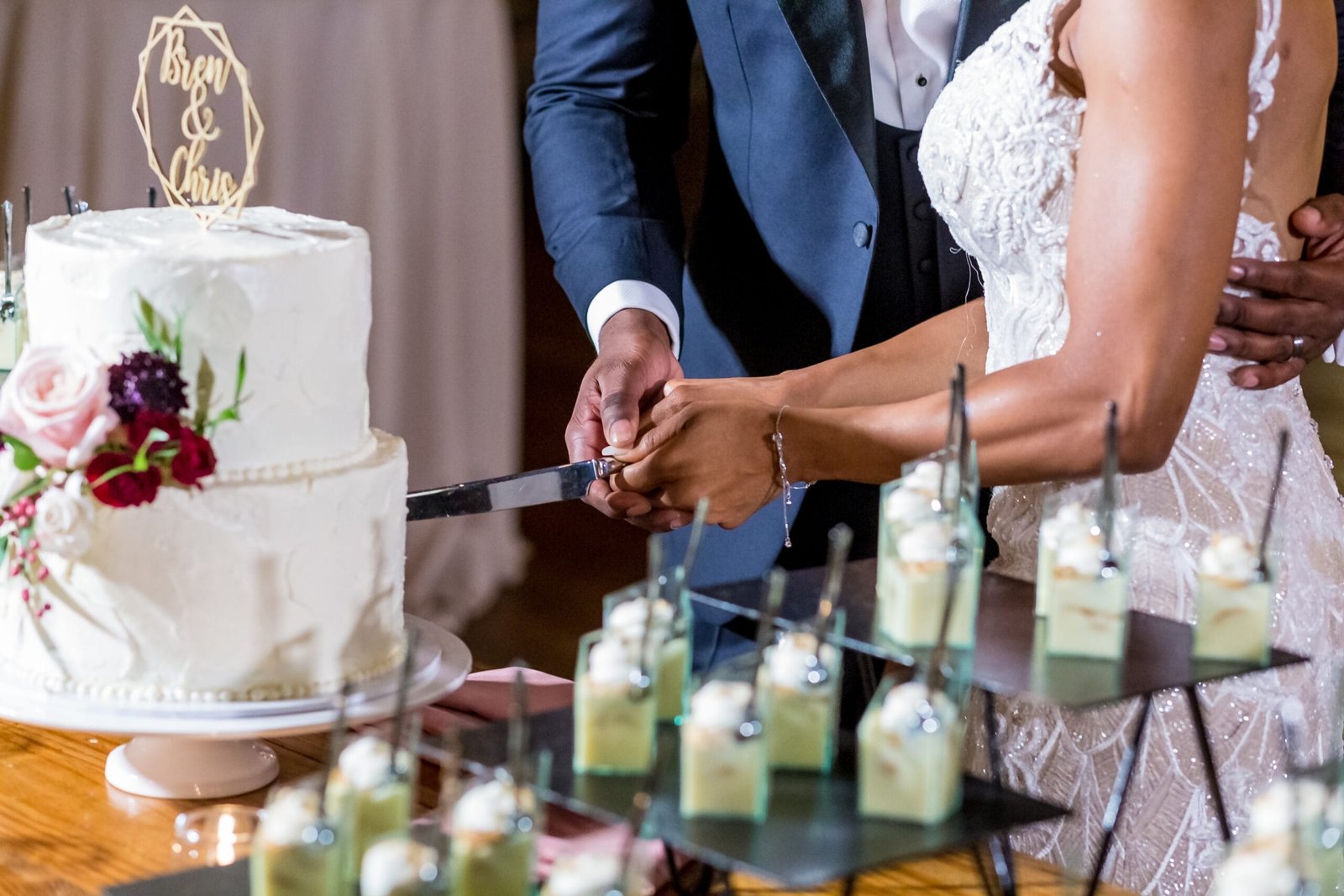
A wedding cake quote can look confusing even when the baker is being completely honest. Two bakeries quote the same guest count, and the numbers land $2,000 apart. Neither price is wrong. They simply reflect different servings math, different design labor, and different delivery logistics hiding behind a single dollar figure.
When considering the wedding cake cost, it’s essential to understand the various factors that can influence the final price. The wedding cake cost is not just about the ingredients; it includes design and complexity as well.
Wedding cake cost is not one number. It is the sum of several separate decisions. How many servings you actually need, how complex the design is, what the venue requires for delivery and display, and how the baker prices their labor and risk. Once you separate those pieces, a confusing quote turns into a set of choices you can actually compare.
Multiple elements contribute to the wedding cake cost, from the size of the cake to the intricacies of its design. Knowing these can help you make informed decisions regarding the wedding cake cost.
What Actually Determines Wedding Cake Price
Most couples ask “how much does a wedding cake cost” and expect one answer. Bakers cannot give one, because four separate variables drive the final number, and each one moves independently of the others.
Many couples are surprised to learn that the wedding cake cost can vary significantly based on these factors. Understanding how each one impacts the wedding cake cost can help you budget more effectively.
The four biggest cost drivers
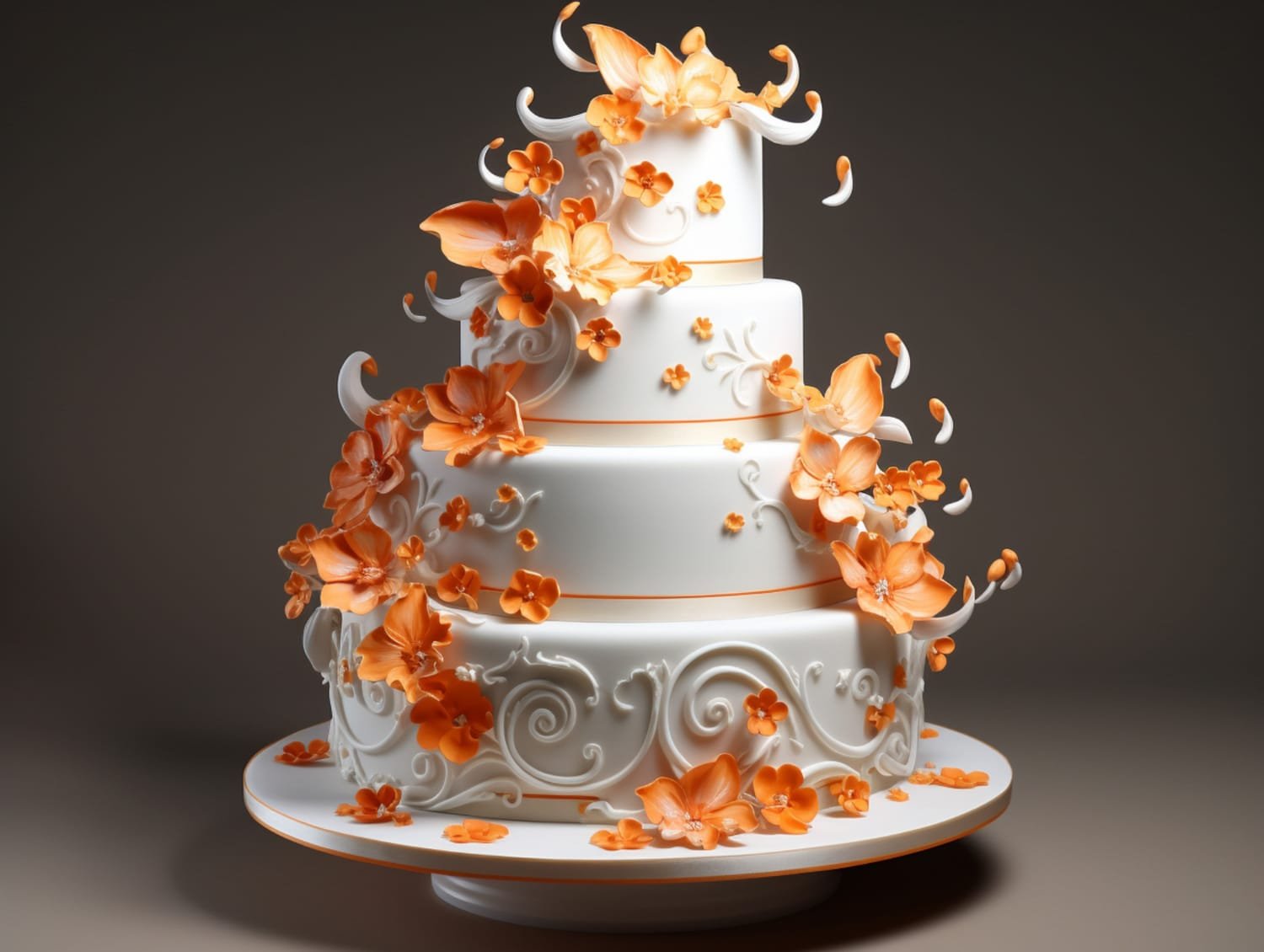
Servings, design complexity, flavors and fillings, and delivery all add cost in different ways. Servings set the baseline, since more cake means more ingredients and more labor. Design complexity adds cost through time rather than materials. Hand-piped detail, sugar flowers, and sharp geometric edges take hours a simple buttercream finish does not require. Specialty flavors and fillings, particularly ones involving fresh fruit or imported ingredients, raise the ingredient cost per serving. Delivery and setup add a separate fee entirely, covering the vehicle, the driver’s time, and the risk of transporting a structure that can be damaged in seconds.
National price ranges are a poor guide
You will find plenty of published national averages for wedding cake cost. Most of them are close to useless for planning your own budget. Bakery pricing varies enormously by region, by local labor costs, and by how a specific bakery structures its packages. A three-tier cake that costs $600 in a smaller Midwestern city might cost $1,200 or more for a comparable design in a major coastal metro, purely because of local labor rates and demand. Treat any published average as a rough orientation, not a number you can hold a local baker to. A per-serving estimate from three bakeries in your own area will tell you far more than a national figure from an article written for a different market.
As you plan, keep in mind that the wedding cake cost can increase with custom requests. Be prepared to discuss your vision for the wedding cake cost with your baker.
Serving Math: How Many Servings You Actually Need
Before you can compare prices, you need an accurate serving count. This step trips up more couples than any pricing question, because the wedding industry defines a “serving” differently than most people expect.
Understanding the wedding cake cost will also help you negotiate with bakers. Knowing the standard wedding cake cost can provide you with leverage during discussions.
A wedding-cake serving is smaller than a slice you would cut at home
Professional bakers typically calculate servings using a slice roughly one inch by two inches, considerably smaller than the wedge most people picture. This is a long-standing industry convention, not a trick, and it exists because a formal cake service is usually paired with other desserts or a full meal. Ask your baker directly what serving size their quote assumes. A “100-serving cake” built on a smaller slice size looks noticeably different from one built on a larger, more generous cut.
Adjust the guest count before you order
Your final serving count should rarely match your total guest count exactly. Children usually eat smaller portions or skip cake entirely, and some adult guests will not have a slice at all. A common adjustment is ordering for roughly 75 to 85 percent of your guest count rather than the full number. Your own guest list may support a different figure. If you are serving other desserts alongside the cake, you can safely order toward the lower end of that range.
A simple worked example
Picture a wedding with 120 invited guests. Subtract 15 children who will take small or no portions, leaving 105 adult guests. Apply an 80 percent adjustment for guests who decline cake or are already full from dinner, and you land close to 84 servings. That number, not your original guest count, is the figure to bring to a bakery consultation. Ordering to your full guest list often means paying for servings nobody eats.
When you think about your guest list, consider how it affects the wedding cake cost. The wedding cake cost can be more manageable if you adjust your serving sizes accordingly.
Worth confirming directly
Ask your caterer or venue whether cake will be plated and served, or set out for guests to take themselves. Self-serve stations typically waste more cake than plated service, which can justify ordering a slightly higher count.
Design and Structural Trade-offs That Change the Price
Each design choice impacts the wedding cake cost. A multi-tier cake may raise the wedding cake cost due to the labor involved.
The design you choose affects price through labor far more than through ingredients. A plain buttercream cake and a heavily decorated one can use the same batter and the same number of servings. They can still differ in price by hundreds of dollars, purely because of the hours involved in the finish.
Tiers, height, and structural support
Tall, multi-tier cakes need internal support that guests never see. Dowels or plastic rods sit inside each tier, separator plates go between layers, and sometimes a central rod runs through the whole structure. This engineering work protects the cake from collapsing under its own weight. It takes real time regardless of how simple the outside looks. Some couples reduce cost by using a smaller “cutting tier” that is genuinely cake, paired with foam display tiers finished to look identical. Ask your baker directly whether this is available. It can meaningfully lower both the price and the serving waste on a large, tall design.
Discussing your design options can help you find a balance between aesthetics and wedding cake cost. Be sure to communicate your budget when discussing the wedding cake cost with your baker.
Icing type changes both cost and resilience
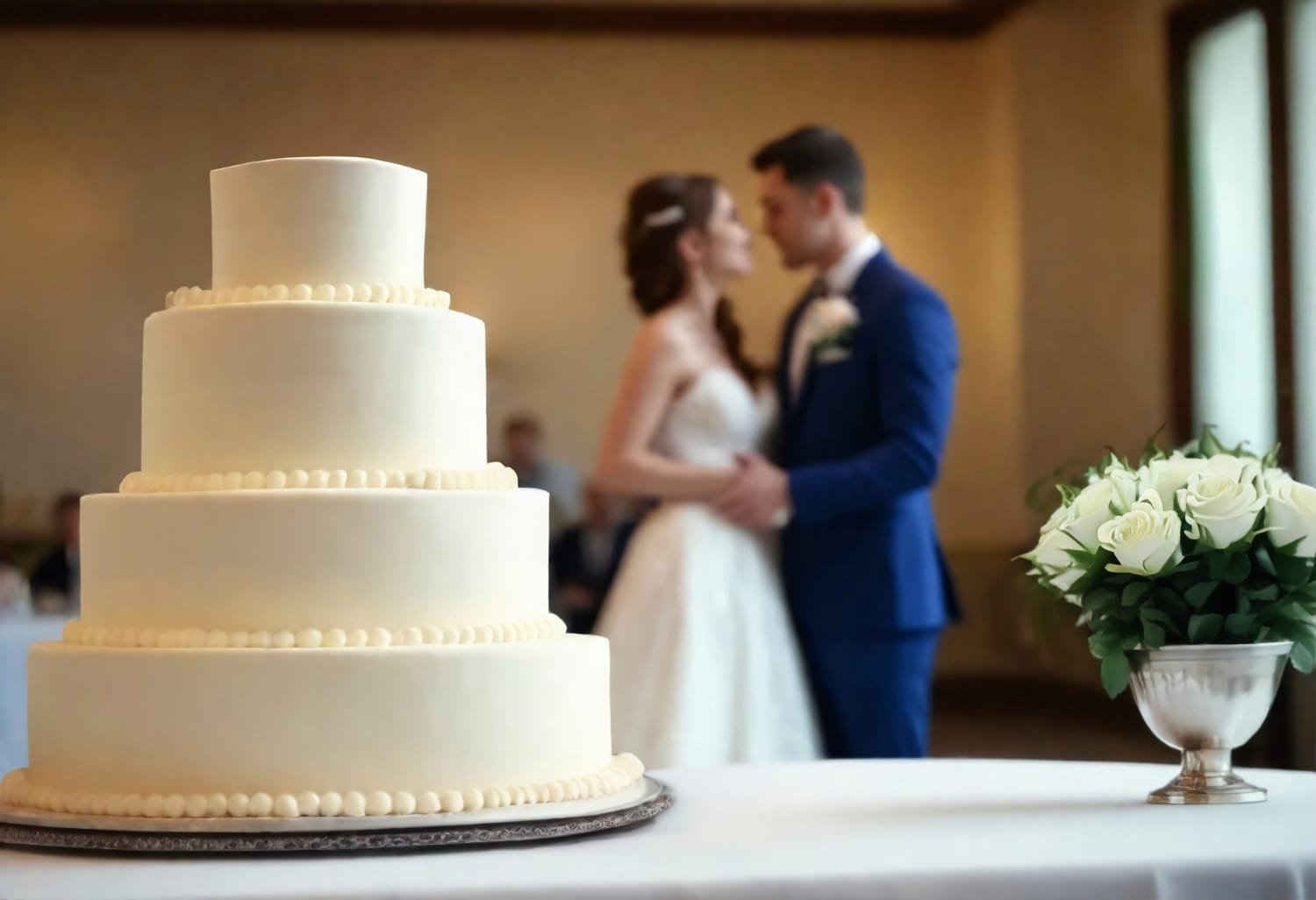
Buttercream, fondant, and naked or semi-naked finishes each carry different costs and different practical trade-offs. Buttercream is usually the most affordable option and offers a soft, classic texture, though it is more sensitive to heat than fondant. Fondant creates a smooth, clean surface that holds sharp designs well, and it tolerates warmer conditions better. It costs more, though, in both materials and labor. Naked and semi-naked cakes show some or all of the cake layers through a thin coat of frosting. They have become popular for their relaxed look, though they offer less protection against drying out and generally need to be finished closer to serving time.
Sugar flowers, hand-piping, and other labor-heavy details
Handmade sugar flowers, intricate piping, hand-painted details, and metallic finishes are almost entirely priced on labor. A single realistic sugar flower can take a skilled decorator well over an hour to build, and a cake covered in them reflects that time directly in the quote. If a specific detail matters to you, ask your baker to price it separately from the base cake. That way you can see exactly what that element costs and decide whether it is worth it against other priorities.
Distinguish aesthetic trends from practical requirements
The wedding cake cost can also reflect the use of fresh ingredients and special flavors. Always inquire about how these can influence the wedding cake cost.
Not every popular design choice serves a practical purpose, and it helps to know which is which before you commit to one. A textured buttercream finish is largely an aesthetic preference with little effect on durability. A properly dowelled tier structure, by contrast, is a practical requirement that keeps your cake standing through a warm reception. Ask your baker to explain the reasoning behind any technique they recommend. That way you can tell whether you are paying for a look you want or a structural need the cake genuinely requires.
Matching flavors to your reception and season
Flavor choices affect both cost and how well the cake fits the rest of your reception. Fresh fruit fillings and certain specialty flavors carry higher ingredient costs, particularly out of season. Fruit has to be sourced from farther away then, or replaced with a preserved version. A cake flavor that echoes something on your dinner menu can feel more intentional than one chosen in isolation. Think of a citrus note after a bright appetizer, or a spiced flavor for a fall or winter reception. Ask your baker which flavors are in season for your wedding date. Seasonal fruit fillings are often both cheaper and better tasting than an out-of-season substitute.
Venue Conditions That Affect Design and Price
Your venue can significantly affect the wedding cake cost. Discuss with your baker how venue conditions may influence the wedding cake cost.
Your venue is not a passive backdrop for the cake. Temperature, humidity, and sunlight can all influence what design choices are realistic. So can the distance from the kitchen to the display table, and what all of it will cost.
Heat, humidity, and outdoor venues
Buttercream softens in heat, and high humidity can affect fondant and cause colors to bleed. If your reception includes any outdoor component, tell your baker the expected temperature and how long the cake will sit before cutting. Experienced bakers adjust their recipes and finishing techniques for warm-weather conditions, sometimes using a more stable buttercream formula or recommending fondant specifically because it holds up better outdoors.
Display table conditions
Direct sunlight, an uneven or non-flat surface, and a long distance from the kitchen all create real risk for a tall or delicate cake. Confirm with your venue coordinator exactly where the cake table will sit and whether it will be shaded. A cake that looks stable in a bakery’s climate-controlled kitchen can behave very differently after ninety minutes under a window in direct sun.
Cold weather brings its own considerations
Weather conditions can affect the wedding cake cost, especially when it comes to outdoor venues. Your wedding cake cost may vary based on how your cake handles temperature changes.
Winter and late-fall weddings are not exempt from venue-related cake risk, even though the concerns run in the opposite direction from a summer wedding. Moving a cake between a cold car, a heated venue, and a cold hallway can cause condensation on the surface once the temperature shifts. That affects both fondant and delicate piping. Ask your baker how they handle transport and acclimation in cold weather. A short adjustment period indoors before final setup can prevent this problem entirely.
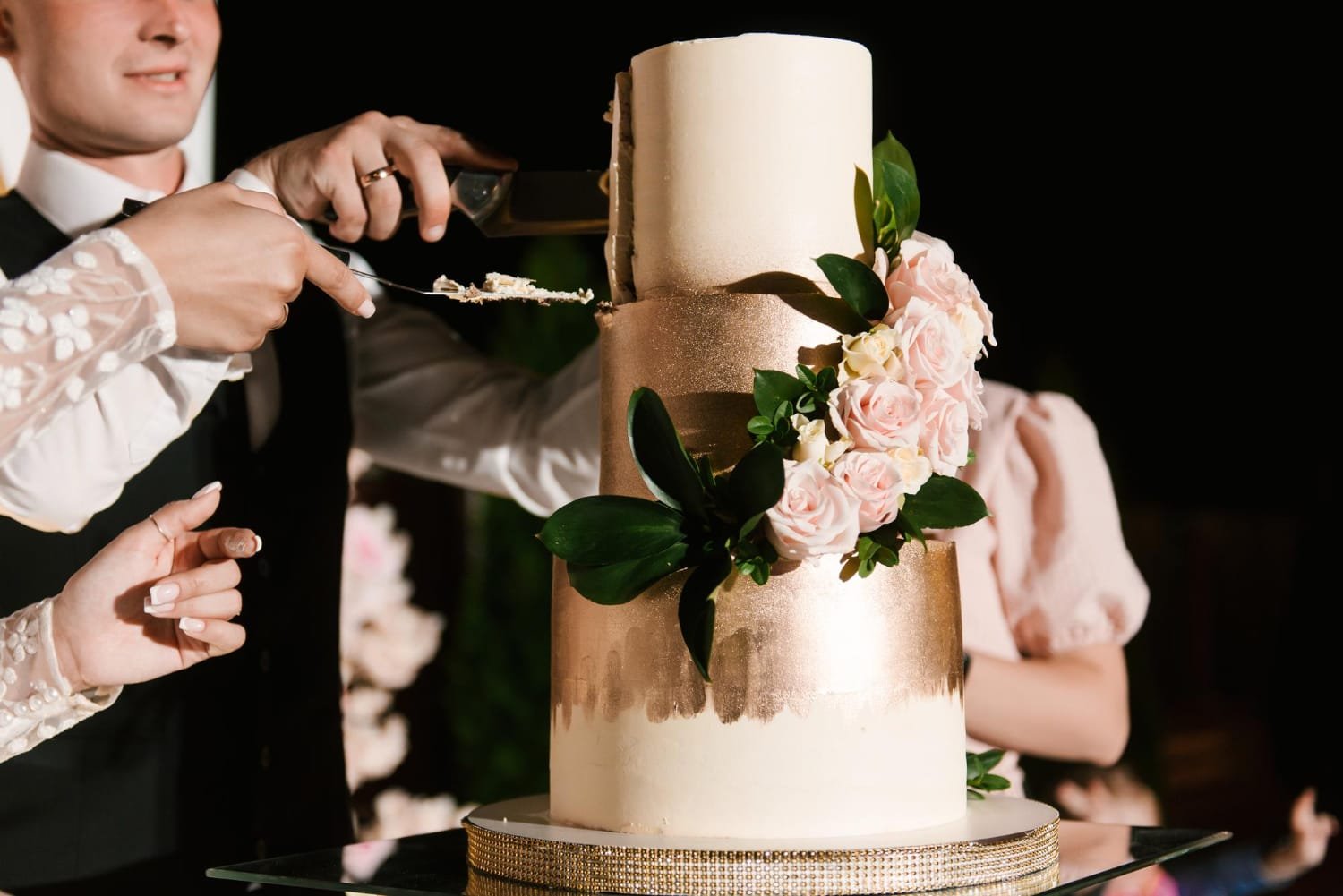
Delivery, Setup, and Getting It There Safely
Delivery is another critical factor in the wedding cake cost. The wedding cake cost includes not only the cake itself but also the logistics of getting it to your venue.
Delivery is where a beautifully designed cake most often goes wrong, and it is also where a meaningful share of your total cost lives. Treat it as a real line item rather than an afterthought.
What delivery fees actually cover
A delivery fee typically covers the vehicle and the driver’s time. It also covers an allowance for the risk of transporting a structure that can be damaged by a pothole, a sharp turn, or a few minutes in direct sun. Distance matters, but so does complexity. A tall, multi-tier cake usually costs more to deliver than a single-tier cake of the same size, because it requires more careful handling and sometimes final assembly on site.
On-site assembly and stacking
Many bakers transport tiers separately and assemble the full cake at the venue. This reduces the risk of damage during transport and allows final touch-ups after the cake has acclimated to the room. Ask whether your quote includes on-site assembly, and confirm how much time the baker needs at the venue before guests arrive. This detail affects your vendor arrival schedule and should be coordinated with your venue’s setup window.
Consider how the wedding cake cost might increase due to on-site assembly and final touches. The wedding cake cost can reflect the level of service you choose.
What can go wrong without a professional delivery plan
Cakes can arrive damaged or collapsed when they travel without proper support. The same risk applies in a vehicle without a flat, stable surface, or with someone unfamiliar with how tiered structures shift during transit. This is one area where hiring a professional with real delivery experience is worth the added cost. That is especially true for anything beyond a simple single-tier design. If a friend or family member offers to transport a cake as a favor, make sure they understand the risks involved first.
What happens to leftover cake
Weddings frequently end with cake remaining, and it helps to decide in advance what happens to it. Some couples ask their caterer or a member of the wedding party to box portions for guests to take home. This reduces waste and gives out-of-town guests a small keepsake. Others save the top tier, following the tradition of freezing it for a first-anniversary taste. Your baker can advise on how well a specific icing type actually holds up in a freezer over a full year. Confirm with your venue whether they handle cake storage and cleanup, or whether that responsibility falls to you or your planner.
Food Safety and Allergens
Wedding cake sits out for hours, often in a warm room. That makes food safety and allergen communication genuinely important, not just a formality to skip.
Common allergens worth discussing with your baker
Allergy considerations can also play a role in the wedding cake cost. Be upfront about these with your baker to ensure the wedding cake cost reflects your needs.
The major food allergens commonly identified in U.S. food labeling include milk, eggs, wheat, soy, tree nuts, peanuts, fish, shellfish, and sesame. Wedding cakes frequently contain several of these by default, since standard recipes rely on eggs, dairy, and often wheat flour. If any guest has a known allergy, tell your baker early rather than close to the wedding. Substitute recipes may need testing time, and some allergens are difficult to fully eliminate from a kitchen that also handles them for other orders.
Cream cheese frosting and perishable fillings need temperature planning
Cream cheese frosting, fresh fruit fillings, and custard-based fillings are more perishable than standard buttercream and require more careful temperature handling. Ask your baker how long these components can safely sit at room temperature. Share your venue’s actual conditions too, including whether the reception space is air-conditioned and how long the cake will be on display before serving. A baker experienced with wedding events will have a clear answer, since this is a routine professional consideration rather than an unusual request.
Communicate allergies clearly, and confirm in writing
Don’t overlook the importance of a written agreement that includes the wedding cake cost. Clarity about the wedding cake cost in your contract can prevent misunderstandings.
Verbal conversations get lost in a busy planning season, so put any allergy or dietary request in writing and ask your baker to confirm it back to you. This creates a simple record for both sides and reduces the chance of a substitution being forgotten. If cross-contact is a serious concern for a guest with a severe allergy, ask directly whether the bakery can guarantee a fully separate preparation process. Not every kitchen can offer that level of control.
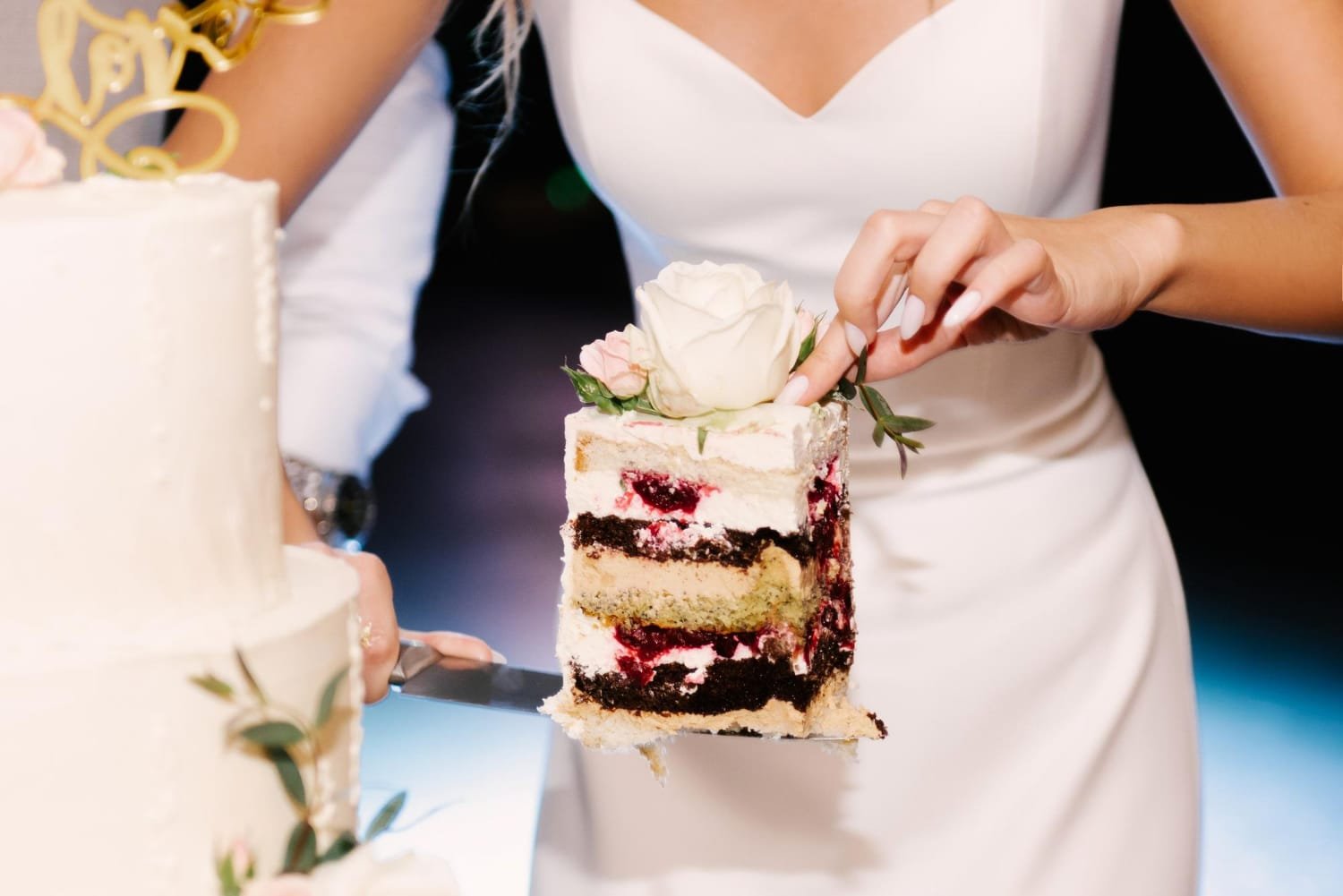
Baker Questions and Contract Terms
Asking your baker specific questions about the wedding cake cost can provide greater insight into their pricing structure. Understanding the wedding cake cost involves knowing what to look for.
Choosing a baker from photographs alone tells you about their decorating style, not about how reliably they will handle your specific wedding. A short list of direct questions reveals far more.
Questions that go beyond the portfolio
- How many weddings do you typically handle on one weekend, and will you personally be baking and delivering mine?
- What happens if you become ill or unavailable close to my wedding date?
- Can you accommodate my specific allergy or dietary requests, and have you done so before?
- What does your delivery fee include, and does it change based on distance or complexity?
- How far in advance do you need my final guest count and design decisions?
- What is your policy if the cake is damaged during delivery or setup?
A baker who answers these questions clearly and specifically is generally more reliable than one who gives vague reassurances. Specific, confident answers usually reflect real experience with wedding-scale events rather than everyday bakery orders.
What belongs in a cake contract
A solid wedding cake contract should specify the total price, the serving count and size assumption, and the flavors and fillings. It should also cover the design details in enough depth to prevent disputes, the delivery time and location, the deposit and payment schedule, and the cancellation policy. Ask for design details in writing, not just a verbal description. A decorator’s interpretation of “elegant” or “rustic” can differ meaningfully from your own mental image. A written or photographed design reference attached to the contract protects both sides.
Where professional standards fit into your decision
Membership in a professional baking organization is not a requirement for hiring a great baker, since many talented independent bakers operate without formal affiliations. It can, however, be one useful signal among several when you are evaluating an unfamiliar bakery. Organizations such as the Retail Bakers of America maintain industry standards and educational resources that reflect current professional practice. Reviewing that kind of resource can help you understand what a well-run bakery operation typically looks like. Use it as one data point alongside reviews, a tasting, and direct conversation rather than as a substitute for your own judgment.
The wedding cake cost can vary based on the baker’s experience and recognition in the industry. Researching any baker’s reputation can help clarify the wedding cake cost.
Realistic Cost Examples
These examples are illustrative rather than a price list, since real pricing varies by region and bakery. Use them to see how the variables discussed above combine, not as a quote you can hold any specific baker to.
| Wedding | Design | Servings | Illustrative total |
|---|---|---|---|
| Small, simple | Two-tier, smooth buttercream, minimal detail | 40 | $250–$400 |
| Mid-size, moderate detail | Three-tier, fondant, piped detail and fresh flowers | 85 | $650–$1,100 |
| Large, elaborate | Four-tier, hand-piped and sugar flowers, metallic accents | 150 | $1,400–$2,600 |
Notice that servings alone do not explain the price difference between these three examples. The large cake serves under four times as many guests as the small one, yet it can cost six to eight times as much. Design labor, not batter, is what separates these numbers.
Understanding the relationship between servings and wedding cake cost is crucial. Be aware that increasing servings will also likely increase the wedding cake cost.
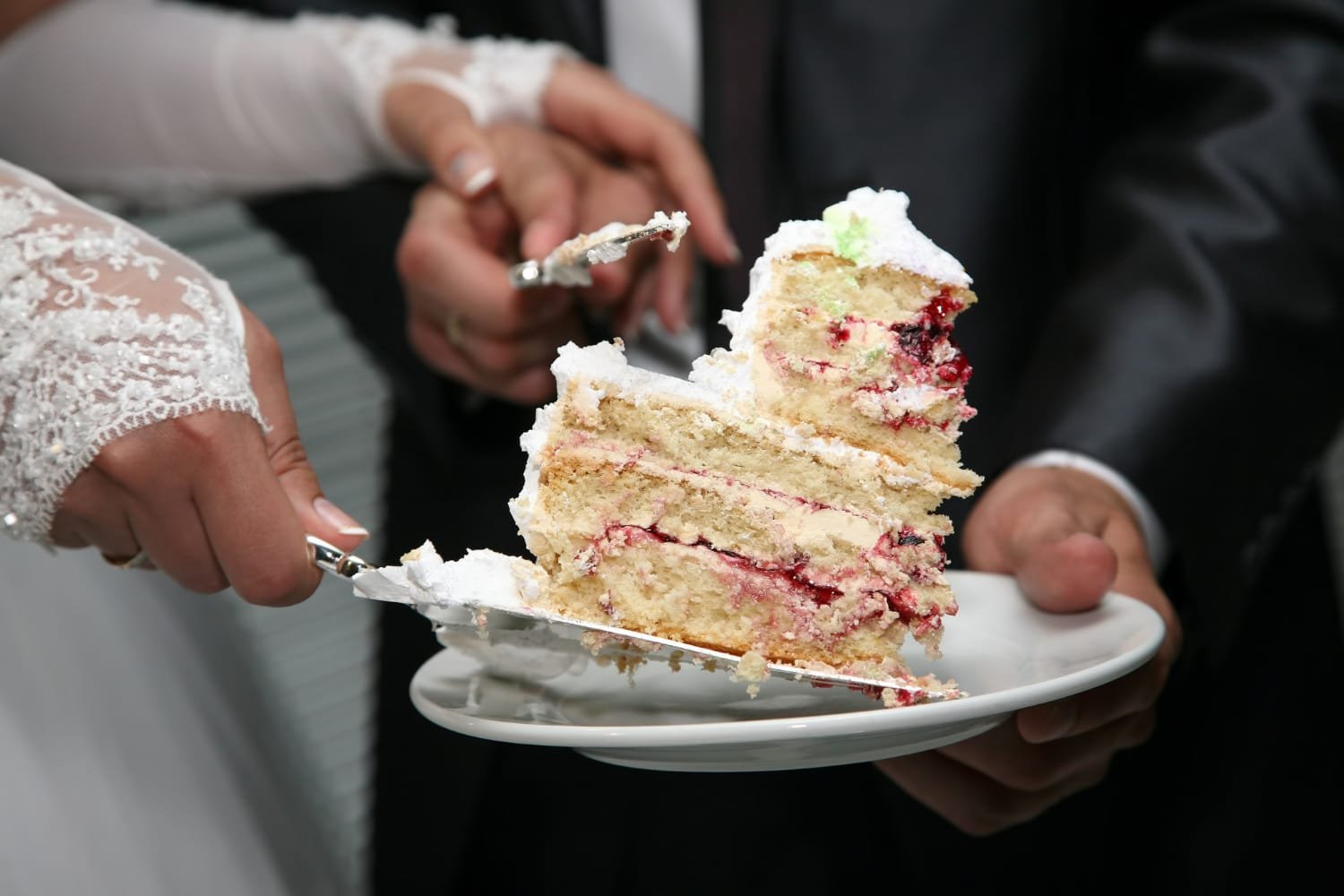
Realistic Alternatives to a Traditional Tiered Cake
Exploring alternatives to traditional cakes can provide savings on the wedding cake cost. Evaluate the options carefully to ensure you’re still meeting your vision within the wedding cake cost.
A full tiered cake is a tradition, not a requirement, and several alternatives can reduce cost, simplify logistics, or better fit a smaller gathering.
The display-and-sheet-cake split
One of the most common cost-saving strategies in the industry is a smaller, fully decorated display cake for photos and cutting. It gets paired with a plain sheet cake baked from the same recipe and served to guests from the kitchen. Guests taste the same cake, and your photos show the design you wanted. You pay decoration labor on only a fraction of your total servings. Ask your baker whether this option is available, since most experienced wedding bakers offer it and can explain how to keep the flavors matching.
Dessert tables, cupcakes, and other formats
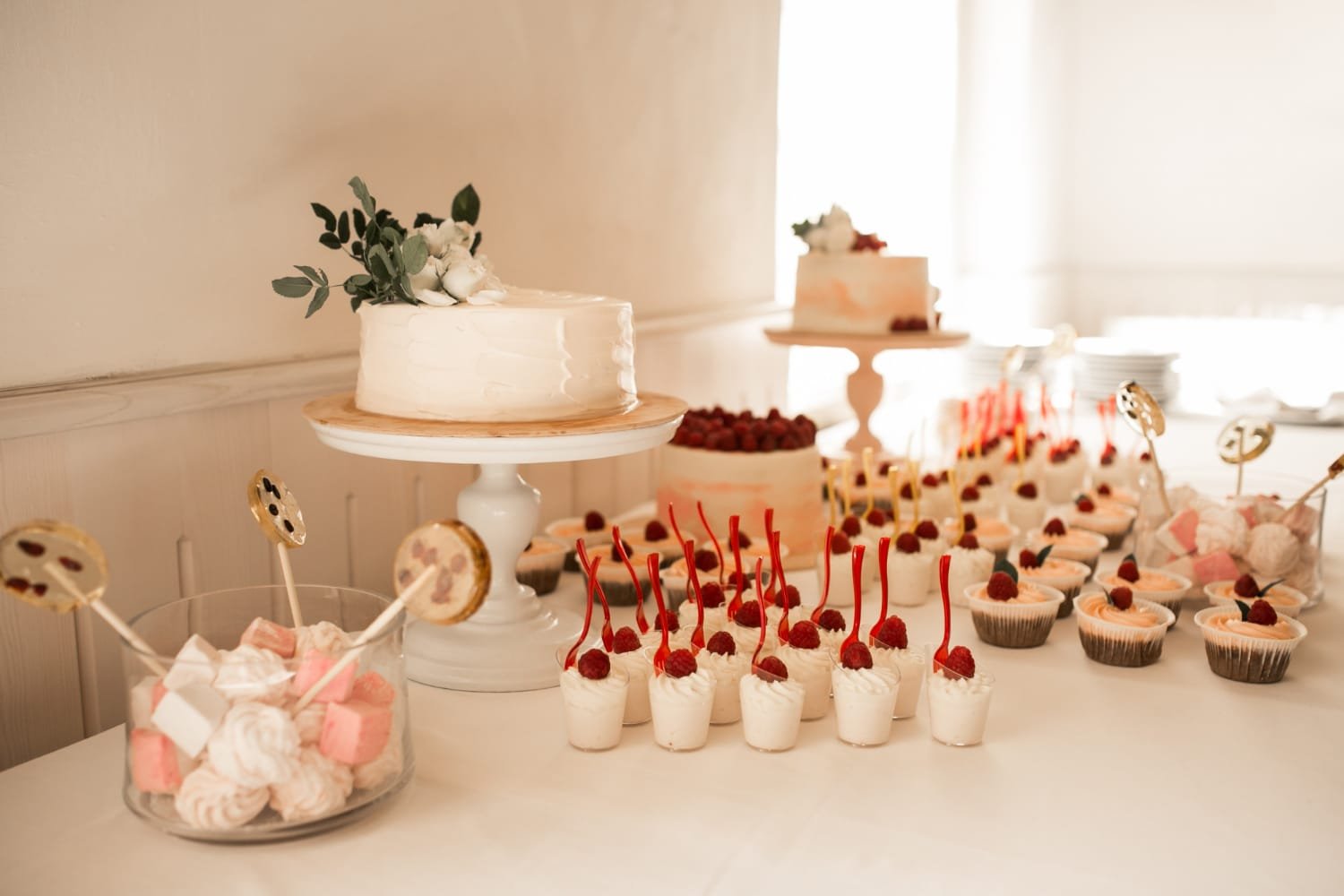
Cupcake towers, dessert tables with several smaller items, and doughnut walls have all become common alternatives to a single large cake. These formats can reduce cost through simpler production, though not always: a large, varied dessert table with several labor-intensive items can cost as much as a mid-size cake. Compare total cost and total servings the same way you would with a traditional cake, rather than assuming an alternative format is automatically cheaper.
Home-baked or small-batch options
Some couples consider a home-baked cake from a skilled friend or family member, which can meaningfully reduce cost. This option carries real considerations worth discussing honestly. Food safety at scale, liability if a guest becomes ill, and the practical challenge of producing and transporting a large tiered structure without professional equipment. If you go this route, keep the design simple. Discuss any allergy concerns directly with whoever is baking, and have a backup plan in case something goes wrong close to the wedding date.
Cake stands, toppers, and small extras
Stands, cake toppers, and knife-and-server sets are often priced separately from the cake itself, and couples sometimes miss them when comparing quotes. Ask whether your baker provides a stand or whether you need to source one through your venue or a rental company. A borrowed or rented stand can save meaningful money compared with buying one new, particularly if you have no plans to use it again. If a specific stand height or style matters to your overall table design, confirm it early enough to arrange delivery or rental, since coordinating this detail in the final week adds avoidable stress to an already busy stretch of planning.
Who typically pays for the cake
There is no universal rule about who covers this cost, and it depends entirely on your own family arrangements and budget. Some couples fund it themselves as part of their overall catering budget. Others split it with family contributions, and some receive it as a specific gift from a relative who wants to cover one distinct piece of the day. Decide this early with whoever is involved in your wedding budget, since it affects how much flexibility you have when comparing design options.
In discussing who will pay for the wedding cake cost, make sure everyone is on the same page about budget priorities.
Cake-Planning Worksheet
Bring this to your first bakery consultation. It turns a vague conversation into a set of specific answers you can compare across bakers.
Servings and budget
- ☐ Total guest count: ____________
- ☐ Adjusted serving count (guests minus children, minus non-eaters): ____________
- ☐ Total cake budget: ____________
- ☐ Serving size the quote assumes, confirmed with the baker: ____________
Design
As you plan, keep in mind the importance of clarifying the wedding cake cost with your chosen baker.
- ☐ Number of tiers, and how many are real cake versus display
- ☐ Icing type chosen with venue temperature in mind
- ☐ Labor-heavy details priced separately from the base cake
- ☐ Design reference image attached to the contract
Venue and delivery
- ☐ Venue temperature and any outdoor exposure shared with the baker
- ☐ Display table location and sunlight exposure confirmed
- ☐ Delivery fee and what it includes, confirmed in writing
- ☐ On-site assembly time coordinated with the venue’s setup window
Safety and contract
- ☐ Guest allergies communicated in writing
- ☐ Perishable filling holding time confirmed against your timeline
- ☐ Deposit amount and payment schedule confirmed
- ☐ Cancellation and damage policy reviewed
Common Mistakes
Ordering for the full guest list
Most weddings do not need servings equal to the total headcount. Adjust for children and guests who decline cake before you finalize a count.
Comparing quotes without matching serving sizes
Understanding the wedding cake cost can help you navigate the planning process more effectively. The wedding cake cost should align with the expectations you set during your planning.
A lower price per cake can hide a smaller serving size. Always compare price per serving, and confirm what size slice each baker’s quote assumes.
Choosing a design before discussing the venue
A design that works beautifully in a climate-controlled kitchen may not survive an outdoor reception in August. Share your venue conditions with your baker before finalizing the design.
Treating delivery as a minor add-on
Delivery protects your investment in the cake itself. A cheaper baker with a weak delivery plan can end up costing more, in damage and stress, than a slightly pricier one with real delivery experience.
Waiting too long to discuss allergies
Substitute recipes need testing time, and some ingredients are difficult to fully remove from a shared kitchen. Raise allergy concerns as early as possible.
Assuming a verbal description is enough
Words like “elegant” or “modern” mean different things to different people. Put your design expectations in writing or attach a reference image to the contract.
Skipping the tasting
A beautiful cake that does not taste good is a common and avoidable disappointment. Most bakers offer tastings, and it is worth the time before you commit to a full order.
Frequently Asked Questions
How much does a wedding cake actually cost?
There is no single reliable number, because price depends on servings, design complexity, flavors, and delivery, all of which vary by baker and region. A simple two-tier cake for 40 servings might run a few hundred dollars. A large, elaborately decorated cake for 150 guests can run into the thousands. Rather than searching for a national average, request quotes from two or three local bakers using your actual serving count, and compare those numbers directly against each other.
How many servings do I actually need?
Start with your total guest count, then subtract children who will likely eat smaller portions or skip cake. Apply a further reduction of roughly 15 to 25 percent for adults who decline a slice or are already full from dinner. Most weddings end up ordering for somewhere between 75 and 85 percent of total guests rather than the full headcount. Confirm with your caterer whether cake will be plated or self-served. Self-serve stations tend to waste more cake.
Why do wedding cake servings look smaller than a normal slice?
Professional bakers use a standard wedding-cake serving size, typically around one inch by two inches. That is smaller than the wedge most people cut at home. This convention exists because cake is usually served alongside other desserts or a full meal rather than as the only sweet item. Ask your baker directly what serving size their quote assumes so you can picture the actual portion guests will receive.
Is fondant or buttercream a better choice?
Both fondant and buttercream will influence the wedding cake cost differently. Discuss which option best fits within your wedding cake cost goals.
Neither is universally better, since each suits different priorities. Buttercream is generally more affordable and has a soft, classic texture, but it is more sensitive to heat and humidity. Fondant costs more and has a firmer texture. It creates a smooth surface that holds sharp designs well, and it tolerates warm conditions more reliably. Consider your venue’s temperature, your design goals, and your budget together rather than choosing based on appearance alone.
Can I save money by ordering a smaller display cake with a sheet cake for guests?
Yes, and this is one of the most effective cost-saving strategies available. You order a smaller, fully decorated cake for the photos and the cutting ceremony. A plain sheet cake, made from the same recipe, gets served to guests from the kitchen. Guests receive the same flavor, and your photographs show the full design. You pay decoration labor on a much smaller portion of your total servings. Ask your baker whether they offer this option, since most experienced wedding bakers do.
How do I handle guests with food allergies?
Tell your baker about any known allergies as early as possible. Do this when you place your order, not in the final weeks before the wedding. Substitute recipes often need testing time. Some allergens can also be difficult to fully eliminate from a kitchen that processes them for other orders too. Put allergy requests in writing and ask your baker to confirm the plan back to you. For severe allergies, ask directly whether a fully separate preparation process is possible.
What should be included in a wedding cake contract?
A solid contract specifies the total price, the serving count, the assumed slice size, and the flavors and fillings. It also includes a detailed design description or reference image, the delivery time and location, the payment schedule, and the cancellation policy. Written design details protect both you and the baker from misunderstandings. Descriptive words like “elegant” or “rustic” can mean different things to different people. Ask for everything important in writing rather than relying on a verbal conversation.
How far in advance should I book a wedding cake?
Popular bakers, especially those handling multiple weddings each weekend, often book up several months in advance, particularly during peak wedding season. Booking six to twelve months ahead is a reasonable target for a busy bakery, though a smaller or newer bakery may have more flexibility closer to your date. If you have a specific baker in mind, reach out early. Secure your date before firming up other vendor bookings that depend on it.
What happens if the cake is damaged during delivery?
Lastly, don’t hesitate to ask about the wedding cake cost implications of any delivery policies. Understanding these aspects can help manage the overall wedding cake cost.
Ask this question directly before you sign a contract, since policies vary between bakers. A professional wedding baker should have a plan for minor repairs on site and should carry appropriate insurance for their delivery vehicle and equipment. Confirm whether repair time is built into their delivery schedule. Ask what recourse you have if damage is severe enough to affect the final presentation.
Are cupcakes or a dessert table cheaper than a traditional cake?
Sometimes, but not automatically. A simple cupcake tower can cost less than an elaborately decorated tiered cake for the same guest count. A large, varied dessert table with several labor-intensive items, though, can end up costing as much as a mid-size cake. Compare total cost and total servings across formats the same way you would compare two traditional cakes. Do not assume any particular format is inherently less expensive.
Who usually pays for the wedding cake?
There is no fixed rule, and arrangements vary widely between families. Many couples include the cake in their own catering budget. Others split the cost with parents or family members. Some receive it as a specific contribution from a relative who wants to cover one distinct part of the wedding. Decide this early with whoever is involved in your budget conversations. Knowing your real spending limit shapes which design and format choices make sense.
Is it safe to put fresh flowers directly on a wedding cake?
It depends on the flower, and this is worth discussing directly with your baker or florist rather than assuming any bloom is safe. Some popular wedding flowers are toxic if their sap or pollen contacts food. Not every stem sold by a florist has been grown without pesticides safe for food contact, either. Many bakers address this by inserting flowers into small floral picks or food-safe wrappers that create a barrier between the stem and the cake. Others use sugar flowers instead, for guaranteed safety. Ask your baker which approach they use, since this is a routine question for anyone who regularly works with fresh flowers on cakes.
Build Your Cake Decision Around Total Cost, Not the Sticker Price
Ultimately, the wedding cake cost is about more than just the cake itself. It encompasses the full experience from design to delivery.
The most useful way to think about wedding cake cost is as a total, built from servings, design, venue conditions, and delivery. It is not a single price you compare against a national average. Two bakeries can quote very different numbers for what looks like the same cake. The difference almost always traces back to one of those four variables.
Start with an honest serving count based on your actual guest list, not your total invitation count. Decide which design elements are structural requirements and which are aesthetic preferences you can adjust to fit your budget. Share your venue’s real conditions with your baker before finalizing the design, and treat delivery as a genuine line item rather than an afterthought. Ask direct questions about allergies, contracts, and what happens if something goes wrong, and put the answers in writing.
Your next step
Calculate your realistic serving count using the method above, then request quotes from two or three local bakers using that exact number. Ask each one to break down the price by servings, design labor, and delivery. That way you are comparing total cost, not a single number that hides very different assumptions.
Your next step should include calculating your budget based on the wedding cake cost. Be ready to discuss your findings during consultations with bakers.
