
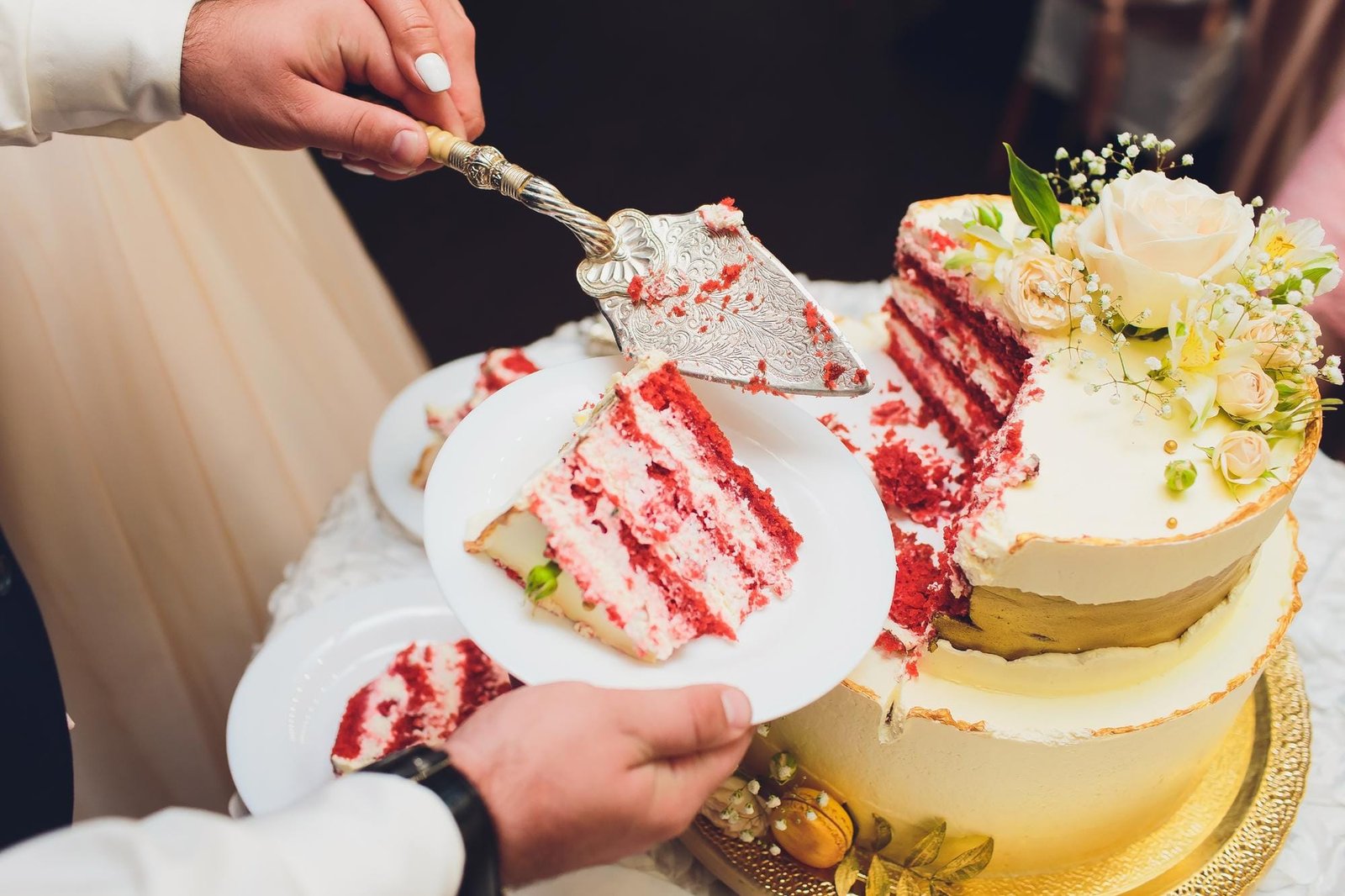
This exact gap is why so many couples end up googling the average price of wedding cake in the first place. You ask three bakeries for a quote on essentially the same cake: three tiers, vanilla and chocolate, a clean buttercream finish, seating around 100 guests. You get back three numbers that don’t seem to belong to the same category of dessert: $380, $650, and $1,200. Nobody’s lying to you. You’ve just bumped into one of the more genuinely confusing corners of wedding budgeting. The same-looking cake can carry wildly different price tags. Who’s making it, where you live, and what exactly you’re actually paying for all shape that final number.
The good news: the average price of a wedding cake in the US is a real, knowable number. Once you understand what actually drives it up or down, the confusing spread of quotes starts making sense. This guide walks through the current 2026 average, broken down by slice and by tier. It covers the choices that move the needle most, and the fee almost nobody mentions until the final invoice. It covers this year’s design and flavor trends too, along with genuinely good budget alternatives and exactly what to ask before you put down a deposit.
Whether you’re building a rough budget line right now or sitting across from a baker with a contract in front of you, the actual number is below, along with the reasoning behind it.
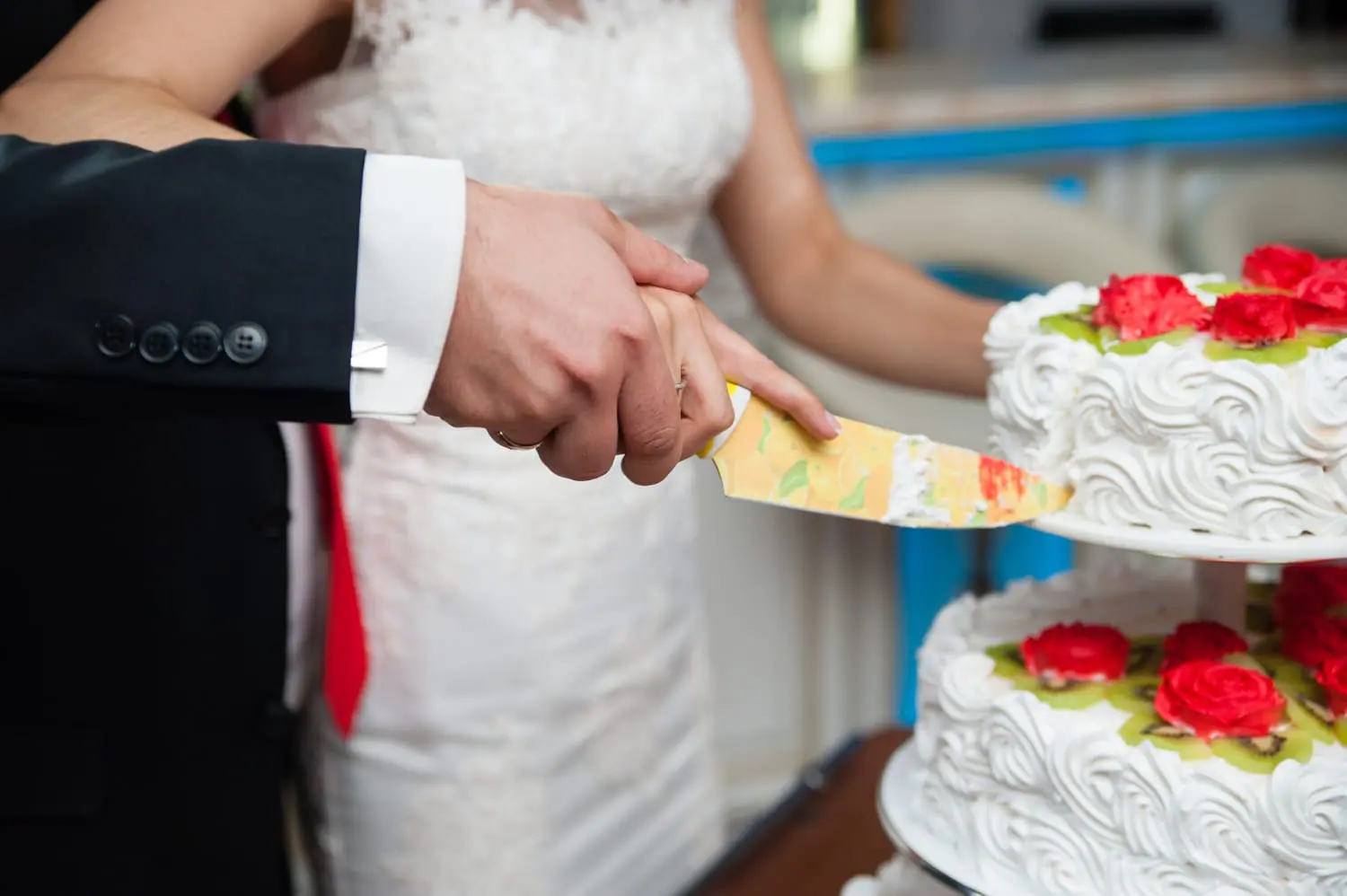
Quick Answer: What a Wedding Cake Actually Costs in 2026
The average price of a wedding cake in the US sits at roughly $500. Most couples land somewhere between $300 and $700 for the cake itself. Priced per slice, that works out to $3 to $8 per person for a standard custom cake. Simpler buttercream designs sit at the lower end; elaborate fondant or hand-decorated cakes push well past $10 a slice.
The number that catches people off guard isn’t the cake itself. It’s the cake-cutting fee your venue charges separately, commonly $1 to $5 per slice. Add a delivery fee of $50 to $150 on top. Both are covered in detail below.
Everything from here builds out that headline number. What actually changes it. What a real 2026 quote looks like at different guest counts. And where genuinely good, non-embarrassing budget alternatives exist, if a custom cake isn’t where you want your money going.
The Real Number, Broken Down Several Ways
National averages get quoted constantly in wedding content, and they’re most useful when you can see exactly how they were built. Here’s the current 2026 picture from several directions at once.
Per slice: the number bakers actually price by
Bakers rarely price a wedding cake as one flat number. They price it per serving, then multiply by your guest count. Most custom bakeries charge $3 to $8 per slice for a standard design, with basic buttercream sitting around $4 and fondant work running closer to $5 to $6. Elaborate designs, hand-piped detail, sugar flowers, multiple specialty flavors, commonly reach $8 to $15 a slice, and highly ornate showpiece cakes from in-demand studios can go higher still.
Total cost: what couples actually pay
Industry survey data, including The Knot’s Real Weddings Study, puts the national average around $500 for the cake itself. Most couples land in a $300 to $700 range. A simpler two-tier buttercream cake for a smaller guest list can come in under $300. A fully custom, heavily decorated three-tier cake with hand-crafted sugar work can run $1,500 or more, particularly from a specialty studio in a major metro area.
What a standard serving actually looks like
A standard wedding cake slice is a 1-inch by 2-inch piece, smaller than most people picture when they imagine a wedding cake serving. Plan for 5 to 10 percent more servings than your actual guest count, since some slices get cut larger and some guests come back for seconds.
Cost by Tier Count: A Practical Table
Tier count is one of the clearest, most direct drivers of total price, since it maps almost directly to how many guests you’re feeding.
| Tiers | Typical cost | Serves roughly |
|---|---|---|
| 1 tier | $120–$250 | 20–30 guests |
| 2 tiers | $200–$600 | 30–60 guests |
| 3 tiers | $300–$850 | 75–175 guests |
| 4 tiers | $600–$1,200+ | 120–200 guests |
| 5 tiers | $1,500+ | 200+ guests |
A useful thing to notice here: many modern couples don’t actually need a cake that serves their entire guest count. A smaller display cake paired with a sheet cake cut in the kitchen, covered in more detail later in this guide, is a genuinely common, completely acceptable way to get a beautiful cake without paying tier prices for every single slice.
What Actually Drives the Price Up or Down
Guest count explains part of the spread between quotes. These five factors explain the rest.
Design complexity
A clean, smooth buttercream finish with minimal piping is genuinely faster to execute than hand-piped lace patterns, sculpted sugar flowers, or elaborate metallic finishes. Time is the main cost driver in a custom cake. Intricate design work takes considerably more of it than a simple, elegant finish.
Buttercream versus fondant
Buttercream is generally less expensive and, for many people, better tasting. It holds sharp edges and intricate detail less precisely than fondant, though. Fondant creates a smooth, sculptural finish and holds elaborate decoration well, at a real cost premium, commonly $1 to $2 more per slice.
Flavor and filling choices
Classic vanilla and chocolate sit at the lower end of most bakers’ pricing. Specialty flavors, multiple filling layers, and premium ingredients like real fruit purees or imported chocolate add real cost. That specific combination sometimes adds $1 to $3 more per slice.
Baker reputation and location
An established cake studio with a strong portfolio and significant demand charges more than a newer or less in-demand baker offering genuinely comparable skill. Major metro areas, particularly on the coasts, run higher across the board than smaller cities and towns. Local cost of living and market demand both drive this gap.
Delivery, setup, and rush timing
A cake delivered and assembled on-site by the baker typically costs $50 to $150 beyond the cake price itself. Ordering on a tight, rushed timeline can also trigger an additional fee at many bakeries, covered in more detail later in this guide.
The Hidden Cost Nobody Mentions: Cake-Cutting Fees
This is the single most common surprise couples report once the final bill actually arrives.
What a cutting fee actually is
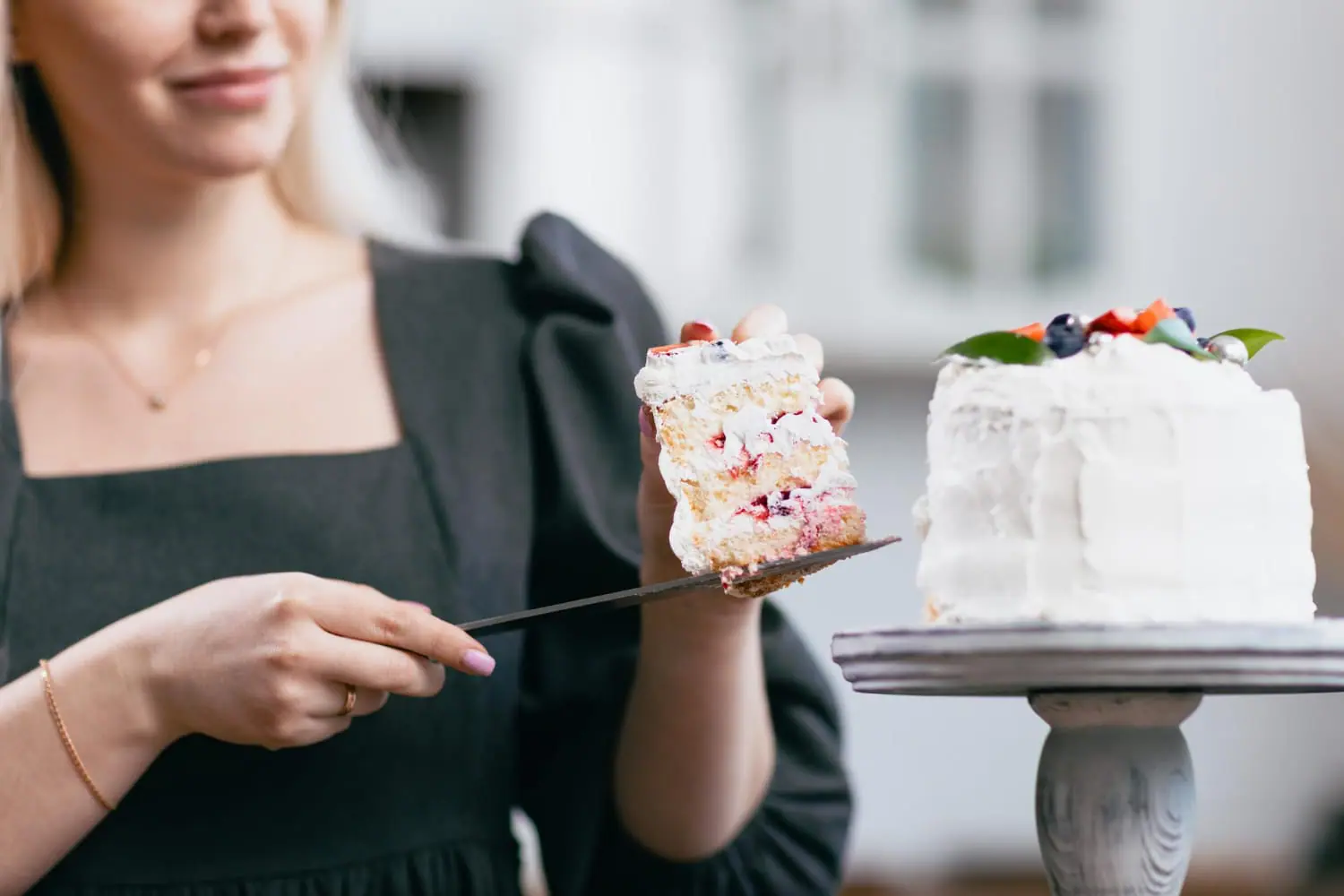
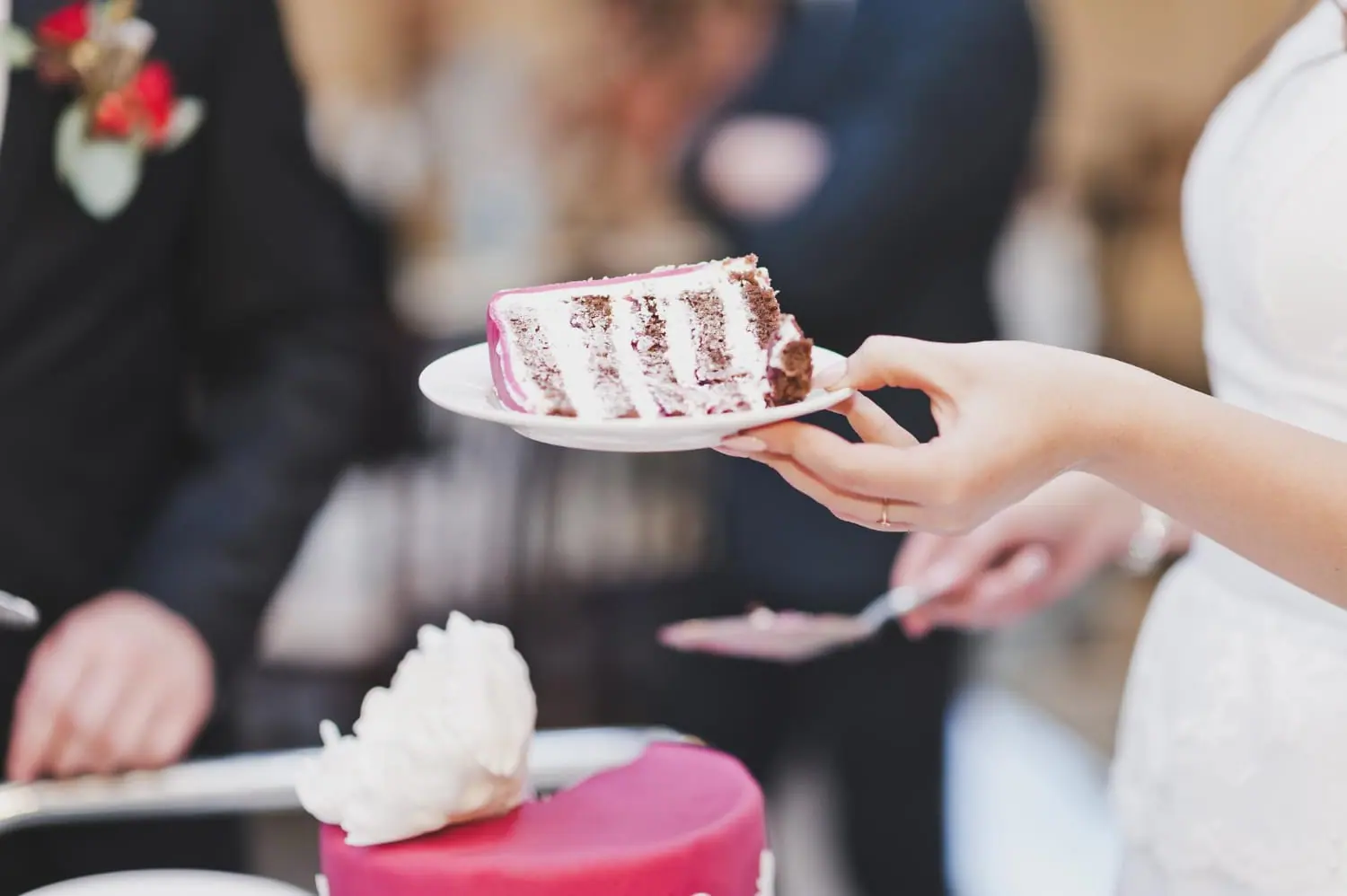
Many venues and caterers charge a separate cutting fee, commonly $1 to $5 per slice, for the specific service of cutting your cake, plating it, and serving it to guests. The venue or catering team charges this, not the bakery. It’s genuinely easy to miss during initial vendor conversations focused on the cake itself.
What this actually adds up to
On a 150-guest wedding, a $3-per-slice cutting fee adds $450 to your total. That’s a genuinely significant number, and it rarely appears in early cake budget conversations. Ask your venue directly and specifically whether this fee applies, and get the exact per-slice rate in writing.
Ways this fee sometimes gets waived
Some venues waive the cutting fee if you use their in-house or preferred bakery. Others reduce it for a smaller guest count. Ask directly whether any of these apply to your specific situation before assuming the standard rate is fixed.
Alternative Dessert Options and What They Actually Cost
A tiered cake isn’t the only way to handle wedding dessert, and the alternatives genuinely deserve consideration on their own merits, not just as a fallback.
Cupcakes
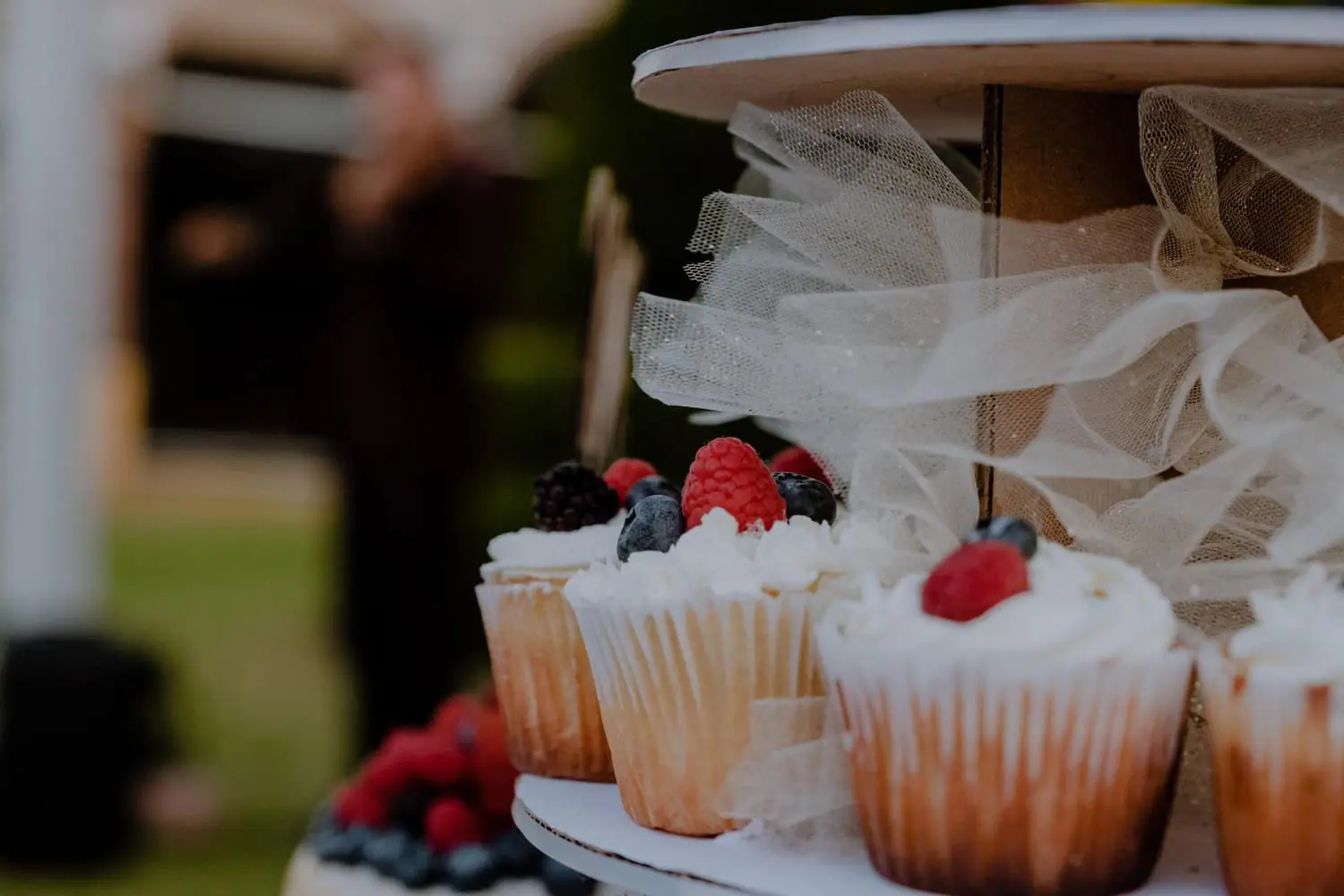
Wedding cupcakes commonly run $2 to $6 per person, planning for 1 to 1.5 cupcakes per guest. Many couples pair a small display cake for the traditional cutting moment with cupcakes for the actual guest dessert, getting the photo moment and an easier, no-utensils serving experience at once.
Dessert tables and bars
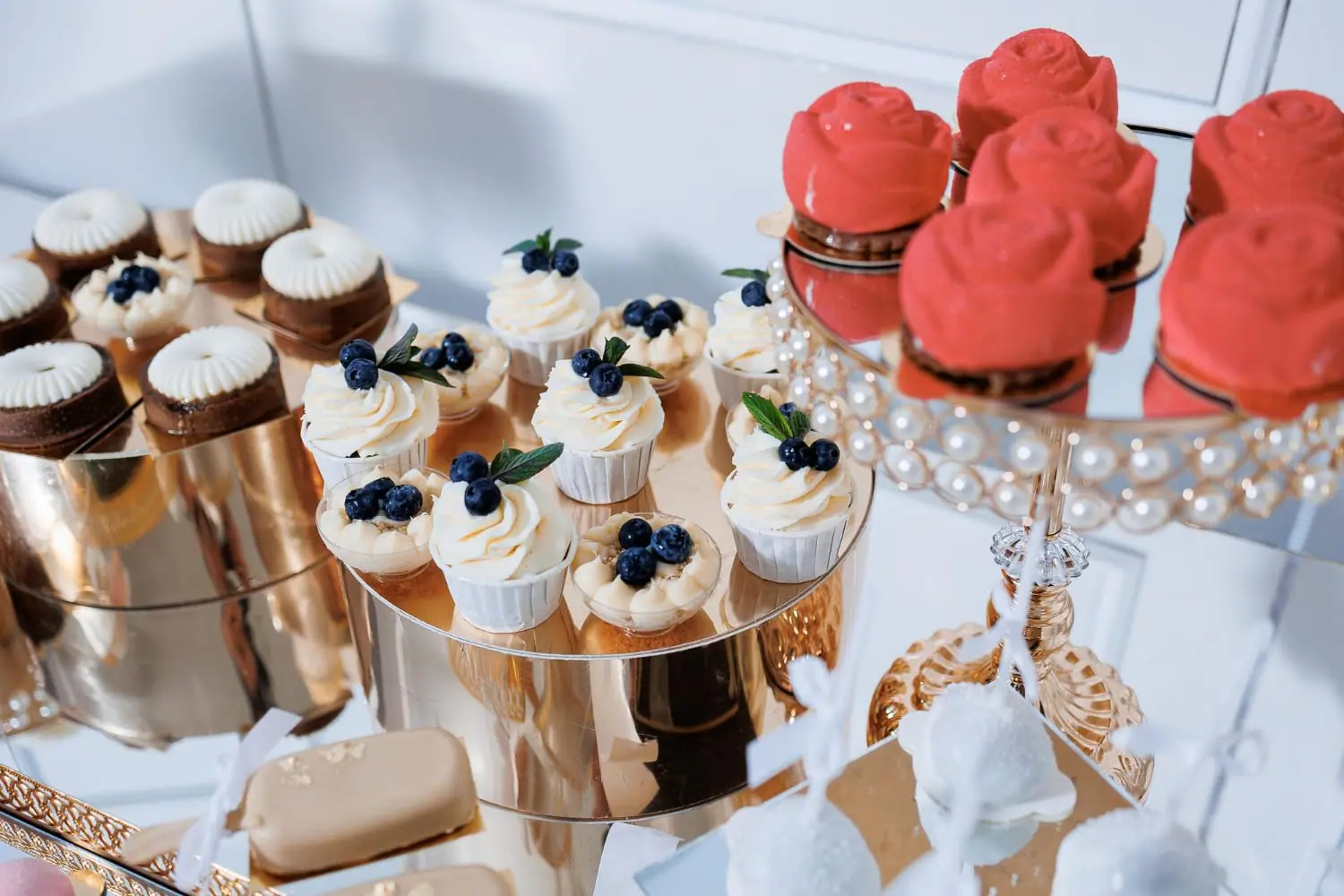
A full dessert bar, commonly $5 to $11 per person, can include a small cutting cake alongside cake pops, cookies, brownies, pastries, and other treats. This genuinely suits a couple who wants variety and a more casual, grazing-style dessert experience over one showpiece cake.
Donut walls and other trend-driven options
Donut walls, pie bars, and other non-cake dessert displays have grown genuinely popular, commonly pricing similarly to a dessert bar. These work particularly well for a casual or non-traditional reception style.
Groom’s cakes and second desserts
A groom’s cake, a Southern tradition that’s spread more broadly in recent years, commonly costs $1 to $8 per slice depending on size and design, usually smaller than the main wedding cake. Plan roughly half a slice per guest if served alongside the main cake, or a full slice if served separately at a rehearsal dinner.
The Grocery Store Option: Where the Average Price of Wedding Cake Actually Goes Down
This deserves a genuinely serious, non-dismissive look, since it’s a real, popular strategy that produces real, beautiful results for many couples.
What Costco actually offers
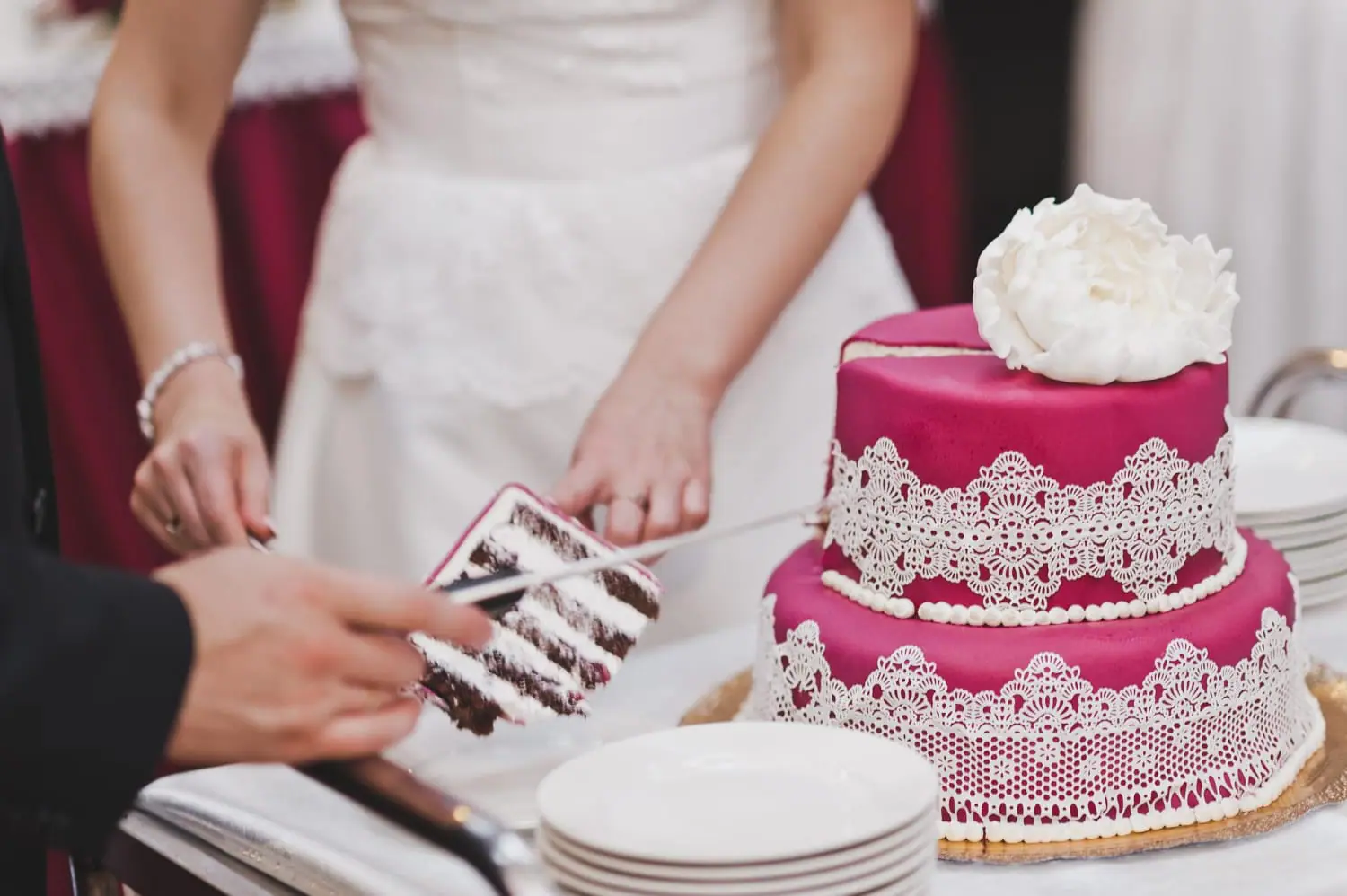
Costco’s bakery sells a half-sheet cake, feeding roughly 48 guests at standard slice size, commonly for well under $30. A 10-inch round feeds 12 to 15 guests at a similarly low price. Flavor options are limited, typically a white cake with vanilla cheesecake mousse or a chocolate cake with chocolate mousse, and custom photo printing isn’t available. Many Costco locations offer a free tasting at the bakery counter, worth taking advantage of before committing.
A real story worth knowing
One widely shared account involves a Phoenix bride planning her wedding on just three weeks’ notice. Local bakers were quoting $350 or more with two-month minimum lead times that simply didn’t fit her timeline. She ordered two vanilla half-sheet cakes from Costco instead, spending around $50 total. Guests spent the evening asking where the cake came from, genuinely impressed, with no idea it hadn’t come from a specialty bakery at all.
Dressing up a grocery store cake
Fresh flowers, a decorative cake stand, a simple topper, or a nice table display can transform a plain sheet cake into something that photographs beautifully, without adding meaningful cost. This is a genuinely legitimate strategy, not a compromise to feel embarrassed about.
What you’re trading away
Custom design, specific flavor combinations beyond the standard options, and a baker’s individual artistic style aren’t available through this route. If a specific, personal design vision matters deeply to you, a custom bakery remains the better fit. If a beautiful, delicious cake at a fraction of the cost is what actually matters, this is a completely legitimate way to get there.
2026 and 2027 Wedding Cake Design Trends
Beyond the budget conversation, this is genuinely one of the more fun parts of wedding planning, and current design directions are worth knowing whether you’re chasing a trend or deliberately going the other way.
Sculptural single-tier statement cakes
Roughly 18 percent of recent weddings now host 50 or fewer guests. Against that shift, a single, more sculptural tier has evolved from a budget compromise into a genuinely deliberate design choice. These cakes lean into unusual shapes, texture, and a gallery-piece feel rather than the traditional tall, tiered silhouette.
Sugared fruit instead of sugar flowers
Sugared grapes, figs, blood oranges, and pomegranate seeds are showing up in place of traditional hand-piped sugar flowers this year. The look reads organic and seasonal. Candied citrus slices add real color without the labor cost of hand-crafted florals.
Textured buttercream
Palette-knife texture, organic swoops, and hand-painted buttercream finishes let couples get a luxury, artistic look without the cost premium of fondant. This has become one of the most requested finishes for 2026 and 2027 weddings. It delivers a high-end result at a genuinely more accessible price point.
Vintage revival
Lambeth piping, ruffled details, and swan or classic rosette motifs, styles pulled directly from mid-century wedding cakes, have made a real comeback. Some couples are specifically requesting a recreation of a parent’s or grandparent’s wedding cake, a genuine way to honor family history.
Metallic accents
Silver and pearl finishes are trending as a fresh alternative to the gold accents that dominated recent years. They offer a cooler, more modern palette that pairs well with both minimalist and maximalist overall wedding styles.
Nontraditional tier structures
Asymmetrical stacking, deliberately offset tiers, and architectural elements that create visual movement are showing up more in 2026 and 2027 design work. This gives a genuinely fresh silhouette to couples who want their cake to feel distinct from a traditional straight stack.
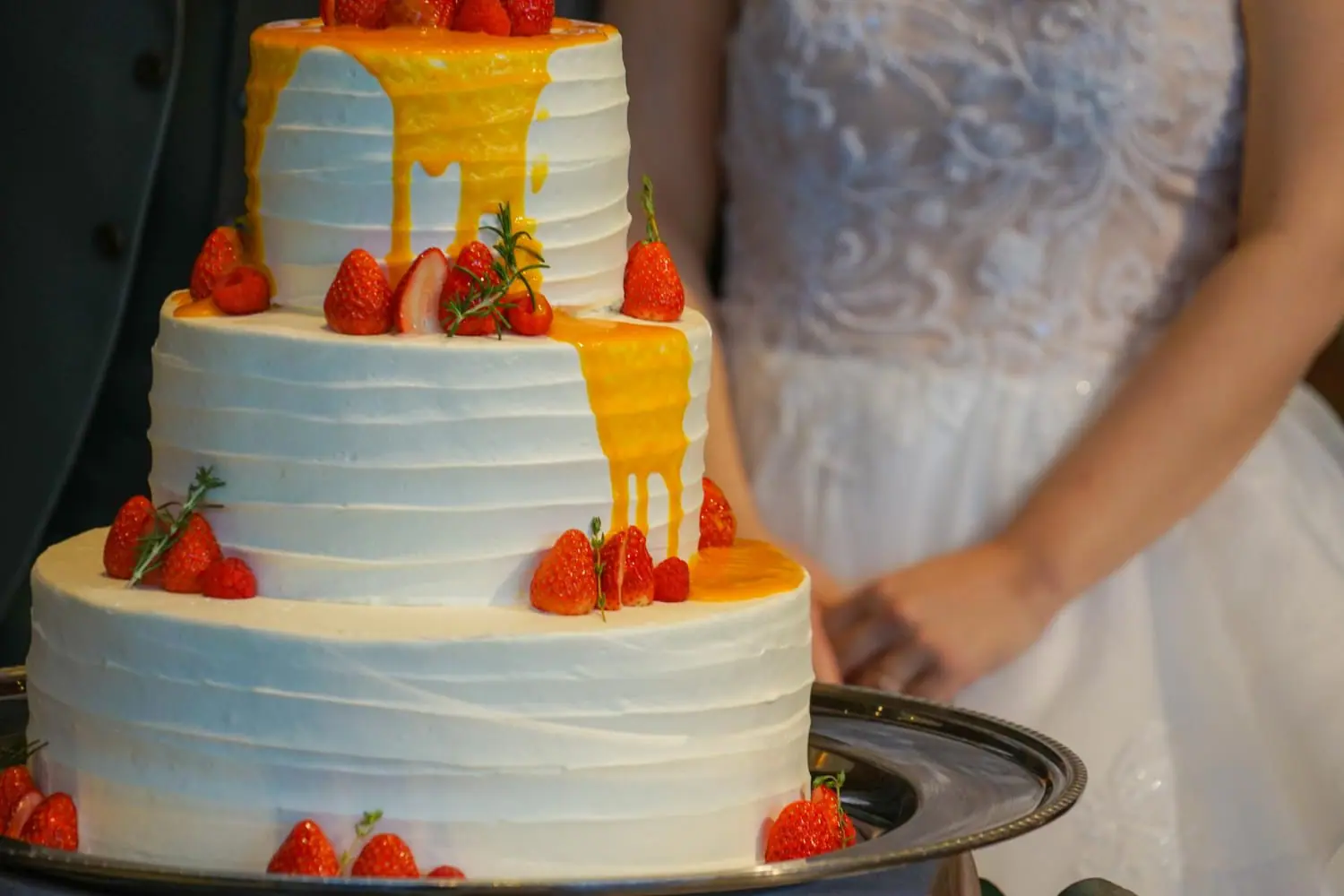
Flavor Trends and the Average Price of Wedding Cake by Flavor
Flavor gets less attention than design in most wedding cake content, though it matters just as much to your actual guests.
What’s trending right now
Lemon-raspberry, tiramisu, and coffee-forward flavor pairings are among the most requested combinations for 2026 weddings. This reflects a real shift toward more sophisticated, dessert-menu-style flavors over purely classic options.
Classic flavors remain genuinely popular for real reasons
Vanilla and chocolate remain the most universally appealing options for a mixed guest list with varying tastes. There’s no requirement to chase a trending flavor if a classic genuinely fits your preferences better.
Consider mixing flavors across tiers
Many couples choose a different flavor for each tier, giving guests real variety without requiring a single flavor to please everyone at once. This also gives your baker room to include one trending, adventurous flavor alongside a safer classic.
How to Bring Down the Average Price of Wedding Cake Without It Looking or Tasting Cheap
A handful of genuinely effective strategies reduce cost without sacrificing how the cake looks or tastes.
Display cake plus sheet cake
A smaller, beautifully decorated display cake handles the cutting photo and sits at the head table, while a plain sheet cake, cut in the kitchen and plated identically, serves the rest of your guests. Nobody at the reception can tell the difference on their plate, and this can cut your total cake cost significantly.
Buttercream over fondant
As covered earlier, buttercream commonly saves $1 to $2 per slice compared to fondant, and current trends, particularly textured buttercream finishes, mean you’re not sacrificing a high-end look to save that money.
Simplify the decoration, not the flavor
Fresh flowers, a few well-placed sugared fruits, or a simple metallic accent can create real visual impact at a fraction of the cost of extensive hand-piped detail work across every tier.
Choose a newer baker with genuine skill
An emerging baker building their portfolio commonly charges less than an established studio with years of demand behind their name, often for genuinely comparable quality. Check reviews and ask to see a full portfolio, not just curated highlights.
Confirm your actual guest count before ordering
Ordering for your final, confirmed guest count rather than a rough early estimate prevents paying for servings you don’t actually need. Confirm this number as close to your final RSVP deadline as your baker’s ordering timeline allows.
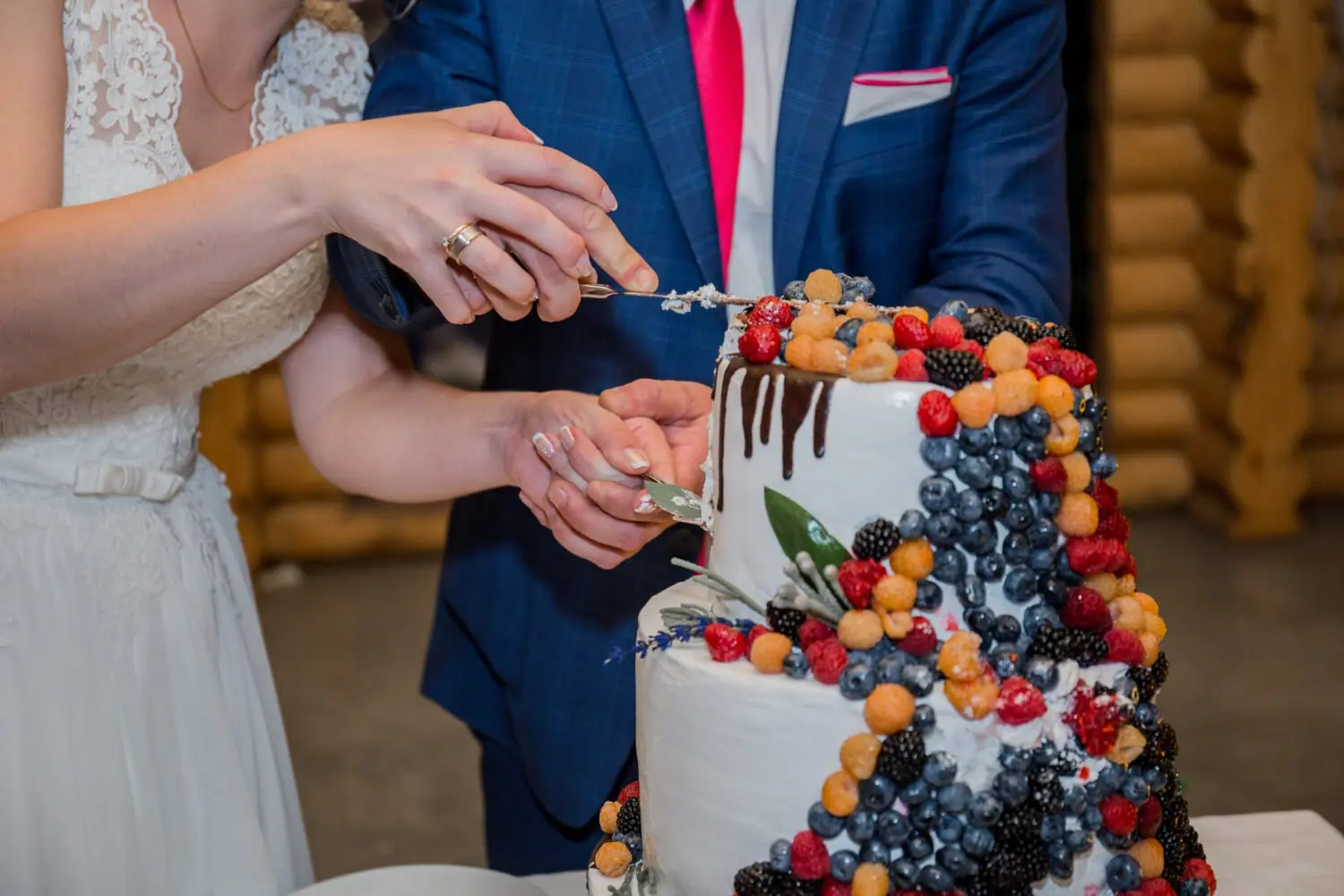
The Tasting Process: What to Actually Expect
Most custom bakeries include a tasting as part of booking, and knowing what this actually involves helps you get real value from it.
What a typical tasting includes
Most bakeries offer several flavor and filling combinations to sample, along with a look at photos or samples of their decorating style. Some charge a modest fee for the tasting itself, often credited toward your final order if you book.
Come with real questions, not just an open palate
Ask directly about their specific production timeline, delivery and setup process, and how they handle a significant guest count change close to the wedding. A tasting is also a genuine opportunity to gauge how clearly and confidently a baker answers direct questions.
Trust your own reaction over a trending flavor
If a currently popular flavor combination doesn’t actually appeal to you and your partner, choose what you genuinely enjoy instead. This is dessert at your own wedding, not a trend showcase for your guests.
Bring the people whose opinions matter, but keep the group small
A tasting with too many opinions in the room can make a straightforward decision genuinely harder. Two to three people, including the two of you, is a reasonable size for this specific appointment.
Questions Worth Asking Before You Book
Direct questions convert vague assumptions into clear, written answers before any money changes hands.
- What is your exact per-slice or total price for this specific design?
- Does this quote include delivery and setup, or are those separate?
- What is your deposit amount and cancellation policy?
- How do you handle a significant guest count change close to the wedding?
- What happens if something goes wrong with the cake before delivery?
What the Contract May Not Make Obvious
Several specific contract details deserve direct attention beyond the price itself.
Confirm the exact serving count, not just the tier count
“Three tiers” doesn’t tell you how many guests it actually serves; different bakers cut and size tiers differently. Get the specific serving count in writing, matched against your actual guest list.
Confirm delivery timing and responsibility
Ask exactly when the cake arrives relative to your reception start time, and who is responsible if delivery is delayed. A cake arriving after your first guests does nobody any favors.
Confirm what happens with substitutions
If a specific ingredient or flower becomes unavailable close to your date, ask directly how your baker handles this and whether you’ll be consulted before a substitution happens.
Get any verbal promise added to the written contract
A specific color match, a particular flower type, a promised flavor combination discussed verbally should appear explicitly in your written order, not relied on from memory alone.
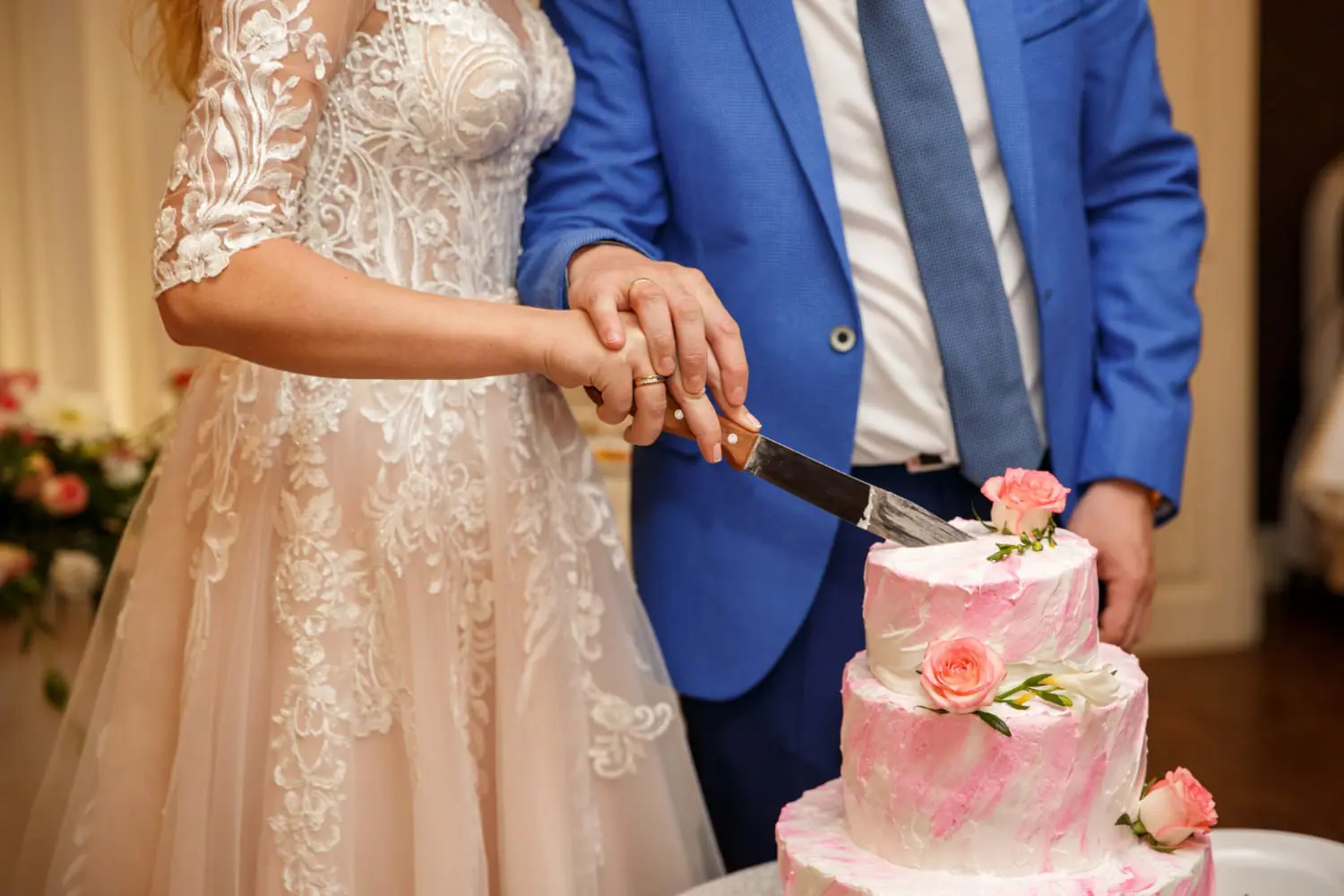
Timeline: When to Actually Order Your Cake
Wedding cakes need less lead time than a bridal gown, but genuine planning still matters.
Book your baker 4 to 6 months out for most weddings
Popular bakers, particularly for peak wedding season dates, can book up considerably earlier than this. If a specific baker’s work genuinely matters to you, reach out as soon as your date and venue are confirmed.
Finalize your design and flavor 2 to 3 months before the wedding
This gives your baker real time to source specific ingredients or decorative elements without a rush, and gives you time to schedule and attend your tasting appointment comfortably.
Confirm your final guest count as close to the deadline as possible
Most bakeries need your final serving count 2 to 4 weeks before the wedding. Confirm your specific baker’s exact deadline directly.
Delivery Day: What Can Go Wrong, and How to Prevent It
Most cake deliveries go smoothly, and a little preparation protects you against the ones that don’t.
Confirm venue access and timing directly with your baker
Your baker needs to know exact delivery access details, loading dock location, elevator availability, any specific timing restrictions, well before the wedding day itself, not discovered together in a parking lot that morning.
Temperature matters more than people expect
Buttercream cakes are genuinely vulnerable to heat, and an outdoor summer reception needs a real plan for keeping the cake in a cool, shaded space until serving time. Ask your baker directly about this if your reception is outdoors in warm weather.
Have a point of contact for delivery day
Designate someone other than the couple, a coordinator or trusted family member, to receive the cake and confirm it looks correct before the baker leaves, so any issue gets caught and addressed immediately rather than discovered mid-reception.
DIY Wedding Cakes: A Genuinely Honest Look
Some couples consider making their own cake, and this deserves a direct, unromanticized look at the real trade-offs.
This is a genuinely large undertaking, not a weekend project
A tiered wedding cake requires real structural engineering, precise timing, and backup planning most home bakers haven’t practiced at this specific scale. Underestimating this is the single most common source of DIY cake regret.
Consider a hybrid approach
Some couples have a professional handle the structural tiers while adding a personal, homemade element, like a groom’s cake or a dessert table addition, getting genuine personal involvement without the full risk of a DIY main cake.
If you do DIY, practice at full scale beforehand
Bake and decorate a full-size practice version well before the wedding, not for the first time during wedding week. This reveals real problems while there’s still time to adjust or pivot to a backup plan.
Have a genuine backup plan
Keep a backup dessert option or a local bakery’s contact information on hand in case a DIY cake doesn’t come together as planned. This isn’t pessimism; it’s the same practical planning this guide recommends everywhere else.
Dietary Restrictions and Allergy-Friendly Cakes
A genuinely inclusive dessert table takes real planning, worth addressing directly and early.
Gluten-free options
Most experienced wedding bakers now offer a genuinely good gluten-free option, though this commonly adds a real premium, often $1 to $3 more per slice, reflecting specialized ingredients and, ideally, dedicated preparation space to avoid cross-contact.
Vegan and dairy-free options
Vegan wedding cakes have improved considerably in quality in recent years, no longer the dense, disappointing option they once were. Ask specifically for a tasting of this option if it applies to you or guests you’re accommodating, since quality genuinely varies by baker.
Nut and other severe allergies
If a guest has a severe allergy, confirm your baker’s actual cross-contact prevention practices directly, not just whether a specific ingredient is excluded from the recipe. This is a genuine safety question, not just a preference.
You don’t need a separate cake for every dietary need
A small, dedicated allergy-friendly cake or a few individual servings alongside your main cake is often more practical and less costly than making your entire wedding cake accommodate every possible restriction at once.
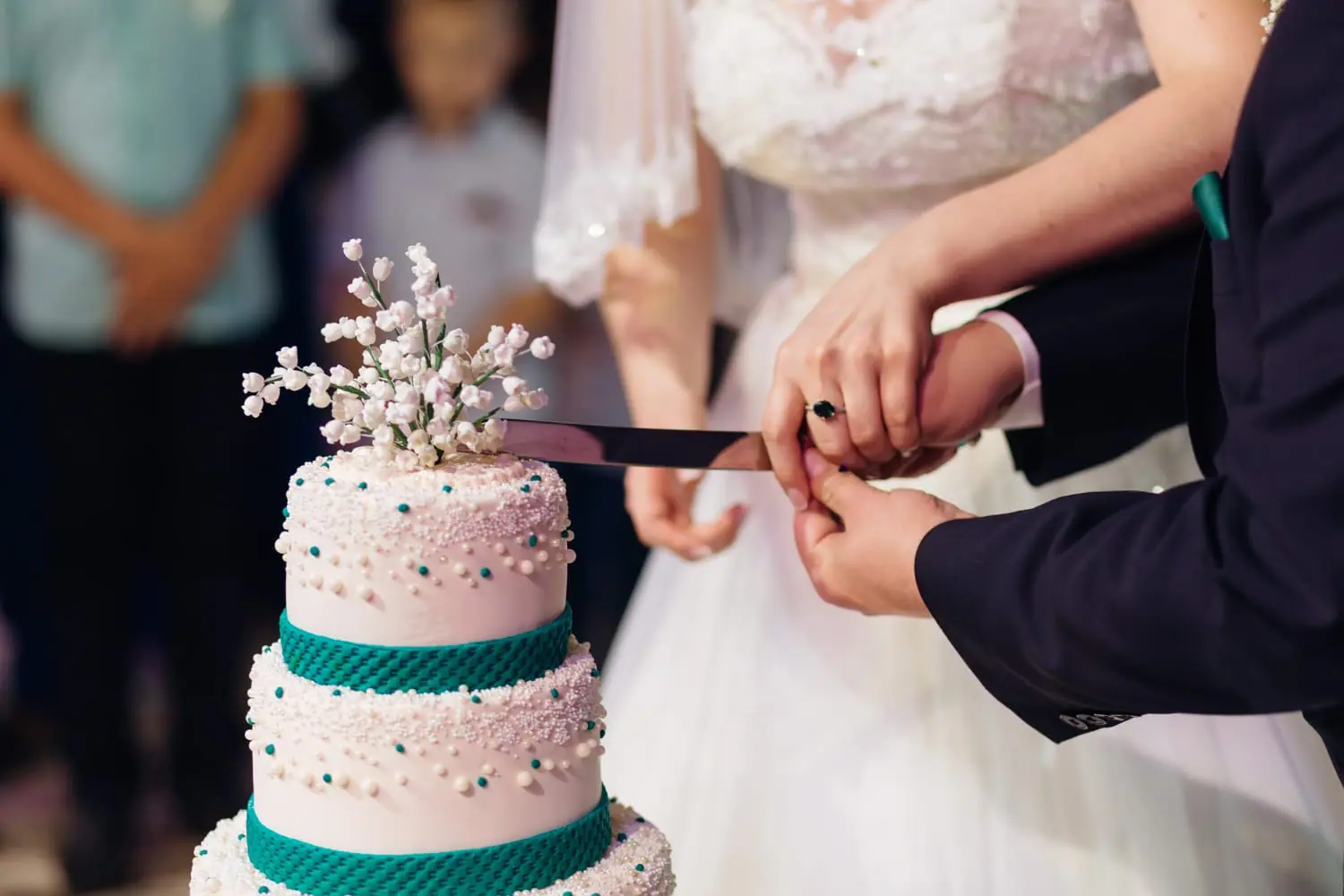
A Realistic Cost Comparison: Three Budget Levels
Here’s how the guidance throughout this guide plays out at three genuinely different, realistic budget levels.
Budget-conscious: under $200
A Costco or grocery store sheet cake, dressed up with fresh flowers and a nice cake stand, feeds a genuinely large guest count for well under $200 total, with money left over for a simple topper or decorative element.
Mid-range: the national average, around $500
A custom two- or three-tier buttercream cake from a local bakery, with one or two trending decorative touches like sugared fruit, lands close to this guide’s headline average, genuinely beautiful without pushing into luxury pricing.
Higher-end: $1,000 and up
A fully custom, elaborately decorated cake from an established specialty studio, potentially incorporating fondant work, hand-piped detail, or sculptural elements, reflects this tier, genuinely justified by the skill and time behind it if that specific artistry matters to you.
None of these three levels is more correct than the others. Each reflects a genuinely reasonable choice depending on what actually matters most to you and your specific budget.
Your Wedding Cake Planning Checklist
- ☐ Real guest count confirmed for accurate serving estimate: ____________
- ☐ Budget range decided, including cutting fee and delivery: ____________
- ☐ Venue’s cutting fee confirmed directly: ____________
- ☐ Baker booked, 4–6 months out for most weddings: ____________
- ☐ Tasting scheduled and attended: ____________
- ☐ Design and flavor finalized in writing: ____________
- ☐ Delivery logistics confirmed directly with venue and baker: ____________
- ☐ Any dietary accommodations confirmed and tasted: ____________
- ☐ Final serving count submitted by baker’s deadline: ____________
Frequently Asked Questions
What is the average price of wedding cake in 2026?
The national average sits at roughly $500 for the cake itself, with most couples spending between $300 and $700. Priced per slice, that works out to $3 to $8 per person for a standard custom design.
How much does a wedding cake cost per slice?
Most custom bakeries charge $3 to $8 per slice for a standard design. Basic buttercream sits around $4; fondant runs $5 to $6. Elaborate, hand-decorated designs commonly reach $8 to $15 a slice.
What is a cake-cutting fee, and do I actually have to pay it?
Many venues and caterers charge $1 to $5 per slice separately from the bakery cost, for cutting, plating, and serving the cake. This is genuinely common, though some venues waive it under specific conditions, worth asking about directly.
How much does a 3-tier wedding cake cost?
Commonly $300 to $850, serving roughly 75 to 175 guests depending on tier size and design complexity.
Is buttercream or fondant cheaper?
Buttercream is generally less expensive, commonly $1 to $2 less per slice than fondant, while also being the preferred flavor and texture for many people.
Can I really save money with a Costco or grocery store cake?
Yes, genuinely. A Costco half-sheet cake, feeding around 48 guests, commonly costs well under $30, a fraction of custom bakery pricing, and can look beautiful with simple styling like fresh flowers or a nice cake stand.
How far in advance should I book my wedding cake?
4 to 6 months out works for most weddings, though popular bakers in peak season book up considerably earlier. Reach out as soon as your date and venue are confirmed if a specific baker matters to you.
Does a wedding cake need to serve every single guest?
No. Many couples use a smaller display cake for the cutting moment paired with a sheet cake served in the kitchen, a genuinely common way to get a beautiful cake without tier-pricing your entire guest count.
How much extra does a gluten-free wedding cake cost?
Commonly $1 to $3 more per slice, reflecting specialized ingredients and, ideally, dedicated preparation space to prevent cross-contact.
What’s the single most commonly missed cost in wedding cake budgeting?
The venue’s cake-cutting fee, charged separately from the bakery and easy to miss during early cake-focused conversations. Confirm this directly and specifically with your venue.
Regional Differences in the Average Price of Wedding Cake
The national average price of wedding cake tells only part of the story, since where you’re getting married genuinely shifts the number.
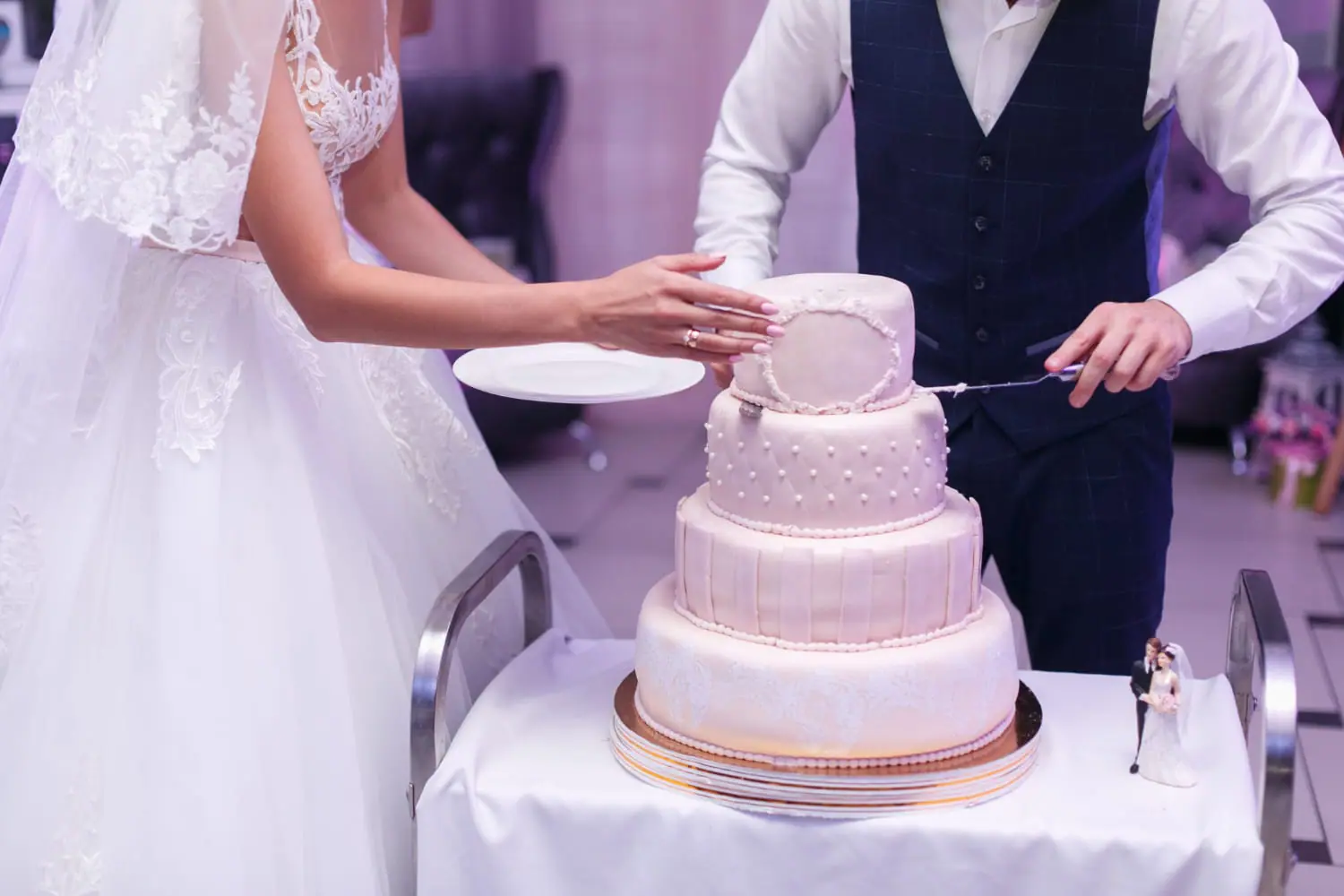
Major metro areas run higher
Coastal cities and major metro areas, particularly New York, Los Angeles, and San Francisco, commonly see wedding cake pricing well above the national average, reflecting both higher business costs for bakers and stronger local demand.
Smaller markets often offer real value
Smaller cities and towns, along with many parts of the Midwest and South, commonly see pricing at or below the national average for genuinely comparable skill and quality, worth factoring in if you have any flexibility on location.
Get a local quote rather than assuming the national average applies directly
Use the figures throughout this guide as a planning baseline, then confirm actual current pricing with bakers in your specific area before finalizing your cake budget.
Working a Wedding Cake Into Your Overall Budget
The cake commonly represents a modest slice of a total wedding budget, useful context when deciding how much to actually spend here.
Where cake typically fits proportionally
Cake and dessert commonly represent roughly 2 to 3 percent of a total wedding budget, a genuinely small category compared to venue and catering, which often account for close to half.
A bigger cake budget doesn’t have to come at the expense of other categories
If cake genuinely matters to you as a couple, a slightly larger allocation here, balanced by trimming a lower-priority category elsewhere, is a completely reasonable way to build your specific budget around your actual priorities.
Confirm your cake line item before falling for a specific design
Decide your realistic cake budget before touring bakeries or browsing inspiration, the same discipline this guide recommends for every other wedding vendor category.
Comparing Multiple Bakery Quotes Fairly
Once you have quotes from a few bakers, comparing them accurately takes more structure than comparing headline numbers alone.
Confirm each quote covers the same actual scope
One baker’s price might include delivery and setup; another’s might not. Confirm exactly what’s included in each quote before comparing the average price of wedding cake options side by side.
Normalize for serving count, not just tier count
As covered earlier, tier count alone doesn’t tell you actual servings. Confirm each quote’s real serving count matches your guest list before comparing per-slice value.
Weigh portfolio and reviews alongside price
The least expensive quote isn’t automatically the wrong choice, and the most expensive isn’t automatically the right one. Use a baker’s actual portfolio and genuine client reviews alongside your price comparison for a fully informed decision.
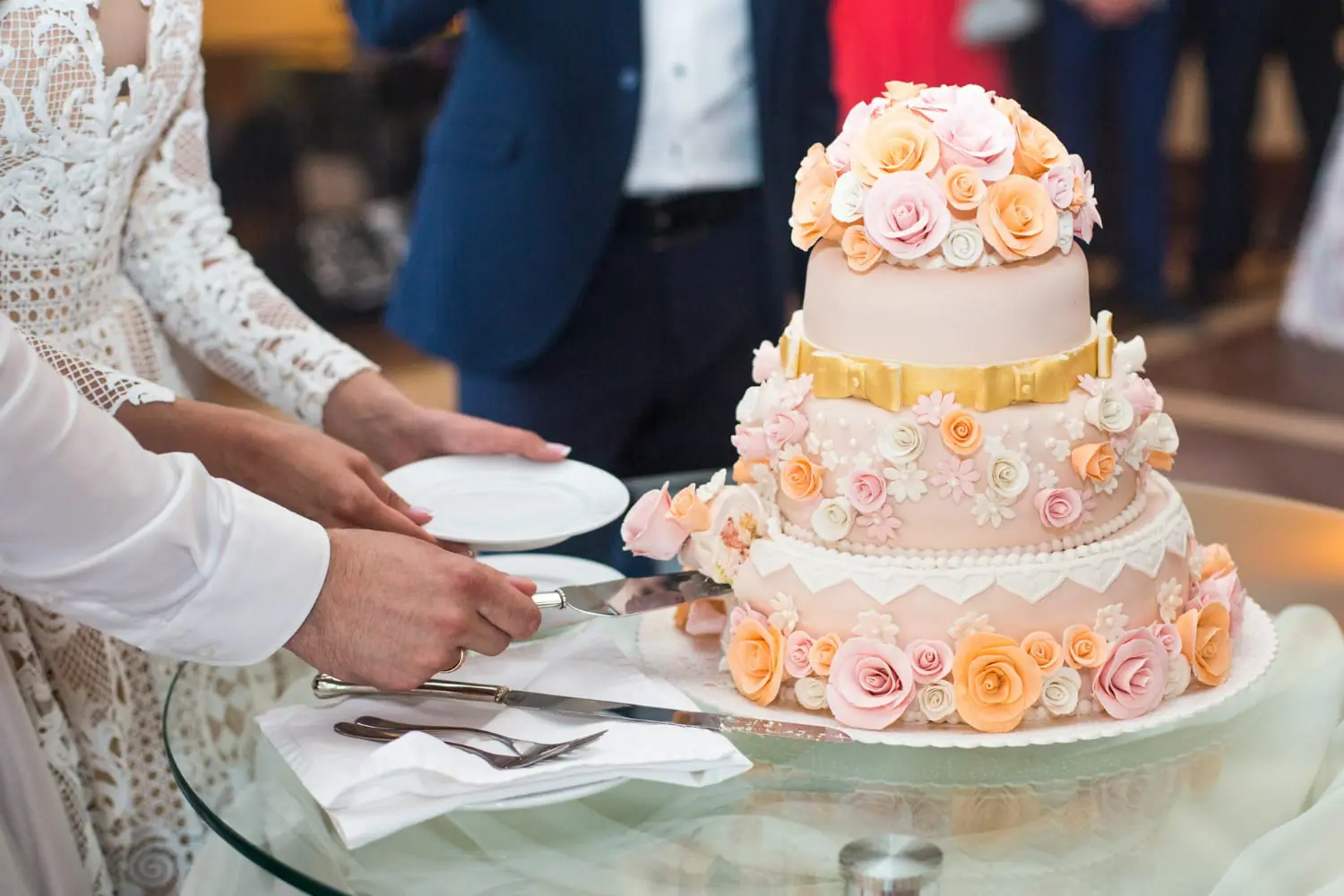
A Few Wedding Cake Myths Worth Dropping
“A wedding cake has to have multiple tiers to look impressive”
A well-designed single tier, particularly with current sculptural trends covered earlier, can look every bit as impressive as a tall, multi-tier cake, at a fraction of the cost.
“Fondant always looks more elegant than buttercream”
Modern textured buttercream techniques deliver a genuinely elegant, high-end look without the taste trade-off many guests notice with fondant. This is a style preference, not an objective quality difference.
“A grocery store cake will look obviously cheap”
As the real Costco story earlier in this guide shows, a well-styled grocery store cake can be genuinely indistinguishable from a custom design to most wedding guests, particularly with simple, thoughtful presentation.
“You need to match your cake exactly to your wedding colors”
A neutral or white cake with fresh flowers matching your palette works just as well as a fully color-matched design, and it’s often more timeless in your actual wedding photos.
Second Round of Direct Answers
Does the average price of wedding cake include delivery?
Not always. Confirm this directly with your specific baker, since delivery and setup commonly cost $50 to $150 separately from the cake price itself.
Why do wedding cakes cost more than a regular cake?
Wedding cakes require structural engineering to support multiple tiers, precise timing for delivery and assembly, and typically higher-quality ingredients than a standard bakery cake, all reflected in the price.
Is it cheaper to order cupcakes instead of a full wedding cake?
Often, yes. Cupcakes commonly run $2 to $6 per person, potentially less than a fully custom tiered cake, while still offering a real dessert experience and photo opportunity.
Should we get cake insurance for our wedding?
This isn’t common practice, though confirm whether your general wedding event insurance, if you have one, extends to vendor-related issues like a cake that doesn’t arrive as contracted.
What happens if our wedding cake arrives damaged?
Contact your baker immediately, document the damage with photos, and confirm your contract’s specific policy for this situation. A reputable baker will have a clear process for addressing this.
Can we order a wedding cake from a bakery that doesn’t specialize in weddings?
Yes, though confirm they have genuine experience with tiered, structural cakes specifically, since this requires different skills than standard bakery cakes.
How many people does a wedding cake actually need to serve?
Order for your actual confirmed guest count, plus 5 to 10 percent extra servings, rather than assuming every invited guest will eat cake.
Is a naked cake, without full frosting coverage, cheaper?
Sometimes, since it requires less finishing work, though this varies by baker. Ask directly, since a naked cake can be genuinely trendy rather than automatically cheaper.
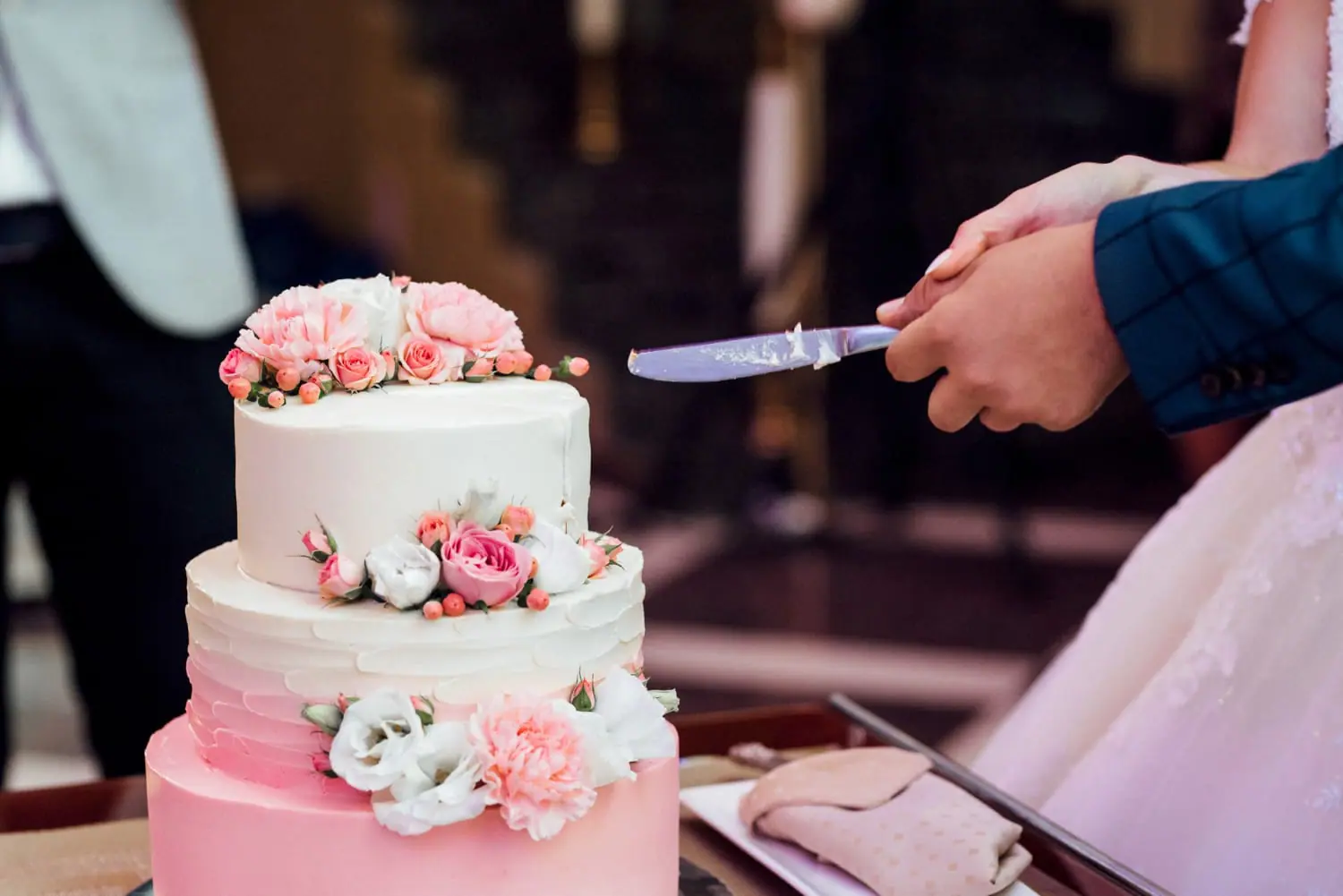
A Worked Example: Building a Real Cake Budget
Numbers in the abstract are harder to apply than a concrete example. Here’s a genuinely realistic, composite scenario.
A specific scenario
A couple planning a 120-guest wedding sets a $600 cake budget. They confirm their venue’s cutting fee upfront, $2 per slice, adding $240 to the real total. They choose a three-tier design with textured buttercream, splitting the difference between their favorite trending flavors, lemon-raspberry on one tier and classic vanilla on the other two. Their baker quotes $480 for the cake itself, delivery included, landing their true total at $720, close to their original estimate once the cutting fee is factored in from the start.
What made the difference
Nothing about this required unusual luck. It required confirming the cutting fee directly and early, rather than discovering it as a surprise on the final invoice, and building that number into the original budget from day one.
What Pinterest and Styled Photos Don’t Show You
A beautifully styled cake photo captures one perfect moment under ideal lighting, not the actual process or cost behind it.
Styled shoots often use display-only cakes
Some elaborate cakes in styled wedding photography are foam or styrofoam forms, not real, edible cakes, built purely for photography rather than serving actual guests. This affects both the apparent cost and the practical feasibility of recreating that exact look.
The photo doesn’t show the temperature-controlled studio
An elaborate buttercream or fondant design photographed indoors, in controlled conditions, doesn’t reveal how that same cake would hold up outdoors in real summer heat, covered earlier in this guide’s delivery section.
Real cakes at real weddings look slightly different from the inspiration photo, and that’s completely fine
A skilled baker interprets your inspiration through their own hands and your specific cake’s real dimensions. Expect genuine similarity, not an exact photographic replica, and trust a good baker’s professional judgment on what will actually translate well.
Cake Toppers and Small Finishing Touches
These small details carry their own modest cost worth planning for separately.
Traditional figurine toppers
Classic couple figurines commonly run $20 to $75, with custom or hand-painted versions running higher, up to $150 or more for a fully personalized design.
Fresh flower toppers
Fresh flowers, either arranged by your florist or your baker, commonly cost $30 to $100 depending on the specific blooms and arrangement size, and pair naturally with the sugared fruit and botanical trends covered earlier in this guide.
Monogram and script toppers
Acrylic, wood, or metal monogram toppers commonly run $15 to $60, a genuinely affordable way to personalize a simpler cake design without a major cost addition.
Confirm who’s actually providing the topper
Some bakers include a basic topper in their pricing; others expect you to provide one separately. Confirm this directly rather than assuming either way.
Cake Stands and Display Considerations
How your cake is displayed affects both its visual impact and, in some cases, your total cost.
Venue-provided versus rented stands
Some venues include a cake table and stand as part of their package; others require you to rent or provide one separately, commonly $30 to $100 for a rental.
A simple stand often works better than an ornate one
A clean, simple stand lets a beautifully designed cake stand out on its own, while an overly ornate stand can visually compete with the cake itself. This is a genuine styling consideration, not just a cost one.
Confirm table placement and lighting with your venue
Ask directly where your cake table will be positioned and what lighting will be available, since this affects both your reception’s flow and how your cake photographs.
Cultural and Religious Wedding Cake Traditions
Wedding cake customs vary genuinely across cultures, worth knowing if a specific tradition matters to your own celebration.
The tiered white cake is itself a relatively specific tradition
The tall, white, tiered wedding cake many Americans picture as “the” wedding cake reflects a specific Western tradition, not a universal wedding custom. Many cultures celebrate with entirely different desserts or none centered on cake at all.
Groom’s cakes have Southern US roots
This tradition, a separate, often more personalized cake reflecting the groom’s specific interests, originated in the American South and has spread more broadly in recent years as a genuinely fun addition rather than a strict regional custom.
Some cultures incorporate specific cake-cutting rituals
Certain traditions include specific rituals around cake cutting, such as saving the top tier for a future anniversary, a custom with real documented history in American wedding tradition specifically, worth researching directly if it’s meaningful to your own background.
Respect your specific tradition’s actual requirements, not a generic version
If a cultural or religious tradition matters to your celebration, research its actual specific requirements directly, ideally with input from someone knowledgeable in that tradition, rather than a general approximation.
Saving the Top Tier: Worth It or Not?
A genuinely charming tradition, worth understanding honestly before committing to it.
The tradition and its origin
Saving the top tier of your wedding cake to eat on your first anniversary has real, documented history in American wedding custom, though modern freezer technology and food safety understanding have evolved considerably since the tradition’s origins.
The honest reality of a year-frozen cake
A cake frozen for a full year often doesn’t taste as good as guests remember from the wedding day itself, regardless of careful wrapping and storage. Many couples report genuine disappointment with this specific tradition.
A popular modern alternative
Some couples order a small, fresh cake in the same flavor and design for their actual first anniversary instead, getting the symbolic gesture and genuinely good cake at once, without a year of freezer storage.
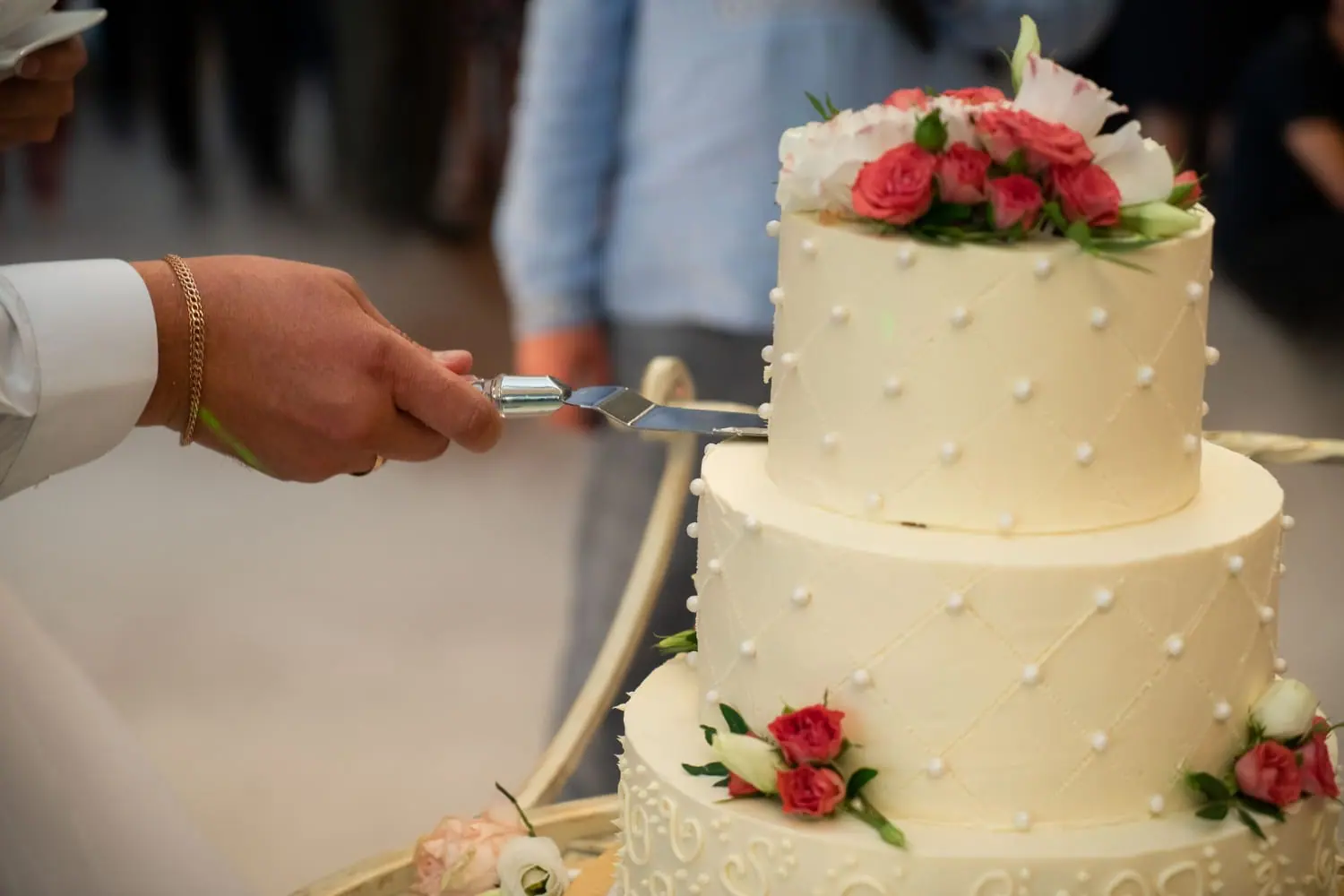
Third Round of Direct Answers
Why do some bakers charge more for the same tier count?
Reputation, local demand, design complexity, and the specific market you’re in all factor in, covered in detail earlier in this guide. Tier count alone doesn’t determine price.
Should we get a cake topper from our baker or buy one separately?
Either works. Confirm whether your baker includes a basic topper, and compare that against buying one separately if you want a more specific or personalized design.
Is saving the top tier of our cake actually worth doing?
Many couples find the year-frozen cake disappointing compared to their wedding-day memory. Ordering a small fresh cake for your actual anniversary is an increasingly popular, genuinely tastier alternative.
Do all cultures have a wedding cake tradition?
No. The tall, white, tiered cake many Americans picture is a specific Western tradition, not universal. Many cultures celebrate with different desserts entirely, or none centered on cake at all.
What is a groom’s cake, and do we need one?
A separate, often more personalized cake reflecting the groom’s specific interests, originating in Southern US tradition. It’s entirely optional, not a required element of any wedding.
How much should we budget for a cake stand if our venue doesn’t provide one?
Commonly $30 to $100 for a rental, worth confirming directly with your venue before assuming either way about what’s included.
Can we bring our own cake topper instead of using one from our baker?
Yes, this is completely standard practice. Confirm timing with your baker so they know to leave space for it during setup.
Does the average price of wedding cake vary much by season?
Peak wedding season, generally late spring through early fall, can mean busier bakers and less negotiating room, though the core pricing factors covered throughout this guide matter more than season alone.
Negotiating With a Baker: What’s Actually Flexible
Some room for negotiation genuinely exists, worth understanding directly.
Package inclusions are sometimes more flexible than base price
A baker unwilling to move on their per-slice rate may still have flexibility on delivery timing, tasting inclusions, or a small design adjustment at no extra charge. Ask directly what flexibility exists.
Off-peak dates sometimes come with real pricing flexibility
A Friday or Sunday wedding, or a date outside peak season, can mean a baker genuinely has more room to negotiate, given lower overall demand for that specific date.
Bundling with other services sometimes helps
If your baker also offers cupcakes, a dessert table, or other services you need, bundling these together sometimes unlocks a better overall rate than booking each separately.
Know when a quote is genuinely fair, not just an opening offer
Well-established bakers with strong demand and transparent, itemized pricing may simply have less room to negotiate, reflecting real market value rather than an inflated starting point. Compare quotes across bakers rather than assuming every price is negotiable.
Wedding Cake Insurance and Liability, Briefly
This is a less-discussed but genuinely relevant consideration for a significant vendor investment.
Confirm your baker carries their own liability insurance
A professional bakery should carry liability insurance covering accidental damage during delivery or setup. Ask directly for proof if this matters to you, particularly for a higher-value cake.
Check whether your venue requires vendor insurance
Some venues require every vendor, including your baker, to carry proof of insurance as a condition of delivery access. Confirm this requirement with your venue and pass it along to your baker early.
This is not typically something couples need to insure separately
Unlike an engagement ring, a wedding cake generally doesn’t warrant its own dedicated insurance policy from the couple’s side, since the baker’s own coverage and your general wedding event insurance, if you have one, typically address genuine risk here.
Destination Weddings and the Average Price of Wedding Cake Abroad
A destination wedding changes the cake conversation meaningfully, worth its own direct attention.
Local versus traveling baker
Hiring a local baker at your destination avoids transport risk entirely, though it means less familiarity with your specific vision. A traveling baker preserves style consistency but adds real travel cost and logistics risk.
Climate affects cake choice more than at a typical wedding
Heat and humidity, particularly for a beach or tropical destination, make buttercream genuinely more vulnerable, worth discussing directly with any baker you’re considering for a warm-climate destination wedding.
Confirm ingredient availability at your specific destination
A specific flavor or ingredient available domestically may not be accessible at every international destination. Confirm this directly during your planning process, not after committing to a specific flavor combination.
Multi-Day Weddings and Multiple Cake Needs
Some celebrations span multiple events, each potentially needing its own dessert consideration.
Welcome parties and rehearsal dinners sometimes include their own dessert
These pre-wedding events commonly call for something simpler and less costly than your main wedding cake, worth budgeting and planning as its own separate line item.
A cohesive dessert theme across multiple events can work well
Some couples choose a consistent flavor or design element across their welcome party, rehearsal dinner, and main wedding desserts, creating a genuine sense of continuity across a multi-day celebration.
Budget each event’s dessert separately, not from one combined estimate
Treating each event’s dessert as its own specific cost, rather than assuming your main wedding cake budget somehow covers everything, prevents a genuine scramble as multiple events approach.
Fourth Round of Direct Answers
Should we hire a local baker for our destination wedding, or bring one with us?
Both are legitimate choices. Local hiring avoids transport risk entirely; bringing your own baker preserves style consistency at real added travel cost.
Does hot weather really affect wedding cake more than people think?
Yes, genuinely. Buttercream in particular is vulnerable to heat, worth a direct conversation with your baker if you’re marrying somewhere warm, especially outdoors.
Should we serve dessert at our rehearsal dinner too?
This is optional, though many couples include something simpler and less costly than their main wedding cake, budgeted as its own separate item.
Is it normal to have different desserts at different wedding events?
Yes, completely normal for a multi-day or multi-event celebration. Budget and plan each event’s dessert separately rather than assuming one budget covers everything.
Can we negotiate our wedding cake price with a baker?
Sometimes, particularly around package inclusions, timing, or bundled services, though a well-established baker’s core per-slice rate may have less flexibility than a newer baker’s pricing.
Do we need to buy separate insurance for our wedding cake?
Not typically. Your baker’s own liability insurance and any general wedding event insurance you carry usually address genuine risk here, unlike an engagement ring, which often does warrant its own dedicated coverage.
What’s the most important single question to ask any baker before booking?
Ask for a complete, itemized quote covering the cake, delivery, setup, and any additional fees, in writing, so you can compare it fairly against other quotes and your venue’s separate cutting fee.
A Glossary of Wedding Cake Terms
| Term | Plain-language meaning |
|---|---|
| Tier | One distinct layer level of the cake, stacked on dowels or a support structure |
| Dummy tier | A non-edible foam form, decorated to match, used to add height without added cost |
| Naked cake | A cake with minimal or no exterior frosting, showing the cake layers themselves |
| Lambeth piping | An elaborate, layered piping technique originating in vintage British cake design |
| Fondant | A smooth, moldable sugar paste used for a sculptural, seamless cake finish |
| Ganache | A rich chocolate and cream mixture, used as filling or a smooth outer coating |
| Cake dowels | Internal support rods keeping upper tiers from sinking into lower ones |
A Direct Comparison: Custom Bakery vs. Grocery Store vs. Cupcakes
| Option | Typical cost (100 guests) | Best for |
|---|---|---|
| Custom bakery | $400–$900 | A specific design vision, full customization |
| Grocery store / Costco | $50–$150 | Maximum savings, tight timelines |
| Cupcakes | $200–$600 | Easy serving, variety of flavors |
| Dessert bar | $500–$1,100 | Variety-focused, casual reception style |
None of these four options is objectively better than the others. Each fits a genuinely different set of priorities, timeline, and budget, and the right choice is whichever one actually matches what you want your dessert experience to feel like.
Accessibility Considerations for Your Dessert Table
A few specific details deserve direct attention for genuinely inclusive dessert planning.
Confirm cake service accommodates mobility needs
If cake is served buffet-style rather than plated at tables, confirm the serving station itself is genuinely accessible, with adequate space and appropriate table height for a guest using a wheelchair.
Label allergen information clearly
Simple, visible labels noting common allergens, nuts, gluten, dairy, let guests with dietary restrictions make informed choices confidently, without needing to ask and potentially feel singled out.
Consider serving format for guests with dexterity limitations
Fork-free options, like cake pops or a smaller, easily handled portion, can genuinely help a guest with limited hand mobility enjoy dessert alongside everyone else.
A Note on Comparing Cake Photos Across Different Bakers
Portfolio photos tell you less than they seem to at first glance, worth understanding before you fall in love with a specific image.
Lighting and photography quality affect how a cake actually looks
A professionally photographed cake under ideal studio lighting can look meaningfully different from how that same design appears under your actual reception lighting. Ask to see photos taken at real weddings, not just styled portfolio shoots.
Confirm a specific photo actually represents that baker’s own work
Occasionally, a smaller or newer baker’s portfolio includes inspiration images pulled from elsewhere, not their own actual work. Ask directly, and request to see cakes from their own recent weddings specifically.
A portfolio shows their best work, not necessarily typical execution
Every baker’s portfolio highlights their strongest pieces. Ask for references or reviews from recent clients to get a fuller, more typical picture of what working with them actually looks like.
Fifth Round of Direct Answers
Can guests with dietary restrictions tell if their slice is allergen-free?
Only if it’s clearly labeled. Simple, visible labeling for common allergens lets guests make confident, informed choices without needing to ask and potentially feel singled out.
Should we ask to see photos from a baker’s actual recent weddings, not just their portfolio?
Yes, this is a genuinely reasonable request. A portfolio shows a baker’s strongest work; photos from real, recent weddings give you a fuller, more typical picture of what working with them looks like.
Why might a cake look different at our reception than in a baker’s portfolio photo?
Lighting matters more than people expect. A professionally photographed cake under ideal studio lighting can look meaningfully different from the same design under your actual reception lighting.
How do we make our dessert table more accessible for guests with mobility needs?
Confirm any buffet-style serving station has adequate space and appropriate table height, and consider fork-free options like cake pops for guests with limited hand mobility.
Is it rude to ask a baker for client references?
No, this is a completely reasonable, professional request. A confident, established baker will have genuine references or reviews readily available.
Wedding Cake Photography: Getting the Shot You Actually Want
Beyond the cake itself, capturing it well deserves a little coordination.
Confirm timing with your photographer, not just your baker
Ask your photographer directly when they plan to shoot the cake, before the reception gets busy or after, so your baker’s delivery and setup timing actually aligns with that plan.
Consider lighting at your specific cake table location
A beautifully designed cake in a dark corner won’t photograph as well as a simpler design in good light. Confirm your venue’s lighting at the actual cake table location during your walkthrough.
The cutting moment needs its own brief coordination
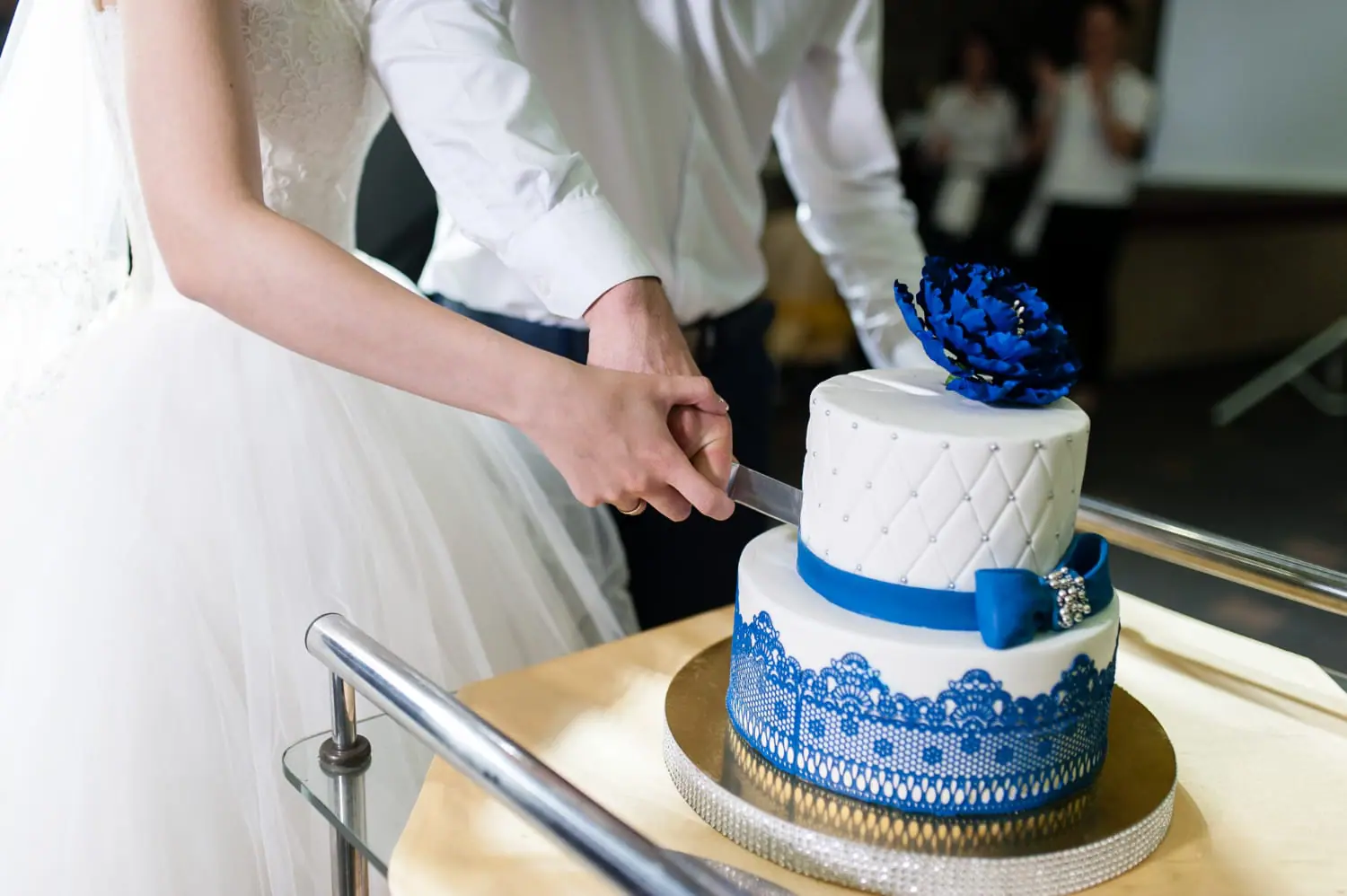
Confirm with your coordinator or planner exactly when the cake-cutting moment happens in your reception timeline, giving your photographer clear advance notice to be ready.
If You’re Feeding a Very Large or Very Small Guest List
Extreme guest counts, on either end, deserve their own direct consideration beyond the general guidance in this guide.
Very large weddings, 250 or more guests
At this scale, a display cake plus sheet cake strategy, covered earlier in this guide, becomes genuinely practical rather than optional, since tier-pricing an entire cake for this many servings gets expensive fast. Confirm your baker has real experience at this scale specifically.
Very small weddings, under 30 guests
A single, beautifully designed tier, reflecting the sculptural single-tier trend covered earlier, genuinely suits this guest count better than a traditional multi-tier cake sized for a much larger celebration.
Confirm minimum order requirements either way
Some bakers have a minimum order size or price, regardless of your actual guest count. Confirm this directly if your guest list sits at either extreme.
A Note on Sustainability and Local Sourcing
Some couples factor environmental and local-economy considerations into their cake decision, worth genuine mention.
Local, independent bakers support your local economy directly
Choosing an independent local bakery over a large chain keeps your spending within your community, a real consideration for couples who prioritize this.
Seasonal, local ingredients reduce environmental impact
A baker sourcing seasonal fruit and local dairy where possible, aligning naturally with the sugared fruit trend covered earlier, genuinely reduces the environmental footprint of your cake compared to out-of-season, shipped ingredients.
Ask directly if sourcing genuinely matters to you
Bakers’ specific answers about where ingredients come from tell you more than a general “locally sourced” marketing claim alone. Ask directly rather than assuming.
Sixth Round of Direct Answers
How do very large weddings handle wedding cake costs differently?
Pairing a display cake with a sheet cake, cut in the kitchen, becomes genuinely practical at 250 or more guests, since tier-pricing an entire cake at that scale gets expensive fast.
Is a single-tier cake enough for a small wedding?
Yes, genuinely. A well-designed single tier, reflecting the current sculptural trend covered earlier, suits a guest count under 30 better than a traditional multi-tier cake.
Do bakers have minimum order requirements?
Some do, regardless of your actual guest count. Confirm this directly if your guest list sits at either a very large or very small extreme.
Does choosing a local bakery actually make a difference?
For couples who prioritize this, yes. It keeps your spending within your local community and often means fresher, seasonal ingredients compared to a large chain.
Should we ask our baker where their ingredients come from?
Yes, if sourcing genuinely matters to you. A specific, direct answer tells you more than a general “locally sourced” marketing claim.
What a Well-Planned Wedding Cake Decision Actually Looks Like
Not every story here needs to be about avoiding a pitfall. Here’s what genuine planning produces in practice.
A specific, worked example
A couple planning a 90-guest wedding sets a $450 cake budget early, before touring any bakeries. They confirm their venue’s $2-per-slice cutting fee upfront, adding $180 to their real total, and adjust their bakery budget down slightly to $400 to keep their combined number on target. They choose a two-tier textured buttercream cake with a sugared fruit accent, landing at $380 with delivery included. Their final total, cake plus cutting fee, comes to $560, close to their original $450-plus-fee estimate, with no surprise on the final invoice.
What made the difference
Nothing about this required unusual luck or a bigger budget than average. It required confirming the cutting fee directly and early, and letting that real number shape their bakery budget from the start rather than discovering it as an afterthought.
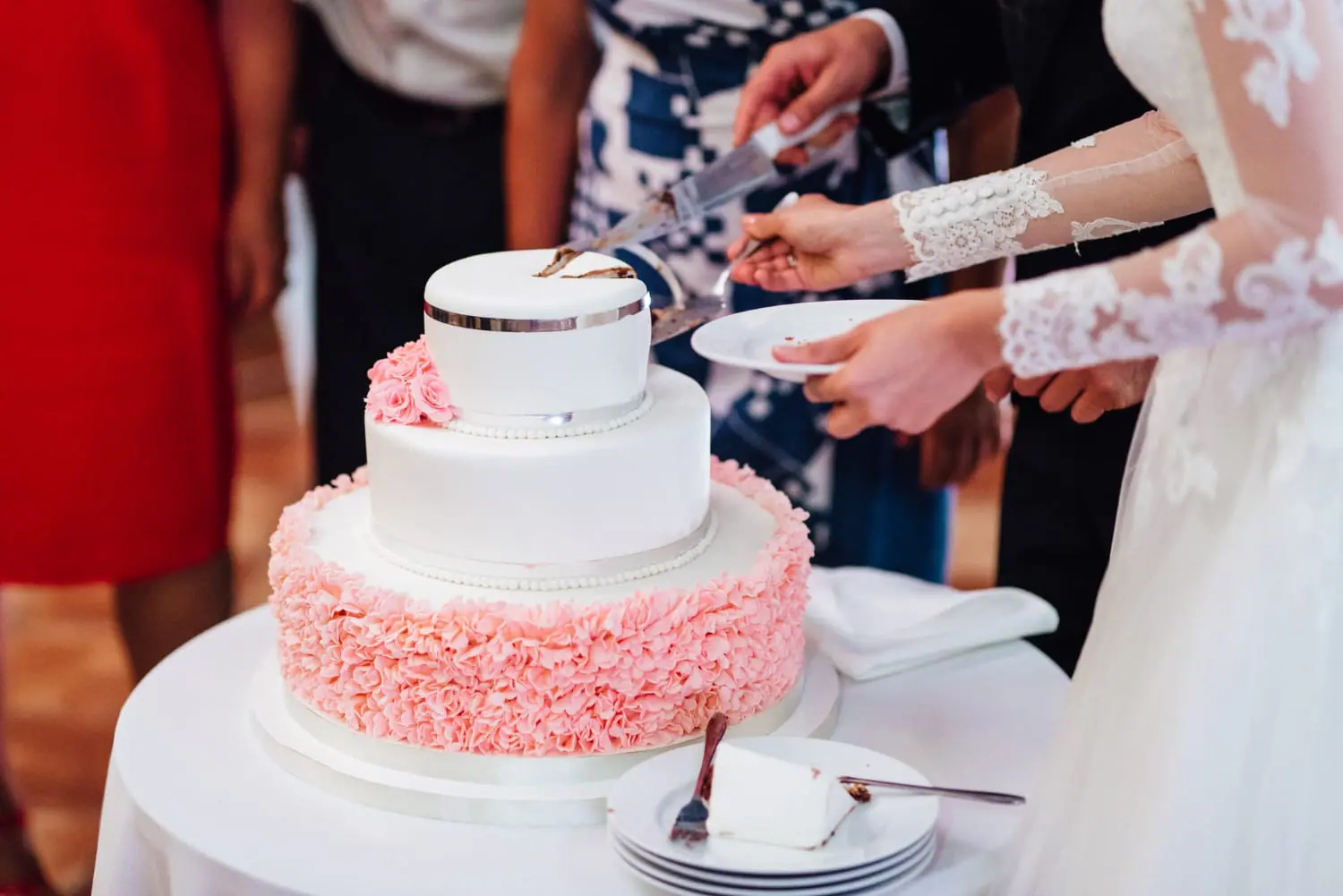
Second Marriages and Vow Renewals: Cake Etiquette Has Genuinely Loosened
Older etiquette once suggested a more modest cake for a second wedding. This convention has relaxed considerably, worth addressing directly.
There’s no reduced version of cake you’re required to choose
Choose whatever design and scale genuinely reflects how you want to celebrate this specific day, regardless of whether it’s a first wedding or not.
A vow renewal offers real flexibility
Since a vow renewal isn’t a legal ceremony, many couples use this as an opportunity to try a completely different cake style than their original wedding, purely based on current preference.
The same budgeting principles apply exactly the same way
Every cost factor and question covered throughout this guide applies identically, regardless of which wedding or celebration this is for you.
A Few More Practical Answers
Is it okay to have a completely different cake style for a second wedding than our first?
Yes, entirely. There’s no obligation to match or reference a previous celebration’s cake style.
Should we tip our wedding cake baker?
This isn’t universally expected, though some couples add a tip for exceptional service, particularly for a baker who also handles delivery and setup personally. Check your specific baker’s policy if unsure.
What if we want a cake but neither of us particularly likes cake?
Consider a dessert you both genuinely enjoy instead, pie, cheesecake, or another format entirely, decorated to serve the same visual and ceremonial role a traditional cake plays.
Can we order a wedding cake from a bakery in a different city than our venue?
Yes, though confirm delivery logistics and any additional travel fee directly, since this adds real distance and coordination beyond a typical local delivery.
Do we need a professional cake server, or can a family member cut it?
Either works. Many caterers include cake cutting as part of their service; if not, a family member or your coordinator can typically handle this without any special equipment beyond a knife and server.
Wedding Cake Alternatives by Region: What’s Locally Popular
Regional dessert traditions genuinely shape what “wedding cake” even means in different parts of the country.
Southern traditions
Beyond the groom’s cake tradition covered earlier, some Southern weddings incorporate regional flavors like red velvet or hummingbird cake as the main wedding cake itself, a genuine regional preference worth considering if it resonates with your own background.
Northeastern and coastal preferences
More elaborate, formal cake designs tend to be more common in Northeastern metro weddings, reflecting both regional style preferences and the higher-end bakery market covered in this guide’s regional pricing section.
There’s no rule requiring you to follow your region’s typical style
Regional trends are observations, not requirements. Choose whatever genuinely reflects your own taste, regardless of what’s most common where you’re getting married.
A Final Practical Checklist Addition: Questions to Ask Every Bakery
- ☐ What is your exact per-slice or total price for this specific design?
- ☐ Does this include delivery, setup, and a topper?
- ☐ What is your production timeline and deposit policy?
- ☐ How do you handle dietary restrictions and cross-contact?
- ☐ What happens if my guest count changes close to the wedding?
- ☐ Can I see photos from your actual recent weddings, not just your portfolio?
- ☐ Can you provide a written, itemized quote with all fees included?
Bring this list to every tasting or consultation where you’re seriously considering booking. A baker who answers every question directly and confidently is telling you something valuable about what working with them will actually be like.
A Few Wedding Cake Trends We’re Watching Fade
Alongside what’s trending up, a few once-popular choices are genuinely fading from current wedding cake design.
Heavily monogrammed, oversized cake toppers
Large, ornate monogram displays have given way to smaller, more understated finishing touches, aligning with the broader shift toward the cleaner, more minimalist design directions covered earlier in this guide.
Perfectly smooth, glossy fondant as the default finish
While fondant remains a legitimate, popular choice, it’s no longer the automatic default it once was, with textured buttercream genuinely competing for the top spot in current requests.
Matching the cake exactly to invitation suite colors
Exact color-matching across every wedding element has given way to a more curated, complementary approach, where a cake references the overall palette without needing to match precisely.
None of this means these choices are wrong if you love them
Trends shift constantly, and choosing a currently less-trendy style you genuinely love will always outlast choosing something purely because it’s popular this specific year.
One More Look at the Numbers: A Quick Reference Summary
| Metric | 2026 figure |
|---|---|
| National average price of wedding cake | ~$500 |
| Typical range | $300–$700 |
| Per-slice pricing | $3–$8 |
| Cake-cutting fee | $1–$5 per slice |
| Delivery fee | $50–$150 |
| Costco half-sheet (feeds ~48) | Under $30 |
Seventh Round of Direct Answers
Is fondant going out of style for wedding cakes?
Not entirely, but it’s no longer the automatic default. Textured buttercream has become a genuine competitor for couples wanting an elegant, high-end look without fondant’s texture and taste trade-offs.
Do we need to match our cake exactly to our wedding colors?
No, this exact color-matching approach has given way to a more relaxed, complementary style. A neutral cake with color-coordinated flowers or fruit often looks more timeless.
What’s the quickest way to compare quotes from several bakeries?
Use the quick-reference numbers in this guide as your baseline, then request an itemized quote from each bakery covering the same specific design, serving count, and included services.
Do certain regions of the US have their own typical wedding cake style?
Some genuine regional patterns exist, like Southern flavor traditions or more formal Northeastern designs, though none of this is a requirement. Choose what genuinely reflects your own taste.
What should we do if we’re torn between two very different cake styles?
Consider which one you’ll feel more genuinely excited about in your wedding photos years from now, not just which one feels more current or trend-appropriate today.
A Closing Perspective on the Actual Number
Every section in this guide circles back to the same underlying idea: the average price of wedding cake is a real, useful starting point, and the actual number you’ll pay depends on specific, knowable choices rather than mystery or luck. Guest count, tier structure, design complexity, buttercream versus fondant, your baker’s location and reputation, and the cutting and delivery fees that sit outside the headline price all combine into your real total.
None of this needs to feel complicated once you’ve walked through it. A genuinely informed couple, armed with the actual numbers in this guide, walks into their first bakery consultation asking sharper questions and building a more accurate budget than one relying on a vague sense of “cakes are expensive.” That’s the entire goal here: replace the vague feeling with the real number.
Wedding Cake Payment Schedules and Deposits
How and when you pay carries its own set of details worth confirming directly.
Typical deposit structure
Most bakers require a deposit, commonly 25 to 50 percent of the total, to secure your date, with the remaining balance due closer to the wedding, often 2 to 4 weeks before.
Confirm whether your deposit is refundable
Most bakery deposits are nonrefundable once your date is secured, standard industry practice reflecting the baker holding that date exclusively for you. Confirm the specific policy directly.
Understand what happens if you need to cancel or postpone
Ask directly what your specific baker’s cancellation and postponement policy looks like, ideally in writing, before you need it rather than after.
Wedding Cake Delivery Distance and Travel Fees
Beyond the standard delivery fee covered earlier, genuine distance adds its own cost layer worth understanding.
Most bakers have a standard delivery radius
A bakery’s base delivery fee commonly covers a set radius, often 20 to 30 miles, with additional mileage charged beyond that, sometimes $1 to $2 per extra mile.
A destination or remote venue may need special transport planning
Venues significantly outside your baker’s normal service area may require special transport arrangements, sometimes involving a higher flat fee rather than standard per-mile pricing. Confirm this directly if your venue is genuinely remote.
Confirm this cost before falling in love with a specific out-of-area baker
Bakers whose portfolio you love, even if genuinely far from your venue, may still be worth the added delivery cost. Confirm the actual number before committing, so it’s a deliberate choice rather than a late surprise.
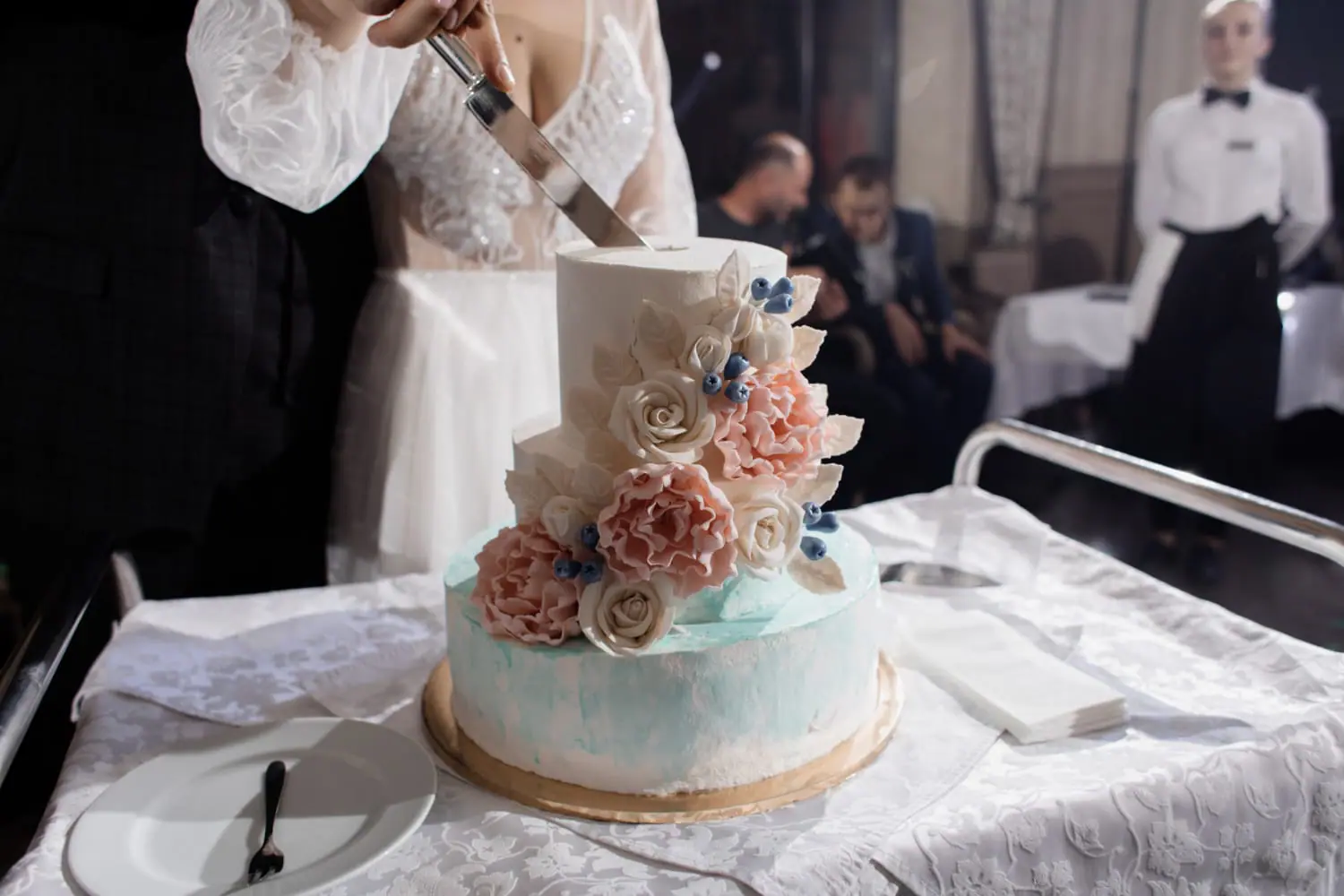
Eighth Round of Direct Answers
How much of a deposit do wedding cake bakers typically require?
Commonly 25 to 50 percent of the total price to secure your date, with the remaining balance due 2 to 4 weeks before the wedding.
Are wedding cake deposits refundable if we need to cancel?
Usually not. Most deposits are nonrefundable once your date is secured, standard practice reflecting the baker holding that date exclusively for you. Confirm your specific baker’s policy directly.
Do bakers charge extra for delivering far from their location?
Often, yes, beyond a standard delivery radius, commonly 20 to 30 miles. Additional mileage is sometimes charged at $1 to $2 per extra mile.
Should we choose a baker based purely on portfolio, even if they’re far from our venue?
This can be worth it if their specific style genuinely matters to you, though confirm the actual added delivery cost before committing, so it’s a deliberate, informed choice.
What happens if we need to postpone our wedding after booking a cake?
Contact your baker immediately and ask directly about their specific postponement policy. This varies by bakery, so get the specific terms in writing before you need them.
A Note on Wedding Cake Reviews and How to Read Them
Online reviews genuinely help, though reading them well takes a little more care than skimming star ratings.
Look for patterns, not isolated incidents
A single negative review among many positive ones is normal for any business. A repeated pattern, mentioning the same specific issue across multiple reviews, deserves real attention.
Recent reviews matter more than older ones
Bakery quality and consistency can change over time, staff changes, ownership changes, growth beyond original capacity. Weight recent reviews more heavily than older ones for a genuinely current picture.
Look specifically for wedding-related reviews, not general bakery feedback
Bakeries sometimes excel at everyday cakes and cupcakes while genuinely struggling with the complexity of a full wedding cake order. Search specifically for wedding-related feedback when researching a potential baker.
Ninth Round of Direct Answers
Should we worry about a single negative review when researching a baker?
Not necessarily. A single negative review among many positive ones is normal for any business. A repeated pattern mentioning the same issue deserves real attention instead.
Do older reviews matter as much as recent ones?
Less so. Bakery quality and consistency can shift over time due to staff or ownership changes. Weight recent reviews more heavily for a genuinely current picture.
Should we look for wedding-specific reviews, or are general bakery reviews enough?
Search specifically for wedding-related feedback. A bakery excelling at everyday treats doesn’t automatically mean they handle the complexity of a full wedding cake order equally well.
Wrapping Up the Practical Side: A Vendor Communication Checklist
A few communication habits, applied consistently from your very first bakery conversation, prevent most of the issues covered throughout this guide.
Get everything meaningful in writing
A verbal promise about flavor, design, delivery timing, or price should appear in your written order confirmation, not relied on from memory alone months later.
Confirm total cost early, not just the headline cake price
Ask for delivery, setup, and any additional fees upfront, in the same conversation as your initial quote, rather than discovering these as separate line items later.
Keep a simple record of every vendor conversation
A quick note after each call or email with your baker, even just a date and key points, prevents genuine confusion later about what was actually discussed or promised.
Confirm your venue’s cutting fee with the same diligence you apply to your baker
As this entire guide has emphasized, the venue side of your total cake cost deserves the same direct, specific questions as the bakery side.
If You’re Genuinely Stuck Between Two Bakers
A close decision between two genuinely good options deserves a real framework, not just a coin flip.
Revisit your actual priorities from this guide
Design, flavor, price, location, and reviews all matter differently to different couples. Rank your own top two or three priorities specifically, then let that ranking, not a vague overall feeling, guide the final decision.
Consider which baker answered your questions more directly
A baker who gave clear, specific, written answers to the questions covered throughout this guide is telling you something real about what working with them will actually be like, beyond just their portfolio.
Trust your own gut about communication style
If one baker’s communication style, responsiveness, tone, clarity, genuinely felt better to work with, that’s a legitimate factor, not just a soft one. You’ll be communicating with this person through your entire planning process.
A Final Word on What This Cake Actually Represents
Beneath every number in this guide sits something worth naming directly: this cake is a genuine, shared moment, one of the few parts of your wedding day where you and your partner do something together, in front of everyone, at the same instant. The cost breakdown matters, and so does remembering that the actual point isn’t the tier count or the fondant finish. It’s cutting into something you chose together, sharing a bite, and letting that small, sweet moment be exactly as meaningful as you want it to be, regardless of what it cost.
Use the numbers in this guide to plan confidently. Then let the cake itself just be what it’s actually for.
Tenth Round of Direct Answers
How do we decide between two bakers we genuinely both like?
Rank your own top priorities, design, flavor, price, location, reviews, and let that specific ranking guide the decision rather than a vague overall feeling.
Does a baker’s communication style during booking actually predict anything?
Yes, genuinely. How clearly and directly they answer your questions during initial conversations is a real, legitimate signal for what working with them through your full planning process will feel like.
Is it okay to choose a more expensive baker just because we connected with them personally?
Yes, this is a completely legitimate factor. You’ll be working with this person throughout your planning process, and genuine rapport has real value alongside price and portfolio.
What if we’re overthinking this whole decision?
Take a step back and remember that any reasonably good baker, chosen thoughtfully using the guidance in this guide, will genuinely deliver a beautiful, delicious cake. This decision doesn’t require perfection, just informed confidence.
What’s the very last thing you’d want us to take away from this entire guide?
The average price of wedding cake, roughly $500, is a real, useful number, but your actual total depends on choices you now understand and can make deliberately. Confirm your cutting fee, set a real budget, and choose a cake that genuinely reflects the two of you.
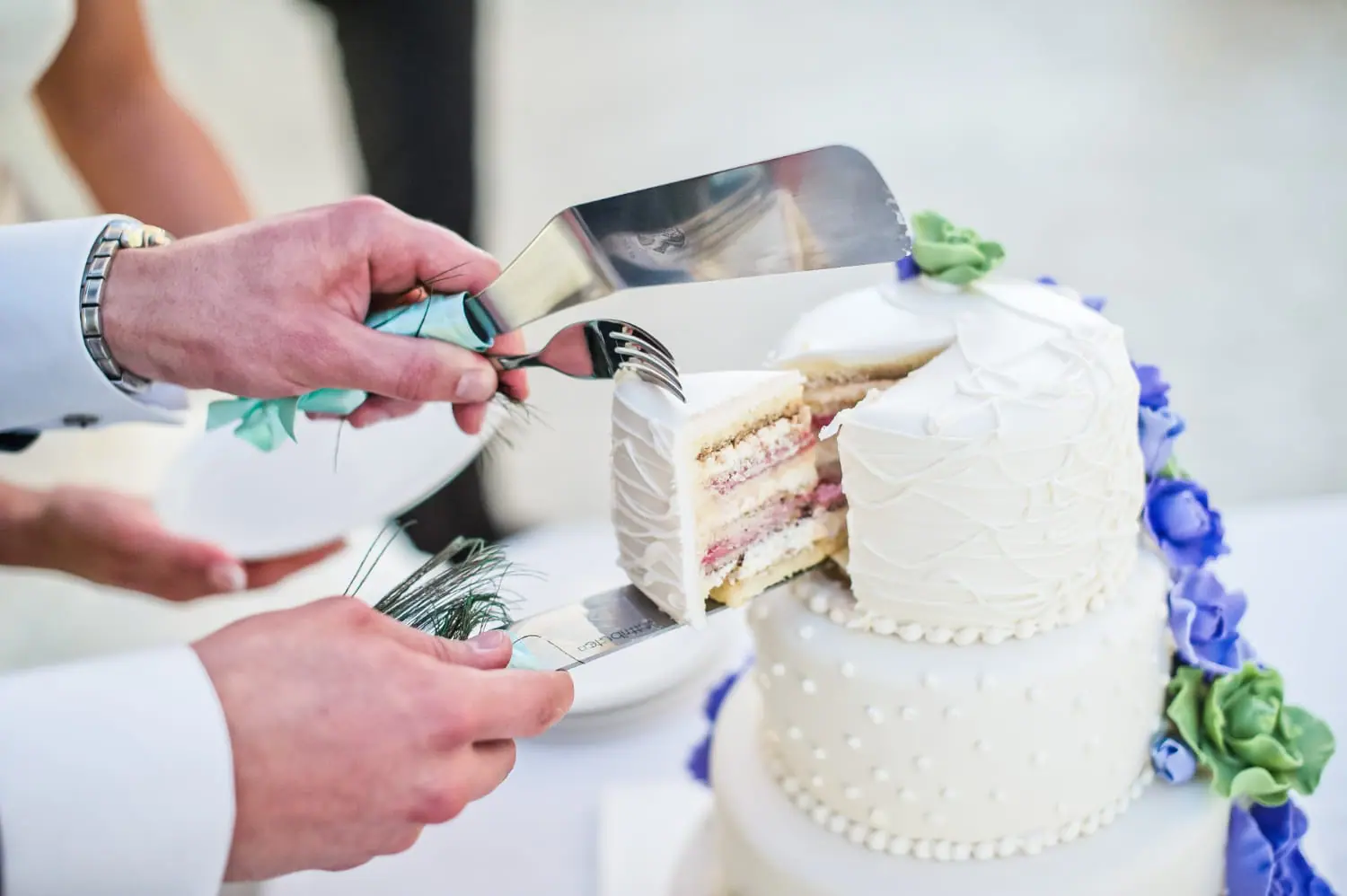
Buttercream Flavor Variations Worth Exploring
Beyond basic vanilla buttercream, several flavor variations have grown genuinely popular and deserve real consideration.
Swiss and Italian meringue buttercream
These silkier, less sweet buttercream styles have grown popular for their refined texture, commonly available at little to no extra cost from bakers experienced with the technique, worth asking about directly.
Cream cheese buttercream
A tangier alternative particularly popular with carrot cake, red velvet, and hummingbird cake flavors, adding real dimension beyond standard sweet buttercream.
Flavored buttercream infusions
Coffee, salted caramel, and fruit-infused buttercream variations align with the coffee-forward and fruit-driven trends covered earlier in this guide, adding genuine flavor complexity without switching to fondant.
Eleventh Round of Direct Answers
Is Swiss or Italian meringue buttercream more expensive than regular buttercream?
Not necessarily. Many experienced bakers offer this at little to no extra cost, though confirm directly with your specific baker since this varies.
What pairs well with cream cheese buttercream?
Carrot cake, red velvet, and hummingbird cake flavors particularly complement this tangier buttercream style, adding real dimension beyond standard sweet buttercream.
Can we add flavor to our buttercream without switching to fondant?
Yes, absolutely. Coffee, salted caramel, and fruit-infused buttercream variations add genuine complexity while keeping the softer, more approachable texture buttercream offers over fondant.
Comparing the Average Price of Wedding Cake Across Different Wedding Sizes
Guest count changes not just the total, but which strategies from this guide actually make the most sense for your specific celebration.
Intimate weddings, under 50 guests
A single sculptural tier or a two-tier design genuinely suits this scale well, often landing well under the national average total while still delivering real visual impact.
Mid-size weddings, 75 to 150 guests
This range sits closest to the actual national average this guide has covered throughout, with a two- or three-tier cake typically the most practical, cost-efficient choice.
Larger weddings, 200 or more guests
The display-cake-plus-sheet-cake strategy covered earlier becomes genuinely valuable at this scale, letting you get a beautiful showpiece without tier-pricing every single serving.
Your specific guest count should genuinely drive your format decision
Rather than starting with a design you love and working backward, consider starting from your actual guest count and letting that realistically narrow your format options first.
A Note on Wedding Cake Trends We’re Not Covering, and Why
Trend coverage dates quickly, and a few genuinely niche or highly localized styles fall outside this guide’s scope deliberately.
Hyper-specific viral trends
Social-media-driven cake trends can rise and fade within a single wedding season, genuinely too fast-moving for a guide meant to stay useful over time. Search current inspiration platforms directly if you want the very latest specific viral style.
Highly regional or cultural-specific designs
Certain cultural wedding cake traditions deserve deeper, more specific coverage than a general national guide can genuinely provide well. Research your own specific tradition directly, ideally with input from someone knowledgeable in that community.
This guide focuses on what stays genuinely useful
The pricing structure, the questions worth asking, and the core decision framework throughout this guide remain relevant regardless of which specific trend is popular this particular season.
Twelfth Round of Direct Answers
Where can we find the very latest, most current cake trends beyond what’s in this guide?
Social media platforms and current bridal publications track fast-moving trends more immediately than any guide can, though the core cost and decision framework in this guide remains relevant regardless of which specific style is trending.
Should we research our own specific cultural wedding cake tradition separately?
Yes, if this matters to your celebration. A general national guide can’t provide the depth a specific cultural tradition deserves; research directly, ideally with input from someone knowledgeable in that specific community.
Will the pricing information in this guide stay accurate for long?
The general structure, per-slice pricing, tier-based costs, the cutting fee, remains stable over time, though confirm current specific numbers with local bakers as your own wedding date approaches.
A Practical Timeline Recap: From Booking to Delivery
| Timeframe | What happens |
|---|---|
| 4–6 months out | Book your baker, especially for peak season dates |
| 3–4 months out | Attend your tasting appointment |
| 2–3 months out | Finalize design, flavor, and written order details |
| 2–4 weeks out | Confirm final guest count and serving total |
| 1 week out | Confirm delivery time, access, and point of contact |
| Wedding day | Cake delivered, set up, and ready for your reception |
This timeline is a genuinely reliable default for most weddings, though your specific baker’s actual requirements always take priority over this general guide. Confirm their exact deadlines directly once you’ve booked.
Final Thoughts on Building Your Own Plan
This guide has covered a genuinely large amount of ground: the real average price of wedding cake, the hidden fees, the current design and flavor trends, budget alternatives, and nearly every practical question a couple might have along the way. You don’t need to apply every single section in order.
Pull whatever’s relevant to your specific wedding, skip what doesn’t apply, and return to any section as a reference whenever a new question comes up. That’s genuinely what this guide is here for.
Thirteenth Round of Direct Answers
What’s the absolute latest we can book a wedding cake before our date?
Some bakers can accommodate orders just a few weeks out, particularly for a simpler design or grocery store alternative, though popular custom bakers genuinely need the 4-to-6-month window covered throughout this guide for best availability.
Should we confirm delivery details with our baker even if everything else is settled?
Yes, always confirm delivery time, venue access, and a specific point of contact about a week before the wedding, even after your main order details are finalized.
What if we’ve read this entire guide and still feel unsure where to start?
Start with the quick answer near the top: set a real budget including the cutting fee, then book a tasting with one or two bakers whose portfolios genuinely appeal to you.
Is there a “right” amount of time to spend deciding on our wedding cake?
No fixed amount, though most couples finalize their decision within one to two tastings. If you’re still torn after that, the decision framework covered earlier in this guide can help you move forward confidently.
What is genuinely the single biggest takeaway from this entire guide?
The average price of wedding cake, roughly $500, is a real number you can plan around confidently, as long as you also account for the cutting fee, delivery, and the specific design choices that move your own total up or down from that baseline.
A Note on Vendor Meals and Cake for Your Wedding Party
A small, easy-to-overlook detail worth a direct mention.
Confirm whether working vendors get a slice
Some couples offer cake to their photographer, coordinator, or other working vendors as a small gesture. This is entirely optional, not an expected cost, though worth deciding deliberately rather than defaulting either way.
Wedding party cake service is typically included in your standard count
Your wedding party is generally counted within your total guest count for cake-serving purposes, not treated as a separate category requiring extra planning.
One Last Practical Note: Storing Leftover Cake
Confirm who takes leftover cake home
Decide in advance who’s responsible for any leftover cake, whether that’s the couple, a family member, or simply left with the venue, so this isn’t a last-minute decision during reception cleanup.
Proper storage extends how long leftovers stay good
Refrigerate leftover buttercream cake, and it typically stays fresh for 3 to 5 days. Fondant-covered cake can last slightly longer under proper refrigeration, though quality genuinely declines the longer it sits.
Freezing extends this further, if you want to save a portion
Beyond the traditional top-tier-saving custom covered earlier, properly wrapped cake slices can be frozen for later enjoyment, worth doing thoughtfully rather than as an afterthought once the wedding is already over.
Fourteenth and Final Round of Direct Answers
Should we offer cake to our wedding vendors?
This is entirely optional, a small, thoughtful gesture some couples choose to extend to their photographer, coordinator, or other working vendors, not an expected or required cost.
Is our wedding party counted separately when ordering cake servings?
No, they’re typically included within your total guest count for cake-serving purposes, not treated as their own separate planning category.
How long does leftover wedding cake actually stay good?
Refrigerated buttercream cake typically stays fresh for 3 to 5 days. Fondant-covered cake can last slightly longer under proper refrigeration, though quality does decline over time either way.
Can we freeze extra cake slices beyond the traditional top tier?
Yes, properly wrapped slices freeze well for later enjoyment, a genuinely nice way to revisit your wedding cake beyond just the traditional anniversary top-tier custom.
Who should we designate to handle leftover cake at the end of the night?
Decide this in advance, whether it’s the couple, a family member, or simply left with the venue, so it isn’t a last-minute scramble during reception cleanup.
That’s genuinely everything. From the headline average price of wedding cake down to leftover storage, you now have the complete, real picture, ready to apply to your own specific wedding.
Bringing It All Together
The average price of wedding cake in the US, roughly $500, with most couples spending $300 to $700, is a genuinely useful starting number. What actually determines where you land within, above, or below that range is the specific combination of choices this guide has walked through: tier count and serving size, design complexity, buttercream versus fondant, flavor selection, your baker’s location and reputation, and the delivery and cutting fees that quietly sit outside the headline cake price.
None of this needs to feel overwhelming. Confirm your real guest count, set a genuine budget that includes the cutting fee from day one, and choose a design and flavor that actually reflects what you and your partner want, not a trend you feel obligated to chase or a size you don’t actually need. That’s the whole approach, applied consistently.
Your next step
Contact your venue this week and ask directly: “What is your exact cake-cutting fee, per slice?” That single number, added to whatever quote your baker gives you, is the real total most couples don’t see until it’s too late to easily adjust.
