
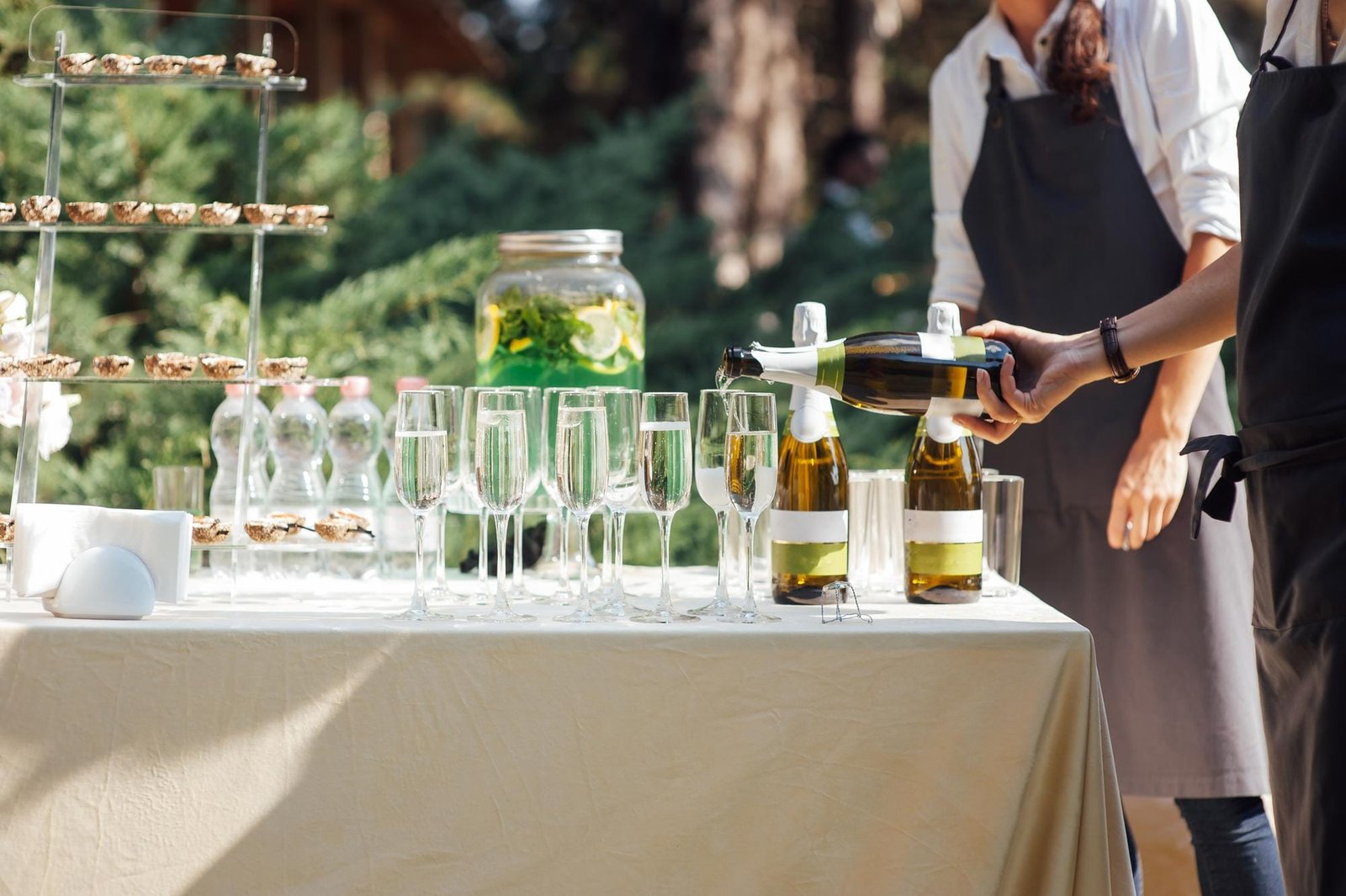
This gap between the quote and the invoice is exactly what open bar wedding hidden costs look like in practice. A couple gets a bar quote of $28 per person for a full open bar. At 150 guests, that reads as $4,200, a real but manageable number against the rest of their budget. The final invoice arrives closer to $6,800. Nothing on it is fraudulent. A 22 percent service charge sits on top of the bar tab, not the quoted per-person price. Two bartenders, billed hourly, appear as a separate line. A corkage-adjacent setup fee for the signature cocktail station adds another few hundred dollars. The $28 was real. It was also never the actual total.
The per-person number vendors lead with is rarely dishonest. It is also rarely the complete picture. Staffing, service charges, insurance, and a handful of fees specific to alcohol service sit outside that headline figure by industry convention, not by anyone’s attempt to mislead. Bar service also carries a category of risk food and flowers do not: real legal liability tied to serving alcohol, and real safety stakes for guests getting home afterward.
This guide walks through where the real total actually comes from. How different bar service models compare. How to plan drink quantities without guessing. Bartender staffing and service-line realities, the license and insurance questions worth asking directly, the fees that hide in corkage and minimums, and how to handle last call, transportation, and guest safety without turning your reception into a lecture.
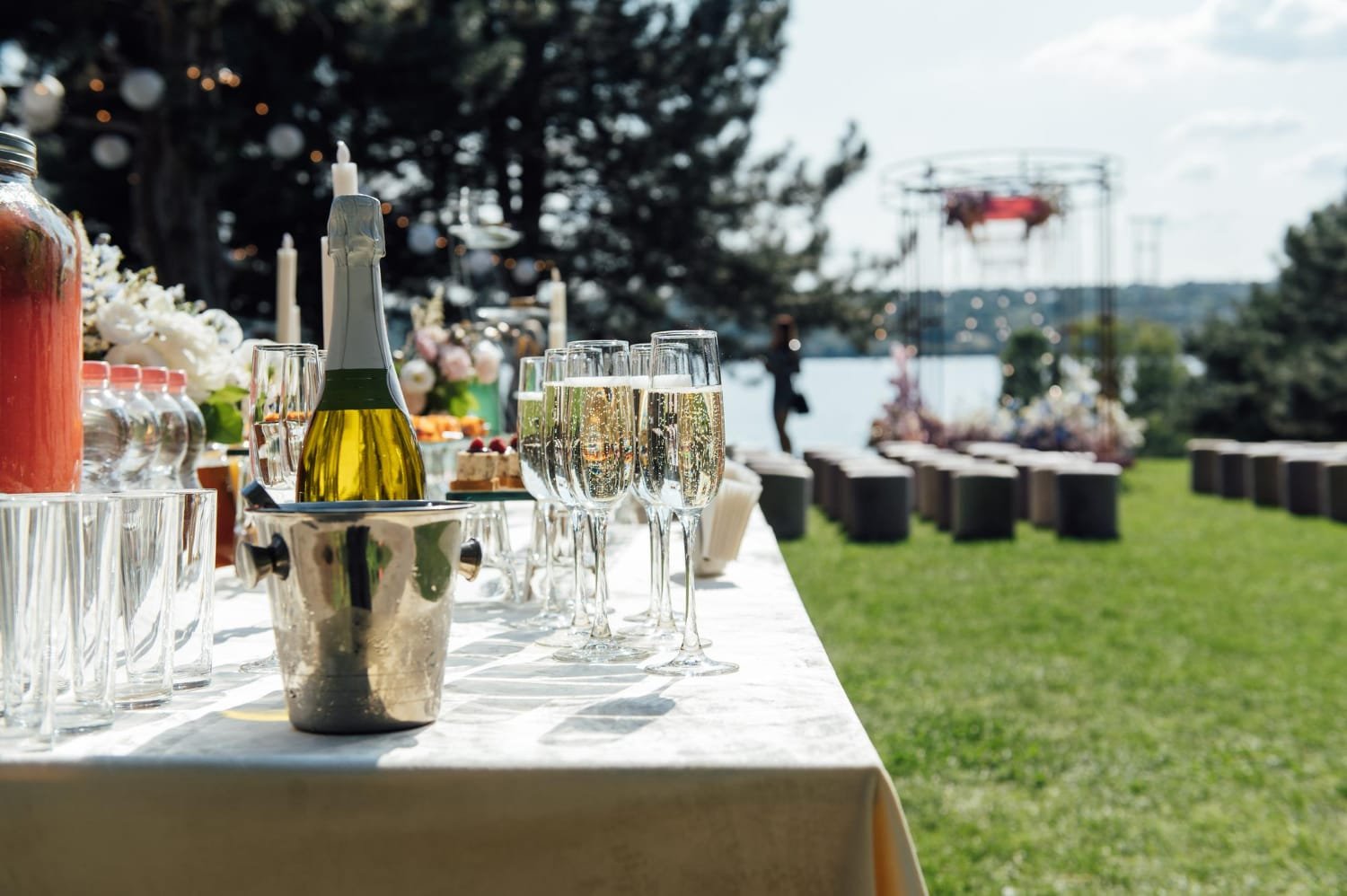
Quick Answer: What Actually Drives Open Bar Wedding Hidden Costs
Four categories account for most of the gap between a quoted number and your real total.
Service charges and gratuity sit outside the per-person price, commonly adding 18 to 25 percent to your actual bar tab.
Bartender staffing is billed separately, by the hour, and understaffing creates real guest experience problems beyond just cost.
Insurance and liability questions matter more than any other category of vendor, since alcohol carries legal exposure that food and flowers simply do not.
Format choice changes your total more than premium-brand upgrades do, and the cheapest-sounding option is not always cheaper once every fee is included.
The rest of this guide builds out each of these into something you can actually verify, starting with the bar service model itself.
What Nobody Mentions Until It Happens
These are not dramatic bar disasters. They are ordinary gaps between a quote and a real invoice.
The service charge that was never part of the per-person price
A quoted per-person bar rate commonly excludes the service charge and gratuity, added afterward to the full tab. A couple budgeting only the headline number is budgeting roughly 20 percent under their actual cost.
The bartender ratio that was technically staffed but practically thin
One bartender for 150 guests meets a technically true “staffed” claim while creating a genuinely long line at every peak moment: cocktail hour, the toast, and right after dinner.
The insurance gap nobody thought to ask about
General liability insurance, the kind most venues already carry, typically excludes alcohol-related claims specifically. A couple assuming their venue’s existing coverage protects them is often wrong about this one, specific detail.
The “cheaper” cash bar that guests experience as a letdown
A cash bar genuinely costs the couple less directly, but guests at an otherwise fully hosted wedding often read it as a mismatched, less generous gesture, an intangible cost worth weighing against the real dollar savings.
Bar Service Model
Several structurally different models exist, and the right one depends on your budget, guest crowd, and how much cost predictability you want.
Full open bar: predictable per-person cost, real premium
Guests drink freely, you pay a flat per-person rate. This commonly runs $35 to $75 per person for standard brands, considerably more for premium or top-shelf selections.
Beer and wine only: a genuine mid-range option
Skipping liquor entirely commonly runs $25 to $40 per person, a real savings while still fully hosting your guests, not a cash-bar compromise.
Consumption bar: unpredictable total, potential savings
You pay per drink actually served, commonly $8 to $15 each. This can save money with a lighter-drinking crowd but creates real uncertainty in your final total.
Package or flat-rate bar: simplicity at a set price
A fixed price for a set number of hours, commonly $1,500 to $5,000 depending on guest count and selection, trades some flexibility for budget certainty.
Cash bar and limited-ticket bar: real savings, real guest perception cost
Guests pay their own way, or receive a set number of complimentary drink tickets. This genuinely reduces your cost but is worth weighing against how it reads at an otherwise hosted event.
Drink Quantity Planning
Guessing wrong in either direction creates real problems: running out mid-reception, or paying for alcohol nobody drinks.
Use a real consumption pattern, not a flat guess
A common planning rule assumes two drinks in the first hour, then roughly one drink per hour after, averaging around five drinks per guest over a typical five-hour reception.
Account for your specific guest list honestly
A younger, celebration-heavy crowd drinks differently than an older or more mixed group. Adjust the standard estimate based on your own guests, not a generic industry average alone.
Confirm your nonalcoholic options are genuinely planned, not an afterthought
Sparkling water, mocktails, and other nonalcoholic options deserve real planning and real presentation, not a forgotten pitcher at the end of the bar, particularly for guests who do not drink at all.

Bartender Staffing and Service Lines: A Real Open Bar Wedding Hidden Costs Category
Staffing ratio affects both your cost and how smoothly your actual reception runs, worth confirming specifically rather than accepting “staffed appropriately.”
Confirm the actual ratio for your specific bar type
Industry norms commonly run one bartender per 50 to 75 guests for beer and wine, tightening to one per 40 to 50 for a full open bar with cocktails. Get your specific ratio in writing.
Confirm bartender cost is billed separately from alcohol
Bartenders commonly cost $35 to $75 per hour each, separate from the alcohol itself, often with a four- or five-hour minimum regardless of your actual event length.
Confirm glassware, ice, and station setup are actually included
Rented glassware commonly runs $0.75 to $2 per piece if not already included. Confirm ice supply and station setup explicitly, since these are easy to assume rather than actually confirm.
License, Insurance, and Liability: The Core of Open Bar Wedding Hidden Costs
This category carries real legal weight beyond simple cost, and it deserves direct, careful attention.
Understand the difference between dram shop and social host liability
Dram shop laws generally hold commercial servers, bars, licensed caterers, liable for serving a visibly intoxicated guest who later causes harm. Social host liability, existing in only a minority of states, can extend similar responsibility to private hosts, potentially including the couple themselves. Confirm which applies in your specific state.
Confirm what your general liability insurance actually excludes
General liability insurance, the kind a venue commonly already carries, typically excludes alcohol-related claims specifically. This is a real, easy-to-miss gap. Ask directly whether host liquor liability coverage exists separately.
Confirm who actually needs a license for your specific setup
Most states require a licensed server for any event serving alcohol, regardless of who supplies it. A DIY bar with unlicensed pouring can create personal liability for you as the host. Confirm your specific state and venue’s requirement directly.
Corkage, Minimums, and Fees
A handful of fee categories sit specifically around alcohol service, separate from general catering fees already covered elsewhere.
Confirm corkage fees if bringing your own alcohol
A venue allowing outside alcohol commonly charges a corkage fee per bottle. Confirm this specific fee before assuming a BYO approach saves as much as it appears to on paper.
Confirm any bar minimum separate from your guest count
Some venues set a required bar spend minimum regardless of actual consumption. Confirm this applies fairly to your specific selections, not just premium options.
Confirm the service charge and gratuity separately, in writing
Service charges and gratuity commonly add 18 to 25 percent to your final bar tab. Confirm the exact percentage and whether it is already included in any quoted per-person price.
Last Call, Transportation, and Guest Safety
This is where bar planning intersects directly with your guests’ actual wellbeing, not just your budget.
Set a specific last-call time, communicated clearly
A last call roughly 30 to 60 minutes before your event ends gives guests a clear, predictable transition rather than an abrupt cutoff.
Plan real transportation options, not just an assumption
Confirm rideshare availability in your specific area, or arrange a shuttle if your venue is remote. A guest with no easy way home creates a genuine safety risk, not just an inconvenience.
Build hydration and food timing into your actual plan
Ensure food service and water are genuinely available throughout the event, not just at designated meal moments, supporting guests who are drinking over several hours.
Green, Yellow, and Red Flags in Open Bar Wedding Hidden Costs
Green flag: a vendor providing an itemized quote with staffing ratio, service charge percentage, and insurance confirmation before you sign. Yellow flag: a vendor unfamiliar with your specific venue’s liquor license status but willing to confirm before finalizing. Red flag: a vendor who cannot explain their insurance coverage, or who encourages skipping licensing requirements to save money.
Before You Sign
- Confirm the true total: per-person rate, service charge, staffing, and any minimums.
- Confirm your actual bartender ratio in writing.
- Confirm host liquor liability coverage exists, separate from general liability.
- Confirm your specific state’s dram shop and social host liability rules.
- Confirm corkage fees if bringing any outside alcohol.
Questions That Feel Awkward but Are Worth Asking
- What is our exact bartender ratio, in writing, for our guest count?
- Do you carry host liquor liability insurance, and can you show proof?
- What happens if a guest is visibly over-served at our wedding?
- Is the service charge already included in this per-person quote?
- What is your specific last-call and cutoff policy?
Scam Check: Open Bar Wedding Hidden Costs Red Flags
A specific pattern deserves direct mention, since alcohol service attracts its own version of urgency-driven pressure.
Be wary of a bartender requiring full payment in cash, with no contract
A legitimate, licensed bartender or bar service provides a real contract and accepts traceable payment. Cash-only, no-contract arrangements make it considerably harder to hold anyone accountable if something goes wrong.
Verify licensing claims directly
Ask to see an actual license number or insurance certificate, rather than accepting a verbal assurance. The Federal Trade Commission’s consumer protection resources maintain general guidance on verifying a vendor’s legitimacy before paying.
Worst-Case Scenario — and the Backup Plan
Picture this: a guest is visibly over-served, becomes disruptive, and your venue’s staff are unsure who has authority to cut them off.
A workable response starts with a clear plan set before the day: confirm directly with your bartender or caterer who has explicit authority to refuse further service to any guest, regardless of who they are. Designate a specific point of contact, ideally not the couple, to handle this calmly if it happens. This is uncomfortable to plan for in advance. It is far more uncomfortable to improvise during an actual incident.
An Open Bar Wedding Hidden Costs Comparison
| Format | Typical per-person cost | Cost predictability |
|---|---|---|
| Full open bar | $35–$75+ | High |
| Beer and wine only | $25–$40 | High |
| Consumption bar | $8–$15 per drink | Low |
| Package/flat-rate | $1,500–$5,000 total | High |
| Cash bar | $0 to couple | High (for couple) |
The Champagne Toast and Signature Cocktail: Small Line Items, Real Cost
A few specific traditions carry their own cost worth planning for directly.
The champagne toast does not require a full per-person pour
Passing trays of pre-poured sparkling wine during the toast, rather than a dedicated per-person pour for every guest, meaningfully reduces cost while preserving the tradition. Many guests already hold a drink and will toast with that instead.
Sparkling wine alternatives cost considerably less than champagne
Prosecco or Cava, commonly $8 to $15 per bottle, offer a genuine alternative to French champagne, commonly $30 or more per bottle, without meaningfully changing the guest experience of the toast itself.
Signature cocktails reduce inventory complexity, not always total cost
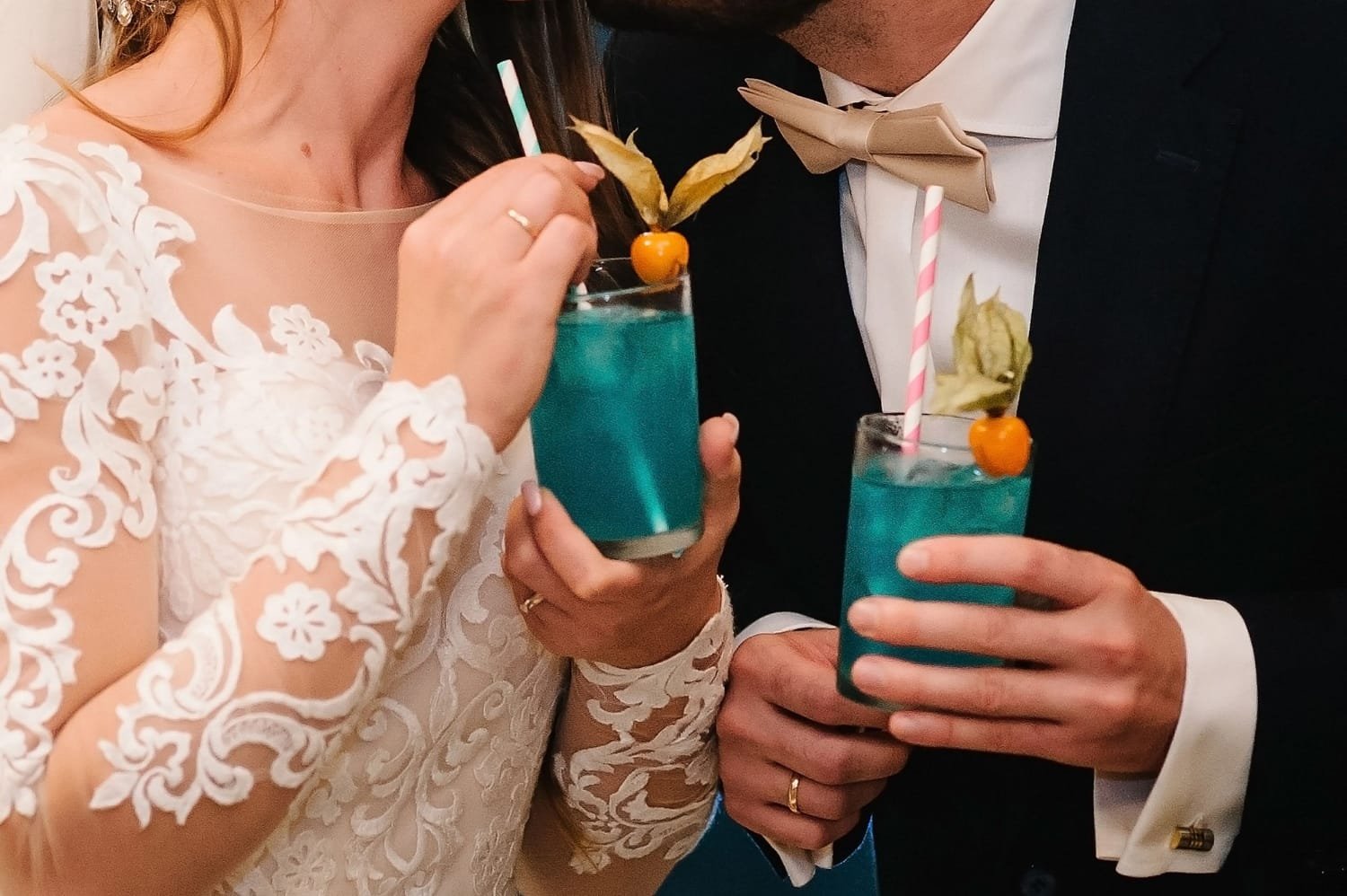
Offering two or three signature cocktails alongside beer and wine, rather than a full liquor rail, can reduce total liquor inventory cost while adding a genuinely personal touch, though confirm this actually reduces your total rather than assuming it automatically does.
Weather Check: Outdoor Bar Service
An outdoor bar setup adds real, specific considerations beyond a typical indoor service plan.
Confirm shade and temperature protection for both drinks and staff
Direct sun can affect beer freshness, wine temperature, and genuinely tax bartenders working an exposed station for hours. Confirm your caterer’s plan for shade or covered service in warm weather.
Confirm ice supply accounts for actual heat conditions
Outdoor events in warm weather need considerably more ice than an indoor setup, both for drinks and for keeping perishable garnishes and mixers safe. Confirm this specifically rather than assuming standard ice quantities apply.
Confirm a wind and rain contingency for the bar station specifically
Bar setups, with glassware, garnishes, and sometimes an uncovered station, need their own specific weather contingency, separate from your general reception backup plan. Confirm this directly with your bar vendor.
Open Bar Wedding Hidden Costs
Accessibility Check: Bar Service Considerations
Several accessibility details specific to bar service are worth direct attention, separate from general venue accessibility already covered elsewhere.
Confirm bar height and approach are usable for guests with mobility needs
Standard-height bars can genuinely challenge a guest using a wheelchair. Confirm whether a lower service point or table service option exists for guests who need it.
Confirm non-alcoholic options are clearly and prominently available
Guests who do not drink, for any reason, medical, personal, or religious, deserve options presented with the same care as alcoholic ones, not an afterthought pitcher easily missed.
Does a Wedding Planner Handle Bar Logistics for You?
Some couples assume a planner automatically manages bar planning specifically. The reality depends on what service was actually agreed to.
Confirm this explicitly, do not assume it
Most standard planning packages coordinate vendors but do not automatically verify insurance or negotiate bar-specific fees. Ask your planner directly and specifically whether bar vendor vetting, including insurance confirmation, is part of your agreement.
A planner can still be a genuinely useful resource
Even without formal responsibility for this task, an experienced planner who has worked with local bar vendors may know current pricing and reliable providers worth asking about, alongside, not instead of, your own direct verification.
DIY Bartending: Why It Rarely Saves as Much as It Appears To
Some couples consider having a friend or family member serve drinks instead of a professional bartender, worth a direct, honest look at the real trade-offs.
Licensing and liability do not disappear with a DIY approach
Most states still require a licensed server for alcohol service, regardless of whether that person is a hired professional or a willing friend. An unlicensed friend pouring drinks can create real personal liability for both that friend and you as the host.
Insurance gaps become your direct problem
Without professional bartending insurance, any alcohol-related incident becomes entirely your own financial and legal exposure, without the layer of protection a licensed, insured vendor provides.
The real savings are often smaller than expected
Once you account for alcohol purchase, equipment rental, and any required licensing or insurance you arrange yourself, DIY bartending frequently saves less than couples initially assume, while adding real personal risk.
Dry Weddings and Cultural Considerations
Not every wedding includes alcohol at all, and this deserves genuine, respectful attention rather than treating alcohol service as a default every couple must plan around.
A dry wedding is a legitimate, complete choice
Some couples choose not to serve alcohol for personal, religious, or cultural reasons, and this requires none of the licensing, insurance, or liability planning covered throughout this guide. A well-planned dry wedding with genuinely thoughtful nonalcoholic options can feel just as celebratory as one with a full bar.
Invest real effort in the nonalcoholic experience
A dry wedding benefits from the same care typically given to cocktail development: interesting mocktails, a real presentation, and options beyond soda and water. Confirm your caterer can genuinely deliver this, not just default to a minimal setup.
Communicate your choice clearly, without over-explaining
A simple note on your wedding website or invitation, mentioning the celebration will not include alcohol, sets guest expectations clearly without requiring justification for a completely legitimate personal decision.

What a Well-Verified Bar Decision Actually Looks Like
Not every story needs to be cautionary. Here is what genuine verification produces in practice.
A specific, worked example
A couple planning for 120 guests requests an itemized quote specifically asking for service charge percentage, bartender ratio, and proof of host liquor liability insurance. Their vendor provides all three without hesitation, along with a written last-call policy and confirmation of who has authority to refuse service if needed. The final invoice matches the itemized quote exactly, with no surprise additions.
What made the difference
Nothing about this required unusual effort. It required one direct, specific request instead of accepting a general per-person number, and a vendor genuinely prepared to answer it. The couple’s actual bill matched what they expected going in.
Premium Brand Upgrades: What They Actually Add
Moving from standard to premium or top-shelf brands is a real cost lever worth understanding specifically, separate from format choice itself.
Confirm the actual dollar difference, not just “premium” as a label
Moving from a well-brand to a call-brand or top-shelf selection commonly adds real, specific per-person cost. Ask your vendor for the exact dollar difference between tiers rather than accepting “premium” as a vague upsell.
Consider whether most guests actually notice the difference
Many guests genuinely cannot distinguish between well and premium spirits, particularly once mixed into a cocktail. Weigh the real cost difference against how much this specific upgrade will actually be noticed and appreciated.
A hybrid approach can capture most of the benefit
Offering premium selections for a few signature items, like the couple’s own favorite cocktail, while keeping the broader bar at standard tier, can deliver a genuinely elevated feel without the full cost of upgrading everything.
Destination Wedding Bar Service: Additional Verification Needed
A destination wedding adds real complexity to bar planning, since local alcohol laws and typical practices may differ considerably from what this guide’s U.S.-focused guidance assumes.
Confirm local alcohol laws and import restrictions
Some destinations restrict bringing in outside alcohol, or have significantly different licensing requirements than U.S. states. Confirm this directly with your venue or a local wedding planner rather than assuming U.S. norms apply.
Confirm liability coverage extends to your specific destination
A U.S.-based host liquor liability policy may not automatically cover an event held outside the country. Confirm this specifically with your insurance provider if alcohol liability at an international destination wedding is a genuine concern.
Wedding Party and Family Bar Tabs: A Separate Cost Category
Some couples extend bar coverage differently to their wedding party or immediate family, worth its own direct planning.
Confirm whether pre-ceremony drinks are included in your main quote
A wedding party toasting before the ceremony, during getting-ready time, is sometimes covered separately from your main reception bar package. Confirm this specifically if this applies to your day.
Decide whether to extend hosted bar coverage to hotel after-parties
Some couples cover an informal after-party bar tab at a hotel or nearby venue, separate from their main reception. This is entirely optional and deserves its own specific budget line if you choose to offer it.
Bringing It Together
Every section in this guide points toward the same underlying practice: treat a bar quote’s per-person number as a starting point for questions, not a complete answer. The real total includes service charges, staffing, insurance, and fees specific to alcohol service that a headline price rarely captures on its own.
None of this requires becoming a legal or insurance expert. It requires one consistent habit: request an itemized quote, confirm liability coverage directly, and plan last call and transportation with the same care you give to the rest of your reception. That habit protects both your budget and your guests.

Legal Check: Age Verification and Underage Guests
Weddings often include a mix of ages, and confirming how your bar service handles this deserves direct attention.
Confirm your bartender’s ID-checking policy
A licensed bartender is trained to check identification for anyone who appears underage. Confirm this is genuinely happening at your event, not assumed, particularly if your guest list includes younger relatives or a wide age range.
Confirm consequences for serving a minor are understood by everyone involved
Serving alcohol to a minor carries real legal consequences for the server and potentially for you as the host, depending on your state’s specific laws. This is not a category where “just this once” is a reasonable risk to take.
Plan for a genuinely appealing nonalcoholic option for younger guests
A specific, well-presented mocktail or nonalcoholic option for younger guests, rather than a plain soda afterthought, helps everyone feel included in the celebration regardless of age.
Why This Verification Effort Is Worth It
Bar service commonly represents 10 to 20 percent of a total wedding budget, and it is the one vendor category carrying real legal liability alongside its cost. Getting the actual numbers and coverage confirmed genuinely protects both your finances and your guests.
None of this requires becoming a legal or insurance expert. A couple who requests one itemized quote, confirms host liquor liability insurance directly, and sets a clear last-call and transportation plan has addressed nearly every real risk covered throughout this guide. The couples who avoid open bar wedding hidden costs are rarely the ones who spent the most. They are the ones who asked the specific questions this guide has walked through, before signing rather than after.
When Your Venue Requires an In-House Bar Package
Some venues mandate their own exclusive bar service, removing your ability to shop around, worth its own direct treatment.
Confirm exclusivity terms before assuming you have options
A venue with an exclusive in-house bar eliminates outside vendor comparison entirely for this category. Confirm this specifically during your venue search, since it changes how much negotiating room you actually have.
Negotiate within the venue’s own package structure
Even with an exclusive bar requirement, specific brands, hours, or package tiers are sometimes negotiable within the venue’s own system. Ask directly what flexibility exists rather than assuming the first quote is final.
Confirm insurance and liability details still apply the same way
An in-house exclusive bar does not exempt you from understanding liability coverage. Confirm the venue’s own insurance covers alcohol service specifically, using the same questions this guide has covered throughout.
Negotiating Bar Minimums Realistically
A bar minimum can feel like a fixed, non-negotiable number, though real flexibility sometimes exists.
Ask whether the minimum flexes with your actual guest count
A minimum set for a larger anticipated guest count may not make sense if your actual final headcount comes in lower. Confirm whether this can be adjusted rather than assuming it is fixed regardless of your real numbers.
Consider whether reaching the minimum naturally makes more sense than fighting it
Sometimes the more practical approach is planning your actual bar selections to comfortably and naturally reach a reasonable minimum, rather than treating it as an adversarial negotiation.
A Final Word on Balancing Generosity With Reality
An open bar genuinely reads as generous to guests, and that generosity is worth something real. Nothing in this guide is meant to argue against hosting a full, celebratory bar if that fits your values and budget.
What this guide asks is simpler: know your actual total, not just the headline number, and confirm the liability coverage that protects you if something goes wrong. A couple who does both can host exactly the celebration they want, fully informed, rather than discovering the real number or the real risk after it is too late to adjust either one.

Tipping Bar Staff: A Separate Line From Your Contracted Total
Gratuity and tipping expectations deserve their own brief, direct clarity, since this is a real cost separate from your contracted service charge.
Understand the difference between an included service charge and a personal tip
A contracted service charge does not automatically mean bartenders receive a personal gratuity, since a service charge and a tip are legally and practically different things in many states. Confirm directly whether your service charge includes gratuity or whether separate tipping is expected.
Budget a specific amount if separate tipping applies
Bartender tips commonly run $50 to $100 per bartender, often handed over in cash at the end of the event. Confirm your specific vendor’s expectation and budget for it explicitly, rather than discovering this as a last-minute cash scramble.
Consider building tips into your overall bar budget from the start
Treating anticipated gratuity as part of your total bar budget from the beginning, rather than a surprise add-on, keeps your actual final cost aligned with what you originally planned.
Frequently Asked Questions
What are the most common open bar wedding hidden costs?
Service charges and gratuity sitting outside the quoted per-person price, bartender staffing billed separately by the hour, and insurance or corkage fees that never appear in an initial conversation are among the most consistent. Individually reasonable, these commonly add 20 percent or more beyond the headline number.
How much should we budget for an open bar wedding?
Costs vary considerably by format and region, commonly ranging from $25 to $40 per person for beer and wine up to $35 to $75 or more for a full open bar with cocktails, before service charges and staffing are added. Confirm your specific caterer or bar vendor’s current pricing directly.
Do we need liquor liability insurance for our wedding?
Often, yes, even if your venue carries general liability insurance, since that coverage typically excludes alcohol-related claims specifically. Host liquor liability insurance, commonly $100 to $500 depending on guest count and location, fills this gap directly.
What is the difference between dram shop laws and social host liability?
Dram shop laws generally hold commercial servers, like a licensed caterer or bar vendor, responsible for serving a visibly intoxicated guest who later causes harm. Social host liability, existing in only a minority of states, can extend similar responsibility to private hosts, potentially including the couple. Confirm your specific state’s rule.
How many bartenders do we need for our wedding?
Industry norms commonly run one bartender per 50 to 75 guests for beer and wine, tightening to one per 40 to 50 for a full open bar with cocktails. Get your specific ratio confirmed in writing rather than accepting a general “staffed appropriately” assurance.
Is a cash bar a reasonable way to save money on our wedding?
It genuinely reduces your direct cost, but many guests read a cash bar as a mismatched, less generous gesture at an otherwise fully hosted wedding. Weigh the real dollar savings against this guest-experience trade-off before deciding.
What should we do if a guest is over-served at our wedding?
Confirm in advance who has explicit authority to refuse further service, ideally your bartender or a designated point of contact, not the couple themselves. Having this plan set before the day makes handling an actual incident considerably calmer.
Can we bring our own alcohol to save money?
Sometimes, if your venue allows it, though confirm the corkage fee first, since this can offset much of the apparent savings. Also confirm licensing requirements, since most states require a licensed server regardless of who supplies the alcohol.
What is the single most useful check for avoiding open bar wedding hidden costs?
Requesting a fully itemized quote covering the per-person rate, service charge, staffing, and insurance confirmation, in writing, before you sign. This single request surfaces more real cost information than any per-person price alone.
How can we cut costs on our champagne toast without skipping it?
Pass trays of pre-poured sparkling wine during the toast rather than pouring individually for every guest, and consider Prosecco or Cava instead of French champagne, both meaningfully cheaper without changing the actual toast experience.
Do signature cocktails actually save money compared to a full bar?
They can, by reducing total liquor inventory complexity, but confirm this actually reduces your total rather than assuming a signature cocktail menu is automatically cheaper than offering the same drinks individually.
What extra planning does an outdoor bar setup need?
Confirm shade and temperature protection for both drinks and staff, increased ice supply for warm weather, and a specific weather contingency for the bar station itself, separate from your general reception backup plan.
Should our bar be accessible for guests using wheelchairs?
Yes, this is worth confirming directly. A standard-height bar can genuinely challenge a wheelchair user. Ask whether a lower service point or table service option exists for any guest who needs it.
How should we handle non-alcoholic options for guests who don’t drink?
Present them with the same care and visibility as alcoholic options, not as an afterthought. A guest avoiding alcohol for medical, personal, or religious reasons deserves a genuine, well-presented option, not a forgotten pitcher at the end of the bar.
Does bar service require different insurance for an outdoor wedding versus indoor?
The core insurance requirements, host liquor liability specifically, remain the same regardless of setting. Confirm this directly with your vendor, since an outdoor setup does not automatically change your insurance needs, though it may affect other logistics covered in this guide.
Does our wedding planner handle bar vendor vetting for us?
Not automatically. Most standard planning packages coordinate vendors but do not automatically verify insurance or negotiate bar-specific fees. Ask your planner directly whether bar vendor vetting, including insurance confirmation, is part of your specific agreement.
Can a friend or family member serve as our wedding bartender to save money?
This carries real risk. Most states still require a licensed server for alcohol service regardless of who is pouring. An unlicensed friend serving drinks can create real personal liability for both that friend and you as the host, and the actual savings are often smaller than expected once licensing and insurance are factored in.
What happens if we skip liquor liability insurance entirely?
You accept significant personal financial risk if an alcohol-related incident occurs at your wedding, since general liability insurance typically excludes this category of claim. Given the relatively modest cost of host liquor liability coverage, skipping it is a real, avoidable gamble.
Is it worth negotiating bar costs with our caterer or venue?
Some categories are genuinely negotiable, such as which specific brands are included or whether certain fees can be waived, while core insurance and licensing requirements typically are not. Focus negotiation energy on the flexible categories rather than expecting movement on legal requirements.
How do we know if our bar vendor’s insurance is actually adequate?
Ask to see an actual certificate of insurance naming the specific coverage type, host liquor liability specifically, not just general liability. If your venue has a minimum coverage requirement, confirm your vendor’s policy meets or exceeds that specific amount.
Is it okay to have a wedding with no alcohol at all?
Yes, entirely. A dry wedding is a legitimate, complete choice for personal, religious, or cultural reasons, and it removes all the licensing, insurance, and liability planning covered throughout this guide. A well-planned dry wedding with genuine, thoughtful nonalcoholic options can feel just as celebratory as one with a full bar.
How do we make nonalcoholic options feel special, not like an afterthought?
Invest the same care typically given to cocktail development: interesting mocktails, real presentation, and variety beyond soda and water. Confirm your caterer can genuinely deliver this rather than defaulting to a minimal setup.
Should we explain our decision to have a dry wedding to guests?
A simple note on your wedding website or invitation mentioning the celebration will not include alcohol sets expectations clearly, without requiring justification for a completely legitimate personal decision. You do not owe guests a detailed explanation.
What does a genuinely well-verified bar vendor conversation actually look like?
One direct, specific request for an itemized quote including service charge percentage, bartender ratio, and proof of host liquor liability insurance, answered without hesitation. A vendor genuinely prepared to answer this produces a final invoice that matches what was quoted.
What is the realistic outcome of following every recommendation in this guide?
Not a guarantee that nothing will ever go wrong, but a significantly reduced likelihood of a surprise cost or an unmanaged safety incident, and genuine confidence that your actual bar total matches what you planned for.
How early should we start planning our bar service?
As early as you book your caterer or a separate bar vendor, since staffing availability and specific package options can fill up, particularly during peak wedding season. Confirm your itemized quote well before your final headcount deadline.
Is it worth paying for premium liquor brands at our wedding?
This depends on your priorities and budget. Many guests genuinely cannot distinguish between well and premium spirits once mixed into a cocktail. Ask your vendor for the exact dollar difference between tiers, and consider a hybrid approach offering premium selections for a few signature items only.
Can we bring our own alcohol to a destination wedding?
This varies considerably by destination, and some locations restrict bringing in outside alcohol or have significantly different licensing requirements than U.S. states. Confirm this directly with your venue or a local wedding planner rather than assuming U.S. norms apply.
Does our U.S. liquor liability insurance cover a destination wedding abroad?
Not automatically. A U.S.-based host liquor liability policy may not extend coverage to an event held outside the country. Confirm this specifically with your insurance provider if this is a genuine concern for your destination wedding.
How much extra does upgrading from standard to premium liquor typically cost?
This varies by vendor and region, but ask for the exact per-person or total dollar difference rather than accepting “premium” as a vague upsell without a specific number attached.
What is the best way to elevate our bar without a full premium upgrade?
Consider a hybrid approach: premium selections for one or two signature cocktails specific to you as a couple, while keeping the broader bar at standard tier. This often delivers a genuinely elevated feel without the full cost of upgrading everything.
Should we cover pre-ceremony drinks for our wedding party separately?
Confirm whether this is included in your main quote or needs its own separate arrangement, since pre-ceremony toasting during getting-ready time is sometimes handled outside your reception bar package entirely.
Is it common to cover an after-party bar tab at a hotel?
This is entirely optional and varies by couple. If you choose to offer this, treat it as its own specific budget line, separate from your main reception bar planning, since it involves its own venue and logistics.
What is the biggest overall lesson from this guide?
Treat a bar quote’s per-person number as a starting point for questions, not a complete answer. The real total includes service charges, staffing, insurance, and fees specific to alcohol service that a headline price rarely captures on its own.
Do we need separate contracts for our caterer and our bar vendor?
This depends on whether the same company provides both services. Confirm directly whether your caterer’s contract covers bar service specifically, including insurance, or whether a separate bar vendor and separate contract are actually involved.
How do we make sure our bar planning doesn’t overwhelm our overall budget?
Request itemized quotes early, before you have emotionally committed to a specific format, so you can compare fairly against your overall wedding budget. Bar service commonly represents 10 to 20 percent of a total wedding budget, worth confirming against your specific numbers.
What should we do first if we haven’t started bar planning yet?
Decide your basic format, full open bar, beer and wine, or another option, based on your budget and guest preferences. Then request itemized quotes from two or three vendors, confirming insurance and staffing ratio directly before comparing final numbers.
How do bartenders handle underage guests at a wedding?
A licensed bartender is trained to check identification for anyone who appears underage. Confirm this policy is genuinely being followed at your event, particularly if your guest list includes a wide age range or younger relatives.
What happens if a minor is served alcohol at our wedding?
This carries real legal consequences for the server, and potentially for you as the host, depending on your specific state’s laws. Confirm your bartender’s ID-checking practice directly, since this is not a category where any exception is a reasonable risk.
Should we plan special drink options for younger guests?
Yes, a specific, well-presented mocktail or nonalcoholic option, rather than a plain soda afterthought, helps younger guests feel genuinely included in the celebration rather than an afterthought at the bar.
Is quantity or quality more important when planning our bar budget?
Both matter, but confirm your actual guest count and drinking patterns honestly before assuming a bigger budget automatically means a better guest experience. A well-staffed, well-planned standard bar often outperforms an understaffed premium one.
Can our venue force us to use their in-house bar service?
Yes, many venues legally can require this through an exclusivity clause in their contract. Confirm this specifically during your venue search, since it changes how much negotiating room and vendor comparison you actually have for bar service.
Is there any flexibility if our venue requires an exclusive in-house bar?
Sometimes, yes. Specific brands, hours, or package tiers are occasionally negotiable within the venue’s own system, even with an exclusivity requirement. Ask directly what flexibility exists rather than assuming the first quote is final.
Do venue-exclusive bar packages still require the same insurance verification?
Yes. An in-house exclusive bar does not exempt you from confirming liability coverage. Ask the venue to confirm their own insurance specifically covers alcohol service, using the same questions you would ask any outside vendor.
Can we negotiate a venue’s required bar minimum?
Sometimes, particularly if your actual final guest count comes in lower than what the minimum assumed. Confirm whether the minimum can adjust to your real numbers, and consider whether planning your selections to naturally reach it is more practical than an adversarial negotiation.
What if we can’t find a way to reduce a bar minimum we can’t fully use?
Consider whether extending hosted hours, adding a specific specialty item, or offering an expanded selection helps you comfortably and naturally reach the minimum, turning an unwanted requirement into something guests genuinely enjoy.
Should we ask other recently married couples about their actual bar costs?
Yes, this is a genuinely useful step. A recent couple’s real final invoice, not just their original quote, gives you honest insight into whether a specific vendor’s actual costs matched their initial numbers.
Is it fine to host a full open bar even on a tighter budget?
Yes, if it genuinely fits your priorities. Choosing a smaller guest list, a shorter bar window, or beer and wine instead of a full liquor bar are all reasonable ways to host a genuinely open bar within a tighter budget, rather than defaulting to a cash bar.
How do we know our bar total is genuinely complete before signing?
Confirm every category covered in this guide, per-person or package rate, service charge, staffing, insurance, and any minimums, appears in your itemized quote in writing. If a category is missing, ask directly whether it applies before assuming it does not.
Does a longer bar service window always cost proportionally more?
Generally, yes, though the relationship is not always perfectly linear. Ask your vendor directly how pricing scales with additional hours, since some vendors offer a modest discount for extending an already-booked block versus adding entirely separate hours.
What is the most common regret couples have about their wedding bar planning?
Discovering the real total only after signing, rather than requesting an itemized quote upfront. Couples who ask the specific questions covered in this guide before booking consistently report fewer surprises on their final invoice.
Where should we start if we’re overwhelmed by all these bar planning categories?
Start with one question: request a fully itemized quote from your top vendor choice, covering every category in this guide’s checklist. That single document becomes your reference point for every other decision that follows.
Does a service charge automatically cover bartender tips?
Not always. A service charge and a personal gratuity are legally and practically different things in many states. Confirm directly with your vendor whether your service charge includes gratuity or whether separate tipping is expected on top of it.
How much should we plan to tip our wedding bartenders?
Commonly $50 to $100 per bartender, often handed over in cash at the end of the event. Confirm your specific vendor’s expectation directly and budget for it explicitly rather than treating it as a last-minute cash scramble.
Should tipping be included in our overall bar budget planning?
Yes, treating anticipated gratuity as part of your total bar budget from the beginning, rather than a surprise add-on, keeps your actual final cost genuinely aligned with what you originally planned.
Is cash the only acceptable way to tip wedding bartenders?
Cash is the most common and generally preferred method, since it goes directly to staff without processing delays. Confirm with your specific vendor whether an alternative method is acceptable if cash genuinely is not practical for your situation.
The Decision Principle, and Your Next Step
Open bar wedding hidden costs rarely come from one dishonest quote. They come from a real total assembled from several separate categories: service charges, staffing, insurance, and fees specific to alcohol service that a per-person number never fully captures. The fix is not assuming the worst about every bar vendor. It is requesting an itemized total and confirming liability coverage directly, before you sign.
Contact your bar vendor or caterer this week and ask for a fully itemized quote, including service charge percentage, bartender ratio, and confirmation of host liquor liability insurance. Their answer tells you more about your real total cost than any headline per-person price.
Your next step
Ask your bar vendor directly: “Can you confirm your host liquor liability insurance and provide proof?” This single question addresses the one category of risk unique to bar service that no other wedding vendor carries in the same way.
