

This is exactly why so many couples end up researching wedding linen rental hidden costs right after their own invoice arrives. A couple returns their rented tablecloths the Monday after their wedding, satisfied. They expect the balance of their deposit back within a week or two. Instead, an invoice arrives listing four tablecloths as “damaged beyond repair.” The charge comes to full replacement cost. That’s three times the original rental rate, per the company’s stated policy. The actual damage was faint water spotting. It came from packing linens still slightly damp into the provided return bags overnight after a late reception. This is exactly the mildew-risk scenario most rental contracts explicitly warn about, in fine print nobody reads until it’s already happened.
Linen rental looks like one of the simpler wedding line items. A tablecloth is a tablecloth, or so it seems, until the actual invoice arrives. That invoice includes delivery, setup, pickup, a damage waiver, and a replacement charge nobody budgeted for. Some of what drives that final number is completely normal, well-documented industry practice. Some of it is a genuine warning sign worth catching before you sign.
This guide covers wedding linen rental hidden costs plainly. What a real 2026 quote actually includes, and what commonly gets added afterward. How damage and replacement charges typically work. And the specific questions worth asking before a single tablecloth leaves the warehouse.

Wedding Linen Rental: Hidden Costs and Fees the Quote May Not Show
Quick Answer: What Linen Rental Actually Costs, and What Catches People Off Guard
Most couples spend $250 to $2,500 on table linens for a 100-guest wedding. The real number depends on fabric choice and table count. It also depends on how many additional pieces, runners, chair covers, napkins, get added to the order. A standard tablecloth commonly runs $12 to $35. A specialty fabric can reach $35 to $90 or more per piece.
The number that actually catches people off guard isn’t the per-piece rental rate. It’s everything priced separately from that rate: delivery, setup, pickup, a damage waiver or deposit. Add a replacement policy that can charge full retail value, sometimes multiplied, for a stain most people would call ordinary wear.
Everything below unpacks exactly where that gap comes from. What’s genuinely standard, and what deserves a direct question before you commit.
What Nobody Mentions Until It Happens
A few realities about linen rental rarely make it into the simple, decorative version of table styling most couples picture beforehand.
Linens are usually their own separate vendor, not part of your venue
Many venues include basic tables and chairs but not linens, treating table coverings as an optional add-on priced separately, either through the venue’s own limited selection or an entirely separate rental company you have to research and book yourself.
The per-item price is only the starting point
Delivery, setup, pickup, and a damage waiver or deposit commonly get quoted, and billed, separately from the linen rental rate itself. A quote that looks appealingly low per tablecloth can end up costing more than a competitor’s higher per-item rate once every line item is added in.
“Damage” is defined by the rental company, not by common sense
Wax, wine, mildew from packing damp linens, and even excessive wrinkling can all count as billable damage under a standard rental agreement, regardless of whether the linen looks genuinely reusable to you.
Hidden Costs to Check
These are the specific line items most likely to be missing from an initial simple price list or verbal quote.
Typical per-item pricing, 2026
| Item | Typical cost |
|---|---|
| Standard tablecloth | $12–$35 |
| Specialty fabric tablecloth | $35–$90+ |
| Napkin | $0.75–$3 |
| Table runner | $8–$25 |
| Chair cover | $3–$12 |
| Chair sash | $1–$5 |
Delivery, setup, and pickup, often three separate charges
Some companies price delivery, on-site setup or table dressing, and post-event pickup as three genuinely distinct line items, not one bundled delivery fee. Ask directly whether your quote includes all three or only one.
Pressing and steaming
Linens that arrive simply folded can show real creasing in photos. Confirm whether pressed, ready-to-use linens are standard or a separate paid upgrade.
The damage waiver or damage deposit
Many companies offer an optional damage waiver, commonly 5 to 15 percent of the total rental cost, that caps your liability for accidental damage. Skipping it means you’re fully exposed to the replacement-cost policy covered in detail below.
Rush fees for late or last-minute orders
Orders placed inside the final two to three weeks before the wedding are commonly subject to rush pricing or limited availability, on top of the standard per-item rate.
Taxes, sometimes listed separately, sometimes not
Confirm whether quoted prices include sales tax or whether it’s added at checkout, a small but real difference when comparing quotes from different companies.

Before You Pay Anything
A few concrete steps before any deposit changes hands protect you from most of the surprises covered so far.
Get a fully itemized quote, not a single bundled number
Ask directly for every line item broken out separately: per-piece rental rate, delivery, setup, pickup, pressing, damage waiver, and tax. A single bundled total makes it genuinely difficult to compare against another company’s quote.
Confirm the damage and replacement policy in writing before ordering
Get clarity on what specifically counts as damage, what the replacement cost formula actually is, and whether a damage waiver is available and what it covers. This single question would have completely changed the outcome for the couple at the start of this guide.
Confirm the order-change and cancellation policy
Confirm directly how late you can adjust your guest count or linen quantities, and what happens to any deposit if your wedding is postponed or canceled.
Ask specifically how to return linens safely
Get explicit, written instructions for returning linens, particularly around drying and bagging, since improper return handling is one of the most common sources of disputed damage charges.
Questions That Feel Awkward but Are Worth Asking
These specific questions can feel uncomfortable to ask a vendor you’re hoping to trust, and they’re worth asking anyway.
“What exactly counts as damage, and what does replacement actually cost?”
Get a specific number or formula in writing, not a vague “we’ll assess it after the event.” As the case at the start of this guide shows, “assess it later” can mean a genuinely large, disputed bill.
“Is your damage waiver worth it for our specific order?”
A direct, honest answer here, including the actual math on what the waiver costs versus what a worst-case replacement bill could run, is a genuine green flag.
“What happens if a guest spills wine or wax on a tablecloth during the reception?”
This is an extremely common, largely unavoidable wedding-reception event. A reasonable company has a clear, non-punitive answer for exactly this scenario.
“Will delivery arrive with enough time for us to inspect everything before setup begins?”
Confirm you’ll have a real opportunity to check quantities and condition before the delivery team leaves, not discover an issue after they’ve already gone.
“What’s your policy if linens arrive with stains or damage that aren’t our fault?”
A reasonable company should have a documented process for you to flag this immediately upon delivery, protecting you from being charged for damage you didn’t cause.
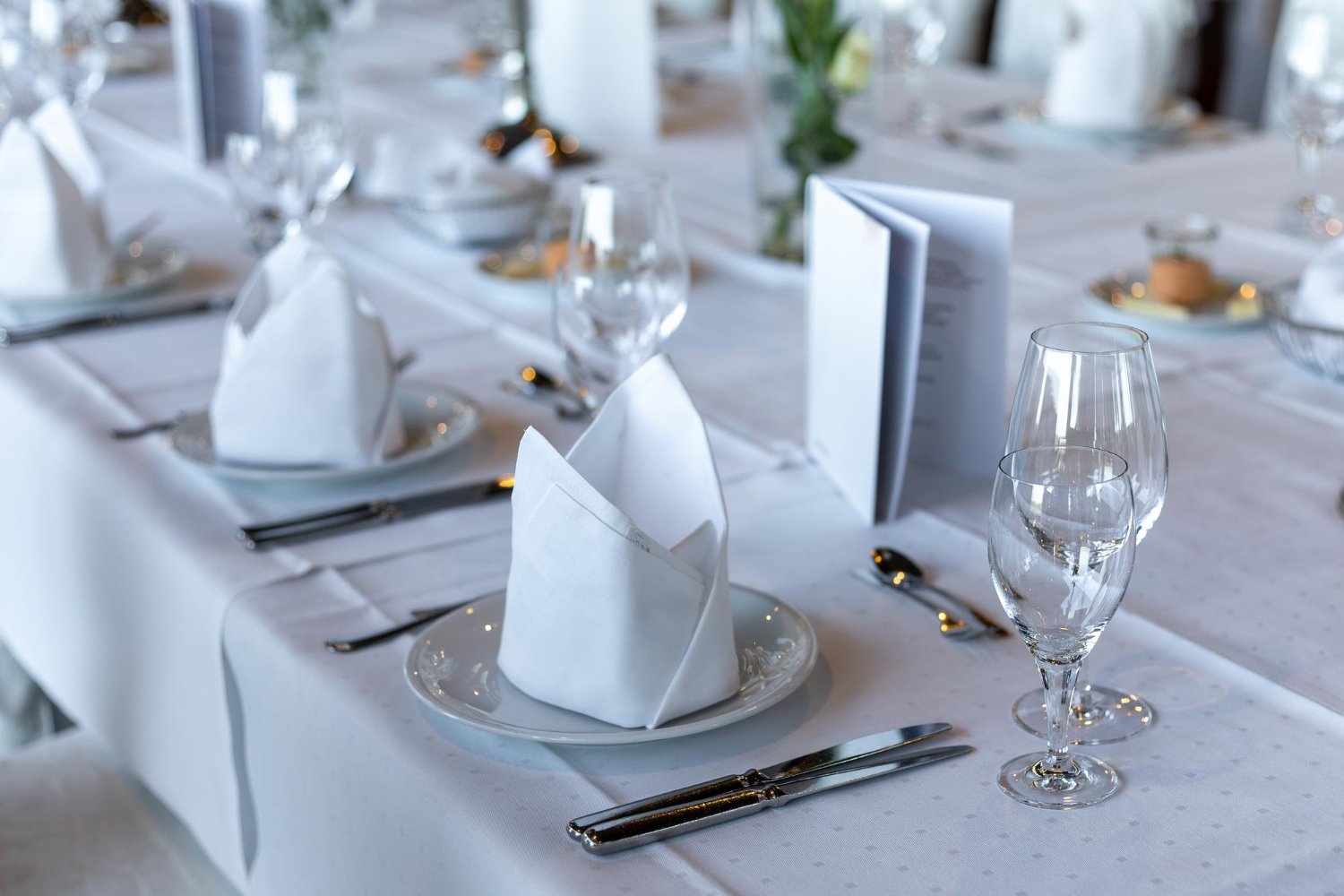
Green, Yellow, and Red Flags
Not every uncomfortable moment in this process is a genuine warning sign. Here’s how to tell the difference.
Green flags
- A fully itemized quote provided without you having to ask twice
- A clear, specific, written damage and replacement policy
- An optional damage waiver explained honestly, including real cost trade-offs
- A documented process for flagging pre-existing damage at delivery
- Clear delivery and pickup windows confirmed well before the wedding date
Yellow flags: normal industry practice, worth a direct conversation
- Delivery, setup, and pickup priced as separate line items, common, confirm the total
- A required damage deposit, standard practice, confirm the refund timeline and process
- Limited availability during peak wedding season, normal, plan around it
- A rush fee for orders placed close to the wedding date, standard, confirm the exact threshold
Red flags worth taking seriously
- No written policy on damage, replacement cost, or the waiver, even after you ask directly
- Verbal-only order confirmation with no written record of quantities or pricing
- Pressure to pay the full balance well before delivery, with no opportunity to inspect first
- Vague or shifting answers about what specifically counts as damage
- No clear process for disputing a charge you believe is incorrect
What the Contract May Not Make Obvious
Even a written agreement can leave real gaps worth checking directly.
Confirm the exact replacement cost formula, not just that one exists
Some contracts charge retail replacement value; others charge a multiple of the rental rate, sometimes two or three times the original price. Get the specific number or formula in writing before you order.
Confirm whether “verbal orders are firm”
Some rental companies’ terms explicitly state that a verbal order, given over the phone, is considered a firm, binding commitment. If this applies to your provider, follow up every verbal conversation with a written confirmation email to protect yourself.
Confirm the deposit and balance payment schedule
A common structure requires roughly half the total at booking, with the balance due before delivery. Confirm your specific provider’s exact schedule and accepted payment methods in writing.
Confirm what happens to accrued rental charges if an item isn’t returned
Some contracts specify that rental fees already paid cannot be credited against a replacement charge for a lost or destroyed item, meaning you could owe both the original rental fee and the full replacement cost. Confirm whether this applies to your agreement.

Table Sizing and Linen Drop: Getting Dimensions Right
This is one of the more genuinely confusing parts of linen ordering, worth understanding clearly before you commit to quantities.
Linen size is about drop length, not just table size
“Drop” refers to how far the fabric hangs past the table edge. A floor-length drop typically means 29 to 30 inches of overhang on a standard-height table; a lap-length drop covers roughly half that distance. Confirm which look you actually want before ordering, since this determines the specific linen size you need.
Round versus rectangular tables need genuinely different sizing
A 60-inch round table commonly needs a 120-inch round linen for a floor-length drop. A standard 8-foot rectangular table commonly needs a 90-by-156-inch linen for the same effect. Confirm your venue’s actual table dimensions directly rather than guessing.
Confirm your venue’s specific table inventory before ordering
Table sizes can vary genuinely between venues, and even within the same venue for different purposes, like a sweetheart table versus standard round guest tables. Get exact dimensions from your venue directly, not from a general online sizing chart alone.
Order slightly more than your exact count
A small buffer, one or two extra of each size, covers a last-minute table addition or an unexpected need without a stressful scramble close to the wedding.
Ordering and Timeline: How the Pieces Actually Stack
Understanding the realistic timeline helps explain the rush-fee structure covered earlier.
Book your linen order 3 to 6 months before the wedding
Popular colors and specialty fabrics, particularly for peak wedding season, can sell out or book up well in advance. An earlier booking also gives you more room to compare quotes across multiple companies.
Finalize exact quantities close to your RSVP deadline
Confirm your specific provider’s cutoff for final quantity changes, commonly 2 to 4 weeks before the wedding, and submit your final numbers before that date to avoid a rush fee or availability issue.
Confirm delivery timing relative to your setup schedule
Linens typically need to arrive with enough time for your venue or planner to actually dress the tables before guests arrive. Confirm this specific timing directly with both your venue and your rental company.
Plan your return promptly and correctly
Confirm the exact return window, commonly within a few business days after the wedding, and follow the specific drying and bagging instructions covered in more detail below to avoid a disputed damage charge.

Damage, Care, and What Actually Voids Your Deposit
This is the section that would have saved the couple at the start of this guide real money, worth understanding in specific detail.
What commonly counts as billable damage
Candle wax, wine and other beverage stains left untreated, burns, cigarette damage, and mold or mildew from improper storage or packing all typically count as damage under a standard rental agreement. This applies regardless of whether normal laundering could theoretically remove a milder version of the stain.
Never pack wet or damp linens into a sealed bag
This is the single most common, most avoidable source of disputed damage charges. Moisture sealed into a bag overnight or longer causes mildew, which most rental companies classify as damage rather than normal wear, exactly what happened in this guide’s opening story.
What generally counts as normal wear, not billable damage
Minor wrinkling, light general soiling from normal table use, and small water rings from condensation are commonly treated as normal wear under most standard agreements. Confirm this distinction directly with your specific provider, since standards do vary.
Address a spill immediately if you can, but don’t attempt DIY stain removal
Blotting a fresh spill can help, but avoid rubbing or applying home remedies, which can sometimes set a stain more permanently or damage delicate fabric. Let the rental company’s own cleaning process handle it.
Take photos of every linen at delivery and again before pickup
A simple photo record, timestamped on your phone, gives you real documentation if a dispute arises later about pre-existing condition versus damage that happened during your event.
Rush Fees, Delivery Delays, and the Real Cost of a Tight Timeline
Beyond the general rush-fee mention earlier, a compressed timeline introduces a few additional, less obvious risks.
A late order limits your color and fabric options, not just your price
Popular colors and specialty fabrics get booked out first, particularly during peak wedding season. A last-minute order may mean working with whatever’s genuinely still available, not your original first choice.
Ask directly what happens if delivery is delayed on the wedding day itself
Confirm whether your provider has a documented contingency plan for a delivery delay, and what compensation or resolution process exists if linens arrive too late for proper setup.
Weather can affect delivery logistics more than people expect
Severe weather affecting roads or delivery schedules is a real, if uncommon, risk. Ask your provider directly about their weather contingency policy, particularly if your wedding falls during a season with genuine severe-weather risk in your region.
Consider a backup plan even if your timeline looks comfortable
Knowing a second rental company’s contact information, even if you never need it, is a reasonable precaution rather than an overreaction.
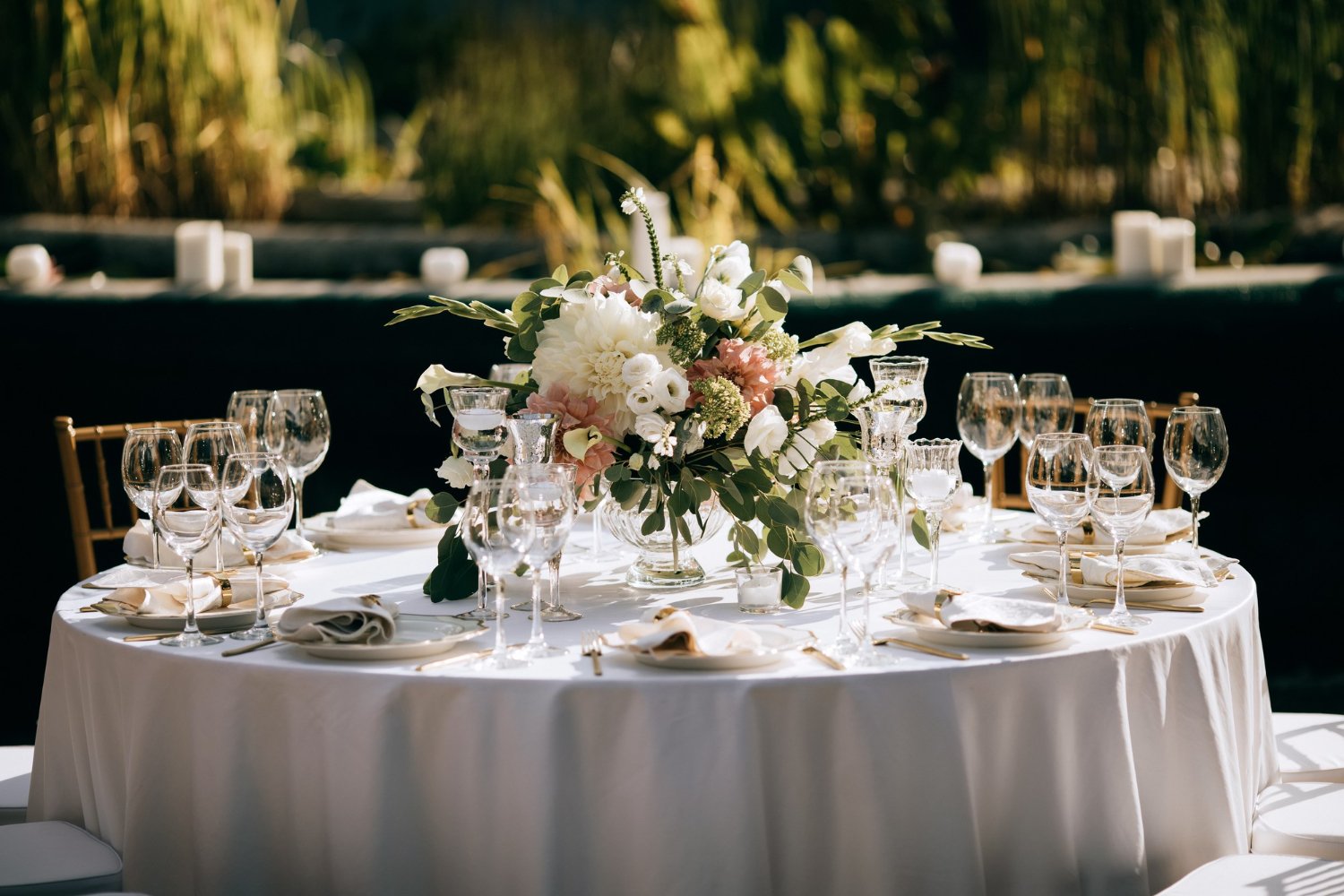
Elegant table set, table decoration at the wedding ceremony in the summer garden, catering service outdoor
Backup, Repair, and Emergency Planning
Most weddings go smoothly. Having a real plan for the ones that don’t costs nothing and prevents genuine panic if something does go wrong.
Keep a small on-site stain kit
Club soda, a few clean cloths, and a bit of cornstarch for wax spills can address a fresh spill enough to prevent it from setting further, without attempting a full DIY cleaning that could void your damage coverage.
Designate someone to handle linen issues during the reception
A coordinator, planner, or trusted family member who knows the return and care instructions can handle an in-the-moment spill or issue so you’re not pulled away from your own celebration to manage it.
Know your rental company’s after-hours contact information
If a genuine emergency, a significant delivery problem, a major shortage, happens on the wedding day itself, having a direct after-hours contact beats searching for a general customer service line during a crisis.
Keep your written agreement and photos accessible, not just filed away
If a dispute comes up after the wedding, quick access to your written contract and delivery-day photos, covered earlier, lets you resolve it faster than relying on memory alone.
Scam Check
Most linen rental companies are legitimate, established businesses. A small number of patterns are worth genuine caution.
Pressure to pay the full balance far in advance with no written terms
A legitimate company typically works on a deposit-plus-balance structure with clear written terms, not full payment demanded upfront with no contract to reference.
No verifiable business presence
A company with no reviews, no verifiable address, and no way to confirm they’re an established, ongoing business deserves real caution, particularly for a significant order this close to your wedding date.
Refusal to provide anything in writing
A consistent refusal to put pricing, damage policy, or delivery terms in writing, even after you ask directly, is a genuine reason to look elsewhere.
Report a genuine concern through the right channel
If you believe you’ve encountered deceptive practices, the Federal Trade Commission’s consumer resource center is the right place to report it and research your consumer protection options.
Worst-Case Scenario, and the Backup Plan
Worth naming plainly, since knowing the realistic worst case actually reduces anxiety more than avoiding the topic does.
The worst realistic case: a significant, disputed damage charge after the wedding
This is exactly the scenario at the start of this guide. It’s genuinely stressful, but it’s also resolvable, particularly with the documentation habits covered throughout this guide.
The backup plan
Your delivery-day and pickup-day photos, your written contract, and a calm, direct conversation with the company are your first line of resolution. If that doesn’t work, your state’s consumer protection office and, for a modest dollar amount, small claims court are genuinely accessible next steps.
This is a manageable, resolvable situation, not a catastrophe
The overwhelming majority of linen rentals go smoothly, with deposits returned as expected. This section exists for the rare exception, not as a prediction.
Accessibility Check
A few specific considerations deserve direct attention for a genuinely accessible reception setup.
Confirm table height and drop length work with mobility devices
A floor-length linen drop can sometimes interfere with wheelchair access at a table. Confirm with your venue and rental company whether a shorter drop or specific table arrangement is needed for any guest using a mobility device.
Consider color and pattern contrast for guests with visual impairments
High-contrast table settings, a lighter linen with darker place settings or the reverse, can genuinely help guests with low vision navigate their table setting more easily.
Ask your rental company about their own accessibility during delivery
If your venue has specific accessibility requirements for delivery access, confirm your rental company can accommodate them directly rather than assuming.
Weather Check: Outdoor Wedding Linen Considerations
Beyond the delivery-logistics weather note covered earlier, an outdoor reception introduces its own specific linen considerations.
Wind affects lighter fabrics more than people expect
A lightweight or sheer linen can shift, lift, or blow off an outdoor table in genuine wind, a real practical concern beyond just aesthetics. Ask your rental company directly about weighted or clip options for an outdoor setting.
Grass and uneven ground affect table stability and linen drape
Tables on natural ground rather than a flat, hard surface can sit less evenly, affecting how a linen drapes and increasing the chance of it dragging on the ground and picking up dirt or moisture.
Heat and direct sun can affect certain fabrics and colors
Extended direct sun exposure can fade certain dyes over the course of a long outdoor event. Ask directly if this is a concern for your specific linen choice and event length.
Have a rain contingency plan that includes your linens specifically
If your outdoor reception has an indoor backup plan for weather, confirm your linens and table setup logistics are part of that broader contingency plan, not an afterthought.
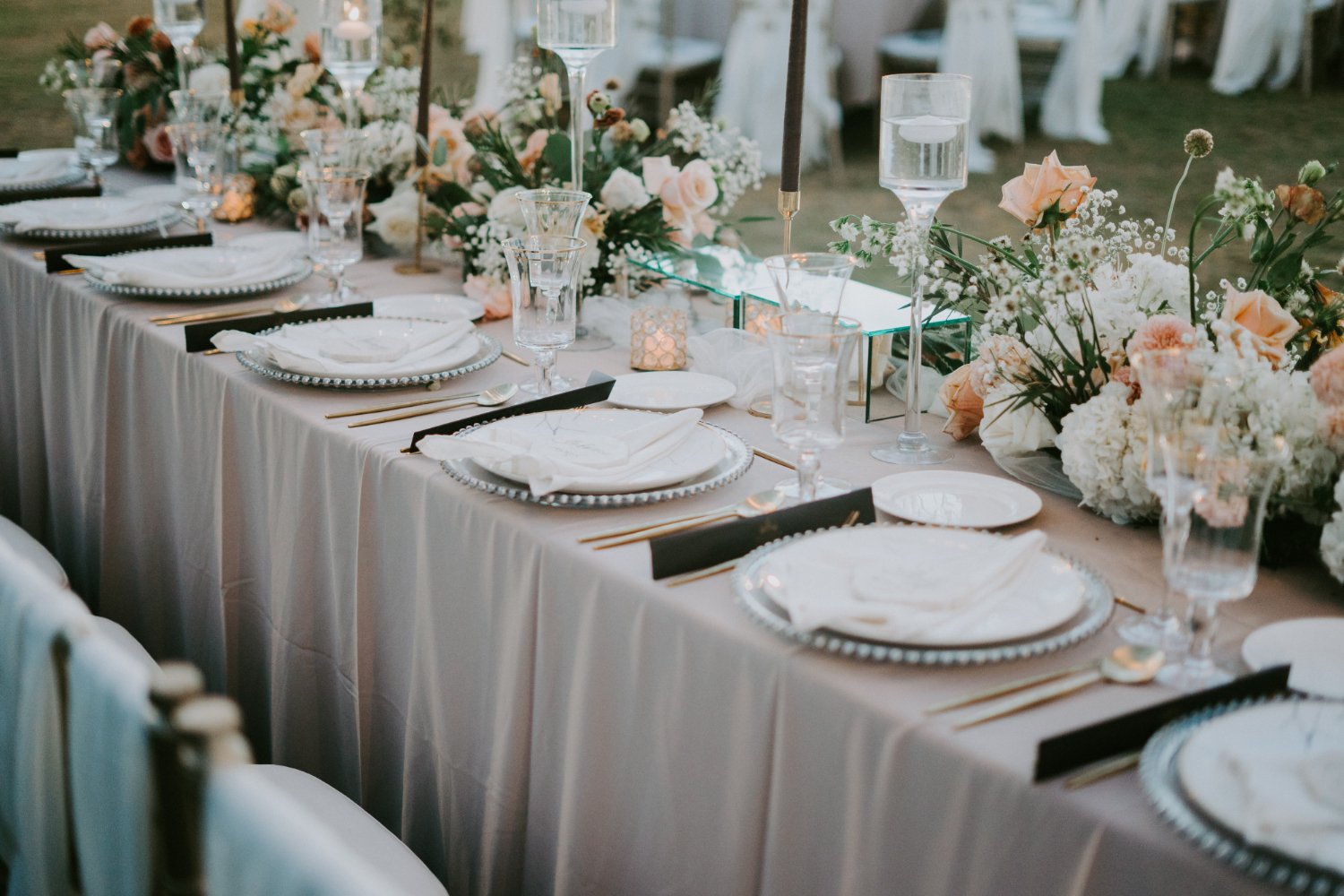
Decorated table setting for a wedding celebration
Legal Check: Consumer Protection Basics Worth Knowing
General consumer protection principles apply to rental services, though specifics can vary by state.
A written agreement creates real accountability
In many states, a written contract for rental services functions as a meaningful reference point if a dispute arises, giving you documented terms rather than relying on memory of a verbal conversation.
Deposit and damage policies are generally private business agreements
There’s no single national rule governing rental deposits or damage charges specifically. Confirm your specific provider’s policy directly and in writing, since this is treated as a contractual matter rather than a standardized legal requirement.
Paying by credit card offers some real protection
A credit card payment, rather than cash or a personal check, gives you access to dispute processes through your card issuer if a company fails to honor its own written agreement.
Where to go if something genuinely goes wrong
For a significant dispute, your state’s consumer protection office and the Federal Trade Commission are appropriate resources. Small claims court is also a genuinely accessible option for a dispute involving a modest dollar amount.
What Pinterest and Styled Photos Don’t Show You
A beautifully styled tablescape photo captures one perfect moment, not the actual logistics or cost behind it.
Styled shoots often use significantly more linen layers than a typical budget allows
A styled photo frequently layers a base cloth, an overlay, a runner, and specialty napkins, each a separate rental line item. Recreating that exact look means budgeting for every layer, not just the visible top fabric.
The photo doesn’t show the delivery truck, the setup crew, or the pickup logistics
An effortless-looking tablescape represents real coordinated logistics behind the scenes, exactly the coordination this guide has covered throughout.
Color accuracy in photos doesn’t always match real fabric in person
Screen color and actual fabric color can differ meaningfully. Request a physical swatch before committing to a specific color for your full order, particularly for a specialty or seasonal shade.
Rental vs. Buying Your Own Linens: A Direct Comparison
Some couples consider buying linens outright instead of renting, worth a genuine, honest look at the trade-offs.
| Approach | Real trade-off |
|---|---|
| Rental | No storage or cleaning burden; damage liability applies |
| Buying wholesale | Lower cost at scale; you own cleaning, storage, and resale |
| Buying and reselling after | Real potential savings; genuine time and effort to resell |
Buying often makes more sense at a genuinely large guest count
Purchasing wholesale can undercut rental pricing for a very large wedding, though it introduces cleaning, storage, and eventual resale or disposal as your own responsibility, not the rental company’s.
Renting removes the damage-liability question entirely if you own the linens
Every damage and replacement concern covered throughout this guide is specific to rental. If you buy your own linens outright, a wine stain is simply your own linen’s problem, not a billable event.
A Realistic Scenario: How the Story at the Start of This Guide Could Have Gone Differently
Return to the couple from the opening of this guide, charged full replacement cost, three times the rental rate, for water-spotted linens from improper bagging.
What a written damage policy check would have changed
If they had confirmed the exact damage definition and replacement formula before ordering, covered earlier in this guide, they would have known in advance that even mild water spotting from improper drying counted as billable damage under this specific company’s terms.
What proper return handling would have changed
Following the explicit “never bag wet linens” guidance, covered in this guide’s damage and care section, would have prevented the mildew spotting entirely, the actual root cause of the dispute.
What a damage waiver would have changed
Even with the water spotting, an optional damage waiver, had they purchased one, would likely have capped their liability well below the full three-times-replacement charge they ultimately faced.
Comparing Multiple Rental Quotes Fairly
Once you have quotes from a couple of companies, comparing them accurately takes more than looking at the per-item price.
Confirm each quote covers genuinely equivalent scope
One company’s quote might include delivery, setup, and pickup; another’s might charge each separately. Confirm the actual total, all-in cost before comparing per-item rates side by side.
Weigh damage policy alongside price
The lowest per-item rate isn’t automatically the best value if that company’s damage and replacement policy is considerably less favorable than a slightly pricier competitor’s. Compare both factors together, not price in isolation.
Ask about fabric quality and condition, not just price and policy
Request to see or photograph an actual sample of the specific fabric and color you’re ordering, not just a general product photo, to confirm genuine quality before committing to a full order.
Three Realistic Budget Scenarios
Numbers in the abstract are harder to apply than a concrete example. Here are three genuinely realistic, composite scenarios.
Scenario one: a simple, budget-conscious order
A couple with 15 tables orders standard white tablecloths and basic napkins, skipping the damage waiver since they’ve confirmed their venue is indoors with minimal spill risk. Total cost: $420, including delivery and pickup, confirmed in writing with no surprises.
Scenario two: a mid-range order with a damage waiver
Another couple with 18 tables orders specialty-color linens with matching runners and chair sashes, adding the optional 10 percent damage waiver given their open-bar reception. Total cost: $1,380, including the waiver, delivery, setup, and pickup.
Scenario three: a rushed order with a real lesson learned
A third couple orders linens just two weeks before their wedding after a venue change, triggering a rush fee and limited color availability. Their $600 estimate becomes $780 once the rush fee applies, a real, documented increase they confirmed and accepted before finalizing.
The difference between a smooth experience and a frustrating one in all three scenarios wasn’t the price. It was whether the full scope, damage policy included, was confirmed clearly, in writing, before the linens were ever delivered.
Your Wedding Linen Rental Checklist
- ☐ Exact venue table dimensions and count confirmed: ____________
- ☐ Fully itemized quote obtained, all fees included: ____________
- ☐ Written damage and replacement policy confirmed: ____________
- ☐ Damage waiver decision made deliberately, not skipped by default: ____________
- ☐ Delivery, setup, and pickup timing confirmed with venue: ____________
- ☐ Fabric swatch requested and color confirmed in person: ____________
- ☐ Return and drying instructions understood in writing: ____________
- ☐ Photos planned for both delivery and pickup: ____________
- ☐ Backup rental company contact identified: ____________
Frequently Asked Questions
What are the real wedding linen rental hidden costs most couples miss?
Delivery, setup, and pickup fees priced separately from the per-item rental rate, and the damage or replacement policy, which can charge full retail value or a multiple of the rental price for damage most people would consider ordinary wear.
How much should I actually budget for wedding linen rental?
Most couples spend $250 to $2,500 for a 100-guest wedding, depending on fabric choice, table count, and how many additional pieces like runners and chair covers get added.
Is a damage waiver worth paying for?
Often, yes, particularly for an open-bar reception or an outdoor event with genuine spill and weather risk. Compare the waiver’s cost, commonly 5 to 15 percent of the total, against the potential replacement cost of your specific order.
What actually counts as damage under a standard linen rental agreement?
Wax, unaddressed stains, burns, and mildew from improper storage or packing commonly count as billable damage. Minor wrinkling and light general soiling from normal table use are commonly treated as normal wear, though this varies by provider.
Why did my linens get charged as damaged when they just looked water-spotted?
Water spotting is very often a sign of mildew from packing linens while still damp, which most rental companies explicitly classify as damage, not normal wear, regardless of how minor it looks.
How far in advance should I book my linen rental?
3 to 6 months before the wedding, especially for a specialty color or fabric, to ensure availability and avoid rush pricing.
What size linen do I need for my tables?
This depends on both table size and desired drop length. A 60-inch round table needs roughly a 120-inch round linen for a floor-length drop; an 8-foot rectangular table needs roughly a 90-by-156-inch linen for the same look. Confirm your venue’s exact table dimensions directly.
Can I negotiate a linen rental quote?
Some room exists, particularly for a large order or a less time-sensitive timeline. It costs nothing to ask directly, though a well-established company with strong seasonal demand may have less flexibility.
What should I do if I’m charged for damage I don’t believe I caused?
Reference your delivery-day photos and written agreement directly with the company first. If unresolved, your state’s consumer protection office and small claims court are genuinely accessible options for a modest dispute.
Is it cheaper to buy linens instead of renting them?
For a very large wedding, buying wholesale can undercut rental pricing, though it shifts cleaning, storage, and eventual resale or disposal onto you, rather than the rental company.
What’s the single biggest mistake couples make with rented linens?
Packing linens away damp or wet before return, which causes mildew and commonly results in a damage charge that proper drying would have completely avoided.
Communicating With Your Rental Company: A Few Habits That Prevent Most Problems
Beyond the specific questions covered earlier, a few general communication habits genuinely reduce your risk of a bad experience.
Get everything meaningful in writing, every time
A verbal promise about price, quantity, color, or policy should appear in your written contract or a follow-up email, not relied on from memory alone months later.
Follow up every phone conversation with a written summary
If your provider’s terms treat verbal orders as binding, covered earlier in this guide, send a brief confirmation email after every call summarizing what was discussed, protecting yourself either way.
Keep a simple record of every order change
A quick note of any quantity, color, or date change, along with when and how it was confirmed, prevents genuine confusion if a discrepancy comes up later.
Address a concern directly and early, not after it’s compounded
If something feels off, an unclear damage policy, a vague answer about fees, raise it directly and early rather than hoping it resolves itself before the wedding.
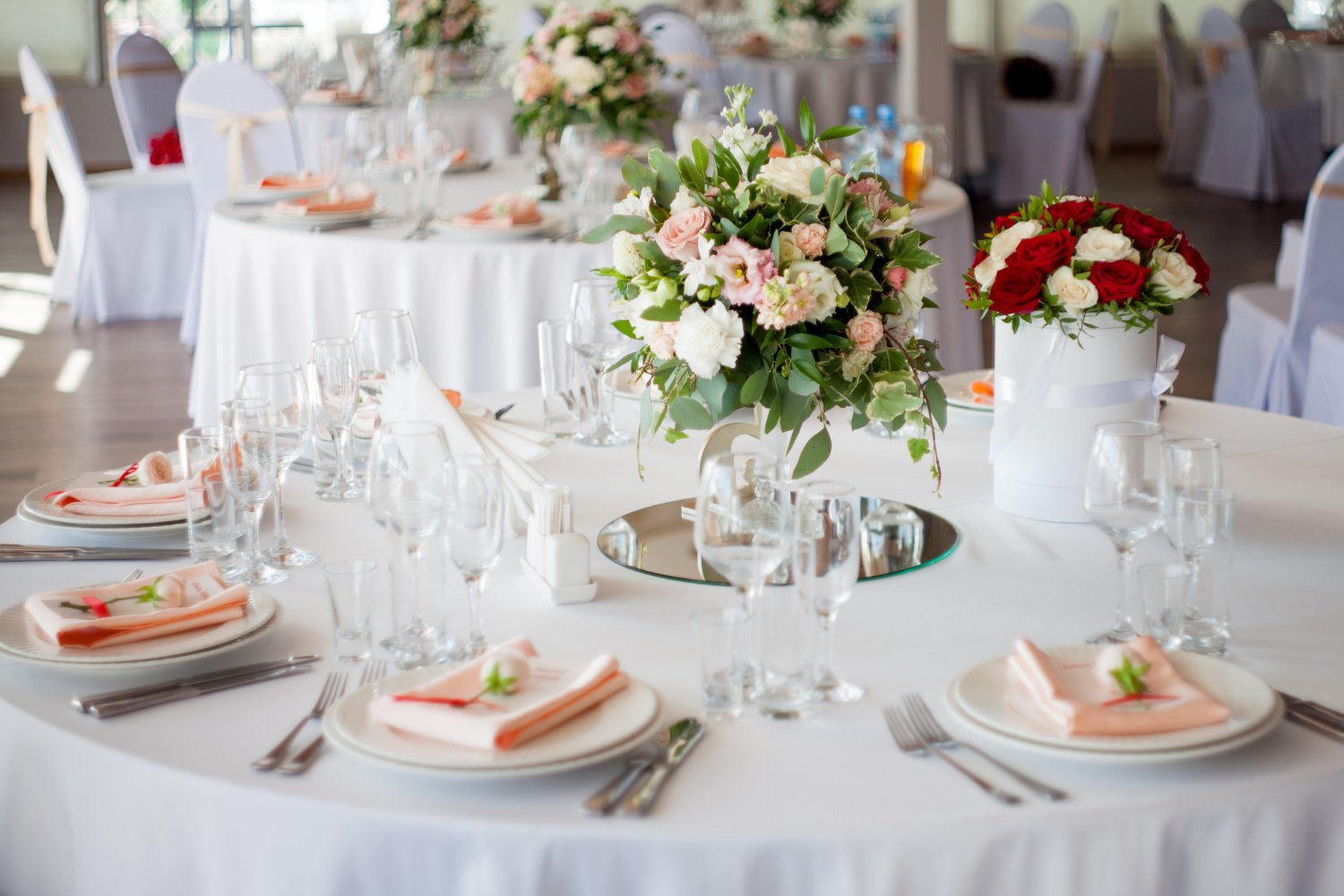
Wedding decor. Flowers in the restaurant, table setting
A Few Linen Rental Myths Worth Dropping
“A higher price always means better quality or service”
Price reflects overhead, brand recognition, and local market conditions as much as it reflects fabric quality or genuine service. A well-reviewed smaller company can offer comparable, or better, quality at a lower price.
“Normal wear and tear will never be charged as damage”
As this guide has shown, the line between normal wear and billable damage is drawn by the rental company’s own written policy, not a universal standard. Always confirm the specific definition directly.
“Skipping the damage waiver always saves money”
This depends entirely on your specific event’s actual risk level and your specific provider’s replacement-cost formula. For a higher-risk event, skipping the waiver can end up costing considerably more than it saves.
“Once linens are delivered, there’s nothing more to think about until pickup”
Proper storage during the event and correct handling before return, covered throughout this guide, genuinely affect your final bill. This isn’t a “set it and forget it” rental category.
Multi-Event Linen Needs
Some celebrations involve more than one event, each potentially needing its own linen consideration.
Rehearsal dinners and welcome events often need their own, simpler order
These pre-wedding events commonly call for a smaller, less elaborate linen setup than your main reception, worth budgeting and ordering as its own separate line item rather than assuming your main order somehow covers it.
Coordinate delivery timing across multiple events carefully
If linens are being reused or exchanged between events, confirm the specific logistics directly with your rental company, since this adds real coordination complexity beyond a single-event order.
Budget each event’s linens separately for a clearer overall picture
Treating each event as its own line item, rather than one combined estimate, prevents a genuine scramble as multiple events approach and helps you see your true total linen spending clearly.
Seasonal and Regional Pricing Differences
The national ranges covered throughout this guide tell only part of the story, since when and where you’re getting married genuinely shifts the number.
Peak wedding season means higher demand and less flexibility
Late spring through early fall remains peak wedding season across most of the country, meaning popular colors and fabrics book up faster and pricing tends to sit at the higher end of the ranges covered in this guide.
Major metro areas commonly run higher than smaller markets
Coastal cities and major metro areas generally see linen rental pricing above the national average, reflecting both higher business overhead and stronger local demand.
Off-season and weekday weddings can mean genuine savings
A winter wedding, or one on a Friday or Sunday outside peak season, sometimes means more available inventory and, at some companies, modest pricing flexibility worth asking about directly.
Get a local quote rather than assuming the national average applies directly
Use the figures throughout this guide as a planning baseline, then confirm actual current pricing with companies in your specific area before finalizing your linen budget.
Sustainability Considerations
Some couples factor environmental impact into their linen decision, worth genuine mention.
Rental itself is inherently a lower-waste choice
Renting reduces the demand for new textile production compared to every couple purchasing single-use linens, a genuine environmental advantage built into the rental model itself.
Ask about your specific company’s laundering practices
A company using efficient, environmentally conscious laundering processes reflects a real difference in resource use, worth asking about directly if this matters to you.
Reusable, natural fiber options exist for a lower-impact choice
Cotton and linen-blend fabrics generally have a different environmental profile than synthetic options. Ask your rental company directly about their specific fabric composition if this is a genuine priority.
Non-Traditional and DIY Linen Considerations
Some couples consider buying and laundering their own linens themselves rather than renting or buying wholesale, worth an honest look.
Sourcing affordable linens secondhand or from discount retailers
Some couples find genuine value in secondhand or clearance-priced tablecloths, particularly for a smaller or more casual wedding where perfect uniformity matters less than overall budget.
Factor in real laundering time and equipment
A large quantity of tablecloths requires genuine time, and sometimes commercial-capacity equipment, to launder and press properly before and after the event. This is a real, often underestimated cost in time and effort, not just dollars.
Consider a hybrid approach
Some couples rent linens for the main reception while sourcing simpler, less expensive coverings for a rehearsal dinner or other secondary event, balancing cost and convenience deliberately across their full celebration.
A Note on Color Matching and Swatches
Color accuracy deserves its own direct attention beyond the general Pinterest-reality point covered earlier.
Always request a physical swatch before ordering a full quantity
Screen colors, and even printed marketing materials, can shift meaningfully from actual fabric color. A physical swatch, held against your other decor elements, genuinely prevents a color mismatch discovered too late to fix.
Consider lighting at your actual venue when evaluating a swatch
A color that looks right under bright daylight can shift considerably under warm evening reception lighting. If possible, view your swatch under lighting similar to your actual reception conditions.
Confirm dye lot consistency for a large order
For a large quantity of the same color, ask directly whether all pieces come from the same dye lot, since even the same named color can show subtle variation between production batches.
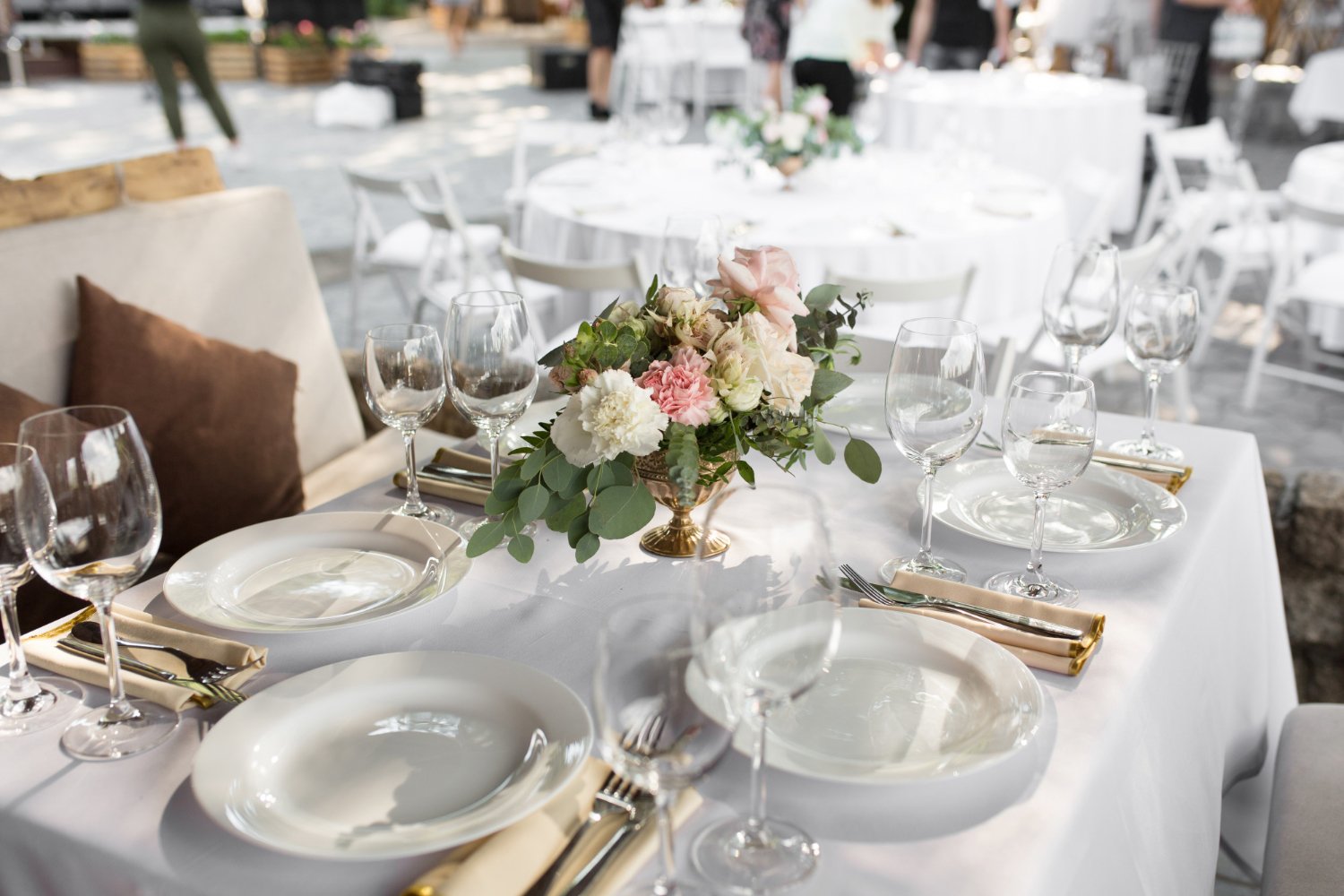
Wedding table setting decorated with fresh flowers in a brass vase.
A Few More Direct Answers
Should we buy our own linens if we’re already planning a large wedding?
Consider running the actual numbers for your specific guest count. Buying wholesale can genuinely undercut rental pricing at scale, though it adds real cleaning, storage, and eventual resale responsibility on your end.
How do we make sure the linen color actually matches our other decor?
Request a physical swatch, not just a photo, and view it under lighting similar to your actual reception conditions before committing to a full order.
What if we need linens for both a rehearsal dinner and the main wedding?
Budget and order for each event separately, rather than assuming one combined estimate covers both, giving you a clearer, more accurate total picture.
Is it worth asking about a rental company’s laundering practices?
Yes, if sustainability genuinely matters to you. A specific, direct answer about their process tells you more than a general “eco-friendly” marketing claim alone.
What’s the most important single habit from this entire guide?
Get the damage and replacement policy in writing before you order, and follow the specific drying and return instructions exactly, since these two habits together prevent the vast majority of disputed charges covered throughout this guide.
A Final Word on Reading Your Specific Agreement Carefully
Every principle in this guide points toward the same underlying, simple habit: read what you’re actually agreeing to, and ask direct, specific questions about anything unclear, before any linen leaves the warehouse and before any deposit changes hands, so that every step of the process stays genuinely predictable from start to finish.
A specific final check before you sign or pay a deposit
Reread your written quote one more time before paying, confirming it matches everything discussed verbally during your consultation, including the specific damage policy and replacement formula.
Keep copies of everything, digitally and on paper if possible
A photo of your written agreement, saved to your phone and backed up elsewhere, ensures you have access to it even if the original gets misplaced during a genuinely busy planning season.
This diligence protects a good relationship, not just guards against a bad one
Clear documentation isn’t about assuming your rental company will act in bad faith. It’s about giving both of you a shared, reliable reference point, the same practice that protects any professional relationship involving a significant service and a real deadline.
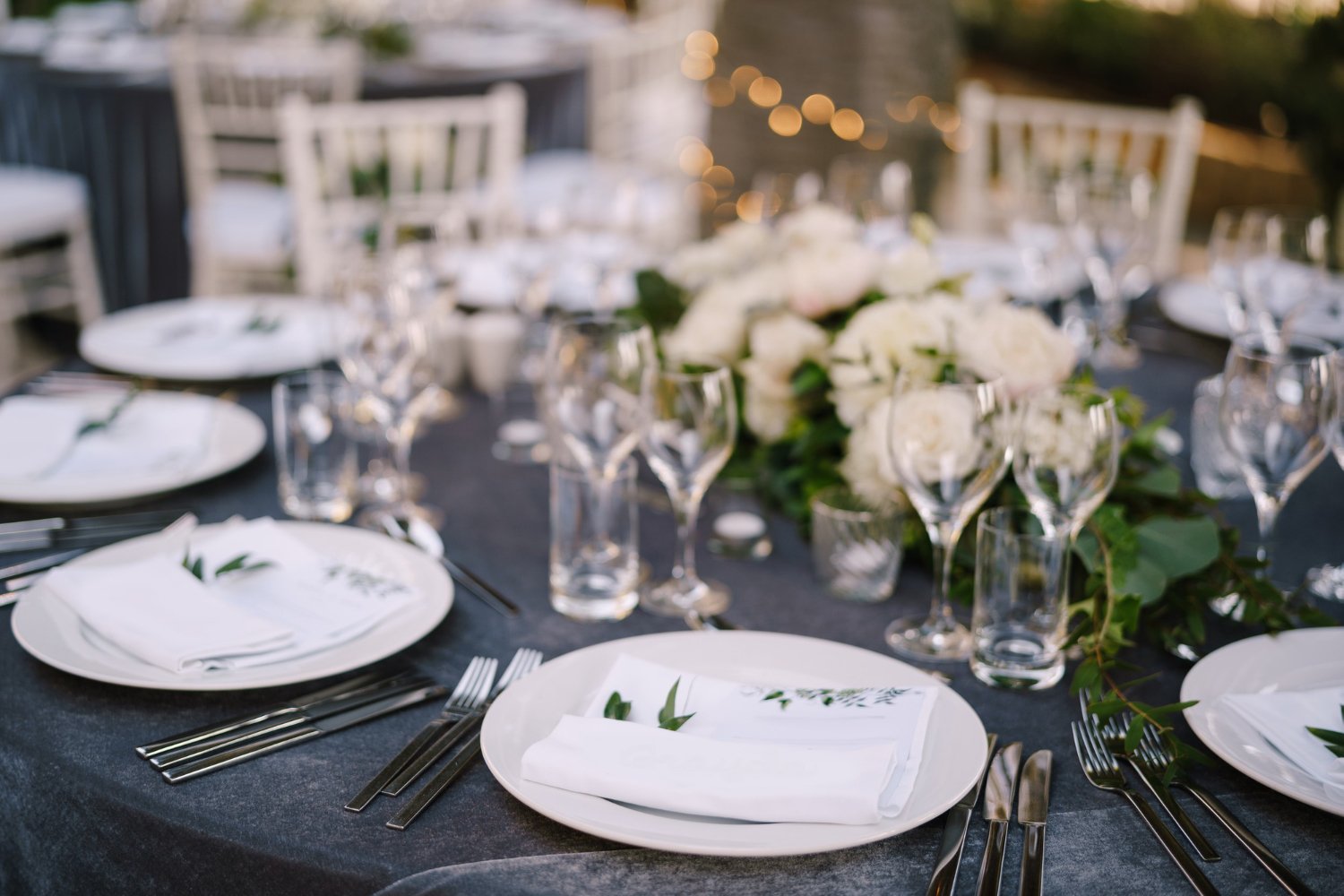
Wedding table setting decorated with fresh flowers in a brass vase.
A Note on Napkin Folds and Setup Style
A small detail that can add real, if modest, cost beyond the base rental price.
Elaborate napkin folds sometimes count as a setup upgrade
A simple fold is commonly included in standard setup service. A more elaborate, decorative fold style can sometimes carry an additional per-napkin charge, worth confirming directly if you have a specific style in mind.
Confirm who’s actually doing the table setup
Some rental companies include full table dressing as part of delivery; others simply drop off the linens for your venue or planner to place. Confirm this directly, since it affects both your total cost and your day-of logistics.
A simple, well-pressed linen often looks more elegant than an overly fussy one
As covered earlier in this guide’s design section, restraint often photographs better than excessive embellishment. This applies to napkin styling as much as it does to overall linen choice.
Guest Experience Check: When Linens Affect More Than Just Photos
Beyond aesthetics, a few genuinely practical guest-comfort considerations connect back to linen choice.
Table stability matters more than most couples consider
A linen that’s too large or improperly secured can shift or bunch, creating a genuine trip hazard near table legs, particularly relevant for guests with mobility considerations.
Confirm linens don’t interfere with place settings or centerpieces
An overly thick or heavily textured fabric can sometimes make it harder for glassware or place settings to sit stably. Worth checking directly with your rental company if you’re choosing a specialty texture.
Consider guest comfort at a long outdoor event
Heavier fabrics can trap heat around a table in direct summer sun. If this matters to your specific outdoor setup, ask your rental company directly about lighter-weight options.
A Realistic Timeline Recap
| Timeframe | What happens |
|---|---|
| 3–6 months before | Book your rental company; request swatches |
| 2–3 months before | Confirm exact table counts and dimensions with your venue |
| 2–4 weeks before | Finalize quantities; confirm delivery and pickup windows |
| Delivery day | Inspect and photograph everything before the delivery team leaves |
| After the wedding | Dry linens fully before bagging; photograph before pickup |
This timeline is a genuinely reliable default for most orders, though your specific rental company’s actual requirements always take priority over this general guide. Confirm their exact deadlines directly once you’ve booked.
A Closing Thought on Value Versus Price
Every number in this guide describes what linen rental commonly costs. None of it describes what a genuinely well-run rental relationship is actually worth. A company that answers questions directly, documents its policies clearly, and treats a disputed water spot as a conversation rather than an automatic charge is providing something real beyond the fabric itself: a predictable, trustworthy experience during a week that already has enough moving pieces.
Approach this process with the same combination this guide has modeled throughout: genuine goodwill toward a vendor providing a real service, paired with the same direct, specific questions you’d bring to any other significant purchase. Both things can be true at once. Holding them together is what actually protects you, start to finish, from the first quote through the final returned deposit.
One Last Practical Note on Choosing Confidently
None of the guidance in this article is meant to make a genuinely routine rental process feel fraught. The overwhelming majority of linen orders go smoothly, arrive on time, and get returned with a full deposit refund and no dispute at all. This guide exists for the exceptions, and for the peace of mind that comes from knowing exactly what to ask before your linens are already on their way to the warehouse.
Choose a rental company that answers your questions directly, puts real numbers and policies in writing without being asked twice, and treats your specific order and timeline as genuinely worth respecting. That combination, more than any single price point in this guide, is what actually predicts a smooth experience from your first quote through your last returned deposit.
A Note on Linen Rental for Non-Traditional Table Setups
Family-style seating, long communal tables, and other non-traditional layouts introduce their own specific linen considerations.
Long communal tables need custom or extra-length linens
A standard table linen may not cover a genuinely long farm-style or communal table without seaming multiple pieces together. Confirm your rental company can accommodate your specific table length, or discuss a runner-based alternative instead.
Cocktail and high-top tables need their own smaller linens
These smaller tables require their own specific linen size, commonly priced lower per piece but still worth including explicitly in your itemized quote rather than assuming they’re bundled with your main table order.
Buffet and gift tables need linens too, easy to forget in initial planning
These functional tables benefit from the same thoughtful linen treatment as guest tables, worth including in your original count rather than a last-minute addition.
Final Thoughts on Building Your Own Plan
This guide has covered a genuinely large amount of ground: real pricing, the damage and replacement policies that catch people off guard, sizing and ordering logistics, and nearly every practical question a couple might have about wedding linen rental hidden costs. You don’t need to apply every single section in order.
Pull whatever’s relevant to your specific wedding, skip what doesn’t apply, and return to any section as a reference whenever a new question comes up during your own planning process. That’s genuinely what this guide is here for.

Wedding table setting decorated with fresh flowers in a brass vase
A Last Round of Direct Answers
Do we need separate linens for cocktail hour and the main reception?
Often yes, since cocktail and high-top tables need their own smaller linen size. Confirm this is included explicitly in your itemized quote rather than assumed as part of your main table order.
What if our reception uses long communal tables instead of standard rounds?
Confirm your rental company can accommodate the specific length directly, since a standard linen may not cover a genuinely long farm-style table without seaming, or consider a runner-based alternative instead.
Should we include buffet and gift tables in our linen order from the start?
Yes, these functional tables are easy to forget in initial planning but benefit from the same thoughtful treatment as guest tables. Include them in your original count rather than adding them at the last minute.
Is it worth asking about elaborate napkin folds, or does that always cost extra?
This varies by company. A simple fold is commonly included in standard setup; a more elaborate style can sometimes carry an additional charge. Confirm directly if you have a specific style in mind.
What’s the very last thing we should do before finalizing our linen order?
Reread your written, itemized quote one final time, confirming the damage policy, delivery logistics, and return instructions all match what was discussed, before any deposit changes hands.
A Brief Word on Working With a Wedding Planner for This Specific Category
If you’re working with a wedding planner, linen rental is one category where their existing vendor relationships can genuinely help.
Planners often have established relationships with reliable rental companies
An experienced planner has typically already vetted several rental companies’ pricing, damage policies, and reliability well before you ever need to. This can save you real research time and real stress. It beats starting completely from scratch on your own.
Confirm who’s actually managing the order and the return
If your planner is handling linen logistics directly, confirm exactly who is responsible for inspection at delivery, care during the event, and proper return, so accountability stays genuinely clear if any issue does arise later.
Ask your planner directly about typical damage disputes they’ve seen
A planner with real experience in this category can often tell you which local companies have reasonable, fair damage policies and which have generated genuine complaints from past clients. This is valuable insight beyond what general online research alone would give you.
This doesn’t replace your own direct review of the contract
Even with a trusted planner involved, review the written agreement yourself using the questions and checklist covered throughout this guide. It’s your deposit and your name on the contract, regardless of who helped coordinate the logistics along the way, and that final review is worth doing every single time.
A Concluding Note on Confidence
Table linens are one of the more visually important, budget-modest categories in an entire wedding. The gap between a smooth experience and a stressful one rarely comes down to the fabric itself. It comes down to information: knowing what a specific company defines as damage, knowing the true all-in cost before you compare quotes, and knowing exactly how to return your order safely.
You now have that information laid out clearly, drawn from real industry practice and real disputes couples have actually faced. Walk into your own rental relationship with it. Ask the direct questions this guide has modeled throughout, and trust that a reasonable, well-run company will answer them clearly.
Where This Leaves You
Wedding linen rental hidden costs come down to the same handful of patterns throughout this entire guide. Delivery, setup, and pickup fees get priced separately from the per-item rate. A damage policy gets defined by the rental company rather than common sense. And a replacement charge can multiply the original rental cost for damage that started as something as ordinary as packing a linen away still slightly damp. None of this is mysterious once you know where to look, and most of it is completely normal, well-documented industry practice, not a sign anything is wrong.
The couple from the start of this guide didn’t need a different rental company or a smaller order. They needed one specific piece of information, in writing, before they packed a single tablecloth for return: exactly what their provider considered damage, and exactly how much it would cost. That single missing detail, more than anything else in their entire order, was what turned a routine return into a genuinely stressful dispute.
You now have that detail, and everything else this guide has covered alongside it. Use it to walk into your own linen order with the same combination of warmth and clarity this guide has modeled throughout, confident rather than anxious, informed rather than guessing.
Your next step
Before you book, ask your rental company directly: “Can you give me a fully itemized quote, and a written explanation of exactly what counts as damage and what replacement costs?” Get the specific drying and return instructions in writing too. Don’t sign until you have clear answers to both.
