

A bride in Texas got married in June and didn’t think about her last name again until August. Her honeymoon boarding pass still read her maiden name. Her freshly reissued debit card read her married name instead. The mismatch got flagged at check-in, and she spent forty minutes at the counter while her new husband held their bags and his patience thinned. Nothing about her situation was rare. It’s the default outcome when nobody plans the paperwork sequence ahead of the wedding.
Every couple hears some version of the same line: changing your name after marriage is free and easy. That’s only half true. Social Security genuinely doesn’t charge a fee for it. Everything downstream of that first form gets more complicated, though. The real name change after marriage cost shows up in passport fees, DMV fees, notary charges, lost work hours, and the occasional rush fee nobody budgeted for. None of it is expensive compared to the wedding itself. All of it is avoidable friction once you know the order and the deadlines before you start.
This guide walks through what Social Security, the State Department, and your state DMV actually require, in the order that avoids the most rework. It covers the deadlines a few states enforce, and the paperwork mistakes that quietly delay a passport by weeks. It also covers the honest math on what paid “name change kit” services do and don’t do for you. It also covers couples who hyphenate, keep separate names, or skip a legal change entirely. None of those choices need defending. They just need their own version of this checklist.
Quick Answer
Quick answer first, details below: start with Social Security, wait for the new card, then update your driver’s license, then your passport if you’re traveling soon, then everything else.
Social Security charges nothing for a name change and typically mails a new card within 5 to 10 business days. A passport update runs $0 to $130 depending on timing and the form you use, and driver’s license fees vary by state, often landing between $10 and $50. The real name change after marriage cost is mostly time: certified certificate copies, notary visits, and the wait between each agency. Budget two to three months to touch every account, not two to three weeks.
What Nobody Tells You About the Post-Wedding Paperwork

Wedding planning has an entire industry built around it: coordinators, checklists, registries, blogs. The paperwork that follows the wedding has almost none of that support. Nobody hands you a timeline for Social Security, the DMV, and the passport office. You learn how the process actually works by living through it, usually during your first attempt at whichever office happens to sit closest.
The Timeline Nobody Puts on a Checklist
Wedding vendors give you a timeline for flowers and invitations. Nobody gives you one for government offices. Each agency runs on its own clock, and none of them talk to each other. That silence between agencies is where most of the frustration in this whole process comes from.
Most agencies don’t share a database with each other
Social Security, the passport office, and your state DMV each keep separate records. Updating one doesn’t automatically update another. You have to notify each agency yourself, usually with the same certified marriage certificate. That’s why order matters so much here. Skip a step, and you’ll end up mailing the same document twice.
“A few weeks” usually stretches into a few months
Individually, each office moves fast enough. Social Security typically mails a new card within 5 to 10 business days once your request goes through. Stack that against a passport that takes 4 to 6 weeks routine, plus a DMV visit that needs your updated Social Security record first. The whole sequence easily runs eight to twelve weeks. Nobody mentions that going in.
Every office wants an original, not a photocopy
Government agencies almost never accept a photocopy of your marriage certificate. They want a certified copy, issued by the county or state where you got married, often with a raised seal. A plain copy from your own printer won’t satisfy Social Security, the passport office, or most DMVs. That single detail trips up more newlyweds than any other step in the process.
The paperwork outlasts the wedding glow
The wedding itself lasts a day. The name change process can stretch across a full season. Couples who expect a quick, one-afternoon errand often feel discouraged when week six arrives and they’re still waiting on a passport. Setting realistic expectations early makes the actual waiting much easier to tolerate.
Why the Real Name Change After Marriage Cost Isn’t One Number
Ask ten couples what they spent changing their names, and you’ll get ten different answers. That’s because the total depends entirely on which documents you touch, which state you live in, and how many shortcuts you’re willing to pay for.
Government fees are the smallest piece
Social Security charges nothing. A same-year passport update through Form DS-5504 is also free unless you want it rushed. The real name change after marriage cost usually comes from the DMV fee, certified certificate copies, and the occasional notary charge, not from any single government filing fee. Budget closer to $60 to $150 total for most couples, government fees alone.
Time off work carries its own cost
Many DMVs still require an in-person visit for a name change on a license. That means taking time off, sitting in a waiting room, and sometimes making a second trip if you forgot a document. That lost time rarely shows up on anyone’s wedding budget spreadsheet, but it’s genuinely real.
Certified copies and notary fees add up quietly
Certified marriage certificate copies typically run $10 to $30 each, depending on the county. Since almost every agency wants its own original, couples often need five to ten copies just to clear the core list. A notary stamp on certain bank or employer forms can add another $5 to $15 per signature.
The total depends on how many accounts you actually update
A couple who only updates Social Security, their license, and their passport spends far less than one who also updates a mortgage, a business license, and three retirement accounts. There’s no single correct answer here. Your specific name change after marriage cost depends on how many places your old name currently lives.
The Social Security Update: Forms, Proof, and Timing
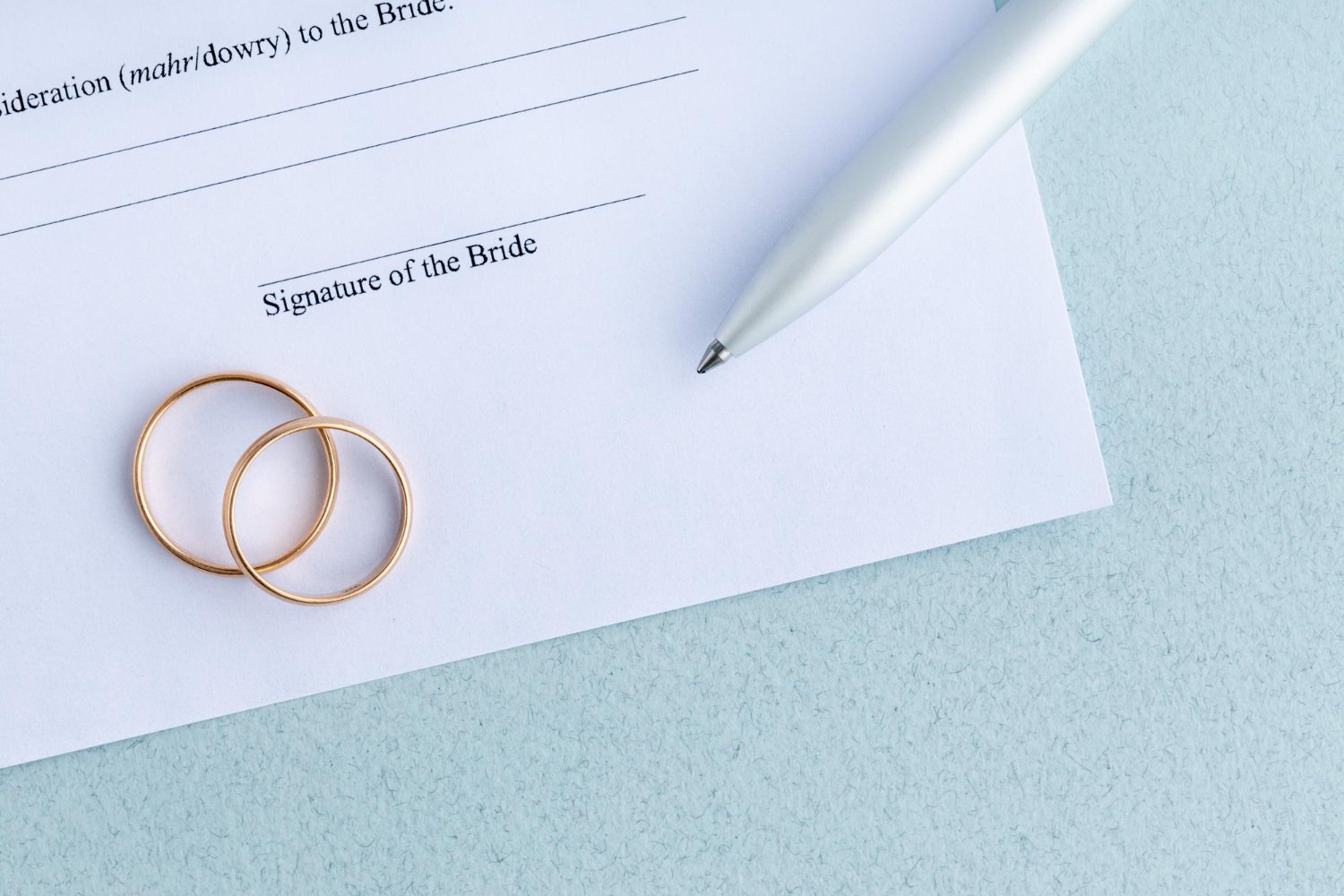
Social Security comes first in almost every recommended sequence, and for good reason. Your driver’s license and your passport both eventually check against Social Security’s records. Getting this one right, early, saves you from bouncing between offices later. The process itself is more paperwork than mystery, but a few details trip people up.
What Form SS-5 Actually Requires
The Social Security Administration uses Form SS-5 to process a name change, whether you file it online, by mail, or in person. The form itself is short. What you attach to it matters far more than what you write on it.
You need proof of identity, not just proof of marriage
Social Security asks for evidence of your identity, your new legal name, and the event that caused the change. A certified marriage certificate covers the name-change event. You’ll also need an unexpired, government-issued photo ID, like a driver’s license or passport, to confirm who you are. One document alone rarely satisfies both requirements at once.
First-time applicants also need to show citizenship or status
If this is your first Social Security card, or your citizenship status hasn’t already been verified with the agency, expect to provide proof of U.S. citizenship or lawful noncitizen status. Most married couples already have this on file from a prior card, so it rarely becomes an extra step. It’s still worth confirming before your appointment.
Some states let you start the request online
Depending on where you live, you may be able to begin your name-change request online through a personal my Social Security account. Not every state supports this yet. If yours doesn’t, mail Form SS-5 with your documents or schedule an in-person appointment at a local field office instead.
The SSA doesn’t charge a fee for this
Changing your name with Social Security costs nothing. No application fee, no processing fee, nothing hidden. This is genuinely one of the few completely free steps in the entire process, which makes it a low-risk place to start even if you’re still deciding on other paperwork.
What Happens After You File
Submitting the form is the easy part. What happens next determines how quickly everything downstream, from your driver’s license to your bank accounts, can actually move forward.
Your new card typically arrives within two weeks
Once the SSA completes your request, expect your replacement card by mail in 5 to 10 business days. That’s a real, published timeline, not a rough guess. It’s also faster than most people assume, which is exactly why starting here first makes sense before tackling slower agencies like the passport office.
Your Social Security number never changes
Only your name updates on the record. Your actual Social Security number stays exactly the same for life. Some newlyweds worry unnecessarily about this. There’s genuinely nothing to worry about; the number stays permanent regardless of any legal name change.
The DMV usually needs a short waiting period first
Many states won’t process a driver’s license name change until Social Security’s own system reflects it, which can take a day or two after your card ships. Florida’s motor vehicle agency, for example, tells applicants to allow 24 to 48 hours after the federal update before heading to the DMV counter.
Your original card, not a photocopy, matters later too
Keep the physical card once it arrives. Several agencies and employers ask to see it directly, not a scanned copy. Store it somewhere secure but easy to find, since you’ll likely need it again for your employer’s payroll department and possibly your bank within the following weeks.
The Passport Decision: Timing Around Travel and Your Honeymoon
A passport carries more urgency than almost any other document on this list, mainly because of timing. Booking a honeymoon under one name and boarding under another creates real friction at the airport. Deciding early which name goes on your travel documents avoids that entirely, and the rules here are more specific than most couples expect.
The One-Year Rule and Why It Matters
The State Department treats a name change differently depending on how recently your current passport got issued. That single distinction decides which form you file, whether you pay a fee, and how fast the whole thing moves.
Within one year, the update is free
If your passport was issued less than a year ago and your name changed since then, Form DS-5504 lets you request a corrected passport at no charge. The only optional cost is a $60 expedite fee. You’ll need your current passport, an original or certified marriage certificate, and one passport photo. This is the cheapest path by a wide margin.
Past one year, expect the full renewal fee
Once more than a year has passed since issuance, that free correction option disappears. You’ll renew through Form DS-82 by mail, or apply in person with Form DS-11. The standard adult passport book fee runs $130. That’s a meaningful jump from a free correction, so timing genuinely affects the name change after marriage cost here.
Routine processing runs four to six weeks
The State Department currently lists routine processing at 4 to 6 weeks, with expedited service cutting that to roughly 2 to 3 weeks for an extra $60. Add mailing time on both ends, and the real-world wait often stretches closer to two months. Plan any name-mismatched honeymoon booking around that window, not around the headline number alone.
A near-term international trip changes the calculation
If your honeymoon departs within a few weeks of the wedding, updating your passport beforehand often isn’t realistic. In that case, many couples simply travel under their pre-marriage name and update the passport afterward. Airlines generally allow this, since the passport still matches the name on the ticket and on existing identification.
Deciding Which Name Goes on the Tickets
Booking travel is where timing decisions become concrete. Whatever name sits on your passport needs to match your boarding pass exactly, and getting that wrong is one of the more stressful, avoidable mistakes couples make right after the wedding.
Airlines match tickets against your ID, not your intentions
Security screening checks your boarding pass against a government-issued photo ID, typically your passport for international travel. A minor mismatch, like a missing middle name, sometimes clears without issue. A full last-name change that doesn’t match anywhere can cause real delays or, rarely, a denied boarding. Match the booking name to your current, valid ID.
Book travel before you file passport paperwork, if the timeline is tight
If your honeymoon falls inside your passport’s processing window, book the trip under your current legal name, the one on your existing, valid passport. Filing the name change afterward, once the trip is behind you, avoids the entire mismatch problem. This is a common, sensible choice, not a workaround anyone needs to apologize for.
A middle-name buffer sometimes eases the transition
Some couples move their birth last name into the middle-name position instead of dropping it entirely. This can simplify certain document matches during the transition period, though it doesn’t remove the need to update a passport for international travel eventually. Discuss this option directly with whichever agency’s rules feel most relevant to your situation.
Rush fees exist for exactly this reason
The $60 expedite fee on a passport application exists specifically for situations like a tight honeymoon deadline. It’s not cheap, but it’s considerably less stressful than discovering a name mismatch at the airport. If your travel date is close, that fee is often the most reliable money you’ll spend in this entire process.
State DMV Rules and Driver’s License Updates
Every state runs its own motor vehicle agency, which means every state sets its own rules for a name change. There’s no single federal standard here, unlike Social Security. What’s true in Florida may not be true in Oregon, so treat any specific number in this section as a starting point, not a guarantee.
What Most States Require
Despite the state-by-state variation, a few requirements show up almost everywhere. Knowing the common pattern first makes it easier to spot what’s different about your particular state’s process.
An updated Social Security record almost always comes first
Most state DMVs check your name against Social Security’s records before accepting a license update. That’s why the recommended order starts with Social Security. Florida’s own guidance, for instance, explicitly tells applicants to update federally first and allow a short waiting period before visiting a DMV counter.
A certified marriage certificate is the standard proof
Just like Social Security, your state DMV will want a certified copy of your marriage certificate, not a photocopy. Bring the original. Some counties issue certified copies with a raised seal specifically for this purpose, so ask for an extra one or two when you first request your marriage certificate.
Fees generally run in a modest, predictable range
License and ID card fees for a name change typically land somewhere between $10 and $50. The exact figure depends entirely on your state, and on whether your license also needs a new photo. This is one of the smaller line items in your overall costs, but it’s rarely zero.
Many states still require an in-person visit
Online name updates exist in some states for minor record changes, but a legal name change on a physical license commonly still requires showing up in person. Bring your certified marriage certificate, your current license, and any state-specific documents listed on your DMV’s website before you go, so one trip is enough.
The Window You Might Not Know About
A handful of states attach an actual deadline to this update, separate from any general encouragement to get around to it eventually. Missing that window can mean fines or an invalid license, which is worth knowing before you assume there’s no real rush.
Some states set a firm number of days
Florida requires drivers to update their name on both their license and vehicle title or registration within 30 days of a legal name change. Other states set similar windows, though the exact number varies. Check your own state DMV’s website directly rather than assuming a national standard applies uniformly.
Driving on a mismatched license isn’t automatically illegal, but it gets messy
In most places, a license that still shows your prior name remains technically valid to drive with for a while. The complications show up elsewhere: a car rental counter, a notary, or airport security may flag the mismatch against your other new documents before the DMV window even closes.
Vehicle titles and registration often need updating too
If your car is titled in your name, that document may need updating alongside your license, especially in states that bundle the two requirements together. This step gets skipped constantly, mostly because it doesn’t feel as urgent as a physical ID card. It still matters for insurance claims and future vehicle sales.
Insurance and registration renewal notices are a natural trigger
If you haven’t updated your license by the time a registration or insurance renewal notice arrives, treat that notice as your reminder. Pairing the update with a renewal you’re already handling is an easy, low-effort way to avoid letting the DMV step slip past its window entirely.
The Order of Operations That Actually Works

Every couple eventually asks the same question: what order actually works? The honest answer depends on which agencies check each other’s records first. Get the sequence right, and each step unlocks the next one smoothly, keeping the total name change after marriage cost and stress to a minimum. Get it wrong, and you’ll find yourself waiting on a document you didn’t realize you needed.
Why Sequence Matters More Than Speed
Rushing through every office in one frantic week rarely works better than a calmer, sequenced approach. Several agencies specifically require proof that an earlier step already happened, which means speed without sequence just creates rejected applications and repeat visits.
Social Security unlocks almost everything else
Because your driver’s license, and often your bank and employer records, check against Social Security’s system, starting there creates a domino effect. Once your new card arrives, most later steps go faster, since you’re presenting a document that already matches your legal name consistently across records.
The DMV comes next, not last
Many couples save the DMV for later, assuming it’s less urgent than a passport. In states with a firm update window, like Florida’s 30 days, that assumption backfires. Handle your license update shortly after your Social Security card arrives, both to beat any deadline and to gain another matching photo ID.
The passport can run in parallel, not strictly after
Unlike the DMV, a passport update doesn’t require Social Security’s system to reflect the change first. If travel timing is tight, file passport paperwork around the same time as your Social Security request, rather than waiting for one to finish before starting the other.
Everything else follows once you have two matching IDs
Banks, employers, and smaller accounts generally want to see at least one updated, government-issued photo ID plus your Social Security card. Once your license and Social Security record match, most remaining updates move quickly, often in a single visit or a short phone call.
The Checklist, Step by Step
The table below lays out a practical sequence, with typical timelines and fees for each step. Treat the fee ranges as general guidance, since exact numbers vary by state and county, and confirm current figures directly with each agency before you go.
| Step | What you need | Typical timeline | Typical fee |
|---|---|---|---|
| Order certified marriage certificates | Valid ID, marriage license information | Same day to 2 weeks, depending on county | $10-$30 per certified copy |
| Social Security card (Form SS-5) | Certified marriage certificate, photo ID | New card mailed in 5-10 business days | No fee |
| Driver’s license or state ID | Updated Social Security record, certified marriage certificate | Often same-day, within a state deadline that can be as short as 30 days | Roughly $10-$50, varies by state |
| Passport, within 1 year of issuance (Form DS-5504) | Current passport, certified marriage certificate, one photo | 4-6 weeks routine, 2-3 weeks expedited | No fee; $60 optional expedite fee |
| Passport, more than 1 year since issuance (Form DS-82 or DS-11) | Current passport, certified marriage certificate | 4-6 weeks routine, 2-3 weeks expedited | $130 passport book fee, plus optional $60 expedite fee |
| Bank accounts and credit cards | Updated photo ID, Social Security card | Often same day, in person or online | Usually no fee; reissued cards may take 5-10 business days |
| Employer and payroll records | Updated Social Security card | Varies by employer, often within one pay cycle | No fee |
| Voter registration | Updated ID | Varies by state, often same day online | No fee |
Start by ordering extra certified marriage certificates
Order more certified copies than feels necessary at first, typically five to ten. Nearly every agency on this list wants its own original, and running out mid-process means a delay while you request another one and wait for it by mail.
File Social Security first, then wait for the card
Submit Form SS-5 with your certified marriage certificate and photo ID as early as possible after the wedding. Expect your new card within 5 to 10 business days once the request completes. Don’t schedule your DMV visit until that card is genuinely in hand.
Update your license, then your passport if travel is close
Head to the DMV once your Social Security update clears, bringing your certified marriage certificate and current license. If a passport-dependent trip is coming up soon, file that paperwork around the same window rather than waiting for the DMV step to finish first.
Work through banks, employer records, and smaller accounts last
Once your license and Social Security card both reflect your new name, move through your bank, employer, voter registration, and remaining accounts. This final stretch usually takes the longest in total time, simply because there are so many individual places to touch.
Hidden Costs and Fees Across Every Document

Add up every fee mentioned so far, and the total rarely reaches the price of a nice dinner out. Spread across two or three months, though, the name change after marriage cost sneaks up in smaller, less obvious ways than a single receipt shows. This section pulls together the costs that show up on paper and the ones that don’t.
The Fees That Show Up on a Receipt
These costs are easy to track because someone hands you an actual invoice or receipt. They’re worth listing together so you can budget for them honestly before you start.
Certified certificate copies
Budget $10 to $30 per certified marriage certificate copy, and plan on needing five to ten of them across every agency on your list. Some counties offer a small discount for ordering multiple copies at once, which is worth asking about directly when you place your order.
DMV and passport fees combined
A driver’s license update typically runs $10 to $50, and a passport, if you’re past the one-year free-correction window, adds another $130. Together, these two line items usually represent the largest single chunk of your total name change after marriage cost, especially if your passport needs the full renewal fee.
Notary fees for specific forms
Notary fees apply to a handful of financial or legal forms. They typically run $5 to $15 per signature at a bank or shipping store, though some banks notarize for free for existing customers. Ask your own bank first before paying elsewhere, since many waive this fee entirely for account holders.
Expedite fees when timing gets tight
A rushed passport adds $60. A rushed certified certificate copy from certain counties can add a smaller rush fee too, often $10 to $20. These costs are avoidable with early planning, which is exactly why starting the process the week after the wedding, rather than the week before a trip, saves real money.
The Costs That Don’t Show Up on Any Receipt
Some of the real cost here has nothing to do with money changing hands. It’s time, attention, and the mental overhead of tracking a dozen small tasks across several months.
Time off work for in-person appointments
DMV visits and Social Security appointments both happen during business hours, which means taking time off work or squeezing an errand into a lunch break. Multiply that across two or three separate offices, and the time cost adds up to real hours that never show up on a budget spreadsheet.
Mental load of tracking multiple deadlines
Remembering which agency you’ve already updated, which ones still need a certified copy, and which state deadline is approaching takes genuine mental effort. A simple written checklist, even a basic spreadsheet, meaningfully reduces this cost by turning a vague obligation into a concrete, checkable list.
Lost time from mismatched records mid-process
During the transition weeks, a bank card might still show your old name while your ID shows your new one. That mismatch occasionally causes a delay at a counter or an awkward moment during a transaction. It resolves itself once everything catches up, but it’s a genuine, if temporary, inconvenience.
The cost of delaying past your own deadline
Putting this off for six months doesn’t make it disappear. It usually means doing the exact same tasks later, under more time pressure, possibly while also juggling a looming trip or a tax filing deadline. Early, unhurried effort is consistently cheaper than late, rushed effort in this specific process.
Banks, Credit Cards, and Employer Records
Once your Social Security card and driver’s license both reflect your new name, the remaining updates move faster than the first two steps. Financial institutions and employers generally just want to see matching, current identification. Still, a few details in this stretch catch people off guard, particularly around timing and reissued cards.
Financial Accounts
Banks, credit card issuers, and loan servicers each run their own process. Most follow a similar pattern, though: bring updated ID, request the change, and wait for reissued cards or updated statements.
Start with your primary bank, in person or by phone
Most banks handle a name update at a branch or over the phone, requesting your updated driver’s license and sometimes your Social Security card. Ask specifically whether a new debit card is automatic or something you need to separately request, since policies differ noticeably between institutions.
Credit cards often need a separate request per issuer
Unlike a bank that might update several linked accounts at once, each individual credit card issuer usually needs its own name-change request. This means calling or logging into each card separately rather than assuming one update covers everything. Budget an afternoon for this if you’re carrying several cards.
Loans and mortgages follow their own, slower timeline
A mortgage servicer or student loan provider may take longer to process a name update than a simple credit card, since the request sometimes routes through a different department entirely. Start these updates early, and don’t assume a quick phone call finishes the job the same day.
Retirement accounts and investment platforms need their own visit
401(k) providers, IRA custodians, and brokerage platforms typically require their own separate name-change request, often through a written form rather than a phone call. These accounts are easy to forget since you don’t interact with them daily, but a mismatched name can complicate future withdrawals or transfers.
Employer and Payroll Records
Your employer needs accurate records too, mainly because payroll reporting to the IRS depends on your name matching Social Security’s system exactly. Skipping this step can cause tax-filing headaches down the road.
HR usually needs your new Social Security card directly
Most employers ask to see your physical Social Security card, or confirm the updated name through their own verification process, before changing your name in payroll. Bring the card rather than a photo of it, since some HR departments specifically require seeing the original document.
A mismatch here can complicate your tax filing
The IRS cross-checks the name on your W-2 against Social Security’s records. A mismatch doesn’t usually block your return outright, but it can slow processing or trigger an unwanted letter. Updating payroll promptly after your Social Security card arrives avoids this entirely.
Health insurance and benefits enrollment need a separate update
Your name on an employer health plan, life insurance policy, or retirement match program often lives in a different system than basic payroll. Ask HR specifically whether benefits update automatically or require their own separate form, since assuming one covers the other is a common, easily avoided mistake.
Professional licenses need their own timeline
If your job requires a professional license, like a nursing, teaching, or real estate license, that update usually runs through a separate state licensing board. It often comes with its own paperwork and sometimes its own fee. Check that board’s specific process directly rather than assuming it follows the same steps as your driver’s license.
Voter Registration and the Smaller Accounts People Forget
Voter registration and the long tail of smaller accounts rarely feel urgent, which is exactly why they’re the ones still carrying an old name years later. None of these updates are complicated individually. Collectively, they’re the part of the process most likely to get abandoned halfway through.
Voter Registration Specifically
A mismatched name on your voter registration doesn’t usually stop you from voting, but it can create an awkward moment at a polling place. It’s a simple update once you know where to look.
Most states let you update online in minutes
Many state election websites offer a straightforward online form for updating your name on an existing registration. It typically takes less than ten minutes and doesn’t require a notary or an in-person visit in most places, making it one of the easiest updates on this entire list.
Some states still require a paper form
A handful of states haven’t moved this process fully online, which means printing, signing, and mailing a form instead. Check your specific state’s election office website directly, since assuming an online option exists everywhere is a quick way to miss a step.
This update can double as an address change
If you’re also moving after the wedding, most voter registration systems let you update your name and address together in a single form. Handling both at once saves a second trip through the same process later.
Timing matters most right before an election
States set registration deadlines ahead of elections, often weeks in advance. If your wedding happens close to a major election, prioritize this update earlier than you might otherwise. That way, a paperwork delay won’t accidentally affect your ability to vote under your current legal name.
The Long Tail of Smaller Accounts
Beyond the major agencies, dozens of smaller accounts quietly carry your old name. None of them are urgent individually, which is exactly why they’re the ones most likely to get forgotten entirely.
Insurance policies beyond your car
Homeowners, renters, health, and life insurance policies all need a separate name update, usually through a quick call or an online account change. This matters most for life insurance specifically, where a mismatched beneficiary name can complicate a future claim for your family.
Subscriptions, loyalty programs, and travel accounts
Airline loyalty programs, hotel rewards accounts, and streaming subscriptions rarely require urgent updates. A mismatched name on a frequent flyer account can occasionally cause friction, though, if it doesn’t match your passport. Update these when convenient, rather than treating them as a priority task.
Utility bills, leases, and property records
If you’re a homeowner, your deed and property tax records may need updating through your county recorder’s office, a step many couples don’t realize applies to them. Renters generally just need to notify their landlord and update the lease name at the next renewal.
A running list beats trying to remember everything
Keep a written list of every account, subscription, and policy you touch during this process, checking each one off as you go. It’s a small effort that prevents the common outcome of discovering, a year later, that one forgotten account still carries a name you stopped using months ago.
Hyphenation, Legal Name vs. Preferred Name, and Keeping Your Name

Not every couple wants a straightforward swap from one last name to another, and that’s completely normal. Hyphenating, keeping separate names, or using a married name socially without ever filing legal paperwork are all common, valid choices. Understanding the practical difference between a legal name and a preferred name helps you choose intentionally, without adding unnecessary name change after marriage cost or confusion later.
What “Legal Name” Actually Means
Your legal name is whatever appears on your government records: Social Security, your driver’s license, your passport. A preferred or social name is simply what you go by day to day, and it doesn’t require any of this paperwork at all.
A married name is a choice, not an automatic outcome
Getting married doesn’t automatically change anyone’s legal name in most states. The marriage certificate simply documents that the option exists, if either spouse wants to use it. Nothing about saying “I do” legally requires touching a single one of the documents covered in this guide.
Using a name socially doesn’t make it legal
You can introduce yourself with a married name, put it on a wedding website, or use it casually with friends without ever filing paperwork. That’s genuinely fine for everyday life. It just won’t match your ID, your paycheck, or your passport until you complete the legal process described here.
Hyphenation rules vary more than most couples expect
Some states cap the total character length of a hyphenated name, and a few limit how many words a legal last name can contain. Before committing to a hyphenated version, check your specific state’s naming rules, since a name that works fine socially can run into a technical limit on an official form.
Both spouses can legally change their name, not just one
Nothing in the marriage certificate process assumes only one partner changes their name. Either spouse, or both, can legally adopt a new last name, a hyphenated version, or a combined name entirely, depending on state rules. The paperwork process applies the same way regardless of which partner is changing their name.
Options Beyond a Simple Swap
Beyond a full swap or keeping your name entirely, several middle-ground options exist. Each comes with its own paperwork implications worth understanding before you decide.
Hyphenating both last names
A hyphenated name generally requires the same documentation process as any other legal name change, just with a longer name on the resulting forms. Double-check that every agency’s system, especially an older one, can actually accommodate a hyphen and the full character count without truncating it unexpectedly.
Moving your birth last name to a middle name
Some couples keep their birth last name as a new middle name, dropping their original middle name instead. This preserves a personal or family name in an official capacity without changing which last name appears on a boarding pass or a work badge. It’s a popular middle-ground option worth considering.
Creating an entirely new shared last name
A smaller number of couples choose to combine both last names into something new entirely, or select a new shared name unrelated to either birth name. This path generally requires a formal court-ordered name change process in most states, separate from the simpler marriage-certificate route.
Keeping your name entirely is a complete, valid choice
Plenty of couples decide neither partner changes anything legally. Nothing about this guide assumes otherwise. If that’s your choice, none of the SSA, DMV, or passport steps apply to you at all, and skipping this entire process is a perfectly reasonable, common decision.
Common Mistakes That Cause Delays
Most delays in this process trace back to a handful of repeated, avoidable mistakes. None of them are complicated to prevent once you know what to watch for, and avoiding them keeps your name change after marriage cost from creeping higher than it needs to. This section covers the errors that show up most, sorted into paperwork mistakes and timing mistakes.
Paperwork Mistakes
These mistakes usually surface at the counter, when an agency rejects an application because a document doesn’t match what they need exactly.
Sending a photocopy instead of a certified original
This is the single most common rejection reason across Social Security, the DMV, and the passport office. A photocopy, even a clear one, almost never satisfies the requirement for a certified marriage certificate. Order extra certified copies from the start to avoid this exact problem entirely.
Signing a new document with an old name out of habit
During the transition weeks, it’s easy to accidentally sign a form with your old name simply out of habit, especially right after the wedding. Some agencies accept this as a minor inconsistency; others send the form back. Double-check your signature against whichever name that specific document currently requires.
Not requesting enough certified copies upfront
Ordering just one certified marriage certificate feels efficient until the second agency asks for its own original. Reordering mid-process adds days or weeks of delay while you wait for a new copy to arrive by mail. Order five to ten from the start instead.
Assuming online forms cover every situation
Online name-change portals work well for straightforward cases but often struggle with a hyphenated name, an unusual character, or a specific citizenship situation. If an online form seems to be struggling with your specific name, switch to an in-person appointment rather than repeatedly resubmitting.
Timing Mistakes
These mistakes have less to do with the paperwork itself and more to do with when each step happens relative to everything else going on.
Booking honeymoon travel before deciding on passport timing
Locking in flights under one name, then realizing your passport won’t update in time, creates unnecessary stress right before a trip. Decide your passport timing strategy before booking travel, not after, so the ticket name and the ID name are never a surprise to reconcile later.
Waiting until a state deadline is nearly up
States with a firm DMV window, like Florida’s 30 days, don’t send a reminder before that window closes. Treat the deadline as real from day one, rather than discovering it exists only after a late notice or a small fine arrives.
Starting everything at once, immediately after the wedding
Trying to update every single account in the first week back from the honeymoon usually backfires, since your Social Security card hasn’t arrived yet to support the later steps. A sequenced approach, spread across two or three months, works more smoothly than an overwhelmed, all-at-once sprint.
Letting the process quietly stall after the first few steps
Momentum matters here. Many couples finish Social Security and the DMV, then let the smaller accounts drift for months or years. Set a specific date, maybe 90 days out, to finish the remaining list, so a mismatched account doesn’t linger indefinitely without anyone noticing.
Scam Check: Paid Name-Change Kits and Services
Search for help with this process online, and paid “name change kit” services show up immediately, often prominently. They’re not scams in the legal sense. These companies package the same free government forms into a guided kit, adding to your total name change after marriage cost without unlocking anything you couldn’t get for free. Understanding exactly what they sell helps you decide whether paying for one makes sense for your situation.
What These Services Actually Sell
These companies charge for convenience and organization, not for anything you couldn’t access yourself directly and for free from the source.
The core forms are free directly from the source
Form SS-5, Form DS-5504, and every state DMV’s name-change form are available at no cost directly from the relevant government website. A paid kit doesn’t unlock access to anything otherwise unavailable. It simply gathers those same free forms into one guided package.
Government filing fees stay separate either way
Even paid services are upfront about this: their fee covers guidance and paperwork organization, not the actual government fees. Passport fees, DMV fees, and any other agency cost still go directly to that agency, regardless of whether you use a paid kit or handle everything yourself.
Pricing typically runs from around $50 to over $200
Published pricing for these services generally spans a basic digital kit around $49 up to a bundled package well over $200 when combined with other services like estate planning documents. Compare that cost against the actual time savings for your specific situation before deciding it’s worth it.
The real value is organization, not access
For someone who genuinely struggles to track deadlines and paperwork, a paid kit’s checklist and pre-filled forms can save real time and reduce mistakes. For someone comfortable following a guide like this one, the same organization is achievable for free, just with a bit more personal effort involved.
When a Paid Service Might Still Make Sense
Paying for convenience isn’t automatically a bad decision. A few specific situations make a paid kit more reasonable than others.
A genuinely overwhelming schedule
If work travel, a new job, or a packed few months make it hard to track five or six separate agency deadlines, paying someone else to organize the checklist and pre-fill the forms can help. It’s a reasonable trade of money for time, especially during an already busy stretch of life.
Combined estate planning bundles add genuine extra value
Some higher-priced packages bundle the name-change kit with wills, healthcare directives, or financial power of attorney documents for both spouses. If you were already planning to handle estate planning basics, a bundled price might reasonably beat paying for each service separately.
Watch for pressure tactics or vague fee breakdowns
A legitimate service clearly separates its own fee from government filing fees, stating plainly that agency fees go directly to those agencies. Any service that’s vague about this split, or pressures you to buy immediately, deserves a closer look before you pay anything.
You can always start free and upgrade later if needed
Nothing prevents starting with the free government forms directly and deciding partway through that a paid checklist would help. There’s no penalty for trying the free route first and paying for organization only if the process genuinely feels unmanageable on your own.
Legal Check, Red Flags, and Awkward Questions Worth Asking
Most of what’s covered so far is procedural rather than legal in a contested sense. Still, a few genuine legal points, and a handful of practical warning signs, are worth understanding clearly. Don’t assume every office and every clerk will treat your paperwork exactly the same way.
What the Law Actually Requires (and Doesn’t)
State law governs most of this process, which is exactly why the details vary so much from one place to another. A few general legal principles hold true almost everywhere, though.
A marriage certificate is your core legal proof
In nearly every state, a certified marriage certificate alone provides sufficient legal grounds for a name change, without requiring a separate court order. This differs from a name change unrelated to marriage, which often does need a judge’s approval. Marriage genuinely simplifies this specific legal process.
No federal law forces a deadline on most updates
Outside specific state DMV windows, there’s generally no federal law forcing a strict deadline on updating your name everywhere. That said, practical consequences, like tax filing mismatches or travel friction, create real pressure even without a formal legal requirement pushing you toward speed.
State rules genuinely differ on hyphenation and combined names
As covered earlier, character limits and formatting rules for hyphenated or combined last names vary by state. This is a real legal variable, not just a bureaucratic quirk, and it’s worth confirming directly with your state’s vital records or DMV office before committing to an unusual format.
Keeping your name has zero legal downside
There’s no legal penalty, tax consequence, or documentation requirement tied to keeping your name after marriage. It’s a fully neutral, equally valid legal choice, and nothing in federal or state law treats it as anything other than completely normal.
Questions Worth Asking Before You Start
A short list of direct questions, asked early, clears up most of the confusion that otherwise surfaces halfway through the process.
“Does my state have a firm DMV deadline?”
This single question, asked directly to your state DMV’s customer service line or checked on their website, tells you whether you’re working against a real clock or a general suggestion. States without a firm deadline still benefit from prompt updates, just without the added pressure.
“How many certified marriage certificates should I actually order?”
Ask the county clerk’s office directly, since they see this exact question constantly and can give a realistic number based on local agency requirements. Five to ten copies covers most situations, but a specific local answer beats a general estimate.
“Will my current passport still work for this specific trip?”
If travel is coming up, check the State Department’s own passport status tool or call directly rather than guessing. This awkward-feeling question is far better asked weeks before a trip than discovered at check-in, when there’s no realistic way to fix it in time.
“Does my employer need the physical Social Security card, or a copy?”
HR departments vary on this. Ask directly rather than assuming, since bringing the wrong form of documentation to a scheduled HR meeting just adds an unnecessary second trip to an already long list of appointments.
Worst-Case Scenario and the Backup Plan
The worst version of this problem isn’t a slow DMV line or an unexpected $130 passport fee. It’s standing at the airport gate with a boarding pass that says one name and a passport that says another, watching an agent explain, politely but firmly, that you can’t board.
Picture a couple who booked their honeymoon under a married name the week after the wedding, assuming the passport would catch up in time. Six weeks later, the passport still hadn’t arrived, stuck in routine processing with no expedite request ever filed. The flight departed in four days. Airlines generally won’t rebook a mismatched name for free. Changing the ticket back to a maiden name this close to departure often triggers a change fee on top of the original booking, too. None of this involved fraud or bad faith. It involved one decision, made too early, without checking the actual processing timeline first.
The backup plan starts with a simple rule: never book travel under a name that doesn’t match your current, valid ID. If your passport hasn’t updated yet, book under your existing name and travel that way, then update the passport once you’re home. If a mismatch has already happened and travel is imminent, call the airline directly, since some carriers allow a documented name correction closer to departure than a full ticket change would. Keep your marriage certificate with you when traveling during the transition period. It’s the one document that explains the discrepancy to a gate agent or a customs officer on the spot.
This same caution applies beyond honeymoons. A car rental reserved under one name and picked up with ID showing another follows the same basic principle. So does a hotel check-in, or a notarized document signed with the wrong name mid-transition. Match your booking, your signature, and your ID to whichever name your current, valid documents actually show, and keep the marriage certificate handy until every record finally catches up.
Frequently Asked Questions
How long does the entire name change process take after marriage?
Most couples finish the core steps, Social Security, driver’s license, and passport, within two to three months. Smaller accounts and subscriptions can stretch the full list out longer, though nothing after the first few weeks is especially urgent.
What is the actual name change after marriage cost most couples pay?
Government fees alone typically run $60 to $200 total, covering certified certificate copies, a DMV fee, and a passport fee if it’s past the free-correction window. Add notary fees and lost work hours, and the realistic total sits closer to a few hundred dollars, spread across several months.
Do I have to change my name just because I got married?
No. Marriage doesn’t automatically change anyone’s legal name. Keeping your name, hyphenating, or choosing any other option is entirely your decision, and nothing in the marriage certificate process requires a change.
Which agency should I update first?
Social Security, in almost every case. Many later steps, including your driver’s license, check against Social Security’s records first, so starting there avoids rework.
How many certified marriage certificates do I actually need?
Plan on five to ten. Nearly every agency wants its own original, and running out mid-process means waiting on a reorder.
Can I use a photocopy of my marriage certificate instead of a certified copy?
Almost never. Social Security, the DMV, and the passport office all typically require a certified copy with an official seal, not a photocopy from your own printer.
How much does it cost to change my name with Social Security?
Nothing. Social Security doesn’t charge a fee for a name change, making it one of the few completely free steps in this entire process.
Do I need to change my passport before my honeymoon?
Only if your travel booking uses your new name. If you book under your current, valid passport name and travel that way, you can update the passport afterward without any conflict.
What happens if my passport application takes longer than my honeymoon window?
Routine processing runs 4 to 6 weeks, with expedited service around 2 to 3 weeks for an extra fee. If your trip falls inside that window, book travel under your current name instead of waiting on the update.
Is it illegal to drive with a license that still shows my old name?
Generally not immediately, though most states set a window, sometimes as short as 30 days, to complete the update once your name legally changes. Check your specific state’s rule rather than assuming.
Do both spouses need to change their names, or just one?
Neither has to, and either or both can if they choose. The paperwork process works the same regardless of which spouse, or whether both spouses, decide to change their name.
Are paid name-change kit services worth the cost?
They don’t unlock anything you can’t get free directly from each government agency. They can genuinely save time and reduce mistakes for someone with a packed schedule, though the core forms themselves always remain free.
Will my employer automatically update my name in payroll?
No. You need to notify HR directly and typically show your updated Social Security card before payroll records change, since the IRS checks your name against Social Security’s system.
Can I hyphenate my last name without any special legal process?
In most states, yes, using the same marriage-certificate-based process as any other name change. Check your specific state’s character limits, since some restrict how long a hyphenated name can be on official documents.
What if I already booked travel under a name that doesn’t match my current ID?
Contact the airline directly and ask about a documented name correction. Some carriers accommodate a minor, provable mismatch closer to departure than a full ticket reissue would normally allow.
Does updating my name affect my credit score or credit history?
No. A name change doesn’t affect your credit history or score. Your credit file ties to your Social Security number, which never changes, regardless of any legal name update.
How soon after the wedding should I start this process?
As soon as you have your certified marriage certificate in hand, typically within a few weeks of the wedding. Starting early gives every downstream step, including a passport before a honeymoon, enough time to actually finish.
None of this requires turning your first few married months into an administrative project. It requires one certified marriage certificate, ordered in enough copies, and a rough sense of which office to visit first. Social Security, then your license, then your passport if travel is close, then everything else on your own timeline. The name change after marriage cost, in the end, is smaller than most people expect, and mostly measured in time rather than money.
Start with the agency that unlocks the rest: Social Security. Order more certified copies than feels necessary. Check your specific state’s DMV deadline before assuming there isn’t one. And if a honeymoon is coming up, decide your travel-name strategy before you book anything, not after. The paperwork outlasts the wedding by a few months, not by years, and it gets easier with every office you cross off the list.
Sources: Social Security Administration, U.S. Department of State, Bureau of Consular Affairs, U.S. Department of State passport fees, USA.gov, and the Florida Department of Highway Safety and Motor Vehicles, cited as one state-specific example. Fees, deadlines, and processing times vary by state and change over time, so confirm current details directly with each agency. Accessed September 29, 2026.
