
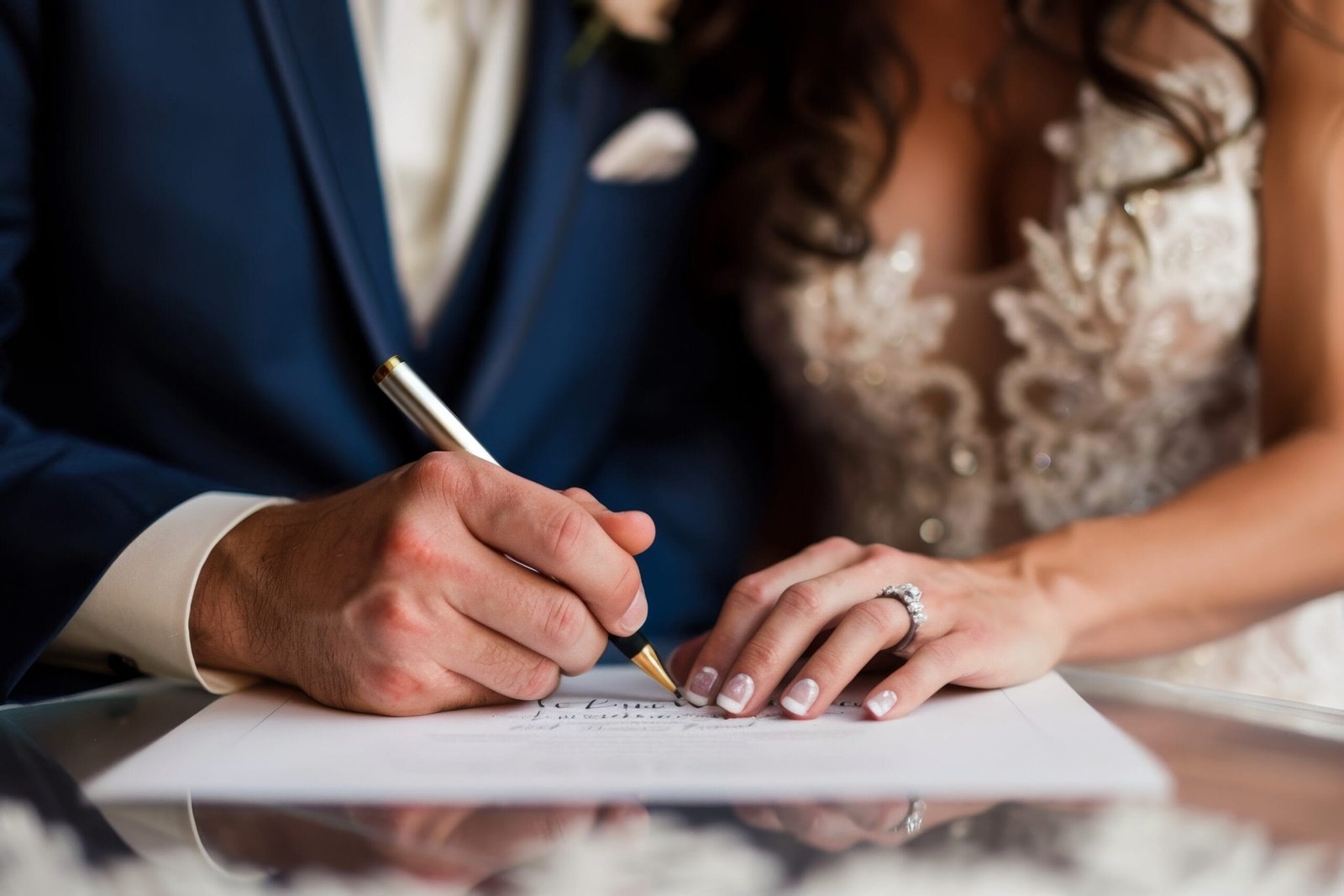
This scenario is exactly why marriage license verification matters more than most couples expect. A couple applies for their marriage license six weeks before the wedding, well ahead of schedule by any normal planning standard. They assumed early was safe. In their specific state, the license is only valid for 30 days. By the time the ceremony arrives, the license has quietly expired. The couple spends their wedding week back at the county office, paying the fee a second time, instead of finishing their final vendor calls.
Nothing about this was careless. The couple did real research. They simply researched a friend’s state, not their own, and marriage license rules do not travel between state lines. This is the central, easy-to-miss reality behind marriage license verification: there is no single national rule for waiting periods, expiration windows, witness requirements, or filing procedures. What is true in one county can be entirely wrong two counties over.
This guide is built as a verification framework, not a fifty-state answer key. It walks through the official documents to confirm and how to identify the actual issuing authority. It covers deadlines and expiration windows worth checking directly, officiant and witness and filing requirements, fees and correction procedures, and the difference between an actual legal requirement and a venue’s own internal policy. It closes with a checklist built for confirming details with your own specific county, not assuming a number from an article, this one included, applies to you.
Quick Answer: What Marriage License Verification Actually Means
Four checks catch nearly every real problem couples run into with a marriage license.
Start with the exact issuing authority for your specific location. This is usually a county office, not a state agency, and requirements shift by county.
Check your license’s actual validity window next. It can range from 30 days to a full year, or never expire, depending entirely on where you apply.
Confirm who must sign it and where it must be returned. An unreturned or improperly filed license can leave a couple legally unmarried despite a real ceremony.
Get this directly from the issuing office, not from a wedding blog, a friend’s experience in another state, or a venue’s own assumption.
The rest of this guide builds out each of these into something you can actually verify, starting with the documents worth confirming before you even walk into an office.
What Nobody Mentions Until It Happens
These are not dramatic legal disasters. They are small, specific gaps that only reveal themselves once a couple’s own timeline collides with a rule they never checked.
The license that expired before the wedding even started
A license obtained too early, without checking the specific validity window, can quietly expire before the ceremony. Some states allow this only 30 days. Confirm your specific window directly rather than assuming a generous default.
The officiant who was never actually authorized
An online-ordained officiant is accepted in most states, but not universally. A ceremony performed by someone not legally authorized in that specific state can create real complications afterward. Verify this specifically, not generally.
The license that was signed but never returned
Completing the ceremony is not the final legal step. The signed license still has to reach the issuing office, sometimes within a specific window. A couple who assumes the officiant automatically handles this can discover months later that it never happened.
The venue requirement that was never actually a law
A venue asking to see the marriage license a specific number of days before the wedding is enforcing its own internal policy, not a legal requirement. Confusing the two can create unnecessary stress chasing a deadline the actual law never set.
The Official Document Checklist
Most offices require the same general category of documents, though the specific list and acceptable formats vary by jurisdiction.
Government-issued photo identification
A valid driver’s license, state ID, or passport is commonly required for both applicants. Confirm whether your specific office accepts a Real ID-compliant license specifically, since identification standards have tightened in many jurisdictions.
Proof of any prior marriage ending
A divorce decree or death certificate is commonly required if either applicant was previously married, and some offices require the original document, not a copy. Confirm this specifically before your appointment.
Social Security number, not always the physical card
Many offices ask for a Social Security number as part of the application, though the physical card itself is not always required. Confirm your specific office’s exact requirement rather than assuming either way.
Confirm the full document list directly with your issuing office
Requirements shift by state and sometimes by county within the same state. Call or check your specific office’s official page before your appointment, rather than relying on a generic checklist.
Jurisdiction and Authority: The Foundation of Marriage License Verification
Marriage law operates at several layers, and confusing them is one of the most common sources of marriage license verification mistakes.
Federal law sets almost none of the specific procedure
Marriage itself is recognized at the federal level for purposes like taxes and benefits. The actual licensing process, waiting periods, fees, and forms are set at the state and often county level, not federally.
State law sets the general framework
Each state’s law establishes the broad rules: who may marry, general age requirements, and the basic licensing structure. States vary considerably here, and a rule true in one state may not exist at all in another.
County or city offices handle the actual process
In most states, a county clerk’s office issues the license and enforces the specific local procedure. Some states, like Georgia, require non-residents to apply in the specific county where the marriage will take place, not just anywhere in the state.
Some states operate differently entirely
A handful of states use a different structure, such as court-issued licenses or state-level online systems. Hawaii, for example, requires an online application through a statewide portal rather than an in-person county process. Confirm your specific state’s actual structure before assuming a standard county-office model applies.
Deadlines, Waiting Periods, and Expiration
This category causes more real wedding-week problems than almost any other marriage license detail, because the rules genuinely differ this much from place to place.
Roughly two-thirds of states have no waiting period at all
Industry data compiled from state sources puts the number of states with zero waiting period between application and ceremony at around 33, including states like California, Colorado, and Georgia. The remaining states require a specific gap, commonly 24 to 72 hours, sometimes longer.
A few states waive their waiting period under specific conditions
Florida commonly waives its waiting period for non-residents and for couples completing an approved premarital education course. Texas commonly waives its waiting period for active-duty military. Confirm whether any waiver applies to your specific situation, since assuming one does not apply can cost real time.
Validity windows vary from 30 days to a full year, or never
Oklahoma’s license commonly expires in 30 days. Ohio’s commonly runs 60 days. Nevada and Arizona commonly allow a full year. Idaho’s license commonly does not expire at all. Confirm your specific state and county’s actual window directly, since applying too early is just as real a risk as applying too late.
Understand the difference between “days to receive” and “days before completing”
Some states have a waiting period before the license is even issued after applying. Others issue it immediately but require a wait before the ceremony can legally happen. Confirm which type of waiting period, if any, applies in your specific location.
Officiant, Witness, Signing, and Filing
Completing the ceremony is not the final legal step. What happens to the physical license afterward matters just as much.
Confirm your officiant is actually authorized in that specific state
Judges, justices of the peace, and ordained clergy are commonly authorized nationwide. Online ordination, such as through the Universal Life Church, is accepted in most but not all states. Confirm your specific officiant’s authorization directly for the state where your ceremony will actually happen.
Confirm witness requirements, since they vary considerably
Most states require one or two witnesses to sign the license at the ceremony. A small number of states, including Idaho, require none at all. Colorado allows a self-solemnized ceremony with no officiant and no witness in certain circumstances. Confirm your specific state’s exact requirement.
Confirm who returns the signed license, and by when
The officiant traditionally signs the license after the ceremony and returns it to the issuing office, sometimes within a specific deadline. Confirm this responsibility explicitly with your officiant rather than assuming it happens automatically, since an unreturned license can create real problems establishing your marriage’s legal record later.
Fees, Certified Copies, and Corrections
Marriage license fees are genuinely small individually, but they vary enough by location that skipping marriage license verification on this specific detail can leave you underprepared.
Base fees vary by county, not just by state
Harris County, Texas, has charged $81 for a standard license and a higher fee, historically around $181, for a license without a required education course, as one illustrative example verified in prior research. Confirm your specific county’s current fee directly, since neighboring counties in the same state can charge different amounts.
Certified copies are a separate cost from the license itself
A certified copy of your marriage certificate, needed later for name changes and other official purposes, commonly costs $15 to $25 per copy in many jurisdictions, though this varies. Order more than one copy at once if you know you will need several, since a second request later means paying separate processing fees again.
Corrections have their own procedure and sometimes their own fee
A misspelled name or an incorrect date on your returned, recorded marriage record typically requires a formal correction request through the issuing office, not just a phone call. Confirm your specific office’s correction procedure and any associated fee before assuming an error will fix itself.
The Difference Between Law, Local Procedure, and Venue Policy
This distinction causes real, avoidable stress, since a venue’s own internal rule is not the same as an actual legal requirement.
A venue asking to see your license early is enforcing its own policy
Some venues or officiants ask couples to provide the marriage license a specific number of days before the wedding, purely as their own internal practice. This is not a legal deadline. It exists to give the venue or officiant comfort that paperwork is in order, not because any law requires it.
A contract requirement is not automatically a legal one either
A vendor contract can require documentation on a specific timeline as a condition of service. That is a real contractual obligation you agreed to, but it is still separate from the underlying legal requirement itself. Confirm which category any specific deadline actually falls into before assuming it reflects state law.
When in doubt, ask which authority actually set the rule
Ask directly: is this a state law, a county procedure, or your own policy? A venue or vendor should be able to answer this clearly. Vague or uncertain answers are worth a follow-up call to your actual issuing office to confirm independently.
Green, Yellow, and Red Flags in Marriage License Verification
Green flag: an issuing office that clearly publishes its documents, fees, waiting period, and validity window on an official government website. Yellow flag: conflicting information between a vendor’s assumption and the office’s actual published rule, worth a direct call to resolve. Red flag: a third-party website or service charging a fee to “process” your marriage license faster, when the actual issuing office is a government office with its own official, typically inexpensive process.
Before You Apply
- Confirm the exact issuing office for your specific ceremony location.
- Confirm the current document list, fee, and accepted payment methods.
- Confirm your license’s actual validity window before choosing an application date.
- Confirm your officiant’s legal authorization in that specific state.
- Confirm witness requirements and who is responsible for returning the license.
Questions That Feel Awkward but Are Worth Asking
- What is the exact validity window for a license issued from this specific office?
- Is there a waiting period, and does any waiver apply to our situation?
- Who is responsible for returning the signed license, and by what deadline?
- What happens if our license expires before the ceremony?
- Can you confirm this requirement is state law, not just your office’s own procedure?
Scam Check: Marriage License Verification Red Flags
A specific pattern deserves direct mention, since it targets exactly the urgency and unfamiliarity many couples feel around this process.
Third-party “expedite” services are rarely necessary
Some websites charge a fee to “process” or “expedite” a marriage license application, positioning themselves between you and the actual government office. The real issuing office is a government agency, and its own official process is typically the fastest and least expensive legitimate path. Verify you are on an official government website, typically ending in .gov, before submitting any payment or personal information.
Confirm official sources directly
Search your county or state’s official government website directly, rather than clicking a sponsored link or an unfamiliar third-party result. The Federal Trade Commission’s consumer protection resources maintain general guidance on recognizing scam patterns that applies here as much as to any other online transaction involving personal information and payment.
Worst-Case Scenario — and the Backup Plan
Picture this: two weeks after the wedding, the couple discovers their signed license was never returned to the issuing office. Their officiant assumed the venue coordinator would handle it. The venue coordinator assumed the officiant already had.
A workable response starts with a direct call to the issuing office, explaining the situation honestly. Most offices have handled this exact scenario before and can advise on next steps, which sometimes includes locating the officiant to complete the filing late, or in rarer cases, addressing a more complex correction process. This is stressful, not usually permanent. Acting quickly, and asking the actual issuing authority directly rather than guessing, resolves most versions of this situation.
A Marriage License Verification Checklist
Run through this before you apply, and again before the ceremony.
- ☐ Issuing office confirmed for your specific ceremony location: ____________
- ☐ Document checklist and fee confirmed directly with that office: ____________
- ☐ Waiting period and any applicable waiver confirmed: ____________
- ☐ Validity window confirmed, and application timed accordingly: ____________
- ☐ Officiant’s legal authorization confirmed for the ceremony state: ____________
- ☐ Witness requirement confirmed: ____________
- ☐ Return responsibility and deadline confirmed with the officiant: ____________
Name Change: A Separate Process From the License Itself
Getting married and legally changing your name are two distinct processes, and confusing them creates real confusion at exactly the wrong moment.
Your certified marriage certificate is the document that unlocks a name change
Most agencies, from the Social Security Administration to the DMV, require a certified copy of your marriage certificate, not the license itself, as proof to process a name change. Order enough certified copies for this specific purpose, since several agencies commonly require the original certified document, not a photocopy.
The name change process itself is not part of marriage license verification
Updating your name with the Social Security Administration, your state’s motor vehicle agency, your passport, and your bank are each separate processes with their own forms and requirements. This guide focuses specifically on the license and certificate; treat the name change sequence as its own project once your certified copies arrive.
Getting Married Outside Your Home State
A destination wedding or an elopement in a state neither partner lives in adds a layer of verification most couples do not anticipate.
You generally do not need to be a resident of the state where you marry
Most states allow non-residents to obtain a marriage license and marry there. Some, like Georgia, require non-residents to apply in the specific county where the ceremony will happen, rather than any county in the state. Confirm this specific rule for your chosen state.
Your marriage remains legally valid in your home state afterward
A marriage legally performed in one U.S. state is generally recognized in every other state, so you do not need to re-register or re-marry once you return home. Confirm this general expectation with an official source if your specific situation feels unusual, such as involving international documents.
Time your application around your actual travel dates, not your home calendar
If you are traveling to a different state specifically to marry, confirm the license’s validity window against your actual travel dates. Consider whether applying in person requires an extra day of travel before your ceremony.
Same-Sex Couples: Documentation Realities Worth Confirming
Marriage license requirements apply identically to same-sex couples across the United States, though a few practical realities are worth confirming directly.
The application process itself is the same
Marriage license applications generally do not distinguish based on the sex or gender of either applicant, and the same document checklist, fees, and waiting periods apply. Some older application forms may still use “bride” and “groom” language, which does not affect legal validity but is worth noting if it feels relevant to you.
Confirm officiant comfort and authorization independently
Legal authorization to officiate does not depend on the couple’s identities. Still, confirm directly that your chosen officiant is genuinely comfortable and experienced performing your specific ceremony, particularly if found through a general directory rather than a personal referral.
Religious Ceremony vs. Civil License: Two Separate Layers
A religious or cultural ceremony and the legal marriage license are related but distinct, and conflating them creates real confusion for some couples.
A religious ceremony alone does not create a legal marriage in the United States
In the U.S., legal marriage requires the civil marriage license process described throughout this guide, regardless of whether a religious ceremony also takes place. Many couples combine both into a single event, with an authorized officiant signing the license as part of the same ceremony.
Some couples hold separate religious and civil events entirely
A couple might have a religious ceremony that carries deep personal or cultural meaning without legal authorization attached, paired with a separate, simpler civil signing to complete the actual legal marriage license process. If this structure appeals to you, confirm your officiant and venue both understand which event is the legally operative one.
Blood Tests and Health Screening: Mostly History, Not Current Practice
Older couples or family members sometimes ask about a blood test requirement, a genuine part of marriage license history worth clarifying.
Most states eliminated blood test requirements years ago
Blood tests were historically used to screen for conditions like rubella and syphilis. Once common nationwide, they have been eliminated in nearly every state over the past several decades. A small number of jurisdictions may retain a narrow requirement; confirm directly with your specific office rather than assuming either way.
Some states retain other health-related disclosures
A handful of states include other health-related questions or disclosures as part of the application process, distinct from a blood test. Confirm your specific state’s actual current requirement directly, since this category has changed considerably and continues to vary.
Age Requirements and Parental Consent
Marriage age requirements vary by state, and this is an area where verification matters, particularly for younger applicants.
Eighteen is the general minimum, with real exceptions
Most states set eighteen as the general minimum marriage age without parental involvement. Below that age, requirements vary considerably. Several states have tightened minimum-age and parental-consent rules in recent years, so confirm your specific state’s current rule directly.
Confirm documentation requirements for parental consent specifically
If parental consent applies to your situation, confirm exactly what documentation the issuing office requires, since a verbal agreement is not sufficient and specific notarized or in-person consent procedures vary by state.
International Couples: Additional Documentation to Verify
If either partner is not a U.S. citizen, marriage license verification adds a real additional layer worth confirming early.
Foreign documents may need translation or additional proof
A foreign birth certificate, divorce decree, or other document may need to be translated and sometimes certified through a specific process before an issuing office will accept it. Confirm your specific office’s requirement for foreign documents well before your intended application date, since translation can take real time.
Marriage license requirements are separate from immigration status questions
Obtaining a marriage license does not depend on either partner’s immigration status in most states, though marriage itself can have separate, significant implications for immigration processes. Confirm marriage license requirements with your issuing office, and confirm any immigration-related questions separately with an immigration attorney or official government immigration resource, since these are genuinely different legal areas.
Remarriage: What Changes if You Have Been Married Before
Prior marriages add a specific documentation requirement most issuing offices ask about directly.
Proof of how the prior marriage ended is commonly required
Applicants previously married commonly need to provide a certified divorce decree or a death certificate for a previous spouse as part of the application. Some offices require the original document, not a copy. Some also set a specific window after a divorce’s finalization before a new license can be issued.
Confirm any waiting period specific to remarriage
A small number of states or situations may include a brief waiting period specifically tied to a recent divorce becoming final, separate from any general marriage license waiting period. Confirm this directly if your situation involves a recent prior marriage ending.
What Happens if Your Wedding Date Changes
A postponed or rescheduled wedding creates a real, specific interaction with your marriage license timeline.
Check your license against the new date immediately
If your wedding date moves, whether earlier or later, check your license’s validity window against the new date right away, not close to the rescheduled ceremony. A license that comfortably covered your original date may no longer cover a significantly postponed one.
A significantly earlier date can also create a problem
If your new date moves earlier than originally planned, confirm any waiting period requirement is still satisfied. An early license issued for a specific waiting-period calculation could theoretically create a timing conflict, depending on your specific state’s rule.
Confirming Your License Status Before the Big Day
A final check in the days before your wedding protects against a problem discovered too late to fix easily.
Verify the physical license is where it needs to be
Confirm who is physically holding the license in the days before your wedding, whether that is you, your officiant, or your planner, and confirm it will be present at the ceremony itself. A license left at home on the actual wedding day creates an entirely avoidable crisis.
Do a final validity window check
Recalculate your license’s expiration against your actual ceremony date one more time in the final week, especially if any part of your timeline shifted since you originally applied. This takes only a moment and closes out the marriage license verification process with real confidence rather than an assumption.
Does a Wedding Planner Handle Marriage License Verification for You?
Some couples assume a planner automatically manages this process. The reality depends entirely on what specific service was actually agreed to.
Confirm this explicitly, do not assume it
Most standard wedding planning packages do not include legal document verification as a default service, since this touches genuinely different expertise than event coordination. Ask your planner directly and specifically whether marriage license verification, or reminders about it, are part of your agreement.
A planner can still be a genuinely useful resource
Even without formal responsibility for this task, an experienced planner who has worked in your specific state or county may have practical, current knowledge worth asking about, alongside, not instead of, your own direct verification with the actual issuing office.
Bringing It Together
Every section in this guide points toward the same underlying practice. Treat marriage license verification as a direct conversation with your actual issuing authority, not an assumption borrowed from a friend, a blog, or even a guide as detailed as this one. State and county rules genuinely differ enough that a confident-sounding general answer can still be wrong for your specific situation.
None of this requires becoming a legal expert. It requires one habit, applied consistently: when in doubt, call the office that actually issues your license, ask the specific question, and get the answer in writing where possible. That single habit resolves nearly every version of the problems covered throughout this guide.
Common Misconceptions Worth Correcting
A few widely repeated assumptions about marriage licenses cause real, avoidable confusion, and correcting them directly saves genuine time.
“A marriage license is the same thing everywhere” is false
This assumption drives most of the problems covered throughout this guide. Even neighboring counties within the same state can differ in fee, waiting period, or specific procedure, let alone different states entirely.
“The officiant automatically handles all the paperwork” is not always true
While many officiants do handle filing reliably, this is a responsibility worth confirming explicitly rather than assuming universally, since the couple, not the officiant, ultimately bears the consequences if it does not happen.
“We can get married anywhere without a license” is generally false in the United States
A small number of very specific exceptions exist in certain states, such as particular self-solemnization allowances, but as a general rule, a valid marriage license is required for a legally recognized marriage anywhere in the U.S. Confirm any assumed exception directly rather than relying on a general impression.
“Once we have the certificate, everything updates automatically” is false
Your certified marriage certificate is the document that enables other updates, such as a name change, but each individual agency, from Social Security to your bank, requires its own separate request. Nothing updates automatically just because your marriage is now on record.
Building Your Own Marriage Documentation File
Everything in this guide points toward one practical output: a single, organized place where your marriage documentation lives, both before and after the wedding.
What belongs in it before the wedding
- Confirmed issuing office name, address, and contact information.
- Document checklist and fee confirmed directly from that office.
- Application date and calculated expiration date.
- Officiant’s confirmed legal authorization for your ceremony state.
- Witness requirement and names of confirmed witnesses, if applicable.
What belongs in it after the wedding
- Confirmation the signed license was returned and received.
- Certified copies of your marriage certificate, stored securely.
- A record of which agencies you have already updated with your name change, if applicable.
Keep both digital and physical copies
Store scanned copies in a secure digital location, and keep physical certified copies in a safe, accessible place. Both formats matter, since some agencies require an original physical document while others accept a digital submission.
Military and Deployment-Related Considerations
Active-duty service members and their partners sometimes face genuinely different circumstances worth confirming directly.
Some states waive standard requirements for military members
Texas commonly waives its waiting period for active-duty military, as one illustrative example. Other states may offer similar accommodations. Confirm your specific state’s actual military-related provisions directly, since these are easy to overlook if you are not specifically searching for them.
Proxy marriage exists in limited circumstances
A small number of states allow proxy marriage, where one or both parties are not physically present, typically limited to specific circumstances like military deployment. This is a narrow exception, not a general option, and requires careful verification of the exact eligibility requirements with the specific state that allows it.
Common-Law Marriage: A Genuinely Separate, Often Confused Topic
Some couples ask whether common-law marriage affects their need for a formal license, and this deserves clear separation from everything else in this guide.
Common-law marriage exists in only a small number of states
Most states do not recognize common-law marriage at all, and even in states that do, specific requirements around cohabitation duration and public representation as married apply, distinct from the licensing process this guide covers. Confirm whether your state recognizes common-law marriage at all before assuming it applies to your situation.
A planned wedding ceremony still needs a formal license
If you are planning an actual wedding ceremony, common-law marriage provisions are generally not relevant to your situation, regardless of how long you have lived together. You are pursuing the standard licensing process covered throughout this guide, not relying on an informal legal status.
Frequently Asked Questions
What is the most important thing to verify about a marriage license?
The exact issuing authority for your specific ceremony location, since this determines every other rule that follows: documents, fees, waiting period, and validity window. Confirm this first, directly, before researching any other detail.
How long is a marriage license valid?
This varies significantly by state and sometimes by county, ranging from as short as 30 days to a full year, with some states issuing licenses that do not expire at all. Confirm your specific issuing office’s actual validity window before scheduling your application.
Is there a waiting period for a marriage license?
Many states have no waiting period at all, while others require a specific gap, commonly 24 to 72 hours, between application and ceremony. Some states waive this requirement under specific conditions, such as for non-residents or completed premarital courses. Confirm your specific state’s rule directly.
Who is responsible for returning the signed marriage license?
This is typically the officiant’s responsibility, though the specific deadline and process vary by jurisdiction. Confirm this explicitly with your officiant rather than assuming it happens automatically, since an unreturned license can create real complications establishing your marriage’s legal record.
Can we get married with an online-ordained officiant?
In most states, yes, though not universally. Confirm your specific officiant’s legal authorization directly for the state where your ceremony will actually take place, since assumptions based on one state’s rules do not automatically apply elsewhere.
Do we need witnesses at our wedding ceremony?
This depends entirely on your state. Most states require one or two witnesses to sign the license, while a small number require none at all. Confirm your specific state’s requirement directly with your issuing office.
Is a venue’s marriage license deadline a legal requirement?
Not necessarily. Some venues request the license a specific number of days before the wedding as their own internal policy, not because state law requires it. Ask directly whether a specific deadline reflects actual law or the venue’s own practice.
What happens if our marriage license expires before the wedding?
You will typically need to reapply and pay the fee again, since an expired license is not legally valid for a ceremony. Confirm your specific state’s validity window before applying, and time your application to comfortably cover your actual wedding date.
How much does a marriage license cost?
This varies considerably by county, commonly ranging from around $30 to over $100 depending on location and any applicable discounts, such as completing a premarital education course in some states. Confirm your specific county’s current fee directly.
What should we do if we made a mistake on our marriage license application?
Contact your issuing office directly and as soon as possible, since correction procedures and any associated fees vary by jurisdiction. Do not assume an error will resolve itself or that a later certified copy will simply reflect the correct information automatically.
Do same-sex couples face different marriage license requirements?
No. Marriage license applications generally apply identically regardless of the sex or gender of either applicant, using the same document checklist, fees, and waiting periods. Some older forms may still use “bride” and “groom” language, which does not affect legal validity.
Does a religious ceremony count as a legal marriage in the United States?
Not on its own. Legal marriage in the U.S. requires the civil marriage license process, regardless of whether a religious ceremony also takes place. Many couples combine both into one event, with an authorized officiant signing the license as part of the same ceremony.
Can we marry in a state where neither of us lives?
Generally, yes, since most states allow non-residents to obtain a marriage license and marry there. A few states have specific rules for non-residents, such as Georgia requiring application in the exact county where the ceremony happens. Confirm your specific state’s rule directly.
Will our marriage be legally recognized if we move to a different state later?
Generally, yes. A marriage legally performed in one U.S. state is recognized in every other state, so no re-registration or re-marriage is needed after a move. Confirm this with an official source if your specific situation involves international documents or an unusual circumstance.
Do we need a blood test to get a marriage license?
Almost certainly not, since nearly every state eliminated blood test requirements decades ago. A small number of jurisdictions may retain a narrow requirement, so confirm directly with your specific office if this concern applies to your situation.
What is the minimum age to get married?
Eighteen is the general minimum in most states without parental involvement. Requirements below that age vary considerably and have tightened in several states in recent years. Confirm your specific state’s current rule directly, since this is an area of genuine, ongoing legal change.
What documentation is needed for parental consent to marry?
This varies by state, and a verbal agreement is not sufficient anywhere. Confirm exactly what your specific issuing office requires, since notarized consent forms and in-person requirements differ considerably from state to state.
How many certified copies of our marriage certificate should we order?
Enough to cover every agency that will require an original, not a photocopy, commonly including the Social Security Administration, your state’s motor vehicle agency, your passport, and your bank if you are changing your name. Order a few extra rather than requesting single copies repeatedly.
Does our marriage certificate expire?
No, unlike the license itself, a certified marriage certificate does not expire once your marriage is properly recorded. It remains valid indefinitely as your official record, distinct from any expiration window that applied to the license before the ceremony.
What should we do if our wedding date changes after we already have a license?
Check your license’s validity window against the new date immediately, whether the date moved earlier or later. A license that comfortably covered your original date may no longer cover a significantly postponed one, and an earlier date could theoretically affect a waiting-period calculation.
Who should physically hold the marriage license on the wedding day?
Confirm this explicitly in advance among you, your officiant, and your planner, rather than assuming someone else has it. A license left at home creates an entirely avoidable crisis on a day with little room to fix it quickly.
Are foreign birth certificates or divorce decrees accepted for a marriage license application?
Often, yes, but they may need translation and sometimes additional certification before an issuing office accepts them. Confirm your specific office’s requirement for foreign documents well before your intended application date, since translation and certification can take real time.
Does getting a marriage license affect immigration status?
Obtaining the license itself generally does not depend on immigration status in most states, though marriage can have separate, significant immigration implications. Confirm license requirements with your issuing office, and address any immigration questions separately with an immigration attorney or official government resource.
What if we were married before and need to remarry each other?
Confirm with your specific issuing office whether any prior marriage between the same two people affects the application process, since this is a genuinely unusual situation many general resources do not address. A direct call to your office resolves this far more reliably than a general guide.
How do we confirm our marriage was properly recorded after the ceremony?
Request a certified copy of your marriage certificate from the issuing office a few weeks after your ceremony. If it is not yet available, this is worth a direct follow-up call to confirm the signed license was actually received and processed.
Does our wedding planner handle marriage license verification for us?
Not automatically. Most standard wedding planning packages do not include legal document verification as a default service. Ask your planner directly and specifically whether this is part of your agreement, rather than assuming it is covered.
Can we apply for our marriage license before choosing a wedding date?
Generally not in a meaningful sense, since the license’s validity window is calculated from the application date, and applying without a confirmed date risks the license expiring before you actually need it. Confirm your date first, then time your application around your specific state’s validity window.
What is the difference between a marriage license and a marriage certificate?
The license is the document authorizing you to marry, obtained before the ceremony. The certificate is the official record confirming the marriage happened, issued after your signed license is returned and processed. You need the certificate, not the license, for most post-wedding purposes like a name change.
Should we keep a copy of our marriage license before the ceremony?
Yes, a photo or scanned copy is a reasonable backup, though it does not replace the original physical document required at the ceremony itself. This is simply good practice in case the original is ever lost or damaged before it can be returned to the issuing office.
Is a marriage license required everywhere in the United States?
As a general rule, yes, though a small number of very specific state exceptions exist, such as certain self-solemnization allowances. Confirm any assumed exception directly with an official source rather than relying on a general impression before assuming your ceremony does not need a license.
Does everything update automatically once we have our marriage certificate?
No. Your certified marriage certificate enables other updates, such as a name change, but each agency, from Social Security to your bank, requires its own separate request using that certificate. Nothing updates automatically just because your marriage is now officially on record.
Can a marriage license requirement differ between two counties in the same state?
Yes, this is common. Even neighboring counties within the same state can differ in fee, specific document requirements, or processing procedure. Always confirm with the exact office issuing your specific license, not a general statewide assumption.
What should we do if we cannot find our county’s official marriage license information online?
Call the county clerk’s office directly rather than relying on an unofficial third-party website. A phone call to the actual government office resolves uncertainty faster and more reliably than searching for information that may be outdated or inaccurate.
Should we keep both digital and physical copies of our marriage documents?
Yes. Store scanned copies in a secure digital location, and keep physical certified copies in a safe, accessible place. Some agencies require an original physical document while others accept a digital submission, so both formats genuinely matter.
What is the best way to organize our marriage license paperwork?
Build a single file, digital or physical, containing your confirmed issuing office details, document checklist, calculated expiration date, officiant authorization, and later your certified copies and a record of which agencies you have updated. Continuous organization prevents the scattered-information problems covered throughout this guide.
How soon after the wedding should we request a certified copy of our marriage certificate?
A few weeks is generally reasonable, giving the issuing office time to process the returned, signed license. If your specific office’s typical processing time is unclear, ask directly when you apply for the license itself, before your ceremony.
What if our county clerk’s office gives us information that contradicts what we found online?
Trust the direct answer from your actual issuing office over any general online resource, including this guide. Local offices know their own current, specific procedures better than any general article, and rules do change over time in ways online content may not immediately reflect.
Is it worth consulting a lawyer for a standard marriage license process?
For most straightforward situations, no, since the issuing office itself can answer standard procedural questions directly. For a genuinely complex situation, such as an unusual immigration status or a disputed prior marriage, a brief consultation with a family law attorney is a reasonable precaution.
Are there special marriage license accommodations for military members?
Some states offer accommodations, such as Texas commonly waiving its waiting period for active-duty military. Confirm your specific state’s actual provisions directly, since these vary and are easy to overlook if you are not specifically searching for them.
Can we get married by proxy if a partner cannot be physically present?
In a small number of states, yes, typically limited to specific circumstances like military deployment. This is a narrow exception, not a general option. Confirm the exact eligibility requirements directly with the specific state that allows it before assuming this option applies to your situation.
What happens if we lose our marriage license before the ceremony?
Contact your issuing office immediately, since procedures for a lost license before the ceremony vary by jurisdiction. Some offices can reissue it; others may require a new application entirely. Acting quickly gives you the most options.
Do we need to bring our marriage license to every wedding-related appointment?
No, only to the ceremony itself, where your officiant needs it to complete and sign it. Confirm who is responsible for having it present on the actual wedding day well in advance, as covered earlier in this guide.
Does common-law marriage affect whether we need a formal license?
No, not for a planned wedding ceremony. If you are having an actual ceremony, you need the standard marriage license process covered throughout this guide, regardless of how long you have lived together. Common-law marriage, recognized in only a small number of states, is a separate legal concept entirely.
How do we know if our state recognizes common-law marriage?
Confirm this directly with an official state government source or a family law attorney, since most states do not recognize it at all, and even in states that do, specific cohabitation and representation requirements apply. This is generally unrelated to your standard marriage license planning.
What is the realistic total timeline from application to receiving our certified certificate?
This varies by jurisdiction, but generally includes any waiting period before the ceremony, the ceremony itself, the officiant returning the signed license, and processing time afterward before a certified copy is available, commonly totaling a few weeks after the wedding. Confirm your specific office’s typical timeline when you apply.
A Final Word on Treating This as a Verification Habit
Nothing in this guide is meant to make the marriage license process feel intimidating. For the overwhelming majority of couples, it is a straightforward administrative step: gather a few documents, visit or contact the right office, pay a modest fee, and complete a ceremony with an authorized officiant and any required witnesses.
What this guide asks is simple. Treat every specific detail as something to confirm directly, not something to assume from a general source, however detailed that source tries to be. A phone call to your actual issuing office, asked at the right time, resolves nearly every uncertainty covered throughout this entire guide. It takes considerably less time than untangling a problem discovered during your actual wedding week. Most couples who follow this single habit never think about their marriage license again after their wedding day, which is exactly the point.
The Decision Principle, and Your Next Step
Marriage license verification is not complicated because the rules are difficult. It is complicated because the rules are local, and no single article, including this one, can tell you your specific county’s exact requirement. The fix is not memorizing fifty states of rules. It is a consistent habit: confirm every detail directly with your actual issuing office, in writing where possible, before you apply.
Contact your specific county or state’s official marriage license office this week, and ask for their current document list, fee, waiting period, and validity window in writing. That single conversation resolves more real uncertainty than any general guide, this one included, ever could on its own.
Your next step
Find your specific county or state’s official marriage license office website, typically ending in .gov, and confirm the current document list, fee, waiting period, and validity window directly from that source before applying.
