
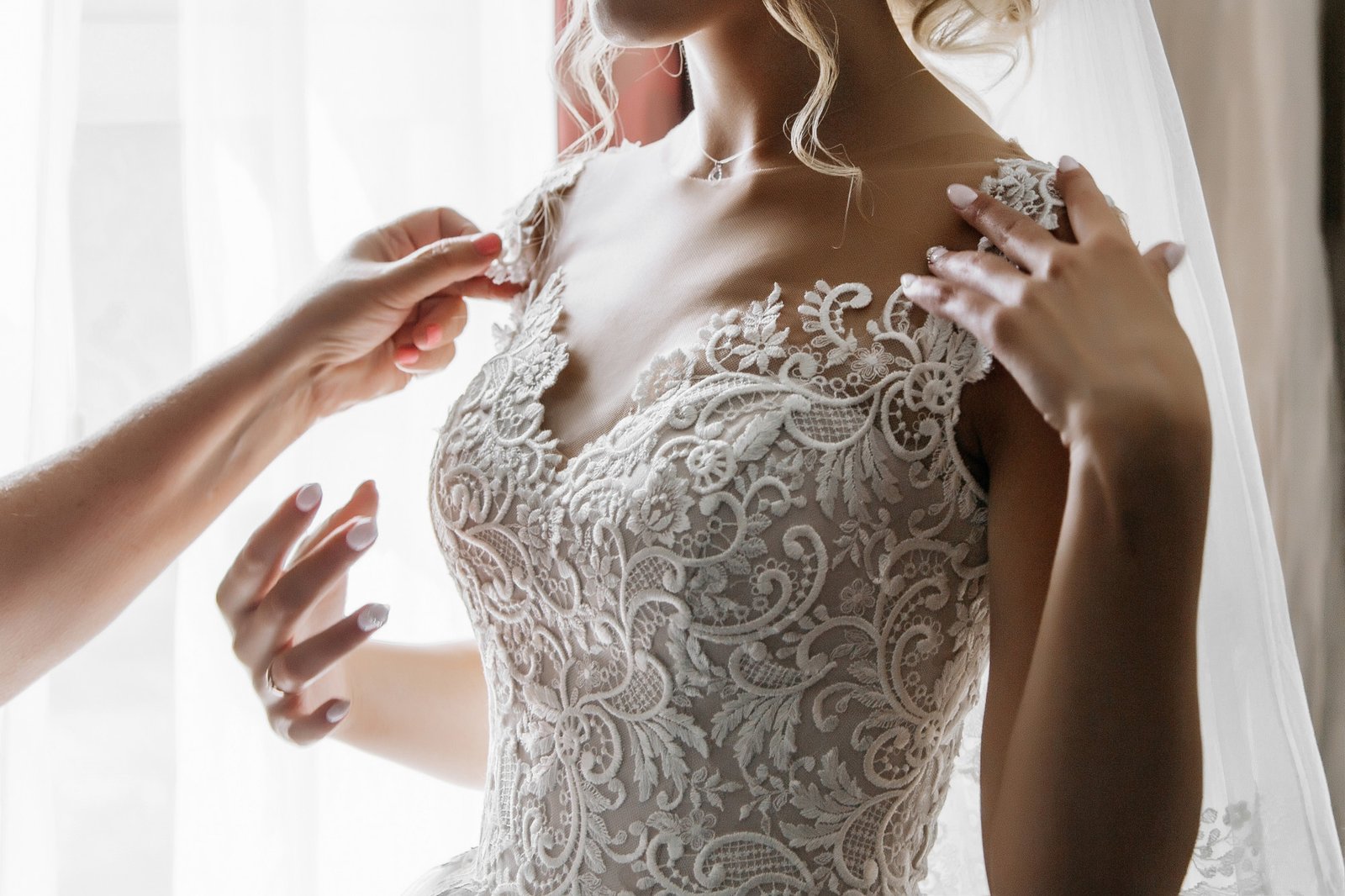
This is exactly why so many couples end up researching wedding dress alterations hidden costs partway through their own process. A bride on a wedding forum described a version of this problem that shows up constantly in real alteration experiences. She got a quote of $630 for a heavily beaded gown, left a $100 deposit, and dropped the dress off three weeks before her wedding. Partway through the work, the seamstress came back asking for $200 more. Removing appliqué from the bodice had simply taken longer than expected, she explained. The bride hadn’t requested any extra work. The beading had been visible at the original quote. She was left deciding whether to pay the difference, push back, or risk an unfinished dress with three weeks left on the clock.
The dress price on the tag is not the real cost of wearing it down the aisle. This is the exact gap this guide exists to close. Alterations are their own separate expense, priced separately and quoted separately, governed by their own set of rules. Most couples only learn these rules once they’re already three weeks out, holding a dress that doesn’t fit yet. Some of what drives the final number is completely normal, well-documented industry practice. Some of it is a genuine warning sign worth walking away from.
Both get covered plainly below. What a real 2026 alteration quote actually includes, and what commonly gets added afterward. The specific rush-fee math that can double a bill in the final weeks. The questions worth asking before you drop off a dress, and the backup plan if something genuinely goes wrong close to the wedding.
Quick Answer: What Alterations Actually Cost, and What Catches People Off Guard
Most brides spend $300 to $900 on standard wedding dress alterations, commonly summarized as 15 to 20 percent of the dress’s own purchase price. A heavily beaded, multilayered, or significantly resized gown can push this well past $1,000, sometimes reaching $1,500.
The number that actually catches people off guard isn’t the base price. It’s the rush fee, commonly 25 to 50 percent added if you book within six weeks of the wedding, and the a la carte structure where every individual adjustment, bustle, hem, bodice, straps, gets priced and billed separately rather than bundled into one flat number.
Everything below unpacks exactly where that gap comes from, what’s genuinely normal, and what’s worth a direct question before you leave a deposit.
What Nobody Mentions Until It Happens
A few realities about wedding dress alterations rarely make it into the excited, aspirational version of dress shopping most couples picture beforehand.
The dress price and the alteration price are two completely separate conversations
Bridal boutiques sell the gown. In most cases, a separate seamstress, either in-house or an outside referral, handles the actual fitting work. These are two different businesses with two different invoices, even when they happen in the same building.
Pricing is almost always a la carte, not one flat number
Unlike buying a suit off the rack, bridal alterations are typically priced per specific adjustment. A hem is one line item. A bustle is another. Taking in the bodice is another still. What sounds like “just a few small changes” during your fitting can add up to a genuinely large invoice once every line is itemized separately.
The first quote is frequently an estimate, not a final number
A seamstress often gives an initial price range after a first look, then finalizes the actual cost once she’s had the dress in hand and worked through the construction. This is standard, legitimate practice in many cases, covered in detail in the sections below, though it’s also exactly the point where costs can quietly expand if you’re not asking direct questions.
Hidden Costs to Check
These are the specific line items most likely to be missing from an initial verbal quote or a simple price list.
The a la carte adjustment list
| Adjustment | Typical cost |
|---|---|
| Simple hem | $70–$150 |
| Bustle | $75–$250 |
| Taking bodice sides in or out | $100–$300 |
| Raising or adjusting straps/shoulders | $40–$70 |
| Adding bra cups | $20–$30 |
| Sleeve tapering | $30–$100 |
| Beading/embellishment labor | $30–$40 per hour |
The rush fee
Booking your first fitting within six weeks of the wedding commonly triggers a rush charge of 25 to 50 percent on top of standard pricing. Some seamstresses instead charge a flat rush fee per alteration, commonly $25 to $40, for anything booked inside three weeks. Either structure can meaningfully change your total.
The consultation or measurement fee
Some seamstresses charge a separate $20 to $40 fee for the initial measurement and consultation appointment, sometimes credited toward your final bill, sometimes not. Ask directly rather than assuming this is automatically included.
Weekend and evening appointment surcharges
A seamstress working outside standard business hours to accommodate your schedule sometimes charges a premium for that convenience. This is worth asking about directly if weekday daytime appointments genuinely don’t work for you.
Resizing beyond a standard range
Taking a dress in or out by more than roughly two sizes commonly costs meaningfully more than a standard adjustment, since it can require reworking the dress’s underlying structure, not just its surface seams.
Before You Pay Anything
A few concrete steps before any deposit changes hands protect you from most of the surprises covered so far.
Get every adjustment itemized in writing
A reputable seamstress or bridal alteration studio provides a written estimate as standard practice, breaking down each specific adjustment and its individual cost. If you’re only given a single verbal total with no breakdown, ask directly for an itemized version before committing.
Confirm what happens if the scope grows once work begins
Ask directly: if you discover additional necessary work once the dress is actually in hand, how will you communicate that, and will you get approval before the cost changes? This single question would have prevented the exact dispute described at the start of this guide.
Bring your actual wedding-day undergarments and shoes to every fitting
Hem length, bodice fit, and overall silhouette all depend on the exact undergarments and heel height you’ll actually wear. Fittings done without these can result in real adjustments needed later, adding cost and time you didn’t plan for.
Ask about the payment schedule directly
Confirm when deposits are due, when the balance is expected, and whether payment happens per fitting or as one lump sum at pickup. This varies genuinely by seamstress, and knowing it upfront avoids an awkward conversation mid-process.
Questions That Feel Awkward but Are Worth Asking
These specific questions can feel uncomfortable to ask a professional you’re hoping to trust, and they’re worth asking anyway.
“What’s your rush fee, and when does it kick in?”
Get the exact threshold and exact percentage or flat fee in writing, not a vague “it depends.” This single number can meaningfully change your total if your timeline is anything less than comfortable.
“If the price changes once you have the dress, will you tell me before doing the work?”
A direct yes here, ideally in writing, is a genuine green flag. Hesitation or a vague answer is worth noting.
“What happens if I’m not happy with a fitting and need another round?”
Ask directly whether additional fitting rounds beyond the standard included number cost extra, and how much.
“Can I see examples of your actual bridal work, not just general alterations?”
Bridal alteration work, particularly on structured, beaded, or delicate fabrics, requires different skill than everyday hemming. A seamstress confident in this specific work will have real examples to show you.
“What’s your policy if something goes wrong with my dress while it’s in your care?”
This is a genuinely reasonable question, not an accusation. A professional with a clear answer, ideally backed by insurance, is telling you something real about how they run their business.
Green, Yellow, and Red Flags
Not every uncomfortable moment in this process is a genuine warning sign. Here’s how to tell the difference.
Green flags
- A written, itemized estimate provided without you having to ask twice
- Clear communication before any cost increase, with your approval sought first
- A specific, realistic timeline that accounts for your actual wedding date
- Genuine bridal-specific portfolio examples, not just general tailoring work
- A clear answer about insurance or liability if something happens to your dress
Yellow flags: normal industry practice, worth a direct conversation
- An initial estimate that may shift once the seamstress has the dress in hand, this is common, but confirm the communication process
- A rush fee for a genuinely tight timeline, standard practice, confirm the exact number
- A consultation fee separate from the alteration cost, common, confirm whether it’s credited toward final cost
- Limited availability during peak wedding season, normal, plan around it rather than treating it as a red flag
Red flags worth taking seriously
- No written estimate offered, even after you ask directly
- A price that increases significantly with no explanation or advance communication
- Pressure to pay the full balance upfront before any work has been inspected or started
- No clear answer about what happens if your dress is damaged in their care
- A seamstress unwilling to let you see or try on the dress mid-process to check progress
What the Contract or Written Agreement May Not Make Obvious
Even a written estimate can leave real gaps worth checking directly.
Confirm the exact list of included fittings
“Standard alterations” commonly includes two to three fittings. Confirm the specific number in writing, and confirm what an additional fitting costs if you need one beyond that.
Confirm what “final fitting” actually means
Ask directly whether your final fitting happens close enough to the wedding to catch any last-minute body changes, and what the policy is if an adjustment is needed after that appointment.
Confirm ownership and liability during the alteration period
Ask directly who is responsible if the dress is damaged, lost, or delayed while in the seamstress’s possession, and whether this is covered by any insurance on their end.
Confirm the cancellation and refund policy
If your wedding is postponed or canceled, ask directly what happens to any deposit or payment already made. Get this answer in writing before you need it.
Sizing, Fit, and Measurements: Why the Tag Number Doesn’t Tell You Much
This is one of the more genuinely confusing parts of the entire process, worth understanding clearly before your first fitting.
Bridal sizing runs differently than everyday clothing sizing
A dress labeled a size that matches your usual off-the-rack number often fits noticeably differently, since bridal size charts commonly run smaller than standard ready-to-wear sizing across the industry. This is a sizing-chart difference, not a reflection of your body.
Ordering runs off measurements, not a size label
Most bridal gowns get ordered based on your actual bust, waist, and hip measurements matched against a specific designer’s own size chart, which is why two different designers’ “size 10” can fit two genuinely different ways.
Multiple measurement points matter, not just one number
A gown can fit correctly at the bust while needing real adjustment at the waist or hip, or the reverse. This is exactly why alterations exist as a separate, expected step, not a sign anything was ordered incorrectly.
A-line silhouettes generally need less adjustment than fitted styles
A structured mermaid or trumpet silhouette, fitted closely through the body, commonly needs more extensive, more expensive alteration work than a more forgiving A-line cut. Worth factoring in if alteration budget is a real concern during your dress selection itself.
Ordering and Alteration Timeline: How the Pieces Actually Stack
Understanding why this takes as long as it does helps explain the rush-fee structure covered earlier.
The dress itself typically arrives 4 to 9 months after ordering
Most wedding gowns are made to order, not shipped from existing stock. Your specific dress, in your specific measurements, doesn’t exist until production begins after you order.
Alterations begin only once the physical dress arrives
This is a genuinely common point of confusion. The production timeline and the alteration timeline are sequential, not simultaneous. Your six-month wait for the dress to arrive happens before the alteration clock even starts.
A realistic alteration window runs 2 to 3 months
This typically includes 2 to 3 fitting appointments spaced several weeks apart, giving the seamstress time to make adjustments between visits and giving your body time to settle into any changes between fittings.
Your final fitting should happen close to, but not immediately before, the wedding
Two to three weeks before the wedding is a commonly recommended window, close enough to catch any last body changes, with enough remaining time to address anything that comes up.
Working backward from your wedding date
If your dress arrives 4 months before the wedding, that leaves a genuinely comfortable alteration window. If it arrives 6 weeks before, you’re already inside the rush-fee threshold covered earlier, worth knowing as you plan your original dress-ordering timeline.

Fabric, Movement, and Weather: Alteration Decisions That Affect Your Actual Wedding Day
A few fabric-related decisions made during alterations affect how the dress actually performs on the day, not just how it looks in a fitting-room mirror.
Heavier fabrics need more structural alteration work
Satin, heavy lace, and multilayered tulle hold their shape well but require more skilled handling during adjustment than lighter fabrics like chiffon or crepe, reflected in both labor time and cost.
Ask your seamstress to check the dress in actual movement, not just standing still
Walk, sit, and raise your arms during your fitting, not just stand in front of the mirror. A dress that looks perfect standing still can pull, gap, or restrict movement once you’re actually dancing or hugging guests.
Outdoor and warm-weather weddings deserve a direct conversation about fabric behavior
Heavier, more structured fabrics can genuinely struggle in heat and humidity. If your wedding is outdoors in warm weather, ask your seamstress directly whether any lining or structural adjustments could improve comfort without compromising the look.
Train length matters more on uneven terrain
Grass, sand, and gravel interact very differently with a long train than a smooth indoor floor. If your ceremony or photos happen on uneven ground, discuss this directly during your fitting, not as an afterthought on the wedding day itself.
Rush Fees, Delivery Delays, and the Real Cost of a Tight Timeline
Beyond the rush-fee percentage covered earlier, a compressed timeline introduces a few additional, less obvious risks.
A delayed dress delivery shrinks your alteration window without warning
Shipping delays, customs holds for international designers, or a production backlog at a busy studio can all push your dress’s arrival later than originally quoted, compressing your alteration timeline through no fault of your own.
Ask your bridal shop directly what happens if your dress arrives late
Confirm whether they have a plan for expediting alterations if their own delivery timeline slips, and whether any resulting rush fee gets absorbed by them or passed to you.
A tight timeline limits your seamstress options, not just your price
Skilled bridal seamstresses, particularly during peak wedding season, book up their calendars well in advance. A late-arriving dress may mean working with whoever has availability, not necessarily your first choice.
Consider a backup seamstress contact even if your primary timeline looks comfortable
Life happens. Having a second, vetted contact in mind, even if you never need them, is a genuinely reasonable precaution rather than an overreaction.
Backup, Repair, and Emergency Planning
Most weddings go smoothly. Having a real plan for the ones that don’t costs nothing and prevents genuine panic if something does go wrong.
Build a small emergency kit specifically for your dress
A few safety pins, a small sewing kit in a matching thread color, fabric tape, and a stain-removal pen, packed specifically for wedding-day emergencies, cost very little and solve a surprising number of last-minute problems.
Confirm who’s responsible for the dress on the actual wedding day
Decide in advance who helps you into the dress, manages the bustle, and handles the dress if you need to change or use the restroom, so this isn’t figured out awkwardly in the moment.
Know a backup contact for a genuine last-minute repair
If a seam or hem gives way the day before or the day of your wedding, having a local seamstress’s contact information ready, even one you’ve never used, beats scrambling to search online during an already stressful moment.
Keep your written alteration agreement accessible, not just filed away
If a dispute or question comes up close to the wedding, having quick access to your written estimate and agreement lets you resolve it faster than trying to recall verbal conversations from months earlier.
Scam Check
Most bridal alteration providers are legitimate, skilled professionals. A small number of patterns are worth genuine caution.
Pressure to pay the full balance before any work is inspected
A legitimate seamstress typically works on a deposit-plus-progress-payment structure, not full payment demanded upfront before any actual work has started or been reviewed.
No verifiable business presence
A seamstress or studio with no reviews, no verifiable address, and no way to confirm they’re an established, ongoing business deserves extra caution, particularly for a significant payment on an irreplaceable garment.
Refusal to provide anything in writing
A consistent refusal to put pricing, timeline, or policies in writing, even after you ask directly, is a genuine reason to look elsewhere, regardless of how confident the verbal conversation felt.
Report a genuine concern through the right channel
If you believe you’ve encountered deceptive practices, the Federal Trade Commission’s consumer resource center is the right place to report it and to research your consumer protection options.
Worst-Case Scenario, and the Backup Plan
Worth naming plainly, since knowing the realistic worst case actually reduces anxiety more than avoiding the topic does.
The worst realistic case: a damaged or unfinished dress close to the wedding
This is rare, but it happens. If it does, your written agreement, covered earlier, becomes genuinely important for resolving cost and responsibility questions quickly.
The backup plan
A backup seamstress contact, identified in advance, can sometimes complete urgent finishing work on short notice. For genuinely severe damage, some bridal shops maintain relationships with rental or sample gowns specifically for emergency situations, worth asking about directly if you want real peace of mind.
This is a low-probability scenario, not a reason for ongoing anxiety
The overwhelming majority of alterations go smoothly, on time, and within the originally quoted range once expanded slightly for any genuinely necessary additional work. This section exists for the rare exception, not as a prediction.
Accessibility Check
A few specific considerations deserve direct attention for a genuinely accessible fitting experience.
Confirm physical accessibility of the fitting space directly
Ask about fitting room size, mirror height, and any assistance available for getting in and out of a heavier or more structured gown, particularly relevant for anyone with mobility considerations.
Sensory considerations are worth mentioning upfront
If bright lighting, certain fabrics, or a busy studio environment genuinely affects your comfort, say so when booking, so the seamstress can accommodate where possible.
Ask about adaptive alteration options if relevant
Some seamstresses have real experience adapting closures, fit, or structure for a bride with a specific mobility or dexterity need. Ask directly rather than assuming this isn’t available.
What Pinterest and Styled Photos Don’t Show You
A beautifully finished bridal alteration photo captures one polished moment, not the actual process behind it.
The three fittings, the pinning, the waiting, none of that gets photographed
The dress in your wedding photos represents genuine hours of skilled, often unglamorous work spread across multiple appointments, not a single transformation moment.
A “simple” adjustment in a photo caption can hide real complexity
A visually small change, like slightly taking in a bodice, sometimes requires dismantling several internal structural layers to actually access the area being adjusted, a genuine industry reality that explains why a seemingly minor request can cost more than expected.
Every dress in inspiration content already fit the specific model wearing it
The dress that looks flawless in a styled photo was very likely altered specifically for that photo’s model. Your own alteration process, and its real cost, has nothing to do with how “simple” that photo made it look.
A Realistic Scenario: How the Dispute at the Start of This Guide Could Have Gone Differently
Return to the bride from the opening of this guide, quoted $630, asked for $200 more mid-alteration for beading removal that had been visible at the original quote.
What a written, itemized estimate would have changed
If beading removal had been listed as its own specific line item, priced by the hour as many seamstresses structure this exact work, both sides would have had a shared, documented reference point for what “more time than expected” actually meant in dollars.
What a direct question up front would have changed
Simply asking, “If this takes longer than expected, will you let me know before doing the extra work?” creates a clear expectation. A seamstress who agrees to this and then doesn’t follow through has broken a specific, stated agreement, not just disappointed a vague hope.
This doesn’t mean every seamstress asking for more money is acting in bad faith
Genuinely underestimating complex, hand-intensive work happens even to skilled, honest professionals. The real issue in this specific story wasn’t that the price changed; it’s that the change happened without any advance communication or agreement.
Non-Traditional Attire and Alteration Considerations
Everything in this guide applies whether you’re altering a traditional gown, a suit, a jumpsuit, or any other wedding attire.
Suits and jumpsuits still need real alteration work
A tailored suit or jumpsuit requires its own fitting process, with its own separate cost structure, commonly less expensive than gown alterations but genuinely necessary for a polished, comfortable fit regardless of style.
Both partners’ alteration costs deserve equal, deliberate budgeting
If both partners are wearing significant formal attire, budget and plan for both alteration processes with the same seriousness this guide has applied throughout, rather than treating one as the primary concern and the other as an afterthought.
The core questions in this guide apply regardless of garment type
Written estimates, clear communication about scope changes, and a realistic timeline matter exactly as much for a suit alteration as for a bridal gown.
Bridal Shop Seamstress vs. Independent Tailor: A Direct Comparison
Where you take your dress for alterations genuinely affects both cost and experience.
| Option | Typical cost | Real trade-off |
|---|---|---|
| In-house bridal shop seamstress | Higher end of standard range | Convenient, bridal-specific experience |
| Independent bridal-specializing seamstress | Mid-range | Genuine specialization at a better price |
| General tailor, not bridal-specific | 30–50% less for simple work | Real skill gap risk for complex gowns |
For a simple, single-layer gown needing only a hem or minor strap adjustment, a skilled general tailor comfortable with bridal work can offer real savings. For a heavily structured, beaded, or multilayered gown, genuine bridal-specific experience matters considerably more than a lower price tag.
Ask directly about bridal-specific experience regardless of who you choose
A general tailor’s confident “yes, I can do that” doesn’t always reflect genuine experience with bridal-specific construction. Ask to see actual bridal work, not just general alteration examples, before committing.
DIY and Friend-Assisted Alterations: A Genuinely Honest Look
Some brides consider handling minor alterations themselves or asking a skilled friend or family member. This deserves a direct, unromanticized assessment.
Simple, low-risk adjustments are genuinely reasonable to DIY
Adding a bra cup, a minor strap adjustment, or attaching a simple bustle loop are within reach for someone with genuine sewing experience and the right tools.
Structural work carries real risk
Bodice resizing, hem work on delicate or heavily beaded fabric, and any adjustment affecting the dress’s core structure genuinely benefit from professional skill. A mistake here can be difficult or impossible to fully correct.
If a friend is helping, treat it with the same seriousness as a paid arrangement
Confirm a realistic timeline, do a full practice run well before the wedding, and have a genuine backup plan if it doesn’t come together as hoped, the same discipline this guide recommends for a paid professional relationship.
Legal Check: Consumer Protection Basics Worth Knowing
General consumer protection principles apply to alteration services, though specifics can vary by state.
A written estimate creates real accountability
In many states, a written estimate for services functions as a meaningful reference point if a dispute arises, giving you documented terms to point back to rather than relying on memory of a verbal conversation.
Deposits and cancellation policies vary by business and by state
There’s no single national rule governing bridal alteration deposits. Confirm your specific provider’s policy directly and in writing, since this is generally treated as a private business agreement rather than a standardized legal requirement.
Where to go if something genuinely goes wrong
For a significant dispute involving deceptive practices or a business that won’t honor its own written agreement, your state’s consumer protection office and the Federal Trade Commission are appropriate resources. Small claims court is also a genuinely accessible option for a dispute involving a modest dollar amount.
Paying by credit card offers some real protection
A credit card payment, rather than cash or a personal check, gives you access to dispute processes through your card issuer if a business fails to deliver what was agreed upon in writing.
Destination Wedding Alteration Considerations
If you’re marrying somewhere other than where your dress was altered, a few additional logistics deserve attention.
Plan your final fitting with travel time built in
Complete your final fitting with enough buffer before you need to travel, accounting for the real possibility of a minor last-adjustment need before you leave.
Pack and transport your dress carefully
Ask your seamstress directly for the best way to fold, hang, or box your specific dress for travel, and consider carrying it on a flight rather than checking it, given how difficult some fabrics are to press back into shape after compression.
Confirm local pressing or touch-up options at your destination
If final touch-ups happen after travel, confirm your venue or a local service can actually provide this before you arrive, rather than discovering a gap once you’re already there.
Three Realistic Budget Scenarios
Numbers in the abstract are harder to apply than a concrete example. Here are three genuinely realistic, composite scenarios.
Scenario one: a simple A-line gown, comfortable timeline
A bride orders her dress nine months before the wedding. It arrives with five months remaining. Her alterations, a hem, minor bodice adjustment, and bustle, total $420, confirmed in writing at her first fitting with no changes needed afterward.
Scenario two: a mermaid silhouette with beading, standard timeline
Another bride’s dress arrives four months before her wedding. Her fitted, beaded gown needs more extensive bodice work; her itemized estimate totals $780, with one additional $60 charge for an unexpected lace repair discovered during the first fitting, communicated and approved before the work began.
Scenario three: a rushed timeline
A third bride’s dress arrives just five weeks before her wedding due to a shipping delay outside her control. Her standard alteration estimate of $500 becomes $700 once the rush fee is applied, a real, documented increase she confirmed and accepted directly with her seamstress before work began.
The difference between a frustrating experience and a smooth one in all three scenarios wasn’t the price. It was whether the final number was communicated clearly, in writing, before the work happened.
Your Wedding Dress Alteration Checklist
- ☐ Written, itemized estimate obtained before any deposit: ____________
- ☐ Rush-fee threshold and exact amount confirmed: ____________
- ☐ Payment schedule and deposit terms confirmed in writing: ____________
- ☐ Policy on scope changes and advance approval confirmed: ____________
- ☐ Bridal-specific portfolio or experience reviewed: ____________
- ☐ Wedding-day undergarments and shoes brought to fittings: ____________
- ☐ Final fitting scheduled 2–3 weeks before the wedding: ____________
- ☐ Backup seamstress contact identified: ____________
- ☐ Small emergency repair kit packed for the wedding day: ____________
Frequently Asked Questions
What are the real wedding dress alterations hidden costs most couples miss?
The rush fee, commonly 25 to 50 percent if booked within six weeks of the wedding, and the a la carte pricing structure, where every specific adjustment gets billed separately rather than bundled into one flat number, are the two most commonly missed costs.
How much should I actually budget for wedding dress alterations?
Most brides spend $300 to $900 on standard alterations, commonly summarized as 15 to 20 percent of the dress’s purchase price. A heavily beaded or significantly resized gown can push this past $1,000 to $1,500.
When should I book my first alteration fitting to avoid rush fees?
Book 10 to 12 weeks before your wedding to comfortably avoid rush charges, which commonly begin at the six-week mark.
Is it normal for an alteration quote to change once the seamstress has the dress?
Sometimes, yes, since a first-look estimate can shift once the actual construction is examined closely. This is normal industry practice as long as you’re informed and asked to approve any change before it’s made, not billed after the fact with no warning.
Should I get a written estimate for wedding dress alterations?
Yes, always. A reputable provider offers this as standard practice, and it protects both sides if a dispute arises later.
What’s included in a “standard” alteration package?
This varies by provider, commonly including a hem, basic bodice adjustment, and bustle, across two to three fitting appointments. Confirm the specific inclusions in writing rather than assuming.
Can I use a general tailor instead of a bridal-specific seamstress?
For simple adjustments on a straightforward gown, yes, often at real savings. For a heavily structured, beaded, or multilayered dress, genuine bridal-specific experience matters more than price alone.
What happens if my dress is damaged during alterations?
Ask this question directly before you commit. A reputable provider should have a clear policy and, ideally, insurance covering this situation.
How many fittings do I actually need?
Most brides need 2 to 3 fittings: an initial assessment, a refinement appointment, and a final confirmation close to the wedding.
Can alterations really be done in a rush, under a few weeks?
Often yes, though expect a genuine rush fee and confirm directly whether your specific gown’s complexity fits within that compressed timeline.
Should both partners budget for alterations, not just the person wearing a gown?
Yes. Suits and other formalwear need real alteration work too, with their own separate, typically lower, cost, deserving the same deliberate budgeting.
What should I do if I think I was overcharged for alterations?
Review your written estimate against the final bill directly with your provider first. If unresolved, your state’s consumer protection office and small claims court are genuinely accessible options for a modest dispute.
Is it worth traveling with my altered dress for a destination wedding?
Yes, if planned carefully. Carry it on rather than checking it when possible, and confirm local pressing options at your destination in advance.
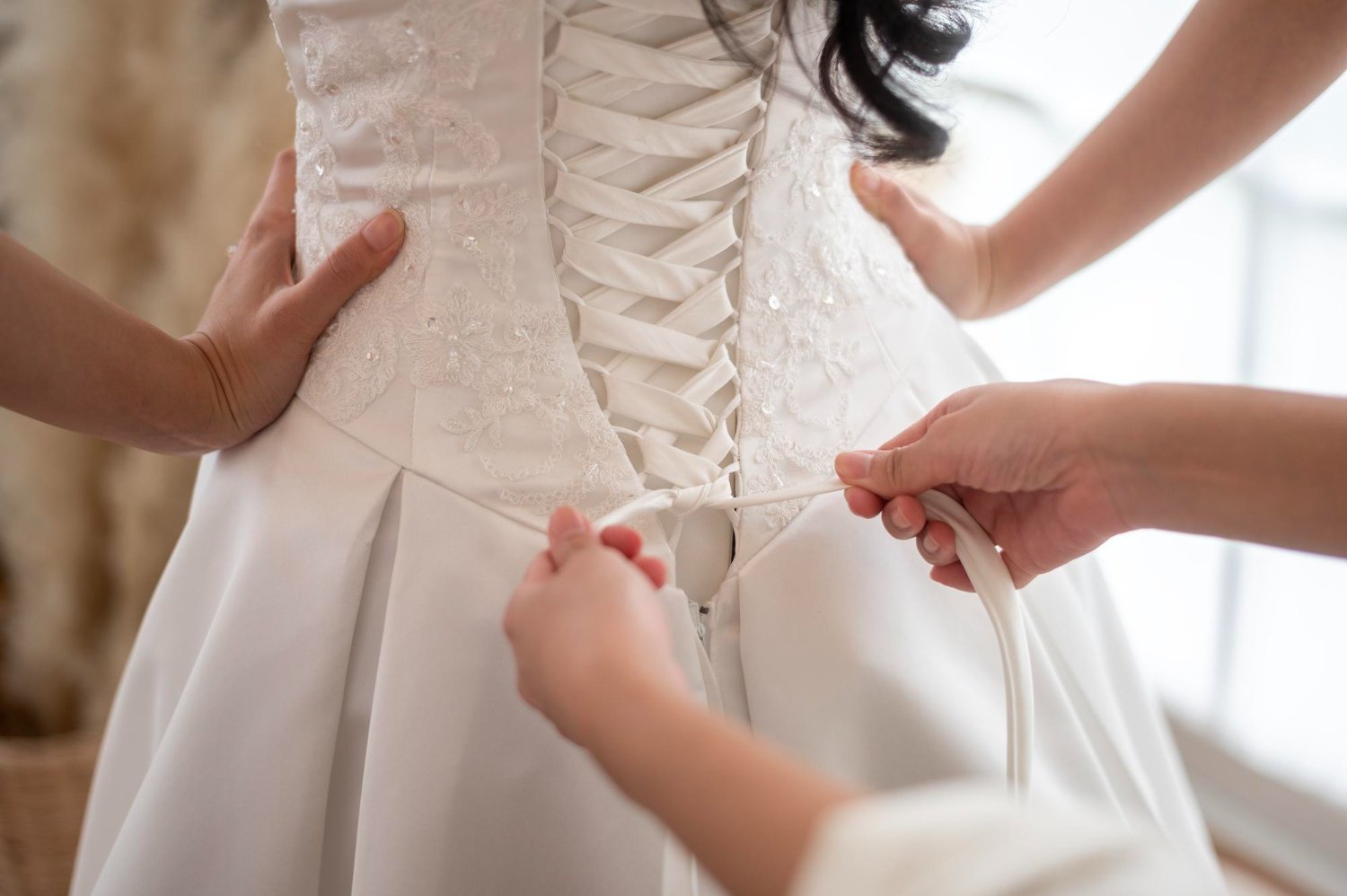
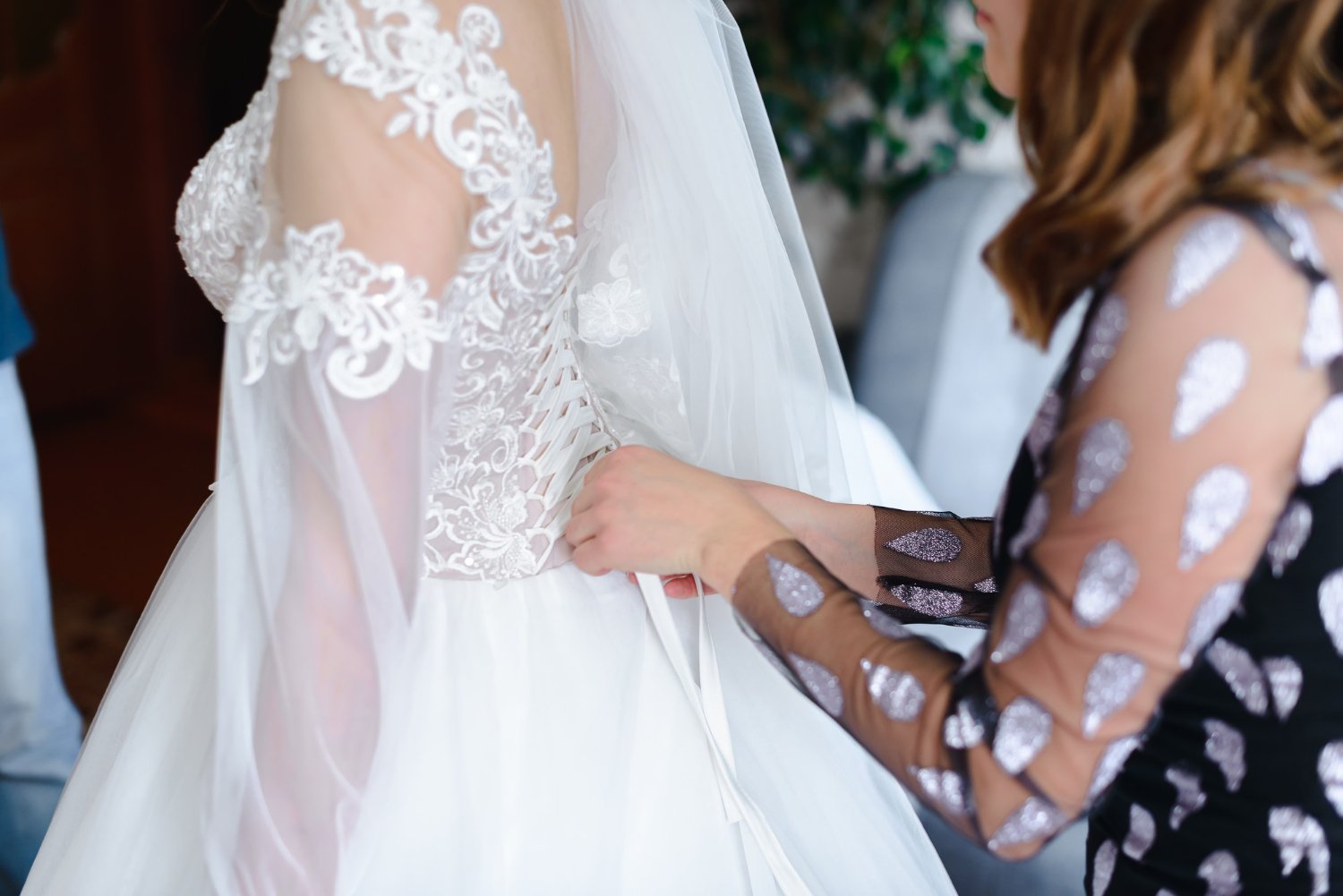
Close up of tying bow on elegant white bridal wedding dress
Preservation After the Wedding: A Brief, Connected Note
Alterations focus on getting the dress ready for the wedding. A brief word on what happens after is worth including here too.
Professional cleaning addresses stains before they set permanently
Champagne, sugar, and body oils can set into fabric invisibly, becoming considerably harder to remove the longer they sit untreated. Clean the dress within a few months of the wedding for the best results.
Ask your alteration provider whether they offer or recommend post-wedding cleaning
Some bridal alteration studios offer this service directly or maintain a trusted referral relationship, worth asking about while you’re already working with them rather than researching separately afterward.
This is a separate cost from alterations, budgeted separately
Post-wedding cleaning and preservation commonly run $250 to $750 combined, distinct from the alteration costs covered throughout this guide, worth factoring into your overall dress budget from the start.
Communicating With Your Seamstress: A Few Habits That Prevent Most Problems
Beyond the specific questions covered earlier, a few general communication habits genuinely reduce your risk of a bad experience.
Get everything meaningful in writing, every time
A verbal promise about price, timeline, or included work should appear in your written agreement or a follow-up email, not relied on from memory alone months later.
Keep a simple record of every appointment
A quick note after each fitting, what was discussed, what was promised, what it will cost, prevents genuine confusion later if questions come up.
Address a concern directly and early, not after it’s compounded
If something feels off, a delayed response, an unclear answer, a price that seems to be creeping upward, raise it directly and early rather than hoping it resolves itself.
Trust your own read on professionalism, not just price
A seamstress who communicates clearly, answers questions directly, and puts things in writing without being asked twice is telling you something real about the experience ahead, regardless of where their price falls in the ranges covered throughout this guide.
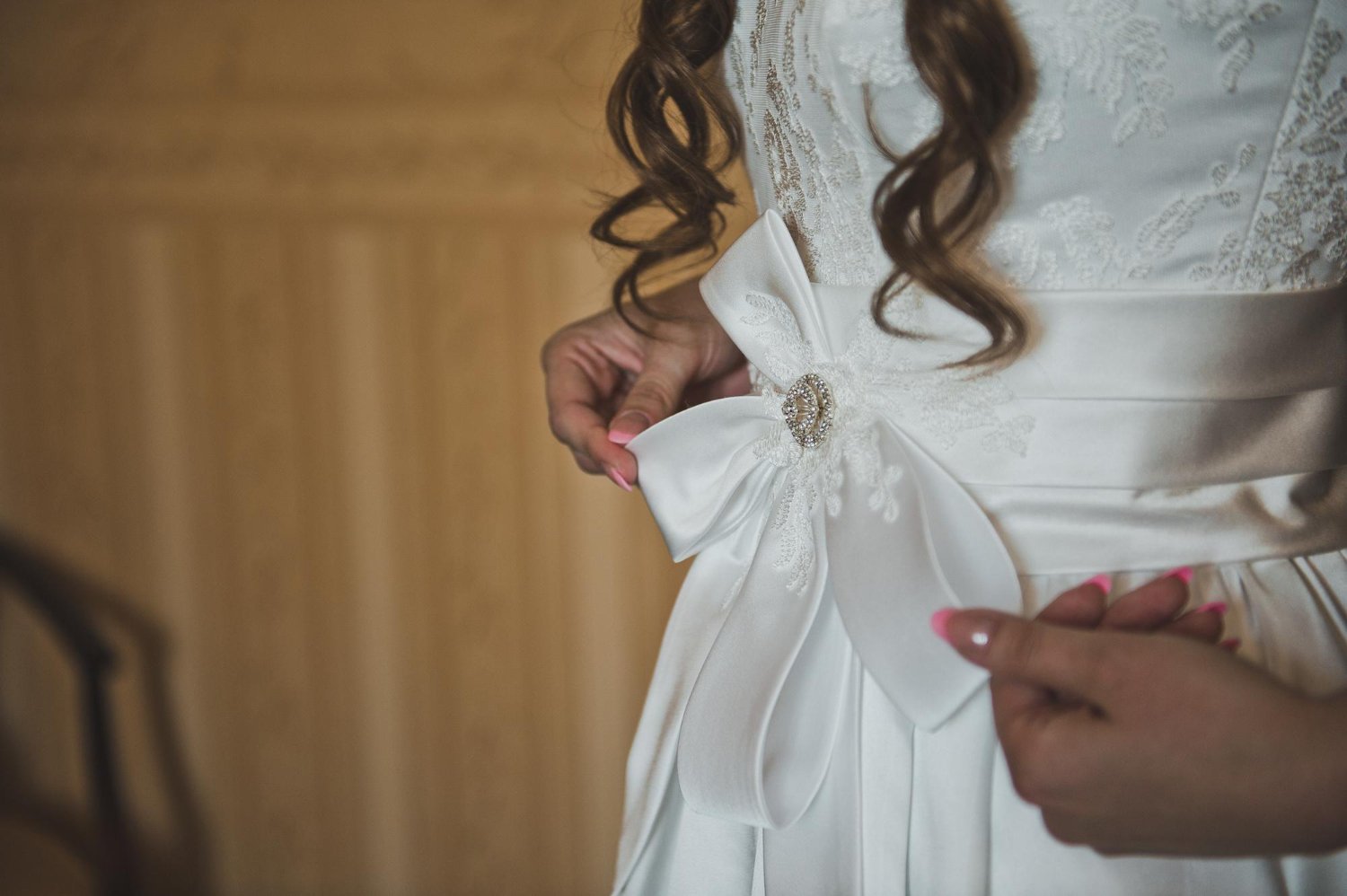
The bride corrects a white bow
A Few Alteration Myths Worth Dropping
“A higher price always means better work”
Price reflects location, overhead, and reputation as much as it reflects skill. A genuinely skilled independent seamstress can charge considerably less than a high-overhead boutique for comparable, or better, work.
“Alterations are a small, minor cost compared to the dress itself”
As this entire guide has shown, alterations commonly run 15 to 20 percent of the dress price, and considerably more for a complex gown. This is a real, substantial line item, not an afterthought.
“If a price changes, there’s nothing you can do about it”
A clear, written agreement with an explicit process for approving any scope change gives you genuine standing to push back on an unexplained increase, exactly the tool the bride at the start of this guide didn’t have in place.
Body Changes Between Ordering and the Wedding
This is a genuinely common concern worth addressing directly, without judgment.
Alterations can accommodate modest changes in either direction
Dresses can typically be taken in or let out somewhat during the alteration process. Communicate any significant expected change to your seamstress as early as possible, though, not at your final fitting.
Significant changes may affect cost and timeline
Substantial resizing, beyond roughly two sizes, can require more extensive structural work, reflected in both the cost table covered earlier and the time required to complete it properly.
Your body on the wedding day is the one your dress should fit
Base decisions on your actual current measurements, not a hoped-for future change, and communicate honestly with your seamstress about your real timeline and expectations.
Plus-Size Alteration Considerations
A few specific realities deserve direct mention for larger-bodied brides.
Confirm genuine plus-size bridal alteration experience directly
Not every seamstress has equal experience working with a full range of body types and dress structures. Ask directly about their specific experience rather than assuming general alteration skill translates automatically.
Complexity, not size itself, typically drives cost
Cost differences, where they exist, generally reflect the amount of fabric and structural work involved rather than size as a standalone factor. Ask for a clear, itemized explanation if a quote seems to vary from the general ranges covered in this guide.
A good seamstress creates a comfortable, judgment-free fitting experience regardless of size
If a fitting experience feels uncomfortable or judgmental in any way, that’s worth noticing and addressing, including choosing a different provider if needed.
Weather Check: How Season Affects Both Availability and Fabric Choices
Beyond the fabric-behavior notes covered earlier, the calendar season itself affects your alteration experience in two distinct ways.
Peak wedding season means busier seamstress calendars
Late spring through early fall remains peak wedding season across most of the country, meaning seamstress availability tightens and booking further in advance matters even more than the general timeline covered earlier.
Off-season alterations can mean more flexibility, not just lower demand elsewhere
A winter or early-spring wedding, outside the peak booking rush, sometimes means genuinely more scheduling flexibility and a less compressed timeline with your chosen seamstress.
Confirm your seamstress has handled your specific fabric in your specific climate before
A seamstress experienced primarily with indoor, climate-controlled venues may have less direct experience with how a specific fabric performs in genuine outdoor heat or humidity. Ask directly if this applies to your situation.
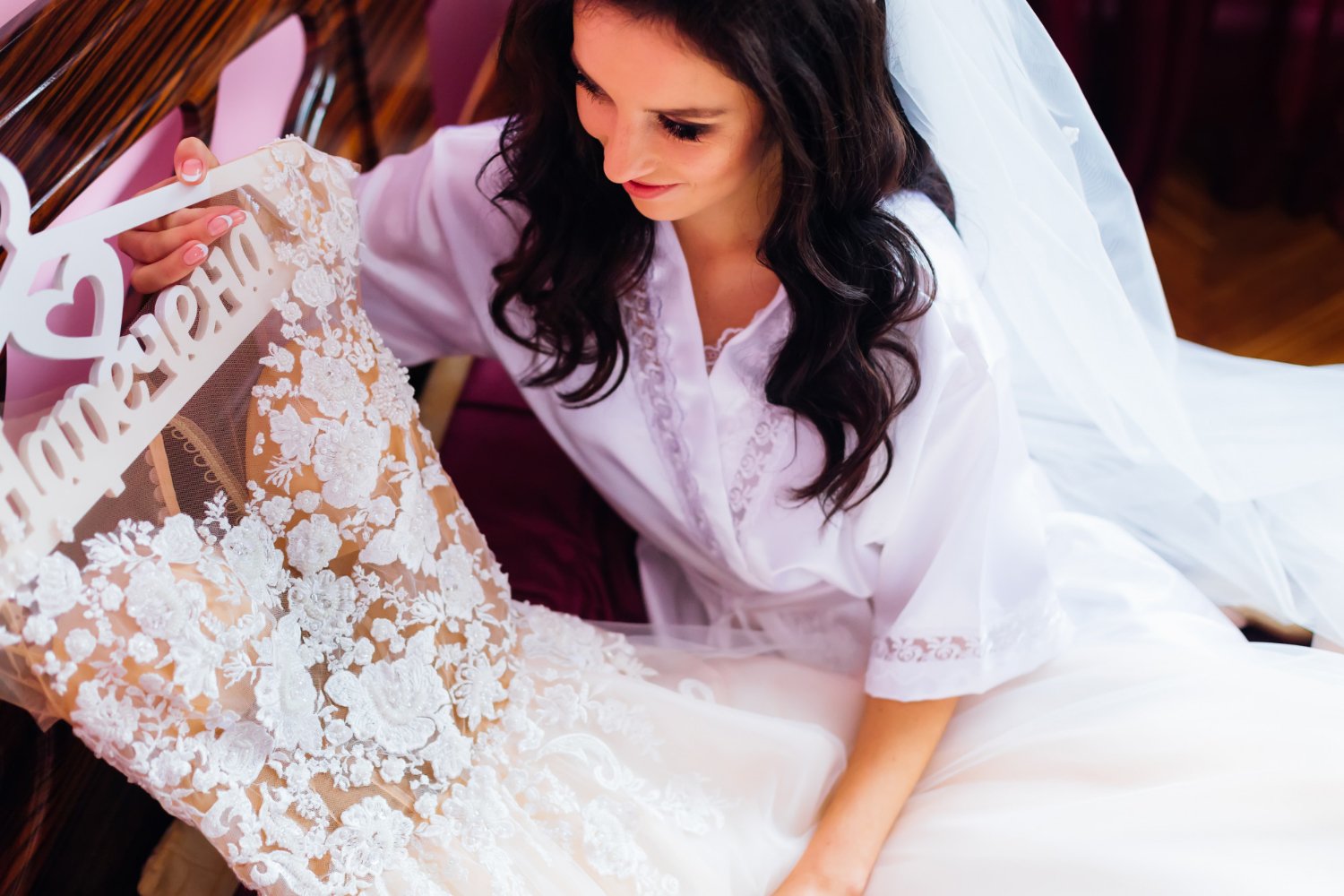
Bride in bathrobe and bridal veil holds a hanger with a wedding
More Direct Answers
Do I need to tip my alterations seamstress?
This isn’t universally expected, though some brides add a tip for exceptional service, particularly for a seamstress who also handles rush work or extra accommodations. Check local norms if unsure.
What if I ordered the wrong size and need major resizing?
This is more extensive work than standard alterations, and worth a direct, honest conversation with your seamstress about feasibility, cost, and realistic timeline as soon as you realize it, not close to the wedding.
Can I negotiate an alteration price?
Some room exists, particularly for bundled services or a less time-sensitive timeline, though a well-established seamstress with strong demand may have less flexibility. It costs nothing to ask directly.
Should I get alteration insurance separately from my dress insurance?
This isn’t common practice specifically, though confirm whether your general wedding event insurance, if you carry one, extends to a vendor-related issue during the alteration process.
What if my seamstress and I disagree about what’s “included” in the quote?
This is exactly why a written, itemized estimate matters so much, covered throughout this guide. Refer back to that document directly as your shared reference point.
Guest Experience Check: When Alterations Affect More Than Just You
Most of this guide focuses on the person wearing the altered garment. A few related considerations touch your wedding party too.
Bridesmaid and wedding party attire follows similar alteration logic
If your wedding party is wearing formal attire needing alteration, the same core principles apply: written estimates, clear timelines, and direct communication about cost, though typically at a lower price point than bridal gown work.
Coordinate timelines across your wedding party, not just your own
A shared seamstress or studio can sometimes offer better scheduling coordination when several people need alterations before your wedding, worth exploring if your wedding party’s attire is coming from a similar source.
Be mindful of cost transparency for anyone else footing their own alteration bill
Clear communication about what to expect helps wedding party members covering their own alteration costs budget realistically, the same courtesy this guide has emphasized throughout for your own alteration planning.
Bride in a wedding dress
A Final Word on Reading Your Specific Agreement Carefully
Every principle in this guide points toward the same underlying, simple habit: read what you’re actually agreeing to, and ask direct, specific questions about anything unclear, before any money changes hands or a single stitch gets undone.
A specific final check before you sign or pay a deposit
Reread your written estimate one more time before paying, confirming it matches everything discussed verbally during your consultation. A genuine discrepancy caught here is far easier to resolve than one discovered weeks later.
Keep copies of everything, digitally and on paper if possible
A photo of your written estimate, saved to your phone and backed up elsewhere, ensures you have access to it even if the original paper copy gets misplaced during a genuinely busy planning season.
This diligence protects a good relationship, not just guards against a bad one
Clear documentation isn’t about assuming your seamstress will act in bad faith. It’s about giving both of you a shared, reliable reference point, the same practice that protects any professional relationship involving a significant service and a real deadline.
Comparing Multiple Seamstress Quotes Fairly
Once you have quotes from a couple of providers, comparing them accurately takes more than looking at the bottom-line number.
Confirm each quote covers genuinely equivalent work
One seamstress’s estimate might include three fittings; another’s might include two, with a third billed separately. Confirm the actual scope matches before comparing totals side by side.
Weigh experience and portfolio alongside price
The lowest quote isn’t automatically the best choice, particularly for a complex, delicate, or heavily structured gown where genuine skill directly affects the outcome. Use the questions covered throughout this guide with every provider you’re seriously considering.
Trust your own read on communication style
A provider who answered your questions clearly and provided a written estimate without hesitation is telling you something real about what the rest of the process will feel like, a genuinely reasonable factor alongside price.
A Realistic Timeline Recap
| Timeframe | What happens |
|---|---|
| Dress ordered | Production begins; typically 4–9 months until arrival |
| Dress arrives | Book your first alteration fitting immediately |
| 10–12 weeks before wedding | Ideal window to start; avoids rush fees entirely |
| 6 weeks before wedding | Rush-fee threshold for most providers |
| 2–3 weeks before wedding | Final fitting; confirm everything with actual shoes and undergarments |
| Wedding week | Dress finished; emergency kit packed just in case |
This timeline is a genuinely reliable default for most gowns and most providers, though your specific seamstress’s actual availability and requirements always take priority over this general guide. Confirm their exact scheduling needs directly once you’ve chosen who to work with.
A Note on Sample and Off-the-Rack Dresses Specifically
If your dress came from a sample sale or off-the-rack inventory rather than a made-to-order process, a few details shift.
You likely have more alteration work ahead, not less
A sample or off-the-rack dress was made in one fixed size, meaning it’s statistically less likely to match your exact measurements than a dress ordered specifically for you. Budget toward the higher end of the ranges covered throughout this guide.
Your timeline advantage is real, but don’t skip the planning
Skipping the months-long production wait gives you a genuine head start on your alteration timeline. Use that extra time deliberately, booking early rather than assuming the shorter overall process means alterations can wait too.
Inspect the dress carefully before your first fitting
A sample or previously displayed dress may show minor wear. Point out anything you notice to your seamstress at your very first appointment, so it can be addressed as part of the overall alteration process rather than discovered later.
One More Round of Direct Answers
What’s the very first thing I should do once my dress arrives?
Book your first alteration fitting immediately, even before unpacking every detail of your excitement. The alteration clock, covered throughout this guide, starts only once the physical dress is in hand.
Is it normal for alteration prices to vary this much between providers?
Yes, genuinely. Location, overhead, experience level, and business structure all create real, legitimate price variation, which is exactly why comparing itemized quotes matters more than comparing a single headline number.
Should I be worried if my seamstress asks a lot of questions at the first fitting?
No, the opposite. A seamstress asking detailed questions about your wedding day, your movement needs, and your specific concerns is doing genuine diligence, a good sign rather than a concerning one.
What if I simply can’t afford the alteration estimate I received?
Ask directly whether any adjustments are optional versus structurally necessary, covered earlier in this guide’s ordering timeline section. A good seamstress will help you prioritize rather than assuming every listed item is mandatory.
Is there ever a reason to skip alterations entirely?
For a dress that already fits genuinely well, minor confidence-building tweaks aside, some brides do skip extensive alteration work. This is a legitimate choice, not a corner-cutting one, if the dress already fits the way you want it to.
That’s the complete picture. From the a la carte pricing structure down to the specific words worth saying at your very first fitting, you now have what you need to walk into this process with real, informed confidence rather than vague hope.
A Note on Vintage and Heirloom Gowns
Altering a family heirloom or vintage gown carries its own specific considerations beyond everything else covered in this guide.
Older fabrics and construction methods need specialized handling
Vintage fabric, aged seams, and construction techniques from an earlier era can behave differently under a needle than modern bridal fabric. Confirm your seamstress has genuine experience with vintage or heirloom garments specifically, not just modern bridal construction.
Budget extra time for this specific work
Heirloom alteration and restoration commonly takes longer than standard modern-gown alterations, given the careful, often slower handling delicate older materials require. Start this process earlier than the general timeline covered throughout this guide.
Discuss preservation of the garment’s sentimental elements directly
If specific details, original lace, a hand-stitched element, a family monogram, matter to you beyond the dress’s overall fit, communicate this clearly and specifically before any alteration work begins, so nothing meaningful gets unintentionally altered or removed.
Get a written condition assessment before work begins
Ask your seamstress to document the dress’s current condition, including any existing wear or fragility, before starting. This protects both of you if a pre-existing issue becomes more visible during the alteration process itself.
A Closing Thought on Value Versus Price
Every number in this guide describes what alterations commonly cost. None of it describes what they’re actually worth. A dress altered by a genuinely skilled hand fits the way it’s meant to, moves the way you need it to through hours of standing, dancing, hugging, and being photographed, and holds up structurally through an entire long day. That specific outcome is what the price throughout this guide is actually paying for, not just fabric adjusted by an inch here or there.
Approach this process with the same combination this guide has modeled throughout: genuine warmth toward a professional doing skilled, often underappreciated work, paired with the same direct, specific questions you’d bring to any other significant purchase. Both things can be true at once, and holding them together is what actually protects you.
Skilled hand-finishing, careful fitting, and the quiet expertise behind a dress that moves correctly all cost real money because they take real, trained time. Recognizing that value doesn’t mean accepting every number without question. It means asking your specific questions from a place of respect rather than suspicion, and expecting the same respect back in the form of clear answers and honest paperwork. Walk into your own fittings with both of those things in hand, and the rest of this process genuinely takes care of itself.
A Last Practical Note on Choosing Confidently
None of the guidance in this article is meant to make a genuinely routine process feel fraught. The overwhelming majority of bridal alterations go smoothly, finish on time, and land within the originally discussed range, once expanded slightly for any genuinely necessary additional work communicated clearly along the way. This guide exists for the exceptions, and for the peace of mind that comes from knowing exactly what to ask before you’re standing in a fitting room with a deposit already paid.
Choose a seamstress who answers your questions directly, puts real numbers in writing without being asked twice, and treats your specific timeline and budget as genuinely worth respecting. That combination, more than any single price point in this guide, is what actually predicts a smooth experience from your first fitting through your very last one.
Where This Leaves You
Wedding dress alterations hidden costs come down to the same handful of patterns throughout this entire guide: a la carte pricing that adds up faster than a single flat number suggests, a rush fee that can genuinely double part of your bill inside the final six weeks, and an initial estimate that’s allowed to shift, as long as you’re told before it does. None of this is mysterious once you know where to look, and most of it is completely normal, well-documented industry practice, not a sign anything is wrong.
The bride from the start of this guide didn’t need a different seamstress or a smaller dress. She needed one specific agreement in writing: a clear answer, confirmed before any work began, about what would happen if the quote changed. That’s the entire lesson this guide has been building toward, stated as plainly and directly as possible.
Your next step
Before your next fitting appointment, ask your seamstress directly: “Can you give me a written, itemized estimate, and will you tell me before doing any work beyond it?” Bring this guide’s checklist with you, and don’t leave a deposit until you have a clear, written answer. That one conversation, more than any single number in this guide, is what actually keeps your alteration experience predictable from start to finish.
