
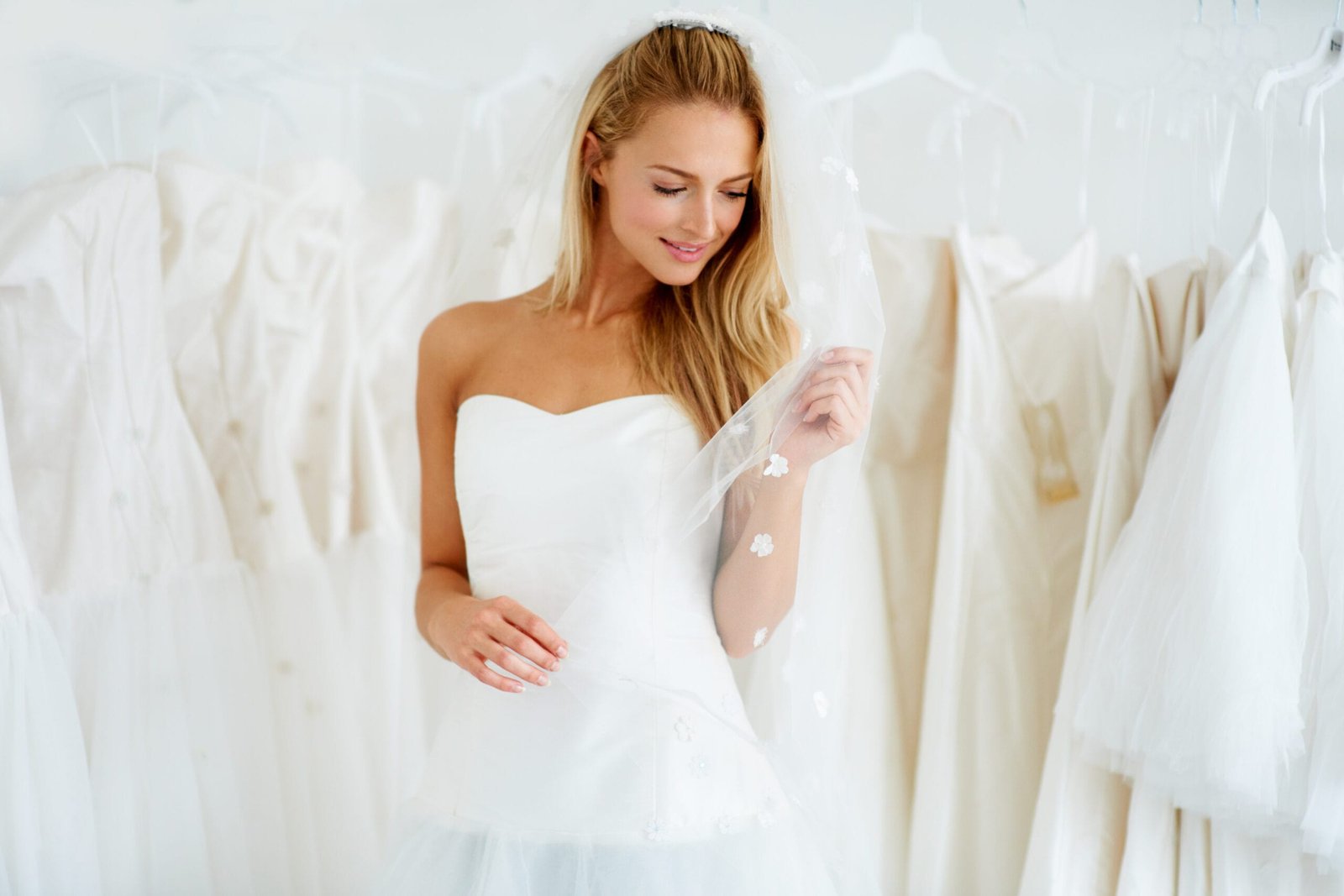
2026 Wedding Dress Trends You’ll Absolutely Love
Last updated: August 10, 2026
The wedding dresses defining 2026 are romantic without being predictable, dramatic without demanding one particular kind of wedding, and far more personal than the old idea that every bride should be searching for the same “timeless” gown. Across the Spring and Fall 2026 collections shown in New York and Barcelona, designers returned to recognizable bridal ingredients—lace, corsetry, satin, tulle, bows, pearls, and full skirts—but changed their proportions, placement, and purpose. Basque waists lengthened bodices. Lace became layered, sheer, or sculptural. Capes and coats created removable ceremony drama. Halter necklines and clean draping offered a quieter alternative to elaborate decoration. Color appeared in soft blue, gray, yellow, blush, and organic tones rather than being treated as a novelty.
That range is the real story of bridal fashion in 2026. There is no single silhouette that every person getting married is expected to wear, and there is no useful reason to force yourself into a trend simply because it is new. The strongest collections make room for different bodies, identities, venues, budgets, and definitions of what “bridal” should look like. A fitted crepe gown can feel just as current as a tulle ball gown. A civil-ceremony mini can feel as considered as a cathedral-length look. A person who wants coverage can find high necklines, sleeves, capes, and coats; a person who prefers a sensual look can find lingerie-inspired lace, open backs, and body-skimming silhouettes. The point is not that everything is trending at once. The point is that designers are offering more than one convincing route to feeling special.
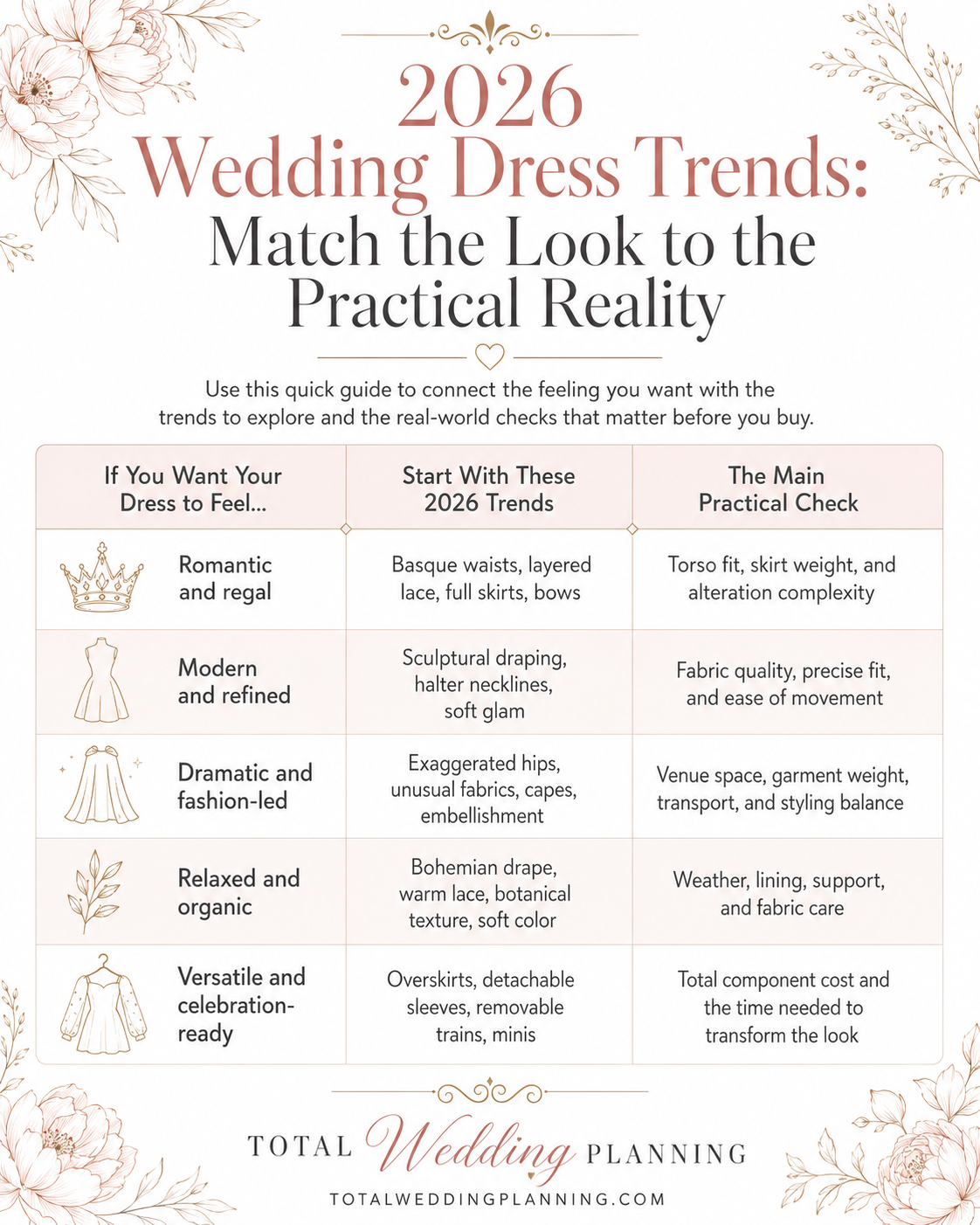
This guide translates those runway ideas into the decisions that matter in an actual bridal salon. You will see what each trend looks like beyond the campaign photograph, why it feels relevant now, how it changes fit and movement, which details may increase alteration costs, and what to ask before you place an order. Use it to build a clearer vocabulary for your appointments—not a stricter set of rules. The right dress is the one that expresses your style, supports the way you want to move through the day, works with the setting you chose, and stays within the complete attire budget you can comfortably afford.
What Defines Wedding Dress Style in 2026?
If you look only at individual runway images, 2026 bridal fashion can seem contradictory. Some collections are filled with monumental ball gowns, glittering surfaces, elaborate lace, and bows large enough to become the focal point of the entire look. Others rely on clean fabric, careful draping, a narrow silhouette, and almost no decoration. Those directions are not evidence that the season has no identity. Together, they reveal a change in what couples expect from wedding fashion: the outfit should feel intentional and personal, whether that intention produces restrained elegance or theatrical romance.
The first defining idea is visible construction. Designers are no longer hiding every seam and foundation. Boning, corset lines, dropped waist seams, gathered fabric, and sculpted hip structures are allowed to show how the gown creates its shape. This gives familiar silhouettes a stronger point of view. A strapless satin ball gown is not simply a strapless satin ball gown when its bodice extends into a sharp Basque point, its cups curve into a cat-eye neckline, and its skirt begins several inches below the natural waist. The design becomes memorable through proportion rather than through decoration alone.
The second idea is texture with purpose. Lace is layered over embroidered tulle, appliqué appears to float above transparent foundations, pearls form borders or fields of light, and fabric flowers climb across bodices rather than being scattered without direction. Fall 2026 reporting from Vogue also identified shimmering embellishment and unusual materials—including chainmail-like weaving, faux feather effects, and liquid-looking organza—as key runway ideas.[3] Texture is not being used merely to make a gown look expensive. It creates movement, catches light, defines a neckline, or leads the eye toward a chosen part of the silhouette.
The third idea is adaptability. Capes, coats, overskirts, removable sleeves, detachable trains, toppers, and bows allow one base gown to change as the wedding moves from ceremony to dinner to dancing. The rise of the “wedding wardrobe” is visible too: designers increasingly show coordinated looks for the rehearsal dinner, ceremony, reception, and after-party. That does not mean every couple needs to buy several outfits. In practical terms, the trend is most valuable when it solves a real problem—coverage for a ceremony, warmth outdoors, a dramatic train for portraits, or freedom of movement later.
Finally, 2026 is defined by permission. A gown can be ivory, colored, sheer, modest, short, enormous, fitted, minimal, or highly embellished and still communicate a clear bridal identity. This permission is especially useful if traditional shopping language has made you feel that a particular body type, age, gender expression, venue, or price point is supposed to determine your style. Trends are design tools, not eligibility requirements. You can borrow one element, ignore the rest, and create a look that belongs to your wedding rather than to a runway season.
Statement Bows Move From Sweet Detail to Main Event
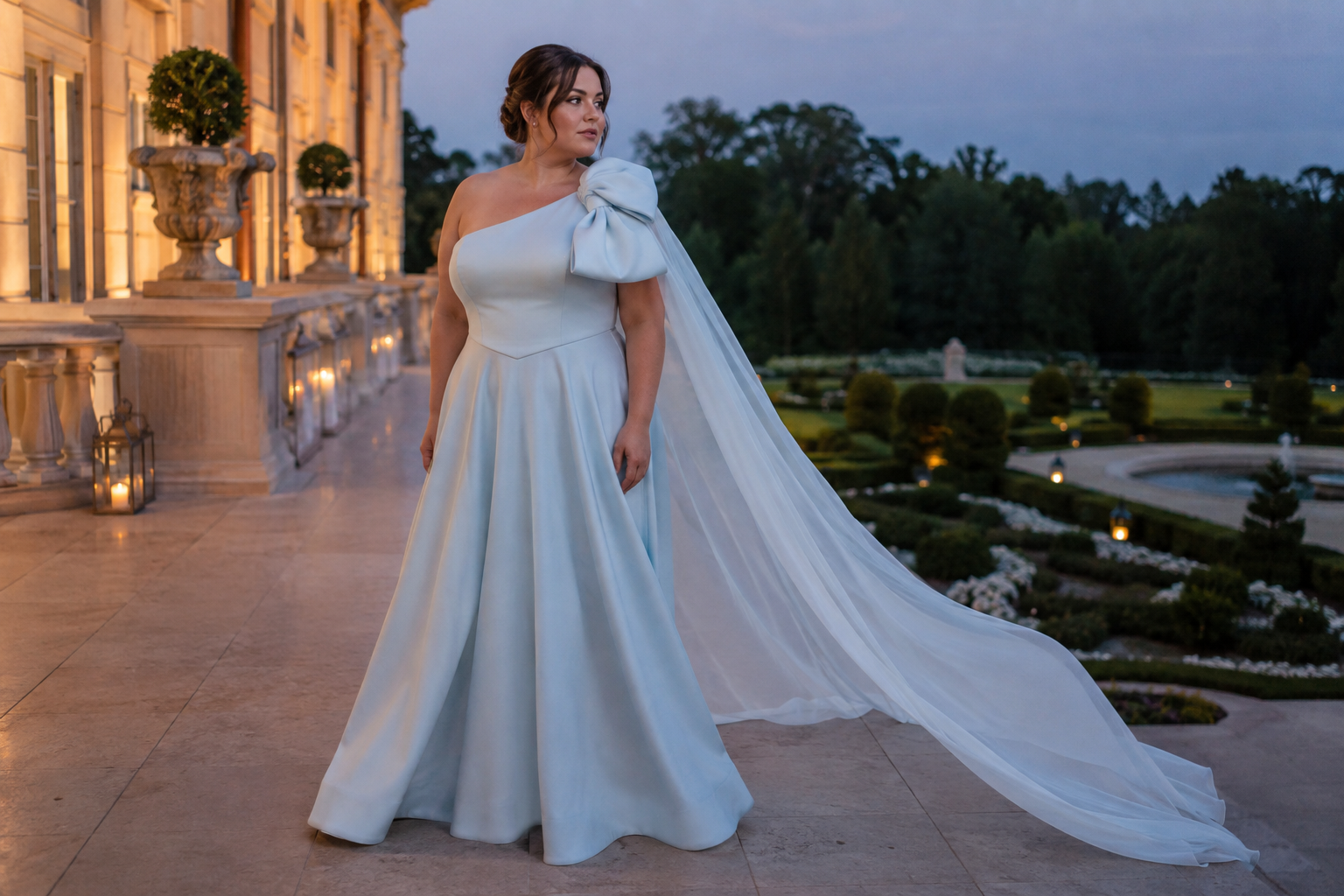
Bows remain a familiar bridal symbol, but their scale and placement make them feel different in 2026. Vogue’s Fall 2026 report noticed bows moving from their usual position at the back of a gown to the front of bodices, while WWD also identified bow details across Spring 2026 collections.[2][3] Designers used them as architectural necklines, asymmetrical shoulder features, wide waist treatments, detachable back pieces, and soft knots that released into train-like tails. Instead of finishing the dress, the bow often defines it.
The material determines whether the effect feels playful, formal, romantic, or graphic. Crisp Mikado can hold a sculptural loop that looks almost geometric. Satin creates polish and visible highlights along the folds. Organza offers scale without the same visual weight, while tulle makes a bow appear soft and airy. A narrow black or velvet bow introduces contrast and can make a traditional silhouette feel sharper. When saving inspiration, notice the material as carefully as the size; copying the shape in a different fabric may produce a completely different result.
Placement should be tested against the real activities of the day. A front bow may compete with a bouquet or bend when you sit at a table. A shoulder bow can brush the face, catch in long hair, or overlap with a veil. A large back bow may flatten against a chair or hide the exact waistline you liked. Long tails can lie over the train and complicate the bustle. None of these issues automatically rules out the look, but each one deserves to be seen before the purchase rather than managed afterward.
Detachable bows are particularly useful because they can create a visible transformation with less time and expense than a second dress. A large ceremony bow can come off for dinner, revealing a clean back and making the gown easier to bustle. The reverse can work too: add a playful bow before the reception to change the mood of a simple dress. Ask how the piece attaches, whether the attachment points remain visible after removal, and whether one helper can operate them quickly. Tiny hooks may disappear beautifully in photographs and become frustrating in a dim changing room.
Storage is part of the design. A crisp bow may need to be stuffed with acid-free tissue, transported without pressure, and professionally steamed into shape. Ask the salon exactly how it should arrive at the venue and who should handle it. Add that instruction to the dressing plan, because the person helping you may otherwise treat an intentional fold as a wrinkle or press a structured loop flat.
A statement bow is successful when it adds personality without creating a full day of adjustment. Hold a bouquet, hug someone, sit, turn, and look at the dress from the side as well as the back. If the bow still feels like part of you rather than an object attached to you, it is doing more than following a trend—it is giving the gown a clear signature.
Capes, Coats, and Bridal Outerwear Add Removable Drama
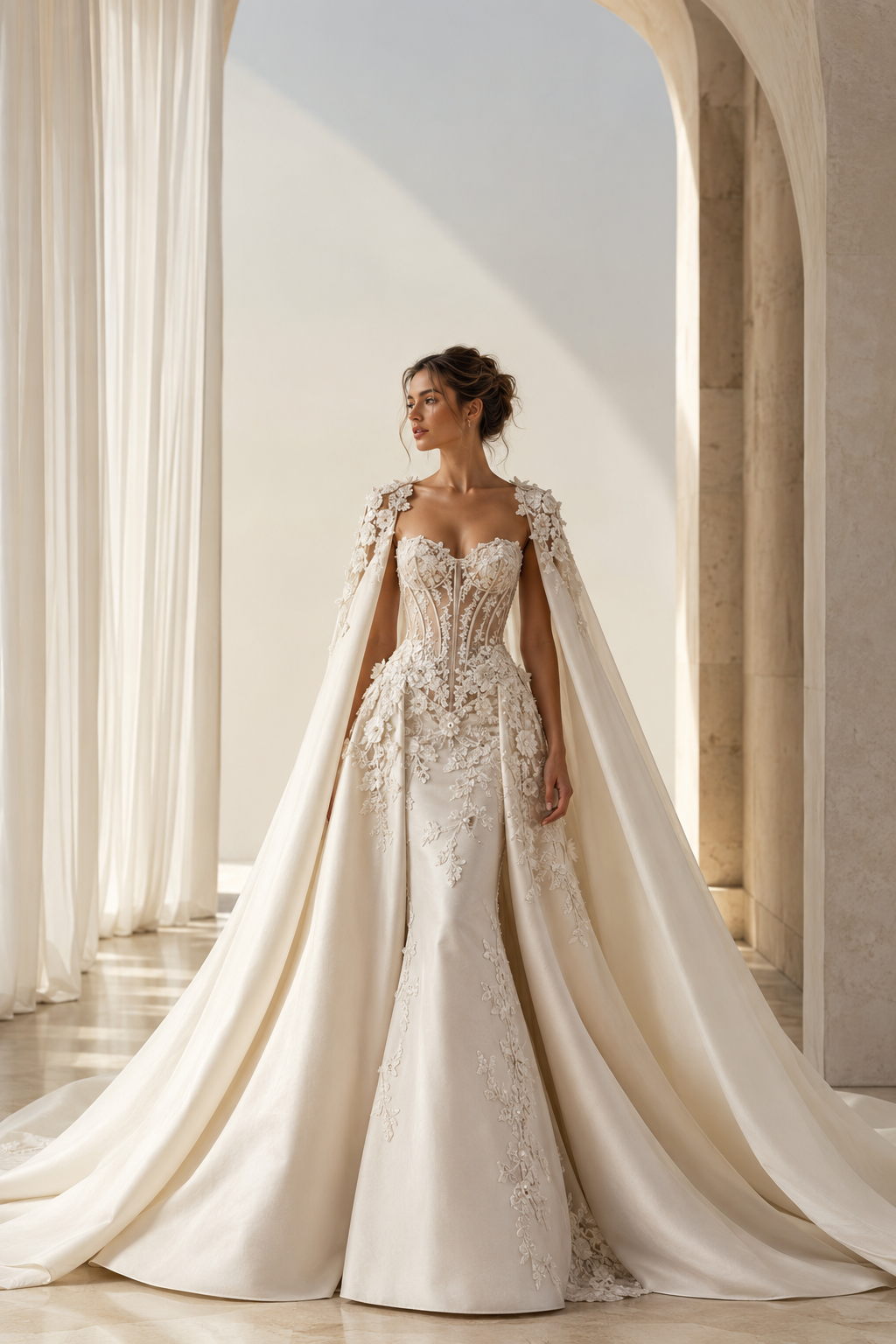
Capes were a clear feature of the 2026 collections shown in Barcelona, while Fall 2026 New York designers expanded the idea into coats and other forms of bridal outerwear.[3][4] The category includes translucent lace fastened at the shoulders, soft tulle that falls like a veil, structured opera capes, cropped jackets, feathered toppers, and full-length coats designed to provide genuine warmth. This breadth makes outerwear one of the most adaptable trends of the year. It can be theatrical or minimal, decorative or functional, and it can transform a very simple dress without changing the dress itself.
A cape creates a different frame from a veil. A veil begins at the head and often softens the face and upper body. A cape starts lower, leaving the hairstyle uncovered and emphasizing the shoulders, back, or entire silhouette. That can be useful if you want to wear a sculptural headpiece, preserve an open hairstyle, avoid the sensation of a comb pulling on your hair, or create a long line without attaching fabric to your head. Some couples choose both a veil and cape, but the combined back view should be evaluated carefully; several layers ending at unrelated lengths can obscure rather than enrich the gown.
Outerwear can also solve a real ceremony need. A lined coat or heavier cape may make an outdoor fall or winter ceremony more comfortable. Lace sleeves or an opaque topper can create coverage for a religious setting. However, a transparent cape may not meet a venue’s specific guideline merely because it covers the shoulders visually. Confirm expectations with the ceremony location or officiant and choose the layer accordingly. When the piece has a practical job, fashion and function should agree.
Fastening and weight determine comfort. A long cape catches air outdoors, so a delicate neck closure may carry more force than expected in the wind. Shoulder attachments, small arm loops, hidden snaps, and closures integrated into the gown distribute weight differently. During a fitting, ask someone to walk behind you, then turn and walk into a gentle airflow if the salon can provide it. Notice whether the cape pulls at the throat, shifts the neckline, or drags against embellishment. Lace, beading, and rough appliqué can snag when two layers repeatedly rub.
Removal should be designed into the wedding timeline. Decide who detaches the piece, where it will be stored, whether it needs to return for sunset portraits, and how it will be transported after the ceremony. If the cape fastens beneath the hair or veil, the person removing it needs to practice without disturbing either. If it trails on the floor, ask whether it has a wrist loop, discreet bustle, or safe way to carry it between locations.
Price every component separately. Campaign photographs may show a gown with a matching cape that is not included in the gown price, and both pieces may require alterations. Compare the total with other ways of achieving the same effect. Sometimes a cape is the most efficient route to a dramatic ceremony and comfortable reception. Sometimes it is an expensive accessory that will be worn for twenty minutes. The correct answer depends on how much that entrance and coverage matter to you.
Transformable Dresses and Wedding Wardrobes Put Versatility First
The idea of changing looks during a wedding has grown from an occasional celebrity gesture into a visible part of bridal design. Fall 2026 collections included coordinated weekend wardrobes as well as ceremony gowns, reception looks, and after-party pieces, while soft-glam collections increasingly use detachable trains, overskirts, sleeves, and corset-and-skirt combinations.[3][6] The useful version of this trend is not simply buying more clothes. It is matching each garment or component to a genuine change in the day.
A full overskirt can turn a fitted base gown into a ball-gown silhouette for the ceremony, then come off before dinner. Removable sleeves can provide coverage and visual formality without restricting the dance floor. A detachable train can create the long aisle line you want without requiring an elaborate bustle. A topper can change a strapless dress into a lace or high-neck look. A short base dress beneath a sheer long skirt can move from ceremony to after-party with one removal. These transformations are strongest when they alter function as well as appearance.
One dress with several components is not automatically cheaper than two complete outfits. The base gown, overskirt, cape, sleeves, train, bow, and topper may all be priced separately. Each may need its own fitting or alteration. Extra closures may require reinforcement. The component may also need steaming, storage, and a labeled garment bag at the venue. Request an itemized quote and compare the complete cost with the benefit, not with the gown’s starting price.
The change itself should be rehearsed. Promotional videos can make a transformation appear instant because stylists, perfect lighting, and multiple hands are outside the frame. Your change may happen in a small room while guests are moving into dinner. At the final fitting, ask one chosen helper to remove and replace every component. Record a clear video showing the order of hooks, buttons, ties, snaps, and bustles. Time the process while wearing the real shoes and hairstyle if possible. A ten-minute change can be worthwhile; a forty-minute change may take you away from the celebration longer than you want.
Check the base gown as carefully as the complete look. An overskirt can hide a zipper, wrinkle, or imperfect hip fit during the ceremony, but those details will become visible when the layer comes off. Detachable sleeves may contribute to the feeling of support even when they are not structurally intended to, leaving the neckline less secure after removal. If the base gown has a train, it may need a separate bustle beneath the overskirt. Test the final reception configuration through walking, sitting, and dancing before approving the alterations.
You do not need a wedding wardrobe to make the celebration feel varied. A veil removal, jewelry change, different shoe, lipstick, jacket, or bouquet can create a new chapter with less cost and disruption. Start by asking what problem the second look is meant to solve. If the answer is comfort, mobility, warmth, coverage, or a style expression you genuinely value, build the change intentionally. If the answer is only that social media says you should surprise guests, one well-chosen outfit may serve you better.
Big Ball Gowns, Sculpted Hips, and Bubble Hems Play With Volume
Volume is returning in several forms at once. Vogue’s Fall 2026 coverage highlighted the renewed presence of large, petticoat-supported ball gowns, while its Barcelona report noted exaggerated hips created with cage-like structure, padding, and tulle overlays. Brides identified bubble hemlines and rounded detailing as another expression of the same interest in shape.[1][3][4] The result ranges from familiar princess silhouettes to fashion-forward gowns that deliberately alter the outline of the body.
A sculpted hip can be subtle: a skirt that curves outward a little more strongly from a dropped waist, sharpening the contrast between bodice and lower volume. More editorial designs may use visible pannier-like structures, asymmetrical peplums, or rigid forms that extend away from the body. Bubble hems turn the lower edge under to create an inflated curve, appearing on minis, tea-length dresses, and occasionally full-length gowns. These designs use space as decoration; they can make plain fabric more dramatic than extensive beadwork.
Because the effect is proportion, try not to let fitting-room language turn it into a judgment about your body. A wide hip or enormous skirt is a chosen silhouette, not a method of correcting something that was wrong before you put it on. Try several degrees of volume and look at the shape from the side and back. You may love the strongest version, prefer a slight architectural curve, or discover that you want a full skirt with a natural waist rather than an exaggerated hip. The design should serve your taste, not a claim about what your figure is allowed to wear.
Venue dimensions are part of the fitting. Find out how wide the aisle and important doorways are, whether you need to climb stairs, what kind of vehicle will transport you, and how closely tables and chairs will be placed. Practice standing beside your partner and hugging someone; a rigid skirt may hold people farther away than expected. Sit at a table if the salon has one, then stand without immediately rearranging the gown. Some internal structures collapse gracefully when seated; others tilt or push upward.
Bathroom access, transport, steaming, and bustle design should be discussed before purchase. Very full skirts may require a helper or a temporary underskirt adjustment. Tulle and petticoats compress in a garment bag and need time to recover. A large train can become even heavier when the skirt is already supported by multiple layers. Ask the salon to show the recommended bustle and calculate whether the finished reception shape still looks intentional.
For a bubble hem or short voluminous dress, movement creates different concerns. Raise your arms, walk quickly, sit, and check whether the rounded edge returns to its intended shape. Ask how the internal layer is constructed and whether shortening is possible without rebuilding the hem. A party dress should feel playful in practice, not require constant pulling and smoothing. The best volume is the amount that gives you delight while still fitting through the real spaces of your wedding.
Ballet-Inspired Romance Brings Soft Movement to 2026
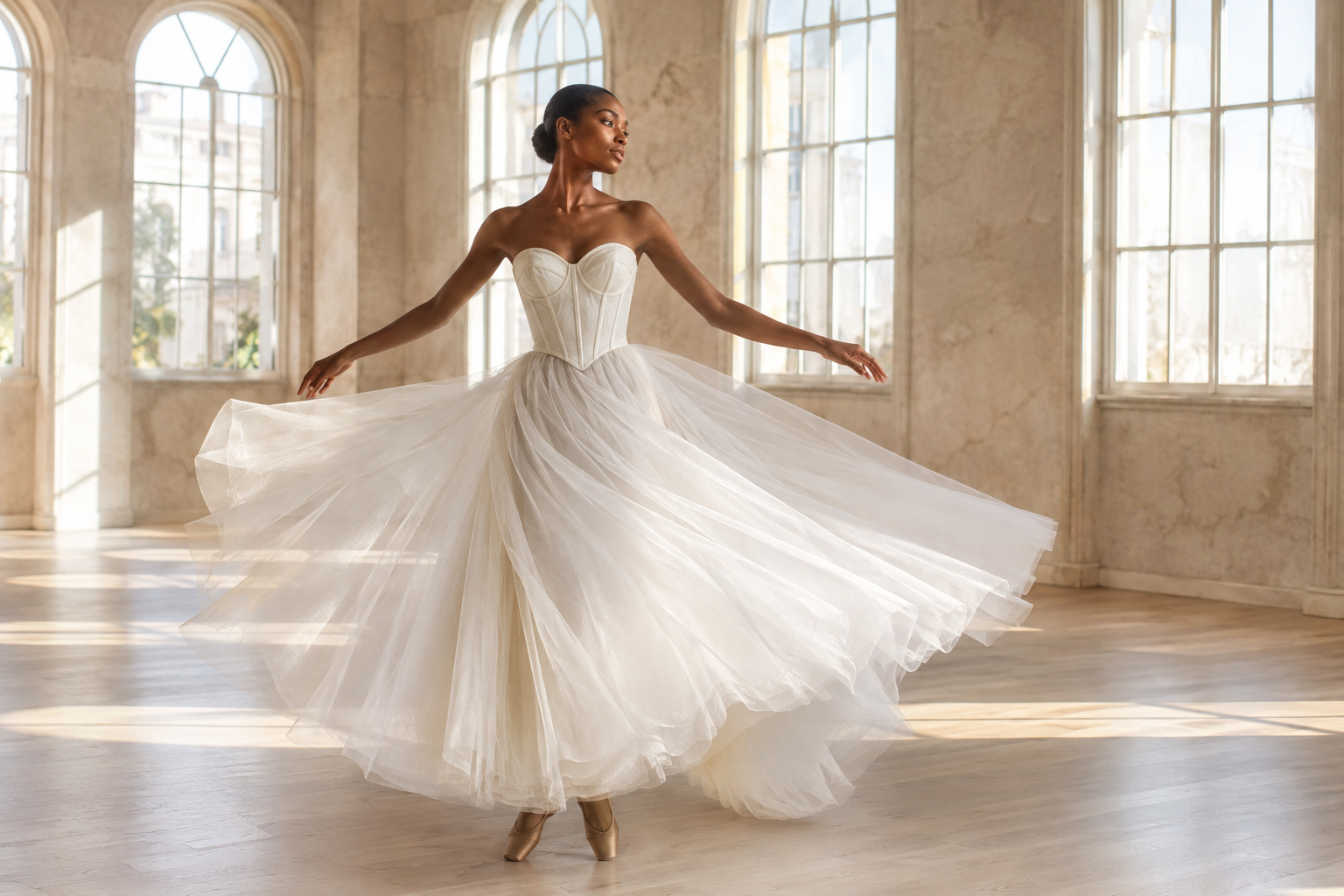
Brides described a “Swan Lake” direction in the Spring 2026 collections, built from soft tulle, fluid movement, delicate sleeves, and an atmosphere of quiet drama.[1] The influence connects naturally with other major trends of the year: corseted and Basque-waist bodices recall ballet costumes without reproducing them literally, while translucent layers, feather-light texture, narrow straps, and pale tones create the sense of motion associated with the stage.
The most wearable interpretation usually selects one or two ballet references rather than turning every detail into a theme. A structured bodice with a fluid tulle skirt can suggest the idea without resembling a tutu. A square neckline and narrow straps can feel dancer-like on a column or A-line gown. Soft blue, blush, gray, or ivory can evoke the palette. Ribbon details, a delicate hair tie, ballet-flat-inspired shoes, or feathered texture can carry the reference through styling. If theatrical fashion is genuinely your style, you can go further; the point is to make the degree of literalness deliberate.
Movement is the reason to try this dress dynamically. Walk quickly, turn, and take several steps while someone films from the side. Layers that appear ordinary in a mirror may separate and float beautifully in motion. Conversely, a skirt that looks weightless in a campaign image may cling to itself, catch between the legs, or resist turning when worn over a different lining or underskirt. Ask whether the sample contains the same number of layers as the ordered gown and whether additional crinoline changes the effect.
Fine tulle requires a venue plan. It can collect leaves, dry grass, twigs, and other debris; raw edges can catch on wood, stone, or rough flooring. Glitter tulle may shed even when the gown is new. For an outdoor ceremony, arrange for someone to lift the train between locations and place a clean cloth beneath it during ground-level portraits. Ask what kinds of small tears can be repaired and whether individual damaged layers can be trimmed or replaced.
Transport and steaming are equally important. A large tulle skirt can be compressed for travel but may need many hours outside the bag to regain its shape. Not every layer should be steamed at the same distance or temperature, particularly when appliqué, glitter, horsehair braid, or synthetic fibers are present. Follow the salon or designer’s instructions rather than allowing an enthusiastic helper to apply heat without guidance.
Ballet-inspired bridal fashion succeeds when the dress makes movement feel expressive rather than difficult. If you love the way it follows you across the room, the skirt’s behavior may matter more than any single still photograph. Give yourself enough appointment time to discover that experience instead of evaluating the gown only in a fixed front-facing pose.
Modern Bohemian Dresses Feel Organic, Fluid, and Intentional
Vogue’s report from Barcelona identified bohemian bridal style as a major 2026 direction, citing organic draping, flowing silhouettes, warm tiered lace, and fringe.[4] This is not simply a return to one familiar festival-inspired uniform. The modern bohemian gown is defined more broadly by movement, tactile materials, less rigid symmetry, and a relationship to the body that feels relaxed rather than heavily engineered.
That description can include a loosely draped silk dress, a lace gown with an oversized botanical motif, a tiered skirt, fringe that moves while dancing, or separates with a softly structured bodice. Sleeves may billow or fall open rather than holding a fixed shape. Surfaces are often matte, warm, or subtly textured. The construction may be lighter, but it should not look unfinished. Shoulders still need to sit correctly, the neckline still needs to remain secure, and the hem still needs to relate to the shoes and ground.
Bohemian style is often marketed through beaches, deserts, gardens, and forests, yet the venue does not determine who is allowed to wear it. A flowing lace gown can bring softness to a city loft, restaurant, or modern gallery. Likewise, an outdoor wedding does not require a boho dress. Decide whether you want the gown to echo the natural setting or create contrast with it. Personal style remains the more durable guide.
Light construction can make support less visible and sometimes less substantial. Ask whether cups, lining, waist stay, or flexible boning can be added without changing the drape. If the back is low or the bodice is cut on the bias, bend, reach, and dance to see whether the front remains secure. Shapewear is optional; some people appreciate anti-chafing or a smooth base, while others prefer fewer layers. Test the actual options under the actual fabric rather than treating any undergarment as mandatory.
Weather affects a fluid gown in ways that are not always obvious. Loose sleeves and fringe can look beautiful in a breeze but may blow across the face or catch on jewelry. Dense crochet-like lace can feel warmer than its open pattern suggests. Bias-cut silk may show moisture, and a long unweighted skirt can move unpredictably in wind. Ask how the fabric responds to humidity, water, heat, and spot cleaning. A relaxed visual mood should be supported by practical preparation.
The strongest bohemian choice feels easy because its details have been resolved, not because they have been ignored. A careful hem, secure neckline, appropriate lining, and realistic weather plan allow the organic fabric and movement to take center stage. Effortlessness is usually the result of good construction and planning.
Soft Color Broadens the Definition of a Wedding Dress
Color is becoming a more integrated part of bridal design rather than being reserved for one “alternative” gown in a collection. Vogue’s Barcelona reporting pointed to gray, blue, yellow, pink, and more saturated hues, while the official Barcelona Bridal Fashion Week trend summary also noted organic tones beneath floral and nature-led details.[4][7] The important development is not that white has disappeared. It is that color now appears at several levels of intensity, giving couples more control over how traditional or unexpected the final effect feels.
The quietest version is an undertone: warm ivory, cool ivory, champagne, sand, silver, or blush. A tinted foundation beneath ivory lace makes the motif more visible and can change the entire temperature of the dress while still reading as traditionally bridal. Embroidery, a ribbon, floral appliqué, a belt, or a bow can introduce a controlled accent. A full gown in misty blue, dove gray, pale yellow, muted pink, green, black, red, gold, or print allows color to lead the look. There is no required progression from subtle to bold; choose the level that feels natural to you.
Evaluate color under several light sources. Salon lighting may be warm and flattering but unrelated to the ceremony. Stand near a window and take an unfiltered photograph. Use phone flash. If possible, compare the result with photographs of the venue at the time of day when you will be there. Champagne satin may become deeply golden in candlelight. A cool gray lining can look crisp in a modern interior and almost blue outdoors. Very pale shades may read as white in wide photographs and reveal their color only at close range.
A popular but unhelpful approach is to assign every skin tone one “correct” white. In practice, some people enjoy low contrast and tonal harmony; others feel most alive when the dress creates clear contrast. Try several shades near your face, remove any filter, and decide which relationship you prefer. The purpose is not to prove that one color objectively flatters you. It is to notice which color helps you recognize the version of yourself you want to bring to the wedding.
Coordination does not require exact matching. A blue gown does not obligate the wedding party, flowers, linens, and invitations to use the same blue. Repetition can be limited to one small floral or stationery detail—or the gown can stand alone. Share enough information with the florist, stylist, and partner to prevent an accidental clash, but do not turn the dress into a command that every visual element must obey.
On the order, confirm the designer’s exact color name and code and ask to see a real swatch. Determine whether the lace, lining, cups, buttons, thread, zipper, and detachable pieces all come in coordinated tones. Replacement material needs to match if the dress is altered or repaired, so request useful offcuts after tailoring. Color can make a gown deeply personal; accuracy keeps that personal choice from becoming an avoidable production surprise.
Unexpected Fabrics and Sleek Silhouettes Offer a Fashion-First Alternative
Vogue’s Fall 2026 report identified unexpected material as a key trend, citing faux laser-cut feathers, chainmail-like weaving, shimmering liquid organza, and the use of vintage deadstock.[3] The same collections also included body-hugging lace, cutouts, bra-top constructions, and sensual fitted shapes. Together, these ideas offer an alternative to the conventional equation of bridal drama with a large skirt. A narrow column, close mermaid, or tailored separate can carry as much fashion impact through surface, cut, and movement.
Fabric is a sensory decision as much as a visual one. Listen to taffeta while you walk. Feel the reverse side of an embellished textile where it touches the skin. Notice whether sequins or feathered surfaces scratch beneath the arm. Pay attention to weight after you have been standing rather than only when the stylist first places the gown on you. Guests see the exterior; you experience the garment from a few millimeters away for many hours.
Different materials bring different practical personalities. Crisp taffeta and Mikado hold volume but may crease during sitting or travel. Satin reflects light and can show water, pulling, or pressure marks. Crepe falls cleanly but may reveal the outline of seams and underlayers. Organza creates translucent structure yet can snag on rough surfaces. Velvet offers depth and warmth while showing directional changes in its pile. Feathers move beautifully but may shed or react to moisture. Metallic, bonded, painted, or coated textiles can have specialized pressing and cleaning requirements. These qualities are not defects; they are part of the decision.
If the silhouette is fitted, determine where the restriction begins. A column may fall almost straight without gripping every curve. A sheath follows the body more closely. A fit-and-flare widens higher on the leg, while a mermaid generally stays narrow longer before opening into a stronger flare. Designers use those labels differently, so test the actual garment. Walk with your normal stride, climb a step, sit in a chair with a back, turn, and dance. A dramatic lower flare loses its pleasure if every step becomes a negotiation.
Foundation choices should support comfort rather than an attempt to erase the fact that a body exists beneath the dress. Stretch crepe may benefit from a smooth underlayer if that finish makes you comfortable. Structured satin may rely more on the gown’s internal construction. Built-in cups, boning, and a waist stay can be more effective than restrictive shapewear. Bring options to a fitting, look at the dress in motion and in photographs, and choose the combination that feels secure without creating heat, rolling, or new visible lines.
Finally, ask about care before committing to an unusual surface. Not every cleaner or alterations specialist works with every textile. If the material is vintage, deadstock, coated, feathered, metallic, or bonded, confirm how it can be steamed, repaired, and cleaned. Fashion-first design is most rewarding when the distinctive material remains compatible with the actual wedding, travel plan, and long-term expectations for the garment.
Basque and Dropped Waists Are Reshaping Bridal Proportions
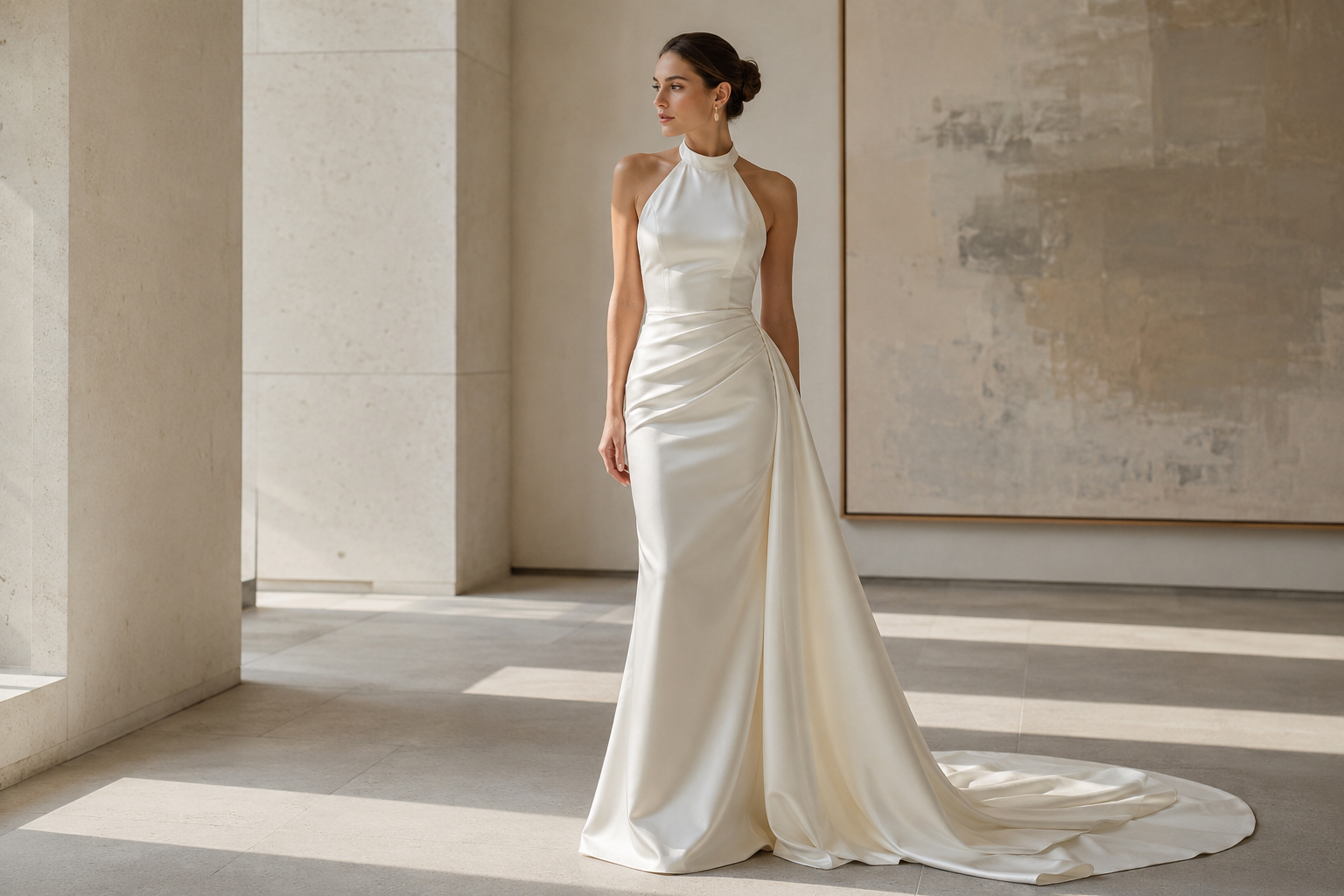
The Basque waist is one of the clearest signatures of the 2026 bridal season. Brides included it among the seven major ideas seen at New York Bridal Fashion Week for Spring 2026, while WWD’s seasonal reporting also highlighted draped Basque waists and dramatic waist placement.[1][2] Rather than ending at the natural waist in a horizontal seam, a Basque bodice extends downward and typically forms a V- or U-shaped point at the center front. A dropped waist also lengthens the bodice, although the skirt may begin in a straighter line or lower around the entire torso. Both constructions create a longer visual transition between bodice and skirt, which is why they can make even an undecorated gown look strongly designed.
The appeal is partly historical. Basque shapes recall corseted court dresses and mid-century couture, but the 2026 versions do not belong to one nostalgic mood. In glossy Mikado with a wide skirt, the look can feel regal and architectural. In matte crepe with a narrow skirt, it can be restrained and contemporary. Beneath lace, it creates romantic definition; beneath gathered satin, it can look almost sculpted. This versatility explains why the silhouette appears across minimalist and maximalist collections rather than being tied to one narrow aesthetic.
Fit is more sensitive than it may appear in photographs. A natural-waist seam has some visual flexibility, but a long bodice establishes exact points where the torso bends and the hips begin. If the bodice is too long, the center point may fold upward when you sit, the side seams may press into the hip crease, or boning may become uncomfortable after several hours. If it is too short, the elongated proportion that made the design appealing can disappear. This is why torso length—not just bust, waist, and hip circumference—deserves attention during the appointment.
When trying the trend, sit fully in a normal chair rather than balancing on the edge. Lean forward as you might during dinner, take a deep breath, and stand again without immediately adjusting the bodice. Watch what happens at the center point and along the side waist. If the salon sample is clipped because it is not your size, ask the stylist to explain which fit issues are caused by the sample and which reflect the dress’s actual structure. Photographs should include the seated position as well as the standard standing view, because a long bodice can look flawless while still and behave very differently in motion.
Before ordering, ask whether the designer offers petite, tall, custom torso, or hollow-to-hem options. Find out whether changing the bodice length affects the waist point, lace placement, boning, or price. If the gown includes a highly structured corset or dense appliqué across the waist seam, substantial alteration may require specialist work. A beautiful dropped waist is not automatically expensive, but rebuilding one can be. The most financially predictable version is a gown whose proportions already relate well to your torso and need refinement rather than reconstruction.
It is also worth separating the silhouette from the claims sometimes made about it. A Basque waist may emphasize contrast between waist and skirt, but you do not need a particular body shape to wear it, and the purpose of the dress is not to “correct” your proportions. Try variations with shallow and deep points, different skirt volumes, and different levels of structure. Choose the version whose geometry you enjoy on your body. That is more useful than searching for a universal rule about what is supposedly flattering.
Modern Corsetry Makes the Structure Part of the Design
Corsetry is closely connected to the return of Basque waists, but it deserves separate attention because “corset wedding dress” can describe several very different garments. In some gowns, visible channels and seams imitate traditional boning while the real support comes from an internal foundation. In others, the boning itself shapes the bodice and can be seen through translucent fabric. Some designs use opaque satin over a fully structured interior, producing a clean exterior with the secure feeling of a corset underneath. Brides identified exposed boning as a major Spring 2026 idea and described the look as architectural, particularly when rigid lines were placed against soft tulle and romantic skirts.[1]
The most important shopping question is therefore not, “Does this gown have a corset?” It is, “What is the corset doing?” A decorative corset may provide visual definition without meaningful support. A functional foundation may stabilize the bust and distribute the dress’s weight through the waist. A lace-up back may offer some fit flexibility, while a fixed zipper and boned bodice may demand more exact sizing. None of these is inherently superior. The right construction depends on the feeling, coverage, support, and adjustability you want.
A properly fitted structured bodice should feel secure, but security should not require shallow breathing or numbness. Stay in the sample long enough for pressure points to become noticeable. Take five slow breaths, raise both arms, turn at the waist, sit, and lean forward. Notice the top edge beneath the arms, the ends of the boning, and the lower edge of the bodice near the hips. A gown can look supportive during a two-minute mirror check and become exhausting over the course of a ceremony and dinner. Comfort is not a lack of commitment to fashion; it is part of the fit.
Visible corsetry also raises practical questions about cups and lining. Designers may offer a lined bodice, filled side panels, a raised neckline, different cup shapes, or several lining colors. Ask to see a physical swatch whenever possible. “Nude” is not a single color, and a mesh that disappears against one skin tone may create a high-contrast panel against another. If a stylist suggests that an ordered lining will look different from the sample, request a designer image or written description of the exact combination rather than relying on imagination.
Alterations can be straightforward when a bodice is close to the correct size, but major changes may affect cups, boning, seams, lace motifs, and the relationship between neckline and waist. Ask whether the gown can be ordered using split sizing or custom measurements, and whether the designer charges for those options. If your bust, waist, and hip measurements fall into different sizes, the least expensive tag price is not always the lowest final cost; paying for a production adjustment may reduce the amount of structural rebuilding later.
Most importantly, choose corsetry because you like its lines, its feeling of support, or its historical and architectural references—not because anyone has told you that your body needs to be controlled before it can wear a wedding dress. The strongest 2026 corsets show their construction with confidence. The person inside the dress deserves the same confidence and considerably more comfort.
Layered and Lingerie-Inspired Lace Make Romance Feel New
Lace is a permanent part of bridal fashion, so saying that it is “back” in 2026 would miss what actually changed. The season’s most interesting gowns use lace as a dimensional material rather than a flat decorative overlay. Brides reported Chantilly lace layered over embroidered tulle, appliqué appearing to float above the surface, and subtle shine placed beneath intricate patterns. Vogue’s Fall 2026 coverage described a wider embrace of lace, while its Barcelona report identified lingerie-inspired versions that were often sheer, lightly lined, and close to the body.[1][3][4]
Those directions produce very different moods. Layered floral lace can make a full gown feel richly romantic without relying on crystals. Large allover motifs can look graphic and modern, especially when the silhouette underneath is simple. Lingerie-inspired lace creates intimacy through delicate edges, visible foundations, and areas of transparency. Lace over a tinted lining can make the pattern clearer and warmer, while ivory-on-ivory construction creates a quieter surface. Rather than deciding whether you are “a lace person,” it is more useful to identify which scale, contrast, density, and level of transparency feels right.
Look at a lace gown from more than one distance. At close range, you may notice beautiful stitching and individual flowers; from the back of a ceremony aisle, those details may merge into one texture. Step at least ten feet from the mirror and ask someone to take an unfiltered photograph. Does the pattern define the silhouette or blur it? Can you still see the waistline and train? Does your face remain the focus? A motif does not need to be large to be successful, but you should understand whether you are choosing a close-up pleasure, a strong wide-shot effect, or both.
Sheer lace should also be tested in several kinds of light. Salon spotlights, a nearby window, direct phone flash, and dim evening light can each reveal a different level of coverage. The useful discussion is not whether a dress is “too revealing” according to someone else’s standard. It is whether the actual gown gives you the coverage you want throughout your venue, ceremony, photographs, and movement. Many dresses can be ordered with bodice lining, lined cups, filled side panels, an opaque skirt, or a removable slip. Ask what the designer offers before assuming that the sample is the only possible version.
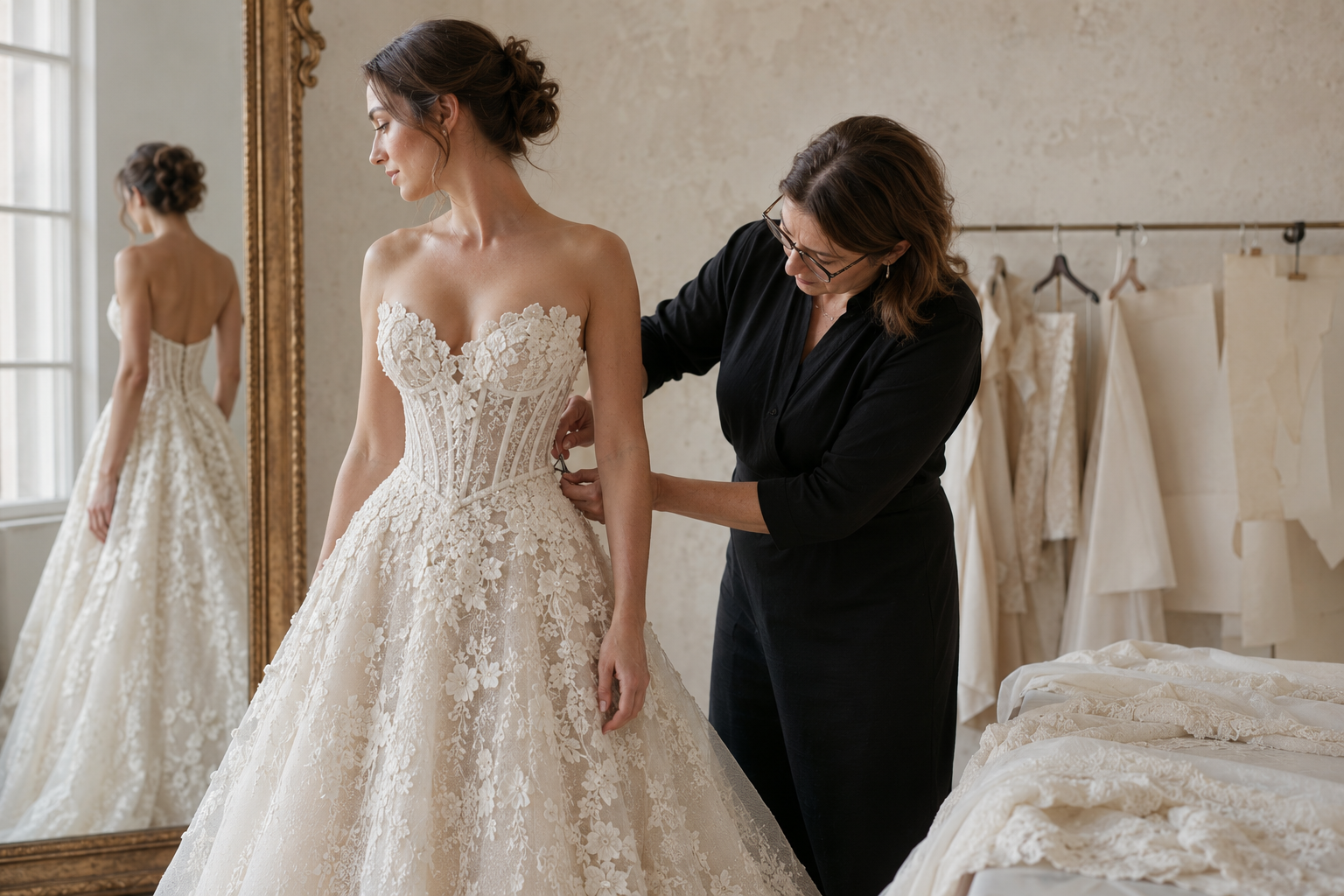
Alteration is where a complex lace gown can differ significantly from a plain fabric dress. A specialist may need to remove appliqué, adjust the seam underneath, and reapply the motifs so that the design appears continuous. A scalloped hem may be lifted and replaced after shortening. Sleeves may require motifs to be repositioned around the arm. These techniques can produce an excellent result, but they require labor and experience. Before ordering, ask which seams are available for alteration, how the hem is normally shortened, and whether extra lace or appliqué can be supplied.
Finally, consider touch as well as appearance. Run your hand carefully along the underarm, neckline, and sleeve edges. Some lace is soft enough for direct contact; some feels rigid or textured after several minutes. If an edge scratches in the salon, it is unlikely to become more pleasant during ten hours of hugging and dancing. Lining, binding, or motif adjustment may solve the issue, but it should enter the alteration plan and budget rather than becoming a wedding-day surprise.
Sculptural Draping Gives Soft Glam Its Quiet Impact
Not every memorable 2026 gown is highly embellished. One of the season’s most wearable directions relies on clean silhouettes shaped by artful folds, curved necklines, gathered hips, and fabric that changes as the wearer moves. Lovely Bride identified sculptural draping as a major 2026 trend, describing designs that feel architectural and effortless at the same time.[5] Brides has also used the term “soft glam” for the broader balance between minimalism and maximalism: an uncomplicated foundation elevated by one or two thoughtful details rather than decoration across every surface.[6]
This approach is useful for anyone who tries plain dresses and finds them underwhelming, then tries ornate dresses and feels visually overwhelmed. Soft glam does not ask you to choose an extreme. A satin column can gain dimension from diagonal folds across the waist. A halter gown can carry one cluster of three-dimensional flowers at the neckline. A strapless ball gown can remain completely unembellished while a curved, sculpted bodice creates the focal point. The result still reads as polished and celebratory, but the design has space around it.
Fabric quality and behavior matter enormously because there is less decoration to disguise construction. Mikado holds crisp folds and creates a controlled, architectural shape. Satin reflects light along every curve and gather, making draping highly visible. Crepe produces a softer and quieter line, although it can reveal the edges of underlayers. Chiffon moves easily and creates fluid folds but depends on lining and internal support. Taffeta brings crisp volume and a recognizable sound. Try to see the dress in natural light and in a phone photograph, because a subtle fold that looks beautiful in person may disappear from a distance, while a shiny fabric may emphasize every tension line.
Draping is often described as universally flattering, but that phrase is too vague to be helpful. Draping directs attention. A diagonal fold may lead the eye across the waist; a gathered hip creates asymmetry and volume; a soft cowl changes the neckline; a wrapped skirt emphasizes movement. The right placement is the one that creates emphasis where you enjoy seeing it. Try several arrangements rather than assuming that one fashionable drape will have the same effect on every body.
Alteration requires care because the design may depend on exact tension. Taking in a side seam can pull a fold into a new position. Shortening a torso can change where a gathered panel meets the hip. Adding cups or structure may alter the way fabric lies across the bust. Ask whether the draping is fixed with internal stitches, whether it can be repositioned, and how the alteration specialist normally accesses the seams beneath it. If the folds continue into the skirt or train, ask how the bustle will affect the shape.
Soft glam also benefits from restraint in styling. Begin with the dress, shoes, and your intended hairstyle before adding jewelry, a veil, gloves, or a cape. If the curved neckline or sculpted hip is the feature you love, allow it to remain visible. Restraint is not the same as playing safe. In a well-cut gown, editing can be the most confident decision in the room.
Halter and High Necklines Create a Stronger Frame
Halter necklines appeared repeatedly in Spring 2026 reporting from both New York and Barcelona, while high Victorian collars and sleek mock necks also gained attention as refined alternatives to open necklines.[1][4][8] These looks are sometimes grouped together because they rise toward the neck, but their visual effects can be very different. A narrow halter may expose the shoulders and most of the back. A lace mock neck can provide coverage while remaining translucent. A clean satin collar may feel architectural; a gathered chiffon neckline can look soft and fluid.
The common advantage is framing. A high neckline directs attention toward the face and can give a simple silhouette a complete identity without a necklace or extensive embellishment. It can also create useful contrast with an open back, cutout, or close-to-body skirt. For a reception dress, a halter leaves the arms visually free and often feels more active than a sleeve, although actual movement depends on the cut of the armholes and the support built into the bodice.
Comfort cannot be judged while standing perfectly still. Turn your head fully in both directions, look up and down, swallow, and sit. Notice whether the neckline presses at the throat or rubs beneath the jaw. If the halter closes at the back of the neck, determine whether that fastening carries the weight of the bodice or whether internal structure supports the dress independently. A narrow strap that feels fine for five minutes can create significant pressure after several hours if it is doing structural work.
Armholes deserve equal attention. Reach forward as if hugging someone, lift your arms, and cross them over your chest. A deeply cut side can reveal more than you expect when you move, while a high armhole can rub. Ask whether the sides can be raised, lined, or reshaped and whether those changes affect the open-back design. If you want built-in cups or additional bust support, discuss that before ordering; the available solution depends on the front coverage, back height, and fabric.
High lace necklines and long sleeves can offer meaningful coverage, but sheer fabric may not satisfy a venue’s specific attire requirements. If your ceremony has religious or cultural guidelines, confirm them directly rather than relying on the general impression that the gown is modest. A removable topper, bolero, or opaque lining may provide a more dependable solution while allowing a different reception look. For warm-weather weddings, remember that dense lace can hold more heat than its transparency suggests.
Style the neckline after seeing the complete proportion. Hold your hair up, then wear it down. Try earrings before a necklace. Add the veil and check the back view. A high neck with a detailed collar may need no jewelry near the face, while a clean halter can support a bold earring. The goal is not to follow a rule about minimal accessories. It is to preserve the framing effect that made the neckline compelling in the first place.
Pearls, Three-Dimensional Flowers, and Shimmer Return With Intention
For couples who want visible romance, 2026 offers much more than a light dusting of sparkle. Vogue’s Fall 2026 New York report highlighted gowns covered in sequins, glitter, rhinestones, pearls, and jeweled appliqué, while Barcelona Bridal Fashion Week identified embroidered flowers, three-dimensional botanical applications, organic textures, and pearls across dresses and accessories.[3][7] The common thread is not simply “more.” The strongest designs use embellishment to establish rhythm, movement, and focus.
A field of small pearls can create a soft glow that becomes visible as the gown moves. Clear crystals and sequins produce sharper flashes under direct light. Large fabric flowers can define a neckline or shoulder, while vines of appliqué can draw the eye from bodice to train. Dense botanical texture feels different from scattered motifs even when both use the same material. Before deciding that you want an embellished dress, identify the type of effect you want: glow, sparkle, depth, movement, or one sculptural focal point.
Venue scale and lighting influence how the detail reads. Tiny beadwork may be exquisite at an intimate restaurant wedding and nearly invisible from the back of a large ballroom. Oversized flowers may look dramatic in a wide ceremony photograph but feel more dominant in close conversation. Candlelight gives pearls and warm crystals a softer presence; phone flash can make reflective elements appear much stronger. Ask to take both close and distant photographs, with and without flash, so you understand which version guests and cameras will see.
Weight is the practical issue most easily overlooked. A fully beaded gown can become tiring even when its silhouette is narrow. Wear the sample for at least fifteen minutes if possible, paying attention to pressure at the straps, neckline, waist, and hips. The internal foundation should distribute the load rather than allowing a few small areas to carry it. If the gown has a long embellished train, ask how the bustle will support that weight and whether the fabric may stretch around the attachment points.
Embellishment also changes alteration and repair. A seam covered in appliqué may require motifs to be removed and replaced. A beaded hem can be expensive to shorten. Pearls or sequins may loosen where the bouquet, arm, chair, jewelry, or another person’s clothing repeatedly rubs. Ask whether replacement beads and appliqué are supplied, how shedding is handled, and whether the designer can produce the gown to a closer length. Request any useful offcuts after alterations; matching material can be valuable for an emergency repair or later preservation.
The easiest way to keep a richly decorated look coherent is to establish hierarchy. If the gown’s entire surface sparkles, begin with quieter jewelry and a simpler veil. If one shoulder carries a large flower, avoid placing another unrelated focal point beside it unless deliberate maximalism is your goal. A highly detailed gown does not need to apologize for being dramatic. It simply needs enough visual order that the person wearing it is still present inside the effect.
How to Choose a 2026 Wedding Dress Trend Without Losing Your Own Style
The fastest way to make wedding dress shopping confusing is to collect hundreds of unrelated images and hope that a clear answer appears in the salon. Every gown looks possible when it has been styled for a runway, photographed under controlled light, and worn for only a few minutes. Your dress has to work through a much longer sequence: traveling to the venue, getting dressed, walking, standing, hugging, sitting, eating, taking photographs, using the restroom, dancing, and possibly moving between indoor and outdoor spaces. A trend becomes useful only when it supports that real sequence.
Begin with feeling rather than a list of garment features. Choose three words that describe how you want to feel when you are dressed. “Romantic, calm, and confident” leads to different choices than “dramatic, sensual, and fashion-forward,” even when both could include lace or corsetry. Avoid words you think a wedding dress is supposed to satisfy. The exercise works when the words sound like you. If “comfortable, playful, and recognizable” matter more than “regal,” those priorities should be visible in the brief you give the stylist.
Next, identify the silhouette and practical need that support those feelings. A useful appointment sentence combines all four elements: feeling, silhouette, detail, and function. You might say, “I want a romantic but relaxed A-line gown with dimensional lace and sleeves I can remove before dancing.” Another person might say, “I want a modern fitted dress with sculptural draping, no heavy beadwork, and enough stretch to sit comfortably.” This provides meaningful direction while leaving room for the consultant to introduce a fabric or shape you have not considered.
Separate leading features from supporting features. A leading feature is what you want someone to remember: the Basque waist, enormous cape, colored fabric, unusual texture, or clean halter line. A supporting feature reinforces it without fighting for equal attention. For example, a large botanical shoulder flower can lead while soft draping supports it. A sculpted hip can lead while the satin surface remains clean. If five features are competing to lead, the dress may feel less expressive rather than more.
Then rank the practical priorities that will filter the options. Consider movement, venue conditions, travel, coverage, weather, production time, accessibility, and complete cost. A long embellished train may still be the right choice for an outdoor wedding, but it should earn its place after you understand the cleaning, bustle, and ground-management plan. A fitted gown may be ideal for a small restaurant, but only if its stride and seated fit let you move between closely placed tables. Practical questions do not diminish the emotional experience; they protect it.
Use a three-part decision test before purchasing. First is the style yes: you recognize yourself and genuinely like the design. Second is the function yes: the gown supports breathing, sitting, movement, ceremony requirements, and venue logistics. Third is the financial yes: the expected complete cost fits the attire amount you chose without depending on an unrealistically low alteration estimate or an assumed future discount. A dress with only one yes is not ready to become a purchase.
The emotional response may be quieter than popular bridal television suggests. Some people cry, some feel immediate excitement, some feel calm, and some want to leave, compare notes, and return. None is more authentic. Pressure to create a dramatic “yes” can make a normal decision feel disappointing or push you toward a gown because the group reacted strongly. A reputable salon should give you clear information and respect your authority, whether your process is intuitive, analytical, or a mixture of both.
Finally, ask whether you would still like the feature if nobody called it a 2026 trend. A detail that connects to your everyday wardrobe, favorite art, cultural references, or long-standing preferences is likely to feel personal after the trend cycle moves on. Every wedding photograph reflects its era, including photographs of dresses marketed as timeless. The goal is not to remove time from the image. It is to make sure the person in the image made a choice that felt true.
Your 2026 Wedding Dress Shopping Timeline
Wedding dress timelines are planning ranges, not universal deadlines. Current guidance commonly recommends beginning the search around nine to twelve months before the wedding, particularly for made-to-order gowns. Jenny Yoo’s current timeline places ordering the ceremony or reception dress in that range, while other bridal specialists make similar recommendations.[9][10] Production time varies by designer, collection, fabric, customization, season, shipping route, and salon. Custom work may need more time; ready-to-wear, sample, vintage, rental, consignment, and off-the-rack options can support a shorter schedule.
12 to 15 Months Before the Wedding: Build the Brief
Use this stage to decide what the outfit needs to do before you decide exactly what it should look like. Set the complete attire budget, identify ceremony guidelines, understand the venue surfaces and weather, and decide whether travel changes the deadline. Research salons by price range, designers, available sample sizes, physical accessibility, appointment format, and alteration relationships. If you need a fully custom gown, extensive adaptation, specialist construction, or a hard-to-find size range, early inquiries provide more options and reduce pressure.
Save inspiration, but review it for repeated ideas. If most images show a long bodice, you may be responding to dropped waists rather than to the different skirts. If the dresses vary but every image has a clean surface and strong neckline, that may be your real preference. Remove images you only admire as fashion objects but would not want to wear. A smaller, more consistent board gives a consultant more usable information than fifty beautiful contradictions.
9 to 12 Months Before: Attend Focused Appointments and Order
At this stage, book appointments with a clear price ceiling and style sentence. Try dresses that relate to your brief, plus one or two informed alternatives. The purpose of trying something different is discovery, not proving that your instincts are wrong. Keep notes after each gown: what you liked, what you kept adjusting, how it moved, and what the complete cost may be. Photographs are useful when the salon permits them, but include video and seated views so you do not compare only front-facing poses.
Before placing an order, review the written details line by line. Confirm designer, style number, standard or custom size, color, lining, length, cups, neckline, sleeves, train, detachable components, production changes, delivery estimate, payment schedule, and store policy. Ask what happens if the delivery date changes and which charges are refundable. Bridal size numbers often differ from everyday clothing, so treat the number as production data rather than personal information. The order should follow the designer’s chart and the salon’s documented process, not a goal size you hope to reach.
6 to 9 Months Before: Complete the Look and Reserve Alterations
Once the gown is ordered, select shoes early enough to establish hem height, but delay unnecessary accessories until you understand the dress’s proportions. A veil that looked perfect in isolation may hide the open back or compete with the cape. Jewelry that seemed subtle may crowd a high neckline. If possible, make accessory decisions with the gown or a reliable sample present rather than building the entire look from separate online images.
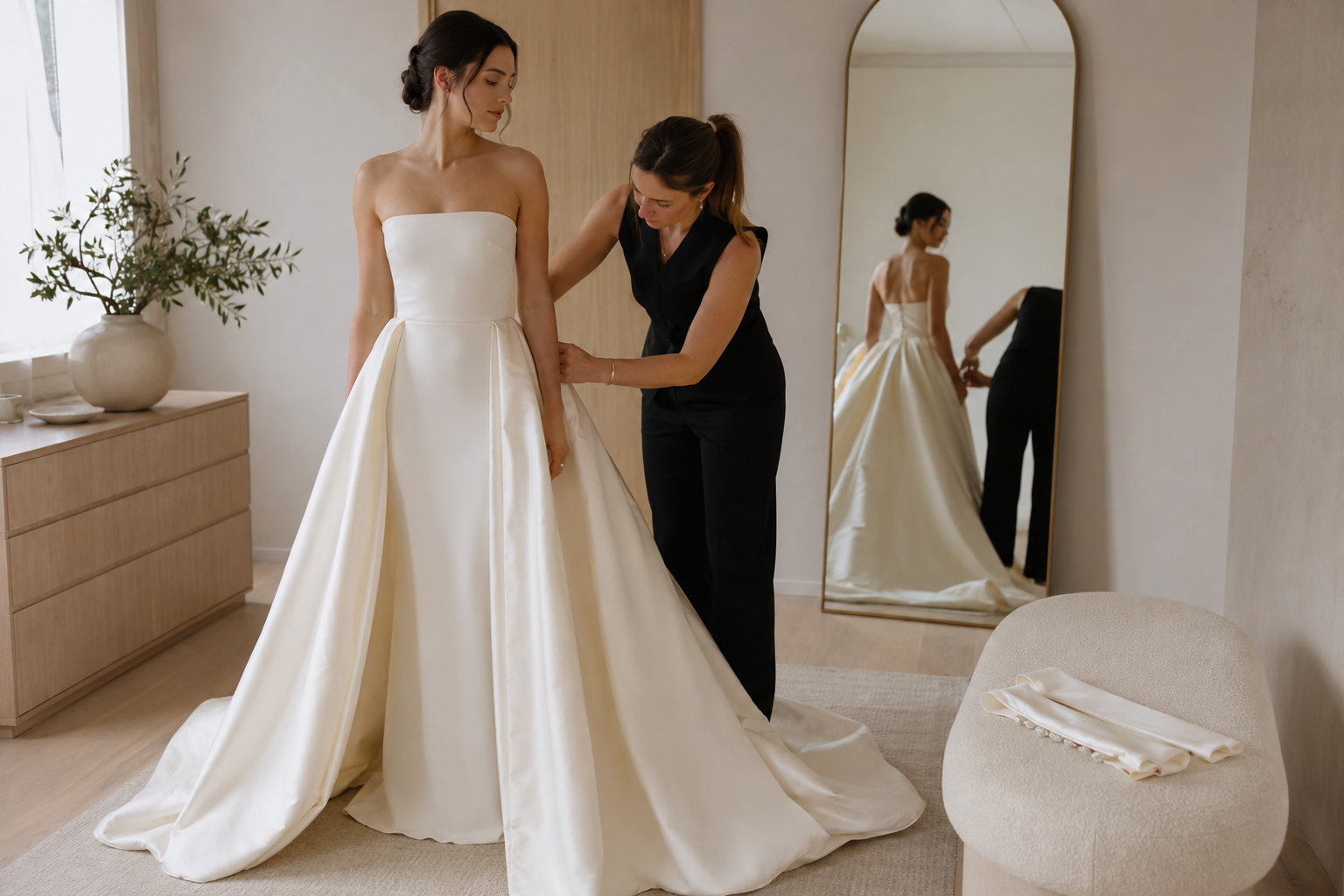
Research and reserve an alterations professional before the active fitting period, especially if the gown contains complex lace, heavy beadwork, corsetry, unusual fabric, adaptive needs, or significant customization. Skilled specialists can fill their calendars months in advance. Share the expected arrival date, wedding date, travel date, fabric, construction, and likely work. A reservation is not the same as beginning final fitting too early; it protects the necessary time on the professional’s schedule.
3 to 4 Months Before: Coordinate the First Fitting
David’s Bridal currently recommends scheduling the first fitting at least three to four months before the wedding, while individual specialists may plan their active sewing and subsequent fittings differently.[11] Follow the timeline of the person performing the work. Bring the actual shoes and intended foundation garments. If you are undecided between undergarments, bring the realistic options and compare them beneath the gown rather than assuming that the most restrictive one will create the best result.
At the first fitting, agree on priorities before requesting optional redesigns. Correct overall fit, hem, support, straps, sleeves, and security come before an added slit, changed neckline, or new embellishment. Ask for an itemized estimate that distinguishes expected work from choices. Confirm how many fittings are included, when additional work changes the price, and whether the bustle is part of the estimate. If you have a detachable overskirt, cape, topper, or sleeve, every piece should be present.
6 to 10 Weeks Before: Test the Complete Look
Wear the gown with shoes, underlayers, veil, cape, sleeves, overskirt, jewelry, and any other component that affects fit. Walk, sit for several minutes, raise your arms, turn, and practice the scale of dancing you expect. If the wedding includes stairs, gravel, grass, sand, a narrow aisle, wheelchair transfers, or other specific movement, explain that context and reproduce what can safely be tested. A fitting is not complete because the dress looks smooth while you stand still.
Choose one helper to learn the bustle and every transformation. Have that person attend a fitting or record a detailed video with the specialist’s permission. The video should show where each loop, hook, ribbon, snap, and button belongs, not only the finished result. Label detachable pieces and plan where removed items will go at the venue. A beautiful overskirt lying on the changing-room floor is not a storage plan.
1 to 2 Weeks Before: Final Approval, Pickup, and Transport
At the final fitting, repeat the movement tests rather than checking only appearance. Count all components before leaving. Confirm steaming instructions, garment-bag position, transportation method, and the person responsible for the dress at the venue. If you are traveling, your true deadline is the departure date, not the wedding date. Build time for packing, transit, unpacking, and any approved steaming after arrival.
Prepare a small repair kit based on the gown’s materials and the specialist’s advice. Matching thread, a needle, spare buttons or beads, safe pins, an appropriate stain cloth, and recommended fashion tape may be useful, but not every product belongs on every fabric. Avoid experimenting with heat, adhesive, stain remover, or cleaning fluid on the wedding day. The safest emergency response is the one already discussed with someone who understands the garment.
The Real Cost of a Trend-Led Wedding Dress
A dress is within budget only when the likely finished look is within budget. The tag price may exclude sales tax, shipping, rush production, custom length, special lining, sleeves, a cape, overskirt, detachable train, bow, veil, undergarments, shoes, alterations, steaming, travel packing, cleaning, and preservation. A gown with a lower starting price can cost more in the end if it needs structural rebuilding, while a more expensive style offered in a better proportion or custom length may require less alteration. Compare complete scenarios rather than isolated tags.
Create three numbers before shopping: the comfortable target, the hard ceiling, and the protected alteration reserve. The comfortable target is where you would prefer the finished attire to land. The hard ceiling is the amount you will not exceed. The alteration reserve remains unspent until a qualified professional evaluates the actual gown on your body. This structure allows you to respond to a dress you love without pretending that uncertain costs do not exist.
Trend details affect cost in different ways. Dense lace or appliqué may have to be removed and replaced around altered seams. Beaded hems and trains require more labor. A corseted bodice may need specialist reconstruction if its length or cup position is wrong. A cape or overskirt adds another garment to fit and steam. Unusual textiles may require a specialist cleaner. None of these makes the trend a poor choice; the cost becomes a problem only when it remains invisible until after the deposit is paid.
Ask the salon which features are included in the quoted gown price and request separate prices for every item shown in the sample or campaign image. Confirm whether production changes are available and whether they reduce or increase later alteration. Ask for a realistic alteration range while understanding that a final quote may not be possible until the gown arrives. If the likely complete cost approaches the hard ceiling before accessories, pause and compare alternatives that preserve the leading feature you love.
For example, if a dramatic ceremony entrance is the priority, compare a gown with an integrated long train, a clean gown plus detachable cape, a fitted gown plus overskirt, and a simpler dress with a strong veil. If color is the priority, compare a made-to-order colored bridal gown with eveningwear or designer ready-to-wear that meets the same quality and fit needs. If a second look is intended only for easier dancing, compare the full outfit with removing sleeves, bustling the train, or choosing a ceremony gown that already moves well.
There is no morally correct amount to spend on a wedding dress. The relevant question is whether the purchase supports the priorities you and your partner chose without creating a financial consequence you will resent. A lower-cost dress is not less meaningful, and a high-cost dress is not automatically irresponsible. Clear totals, honest trade-offs, and an unpressured decision matter more than the number printed on the label.
What to Test During a Bridal Appointment
A useful bridal appointment is not only a search for the most beautiful reflection in the mirror. It is a controlled opportunity to gather evidence about fit, movement, construction, cost, and how the dress relates to your own style. Bring a concise inspiration set, your written price range, shoes with approximately the planned heel height, and any sentimental accessory or ceremony item that must work with the gown. Wear undergarments that let you change comfortably; the salon can explain whether the dresses contain built-in structure and what additional support may be useful.
For each serious contender, spend enough time to move beyond the first reveal. Take full breaths. Raise your arms and hug someone. Sit naturally, lean forward, stand, take normal-length steps, turn, and make a few dance movements. Check the neckline, underarms, waist edge, boning ends, sleeve mobility, train, and any area you keep touching. A repeated urge to pull up, smooth, or reposition the gown is information. Some issues are ordinary sample-fit problems; others are built into the design. Ask the stylist to distinguish between them.
Look from several distances and angles. Use the mirror, a photograph from across the room, an unfiltered close image, a side view, a back view, a seated view, and a short video. If the salon permits, compare natural light with indoor lighting and phone flash. This is especially important for sheer bodices, colored linings, satin, shimmer, and layered lace. You are not searching for a single photograph in which your body appears perfect. You are learning how the garment behaves in the kinds of images and light your wedding will produce.
Ask construction questions while the gown is on you. What supports the bodice? Which seams can be altered? Can the torso or hem be ordered to length? Are cups, lining, sleeves, and color customizable? Which accessories are included? How heavy is the ordered gown compared with the sample? What is the production estimate, and when must the order be placed? What alteration range is realistic for this specific fabric and detail? Write the answers down; after several appointments, verbal estimates can blend together.
Choose companions who can respect your body, budget, identity, and final authority. Their most helpful role is to observe your stated priorities: “You said you wanted to dance easily, and you took longer steps in the previous dress,” or “This is the first gown where you stopped adjusting the neckline.” Comments about becoming smaller, looking more traditional, pleasing other relatives, or spending beyond the agreed ceiling do not improve the decision. It is entirely reasonable to shop alone, with one trusted person, or to return for a second appointment before deciding.
Before paying, read the order and policy rather than relying on the excitement of the moment. Verify every specification, the payment schedule, delivery estimate, change policy, and final-sale terms. Ask for time to think if you need it. A gown can still be the right gown tomorrow. The objective is not to produce the fastest yes; it is to leave with a decision you understand.
Frequently Asked Questions About 2026 Wedding Dress Trends
What is the biggest wedding dress trend for 2026?
No single feature defines every 2026 collection, but Basque and dropped waists, visible corsetry, layered lace, halter necklines, sculptural draping, capes, bows, soft color, dimensional florals, pearls, and adaptable components appeared repeatedly in major New York and Barcelona reporting.[1][3][4] The broader shift is toward personal expression: highly romantic and very clean gowns both feel current when their construction and styling are intentional.
Are Basque-waist wedding dresses still in style?
Yes. Basque and dropped waists are among the most recognizable silhouettes in Spring 2026 bridal coverage.[1][2] They appear in corseted ball gowns, clean satin dresses, lace designs, and fitted silhouettes. Fit through the torso is especially important, so ask about bodice length and sit in the gown before ordering.
Are simple wedding dresses going out of style?
No. Clean gowns remain central to bridal fashion, but many 2026 versions gain interest through one strong feature: sculptural draping, a curved neckline, a dropped waist, luminous fabric, a cape, or a dimensional flower. Soft glam describes this balance between a restrained silhouette and carefully chosen detail.[5][6]
Can a wedding dress be trendy and still feel timeless?
“Timeless” is subjective, and every photograph reflects the era in which it was made. A more practical goal is personal continuity. If the silhouette, texture, or detail relates to clothes and design you have loved for years, the gown is more likely to feel authentic later. You can also use a trend in a removable piece—a cape, bow, sleeve, overskirt, or veil—while keeping the base dress quieter.
Do I need a second wedding dress?
No. A second look can solve a real comfort or style need, but it also adds cost, alterations, storage, and time away from the celebration. Before buying one, test whether a bustle, detachable train, removable sleeves, overskirt, cape, shoe change, or accessory change creates the function and mood you want. If you genuinely love two outfits and the complete cost fits the plan, changing can still be a joyful choice.
How early should I shop for a 2026 wedding dress?
Many current bridal timelines place the search and order around nine to twelve months before the wedding, especially for made-to-order dresses.[9][10] Custom design, complex changes, peak-season production, or destination travel may require more time. Ready-to-wear, sample, vintage, consignment, rental, and off-the-rack garments can work with shorter schedules. Confirm the exact timeline with the selected vendor rather than relying on a general average.
Can these trends work for plus-size, petite, tall, disabled, pregnant, nonbinary, or older nearlyweds?
Yes. Trends are design ideas, not body categories, although access to samples, construction options, and skilled alterations varies. Call before booking and ask for exact sample measurements, not only a claim of inclusivity. Discuss custom length, torso options, adaptive closures, seated fit, sleeve mobility, step-free access, private changing space, appointment duration, and support-person policies according to your needs. You deserve enough information and appropriate samples to make a real decision rather than being asked to imagine every important element.
What if the salon sample does not fit?
Clips, panels, and temporary modesty fabric can help demonstrate some elements, but they cannot perfectly simulate the ordered size. Ask which issues come from the sample and which are features of the dress. Request designer images showing the gown on a body closer to your size, ask about other stores or trunk shows with a more useful sample, and confirm the actual size-selection and alteration process before ordering. Bridal sizing often differs from streetwear sizing; the label is not a judgment of your body.[12]
How can I tell whether a sheer bodice will provide enough coverage?
Test it near a window, under indoor light, and with phone flash. Move your arms and bend forward. Ask about lined cups, a fully lined bodice, filled side panels, different mesh colors, added appliqué, or a removable slip. If the ceremony has attire requirements, confirm them with the venue or officiant. Coverage should be evaluated in the exact lighting and context of your wedding, not through a single salon photograph.
Which 2026 trend is best for a budget-conscious couple?
No trend is automatically cheapest because fabric, designer, construction, customization, and alterations have more influence than the trend label. A clean gown with one strong detail may control accessory spending, while a transformable gown may replace a separate reception outfit. However, detachable pieces and complex draping can also add cost. Compare complete finished scenarios and protect an alteration reserve before deciding.
The Best 2026 Wedding Dress Trend Is the One That Solves Your Style Problem
The most useful way to approach 2026 wedding dress trends is not to ask which one you are supposed to wear. Ask what you want the outfit to communicate and what you need it to do. A Basque waist can give a clean gown the sense of romance you were missing. Layered lace can provide richness without glitter. A cape can create a memorable ceremony entrance and disappear before dinner. A halter neckline can make a simple column feel complete. Soft color can express your identity more clearly than traditional ivory. A well-designed overskirt can give you two functional silhouettes without asking you to leave the celebration for a full change.
You are also free to decide that a trend belongs on the inspiration board rather than in the final outfit. Admiring a sculpted hip does not obligate you to navigate it through a narrow restaurant. Loving a sheer corset in a photograph does not require you to spend the wedding checking its coverage. Wanting a dramatic train does not make you unreasonable, and choosing an easy, unembellished dress does not mean you cared less. Every design choice contains a trade-off; calm planning means seeing that trade-off before you pay for it.
When style, function, and complete cost align, the dress no longer needs to win an abstract contest for “most timeless,” “most flattering,” or “most bridal.” It supports the person wearing it and the promises being made. That is the kind of wedding style worth loving in 2026—and long after the trend reports have moved on.
