

You open the save-the-date. There’s a beach on it. Or a vineyard. Or a cobblestone street in some Italian hill town you can’t quite pronounce. Your first reaction is genuine happiness for the couple. Your second reaction, thirty seconds later, is a quiet stomach-drop. You’ve started doing math you didn’t sign up for. A flight. Several nights somewhere that isn’t cheap by design. A gift. Maybe a bachelorette weekend before any of that even happens. Destination wedding guest costs rarely show up as one clean number. That’s exactly why they’re so easy to underestimate. It’s also why they’re so awkward to ask about out loud.
The hard part isn’t just “can I afford this.” You’re being asked to commit real money before you know the total. And you’re doing it in a social context where too many questions feel rude. Yet the couple almost certainly expects some. Nearly a third of Americans have skipped a wedding this year over cost, according to a nationwide survey of more than a thousand adults. Well over half say weddings have become unaffordable for the people invited to them. That’s not a fringe reaction. That’s the median guest, quietly running the same numbers you’re running right now.
Search “destination wedding guest costs” and you’ll find plenty of general advice. You’ll find very few real numbers broken out by category, though. That gap is the actual problem. A destination wedding budget for guests isn’t one figure. It’s six or seven smaller ones. Each has its own range. Each is easy to miss on its own, and easy to underestimate as a group. A flight quote in isolation looks manageable. A hotel rate in isolation looks manageable, too. Stack them with a gift, extra meals, and a day of PTO, though, and the real cost of attending a destination wedding often runs double what guests first assume.
Get this wrong one way, and you drain a vacation fund. Or you carry a credit card balance to attend a three-day event for people you see twice a year. Get it wrong the other way, and you decline a wedding you genuinely wanted to attend, simply because you guessed the price wrong. Both mistakes trace back to one root problem. Nobody handed you an itemized number before the RSVP was due. That’s what this guide fixes. We’ll walk through real destination wedding guest costs: flights, lodging, meals, gifts, time off work, and the wedding-party extras nobody mentions on the invitation. Then we’ll cover a framework for deciding what you can actually afford, and how to say no without any guilt attached.
Why Destination Wedding Guest Costs Catch Invitees Off Guard
Most people budget a wedding like a birthday dinner. Pick a gift amount, maybe buy a new outfit, done. A destination wedding breaks that model completely. The event itself is only one line item in a much longer trip. Understanding destination wedding guest costs means thinking like a trip planner first. The wedding guest part comes second. The ceremony is a few hours inside a four- or five-day commitment. You’re not attending a wedding that happens to be somewhere nice. You’re taking a vacation built around someone else’s ceremony, on someone else’s timeline, at a price you didn’t choose. That distinction matters more than it sounds like it should. It’s the single biggest reason guests get blindsided.
The Real Math Behind an Invitation
When a couple mails a destination wedding invitation, they’ve usually already negotiated group rates. They’ve picked a resort. They’ve locked in a date that suits their own budget. You’re starting from zero. No flight booked. No hotel room held. No idea yet whether the “all-inclusive” resort actually includes the welcome dinner. The couple spent months planning around their own numbers. You get a few weeks to reverse-engineer yours. Often that’s from a website that says more about the ceremony arch than what a room costs per night.
A few industry shifts make this harder than it used to be, too. Destination wedding guest lists have gotten smaller on average, often landing around 40 to 80 people, as couples fund more of their own weddings and trim the list accordingly. Planning timelines have also compressed, with many couples now booking a venue and sending save-the-dates less than eighteen months out, down from closer to two years a decade ago. And multi-day formats have become the norm rather than the exception. Nearly every couple plans some kind of welcome event now, which means the modern destination wedding genuinely is a multi-day trip, not a single afternoon with a flight attached.
Sticker Price vs. Total Trip Cost
The invitation itself costs nothing. That’s the trap. A guest who only budgets for “the wedding” will badly undercount the real cost of the weekend. A realistic destination wedding guest cost includes airfare and ground transportation. It includes three to five nights of lodging. It includes meals outside the included events, a gift, and appropriate attire. It often includes a welcome party or farewell brunch, too. None of these are technically mandatory. Most of them are socially mandatory. Add them up one at a time, and the number stops being abstract fast.
Picture a fairly ordinary invitation: four nights in Cancún. A round-trip flight runs roughly $400 to $600 from most U.S. cities. Four nights at a mid-range all-inclusive resort lands between $600 and $1,100. That range depends on the season, and on whether you book through the block or on your own. Add a $100 gift. Add $80 in airport transfers. Add a new outfit or two. The honest total sits closer to $1,300 to $1,900. That’s nowhere near the price of “a wedding.” It’s much closer to the price of a real vacation you didn’t fully choose the timing of.
Why the “Just Fly In for the Weekend” Myth Falls Apart
Plenty of guests assume they can cut costs by flying in Friday and leaving Sunday. They treat the trip like a long weekend. In practice, this rarely saves as much as people expect. Destination weddings increasingly run as three-to-five-day celebrations. Nearly all couples now plan at least one welcome event for arriving guests. A quick-in-quick-out trip means missing part of what you paid to travel for. You’ll still pay nearly the same airfare as someone who stayed the full stretch. Short trips also tend to land on the most expensive flight days. That’s exactly when weekend-adjacent fares spike.
Who Actually Gets Hit Hardest
Not every guest experiences destination wedding guest costs the same way. Your position relative to the couple matters a lot here. Wedding party, close family, casual friend, plus-one — each role changes the expected spend. It also changes the social pressure around it. Understanding where you fall on that spectrum helps you set a realistic number. Otherwise you’ll compare yourself to someone whose situation looks nothing like yours.
Wedding Party Members and Close Friends
If you’re a bridesmaid, groomsman, or otherwise in the wedding party, your costs stack on top of everyone else’s. There’s attire. There’s often a pre-wedding event or two. There’s frequently a bachelorette or bachelor trip, a separate expense entirely. Sometimes there’s a contribution toward décor or favors as well. We’ll break down real averages for this group later. The short version: wedding party members regularly spend two to three times what a standard guest spends, once travel gets layered on.
Guests Attending Multiple Weddings in One Year
Say this is your third invitation of the year. Two of them are destination weddings. The math compounds fast. A single $1,500 trip is manageable for most households. Three of them in one calendar year, on top of regular life expenses, is a genuinely different financial decision. It’s completely reasonable to decline one or two while attending the one that matters most. That’s not a betrayal of anyone involved.
A practical move here is ranking invitations the moment they arrive. Don’t decide case by case as each one shows up. List every wedding you expect this year. Note whether it’s local or a destination event. Put a rough dollar figure next to each one. Seeing $1,400, $900, and $1,700 stacked in a single column, against one year’s discretionary budget, makes the decision far less emotional. It beats weighing each invitation alone, months apart.
What Does This Actually Cost? A Real Destination Wedding Guest Budget Breakdown
Here’s the number everyone actually wants: what does a destination wedding guest cost, start to finish? According to The Knot’s Guest Study, the average cost of attending any wedding sits around $610. That figure blends in plenty of local, no-travel weddings, which pulls the average down. A separate nationwide survey of over a thousand American adults found a more telling split. Guests spend roughly $360 attending a local wedding. They spend $901 attending an out-of-town wedding. Wedding party members spend $1,131. Destination weddings specifically tend to land even higher than that general out-of-town figure. “Out of town” can mean a three-hour drive. “Destination” almost always means a flight.
Realistically, budget $900 to $1,800 per person for a domestic destination wedding as a standard, solo-traveling guest. For international destination weddings — Mexico, the Caribbean, Italy, Greece — that range climbs to roughly $1,500 to $3,000 or more. Expect the higher end at a premium resort or a four-to-five-day event. Couples attending together generally spend less per person than solo travelers. Lodging is the single biggest shared cost.
Flights and Ground Transportation
Airfare is usually the first cost a guest checks, and for good reason. It’s often the largest single line item. As of early 2026, the average domestic U.S. plane ticket runs about $428. The average international economy ticket runs closer to $1,217. Those are averages across all routes and booking windows. Your actual fare depends on the destination, the season, and how far ahead you book relative to other guests.
Domestic Destination Weddings (Within the U.S.)
Picture a domestic destination wedding: a vineyard in Napa, a resort in the Smokies, a beach house in the Outer Banks. That usually means a flight in the $250 to $600 range for most guests. Add a rental car or rideshare budget of $100 to $300. The exact amount depends on how remote the venue sits from the nearest airport. Guests flying direct from a hub city pay noticeably less. Guests connecting through two airports pay more, which is worth weighing when you’re choosing travel dates.
International Destination Weddings
International destinations push flight costs meaningfully higher. Mexico and Caribbean travel tends to land guests between $500 and $1,000 for travel alone, according to recent cost analyses. Europe runs higher still. Italy’s Tuscany and Lake Como region, the Greek islands, and southern Spain have all seen rising interest for 2026 and 2027 weddings. These destinations also tend to draw longer stays. Guests often build in a few extra vacation days around the wedding itself, since the flight alone makes a short trip feel wasteful. Expect $800 to $1,500 round-trip from the U.S., depending on season and booking window. Airport transfers add more. A passport renewal, if yours has lapsed, adds more still. Sometimes a small entry fee applies too.
Lodging, Meals, and Incidentals
Lodging is where destination wedding guest costs either stay reasonable or spiral. It largely depends on how you book: through the couple’s room block, through your own hotel nearby, or split as an Airbnb with other guests. Here’s a useful reference point. Couples estimating lodging for thirty guests often see total group accommodation costs land between $2,100 and $4,000. That works out to roughly $70 to $130 per room per night, depending on the property and season. Compare that number against whatever rate the couple’s block is actually offering.
Hotel Room Block Costs vs. Booking Independently
Room blocks typically offer a 5% to 20% discount off standard rates, averaging around 15% in practice. That’s real savings, but it’s not automatic. Some “group rates” barely beat what you’d find booking directly through a hotel site, especially with a promotional rate. Always check the public rate before assuming the block rate is the better deal. The next section covers exactly how to vet this.
Multi-Day Events Mean Multi-Day Meals
All-inclusive resorts simplify meal budgeting considerably. Food and drink get bundled into the room rate. Non-all-inclusive destinations are a different story. A welcome dinner, a few meals not covered by the wedding, and daily coffee or snacks can add $40 to $100 per day per person. That adds up fast across a four- or five-day stay. Ask early whether the venue is truly all-inclusive or just “resort-style.” Those two terms get used almost interchangeably in wedding marketing. They mean very different things for your wallet.
What’s Typically Included vs. What Costs Extra
Before you build a budget around assumptions, separate what the couple actually hosts from what you’ll cover yourself. This is where most destination wedding guest cost surprises come from. It usually takes one email to the couple to clear up entirely.
What the Couple Usually Covers
- The ceremony and reception itself, including the reception meal
- Often, though not always, a welcome party or rehearsal dinner
- Sometimes a group excursion or farewell brunch, though this varies a lot by couple and budget
- A welcome bag or small gift left in your room, at many (not all) destination weddings
What Guests Almost Always Pay For Themselves
- Airfare and any airport transfers not explicitly arranged by the couple
- The hotel room itself, whether booked through the block or independently
- Meals and drinks outside of the specific wedding events listed above
- Resort fees, tourism taxes, and incidentals charged directly to the room
- Attire, a gift, and any spa, excursion, or activity booked on your own
Realistic Red Flags Worth Noticing (Calmly)
Most destination wedding cost surprises come from unclear communication, not bad intentions. A couple planning a wedding from afar is juggling a lot. A confusing wedding website usually just reflects that stress. Still, a couple of patterns are worth a gentle follow-up question.
Vague or Missing Cost Information
The wedding website lists a resort name, but no price range, no room block link, no mention of what’s included. In that case, ask directly. A quick message works fine: “trying to plan our travel budget, any info on the room block rate or what’s covered?” That’s completely normal. Most couples genuinely welcome it.
Pressure to Book a Specific, Pricier Option
Occasionally a couple, or more often a well-meaning wedding planner working on commission, pushes guests toward the priciest room category. Sometimes it’s a bundled excursion package instead. You’re never obligated to book anything beyond the minimum required to attend. A couple worth traveling for won’t make you feel bad for picking the standard room over the swim-up suite.
Sample Budgets for Two Common Scenarios
Real numbers make this easier to plan around than ranges alone. Here are two itemized examples built from the pricing above. One is a Caribbean trip. One is a longer European trip. Together they show how the categories stack up in practice.
Sample Budget: A Four-Night Mexico or Caribbean Beach Wedding
- Round-trip flight: $450–$700
- Airport transfer (shared): $30–$50
- Lodging, 4 nights at a mid-range all-inclusive: $700–$1,100
- Meals/incidentals outside the all-inclusive rate: $100–$200
- Gift: $75–$150
- Attire: $100–$250
- Realistic total: roughly $1,455–$2,450 per person
Sample Budget: A Five-Night Italy or Greek Islands Wedding
- Round-trip flight: $800–$1,400
- Ground transportation/trains/transfers: $100–$250
- Lodging, 5 nights: $900–$1,750
- Meals outside included events: $250–$450
- Gift: $100–$200
- Attire: $150–$350
- Realistic total: roughly $2,300–$4,400 per person
How Hotel Room Blocks Actually Work (And What Couples Don’t Always Explain)

Room blocks are the part of destination wedding logistics that guests understand the least. That’s mostly because couples themselves are often learning the terminology in real time. They’re negotiating with a hotel or resort for the first time in their lives. Knowing how blocks actually work helps you ask better questions. It also helps you avoid overpaying for a room that’s supposed to be the discounted option.
Group Rates, Comp Rooms, and Who Pays for What
A hotel or resort group block is a bulk reservation the couple negotiates ahead of time. It usually requires a minimum of around ten rooms to qualify for group pricing at all. In exchange for guaranteeing that many room-nights, the couple typically receives a modest group discount. They also get perks, like one complimentary room for every ten booked. A complimentary suite upgrade sometimes kicks in around the twenty-room mark. None of that comp inventory comes out of your pocket. It does explain, though, why couples care so much about guests booking through the block.
The Typical Discount and Why It’s Smaller Than You’d Think
A 10% to 15% discount sounds meaningful. Then you compare it against a flash sale, or a flexible-date search on a general booking site. Those can sometimes beat the group rate outright, especially at resorts running their own promotions. This isn’t the couple trying to mislead anyone. Hotel group contracts are genuinely complex. The “discount” is often calculated against a rack rate that few travelers actually pay. It just means the block rate deserves a quick price-check before you book. It doesn’t deserve blind trust.
Courtesy Blocks vs. Contracted Blocks
Some couples start with a “courtesy block.” That’s a soft hold with no financial obligation on their end. Later they convert it to a formal contracted block, once RSVPs firm up. Maybe you’re booking early and the couple mentions the block isn’t finalized yet. That’s normal, not a red flag. It usually just means they’re waiting to see how many guests commit, before locking in a contract with penalties on their side.
Questions Worth Asking Before You Book
You’re allowed to ask logistics questions. Couples generally want you to. A guest who books confidently and correctly is one less thing for them to manage during an already complicated planning season.
Is This Rate Actually Better Than Booking Direct?
Before committing to the block, open the hotel’s own website in a second tab. Compare the nightly rate, including resort fees and taxes, on both sides. If the block rate isn’t clearly cheaper, ask the couple a direct question. Does booking outside the block cause any problem for their contract? Sometimes it doesn’t matter at all. Sometimes the couple needs a minimum headcount in the block to avoid a penalty, worth knowing before you book elsewhere to save $15 a night.
What Happens If You Need to Cancel?
Group block cancellation policies vary widely. They’re often stricter than a standard hotel reservation. That’s because the couple’s own contract has real financial stakes attached. Hotels commonly require the group to fill 80% to 90% of the blocked rooms, or the couple faces a penalty. Couples who negotiate well sometimes push that threshold down to 70%. Check your booking confirmation directly for the cancellation window. Don’t assume it matches the flexible policy you’re used to from a solo hotel booking.
A Real Example: A 25-Room Block in Riviera Maya
Here’s how the numbers typically play out. A couple books a 25-room block for a wedding in Riviera Maya, Mexico. At that volume, the resort offers roughly a 12% discount off the standard rate. It also comps two rooms, one for every ten to twelve booked. The couple usually keeps those for themselves, or gives them to immediate family. The contract requires the block to reach 80% occupancy by the cutoff date, typically 60 days before the wedding. Miss that, and the couple pays a penalty on the unfilled rooms. That’s exactly why couples follow up persistently about booking through the block by a certain date. It isn’t nagging. It’s a real contractual deadline on their end.
What This Means for Your Own Booking Decision
Say you’re planning to book outside the block, to save $20 a night. Ask first whether the couple is close to their occupancy threshold. A guest who books independently, when the block is already struggling to fill, can genuinely cost the couple money in penalties. Most couples are happy to share that information honestly, if you simply ask.
Spotting a Fair Contract From a Risky One
You won’t see the couple’s actual hotel contract, and you don’t need to. But a few signs suggest the couple negotiated well, which indirectly benefits you as a guest. A reasonable cutoff date, usually 45 to 60 days out, gives guests real time to book. A cumulative attrition calculation, rather than a per-night one, gives the couple flexibility if some nights fill better than others. If the couple mentions either of these terms, they’ve done their homework, and the room block you’re booking into is probably a fair one.
Wedding Gifts When You’re Already Paying for a Plane Ticket

The old, unofficial “rule” that a wedding gift should cover the cost of your plate was never an actual etiquette standard. It’s internet folklore that somehow achieved the cultural weight of law. It becomes especially unhelpful at a destination wedding, where you’ve already spent hundreds or thousands of dollars just showing up. The honest, current etiquette consensus is more forgiving than most guests assume.
What Guests Are Actually Giving in 2026
Attitudes toward destination wedding gifting have shifted noticeably in recent years. The data backs up what most etiquette writers have been saying for a while. Attending is itself a meaningful gesture. It’s increasingly acceptable to scale the gift down, or skip it, when travel costs are already substantial.
Cash Gifts and Registry Contributions
Cash and registry contributions remain the most common gifts for destination weddings. Couples hosting a destination event often prefer contributions toward the honeymoon, or a group experience, over physical items they’d have to ship home. A modest cash gift — $50 to $150 for a standard guest who traveled — is widely considered appropriate. Plenty of couples explicitly say so. Sometimes it’s a registry note. Sometimes it’s just the practical reality of the situation, understood without a word said.
Maybe you’re unsure how to phrase a card alongside a smaller-than-usual gift. Simplicity works better than over-explaining. Try something like: “We’re so thrilled we got to be there — wishing you both a lifetime of happiness.” Pair that with a card and a gift card or cash contribution. It reads as warm and complete on its own. You don’t need to mention travel costs in the card. The couple already knows what it took for you to be in the room.
When It’s Genuinely Okay to Scale Back
A recent cost analysis found that 27% of guests planned to spend less on gifts. The reason: the travel expense of attending a destination wedding. Separately, 59% of people surveyed said it’s acceptable to attend a wedding without giving a gift at all. Younger guests feel this even more strongly. 72% of Gen Z respondents said they’re comfortable skipping a gift, compared to 44% of baby boomers. None of this means gifts don’t matter, though. It means the couple almost certainly understands what flying to their wedding cost you. A card with a heartfelt note and a modest contribution is a completely legitimate response.
Etiquette Nuances Specific to Destination Weddings
A few gifting and courtesy questions come up specifically in the destination context. They rarely apply to a local wedding. They’re worth settling before you travel, rather than figuring out in the resort lobby.
Welcome Bags, Favors, and the Gifting Confusion
Many destination weddings include a welcome bag waiting in your hotel room. Sunscreen, snacks, a schedule of events, maybe a small local treat. This is a gift from the couple to you. It is not an obligation on your part to reciprocate beyond the gift you’re already planning. Treat it as a lovely gesture and a helpful itinerary, nothing more.
Plus-Ones and Whether They Need to Gift Separately
If you’re bringing a plus-one, one gift per invited household is standard. It isn’t one gift per attending adult. A plus-one who isn’t independently close to the couple isn’t expected to contribute a separate gift on top of yours. Many couples appreciate the gesture anyway, if a plus-one wants to chip in toward a shared card.
Honeymoon Funds and Group Experience Registries
Destination weddings have pushed honeymoon funds and group-experience registries from novelty to near-default. Think a scuba excursion, a private dinner, a spa day. These work especially well for guests who’ve already spent heavily on travel. Contributing $25 or $50 toward a shared line item feels far less daunting than buying a standalone physical gift. If the couple set one up, they’d genuinely rather receive that than a third candle set. Use it exactly as intended.
Wedding Party and Close Family: Where the Costs Multiply

Being asked to stand up at a destination wedding is an honor. It also comes with a genuinely different budget than attending as a guest. It’s worth understanding the real numbers before you say yes. This isn’t about talking you out of it. Accurate expectations prevent the slow-building resentment that sometimes creeps into wedding party experiences, when costs keep surfacing one at a time.
Being a Bridesmaid or Groomsman at a Destination Wedding
Even for a wedding down the street, the average total cost of being a bridesmaid runs $1,650 or more. The average for a groomsman sits around $1,600. That’s once you count attire, alterations, hair and makeup or grooming, pre-wedding events, and a gift. Now layer on destination travel and lodging, typically another $500 to $1,500, depending on location. A realistic total for wedding party members at a destination wedding often lands between $2,500 and $4,000.
A Worked Example: A Bridesmaid at a Destination Wedding
- Bridesmaid dress plus alterations: $200–$350
- Shoes and accessories: $80–$150
- Hair and makeup on the wedding day: $150–$300
- Bachelorette trip (shared with other bridesmaids): $400–$900
- Flight and lodging for the wedding itself: $700–$1,400
- Gift: $75–$150
- Realistic total: roughly $1,605–$3,250
Attire, Travel, and Pre-Wedding Events
Bridesmaid dresses and alterations are usually non-negotiable. Same with groomsmen tuxedo rentals or purchases, and required accessories. The couple sets these costs, so you’re budgeting around a number you don’t fully control. Add a shower, an engagement party, and the wedding weekend itself. Wedding party members are frequently making three or four separate trips or purchases before the ceremony even happens.
Bachelorette and Bachelor Party Add-Ons
The bachelorette or bachelor party is often its own trip now, separate from the wedding itself. That’s an additional travel budget stacked on top of everything else. It’s completely reasonable to have an honest conversation with the group about a spending ceiling. Bring it up before that trip gets planned. That’s better than discovering the total after flights and an Airbnb are already booked.
Parents, Grandparents, and Guests with Mobility or Health Needs
Close family members occupy a unique position. They’re deeply invested in being there. They’re not always financially equipped to absorb destination-level costs, though, especially for international travel. A guest with mobility limitations may also need accessible accommodations, which adds its own cost layer.
When Couples Should (and Don’t Have To) Help Cover Costs
There’s no universal rule requiring couples to subsidize travel for parents or grandparents. Still, many couples choose to cover a portion of costs for immediate family. They recognize the gap between “wants to attend” and “can afford to attend.” If you’re in this position, have a direct, warm conversation with the couple. Skip the guilt-trip. Just talk logistics honestly. That works far better than silently declining, or silently going into debt.
Accessibility Costs That Are Easy to Overlook
Accessible hotel rooms cost real money to arrange properly. So does ground transportation that accommodates mobility equipment. Travel insurance covering pre-existing conditions adds more still. A younger, fully mobile guest wouldn’t encounter any of this cost at all. If it applies to you, start researching the venue’s accessibility specifics early. Resort marketing photos rarely show curb cuts, elevator access, or bathroom layouts. A quick email to the venue or a travel agent can save a genuinely stressful surprise on arrival day.
Taking Time Off Work and Other Hidden Logistical Costs

The dollar amount on your credit card statement isn’t the only cost of attending a destination wedding. Time off work, travel documents, and insurance all carry real weight. They just don’t show up as one line item the way a flight or hotel room does.
How Much PTO a Destination Wedding Really Requires
Most destination weddings run three to five days, once you count arrival, wedding events, and departure. That timeline rarely lines up with a standard Friday-to-Sunday weekend. Some guests try to squeeze the whole trip into two vacation days. They often end up exhausted, jet-lagged through the actual ceremony, or stuck on a red-eye flight the morning after the reception.
The Three-Day-Weekend Trap
Booking a destination wedding around a long holiday weekend feels efficient on paper. It appears to save a vacation day. In practice, those dates carry the highest airfare of the year. They also bring the most competition for hotel rooms. That can erase any time-off savings through higher flight and lodging costs. Maybe the couple picked a holiday weekend to help guests save PTO. That’s a thoughtful choice. Just budget for the fact that everyone else traveling that weekend drove the prices up too.
Multi-Wedding Years and Burnout
Say you’re attending more than one destination wedding in the same year. The PTO math compounds just as fast as the financial math. Six days of vacation spent on other people’s weddings is six days you don’t have for your own rest. Or your family. Or a trip of your own choosing. That’s a genuinely reasonable factor to weigh when deciding which invitations to accept. Total destination wedding guest costs aren’t only financial. Time off is a real, limited resource too. Treating it that way on a spreadsheet tends to produce better decisions than weighing each invitation by guilt alone.
Passports, Visas, Vaccinations, and Travel Insurance
International destination weddings add a documentation layer that domestic ones simply don’t have. Check your own paperwork the moment you RSVP yes. Don’t wait for the week before departure.
Passport Timelines and Rush Fees
A standard U.S. passport renewal typically takes several weeks through routine processing. It takes longer during peak travel seasons. Expedited processing carries an additional government fee on top of the standard cost. If your passport is expired, close to expiring, or you’ve never gotten one, start that process the day you RSVP. Don’t wait until after you’ve already booked a nonrefundable flight. Most countries also require your passport to be valid at least six months beyond your travel dates. That rule catches even guests with a technically unexpired passport off guard.
Entry requirements are also shifting for some popular destination wedding countries. Several European destinations, including Italy, Greece, and Spain, are rolling out a new electronic travel authorization system for U.S. visitors. The implementation timeline has shifted more than once. It isn’t a visa in the traditional sense, and the fee is small. Still, check current entry requirements for your specific destination two to three months before departure. Don’t assume the rules haven’t changed since your last trip.
A Quick Documents Checklist
- Passport valid at least six months past your return date
- Any required travel authorization or entry form for your destination country, checked no earlier than a few months out
- A digital and physical copy of your itinerary, hotel confirmation, and travel insurance policy
- Your destination’s current routine vaccine recommendations, checked against CDC travel health guidance for that country
Travel Insurance: When It’s Worth the Extra Cost
Travel insurance typically runs a small percentage of your total trip cost. It’s genuinely worth considering for any destination wedding. It protects the nonrefundable pieces — flights, prepaid hotel nights, excursions — against illness, weather delays, or a sudden work emergency. It won’t cover simply changing your mind. For a trip built around a fixed date you can’t move, though, it’s a reasonable add-on cost to accept rather than skip. Expect to pay 4% to 10% of your total trip cost for a solid policy. That’s roughly $60 to $150 on a $1,500 trip.
Deciding Whether You Can Actually Afford to Go
At some point, all the research in the world has to turn into a yes or a no. Here’s a straightforward way to make that call without guilt-spiraling or guessing. Price out your own version of destination wedding guest costs using the ranges above first. The decision usually gets far less emotional, and far more practical, once real numbers are in front of you.
A Simple Framework for Saying Yes
Instead of asking “can I technically afford this,” ask something more specific. Can you afford this without touching your emergency fund? Without carrying a credit card balance past the due date? Without resenting the couple by the time the trip happens? If the honest answer to all three is yes, you’re in reasonably solid shape to commit.
The “Three Numbers” Budget Check
Write down three numbers before you RSVP. First: your best-guess total trip cost. That’s flights, lodging, meals, gift, and attire, all added together. Second: your available discretionary savings between now and the wedding. Third: the amount you’d need on a credit card if the first number exceeds the second. A zero here means you’re in good shape. Several hundred dollars or more is useful information, not a reason to panic. It’s a reason to start saving immediately, or to have an honest conversation with yourself about attending.
Say your estimated total for a Riviera Maya wedding comes to $1,700. You’ve got five months until the wedding. You can realistically set aside $150 a month without straining your regular budget. That puts your available savings at $750 by departure. Your gap is $950. That’s not a disqualifying number. It might mean booking the flight now on a fare alert deal. It might mean choosing the standard room instead of an upgrade. Scale the gift down to $75. Pick up a side project or two over the next few months. That beats putting the gap on a card and paying it off afterward.
Booking Early vs. Waiting (Trade-offs)
Booking flights and hotel rooms early usually saves money. It also locks in a cost before you’ve fully confirmed your own schedule. Waiting keeps your options open. It almost always costs more, though, since destination wedding travel dates are, by definition, in high demand. A reasonable middle ground: book refundable or low-cancellation-fee options as soon as you decide to attend. Do this even before every other detail is locked in.
How to Decline Gracefully Without Burning a Bridge
Destination weddings see meaningfully lower attendance than local ones. Typical attendance runs 50% to 70% for destination events. Local weddings run 75% to 85%. Declining isn’t unusual. It’s the expected, planned-for outcome for a real portion of any destination guest list.
What to Say When Cost Is the Reason
You don’t owe a detailed financial breakdown to explain a decline. A simple, warm response works fine. Try: “We’re so happy for you, and we can’t make the trip work this time. We’d love to celebrate with you closer to home if there’s ever an opportunity.” Respond as soon as you know. Couples are actively using headcounts to finalize catering and room block numbers.
Sending a Gift (or Not) When You Can’t Attend
There’s no strict etiquette rule requiring a gift when you decline an invitation. Plenty of guests send one anyway, as a gesture. Plenty don’t. Both are broadly accepted. If the relationship matters, and your budget allows even a small gesture, a card and a modest gift marks the occasion nicely. If it doesn’t, a genuinely warm response to the invitation itself carries real weight on its own.
Common Mistakes Guests Make With Destination Wedding Budgets
Most destination wedding budget blowouts trace back to a handful of repeatable mistakes, not bad luck. Recognizing them ahead of time is the easiest way to avoid becoming a cautionary story at the next family gathering. These mistakes rarely come from one huge expense. They’re almost always a handful of smaller oversights. Each one quietly compounds over the course of planning a multi-day trip around someone else’s timeline.
Booking and Money Mistakes
Financial mistakes tend to cluster around timing and assumptions. Guests assume prices will hold steady. Or they assume a fee doesn’t apply to them, when it absolutely does.
Waiting Too Long to Book Flights
Destination wedding flights don’t behave like normal travel planning. Dozens of other guests search the same route for the same dates, at the same time. That drives prices up faster than typical leisure travel. Book within a few weeks of receiving the invitation, ideally once the save-the-date arrives. That consistently produces better fares than waiting until the RSVP deadline.
Forgetting Currency Conversion and Foreign Transaction Fees
International destination weddings introduce currency conversion. A surprising number of guests forget to check whether their debit or credit card charges a foreign transaction fee. That fee typically runs 1% to 3% per purchase. Over a five-day trip with meals, activities, and incidentals, it adds up to a real number. A no-foreign-transaction-fee card, applied for even a month before travel, is one of the simplest cost-saving moves available.
Planning and Etiquette Mistakes
Beyond the money itself, a few planning missteps create stress that’s entirely avoidable. One extra email, or one extra question asked early, usually solves it.
Assuming the Couple Covers More Than They Do
Some guests assume that because the couple chose an all-inclusive resort, meals and drinks are covered for everyone. Usually, the all-inclusive rate only applies to what the couple is directly paying for: the ceremony and reception, sometimes a welcome dinner. Your hotel stay and other meals get billed to your own room. Ask directly and early what’s included in the wedding itself. Separately, ask what’s included in the resort’s all-inclusive room rate. Those are two different things wearing the same label.
Not Confirming What’s Included in “All-Inclusive”
“All-inclusive” as a resort marketing term isn’t the same as “all-inclusive” as a description of what the couple is covering for guests. Conflating them is one of the most common sources of an unexpectedly high bill at checkout. Premium alcohol, spa services, excursions, and specialty restaurants inside an all-inclusive resort are frequently upcharged. That’s true even when standard meals and drinks are included. Read the resort’s own inclusions list, not just the couple’s wedding website description.
Two More Mistakes Worth Avoiding
A few additional missteps show up often enough among destination wedding guests to deserve their own callout. They’re smaller in dollar terms than the mistakes above, but they still sting.
Forgetting Resort Fees and Tourism Taxes
Many resorts, and several countries, charge a separate resort fee or tourism tax. It’s collected at check-in or check-out. This fee rarely shows up in the advertised nightly rate. Expect $5 to $35 per night, depending on the property and destination. It’s a small amount per night individually. Across a four- or five-night stay, it’s a real number worth budgeting for, not discovering at checkout.
Booking the Cheapest Flight With No Buffer Day
The absolute lowest fare often lands you home the same night as the reception. That’s frequently on a connecting flight through an airport you’ve never transited before. One canceled or delayed leg, and you either miss work the next day or miss part of the wedding weekend. Build in a half-day buffer instead. Or choose a slightly pricier direct flight. The extra $40 to $80 is frequently worth the peace of mind alone.
Smart Ways to Cut Destination Wedding Guest Costs Without Skipping the Celebration
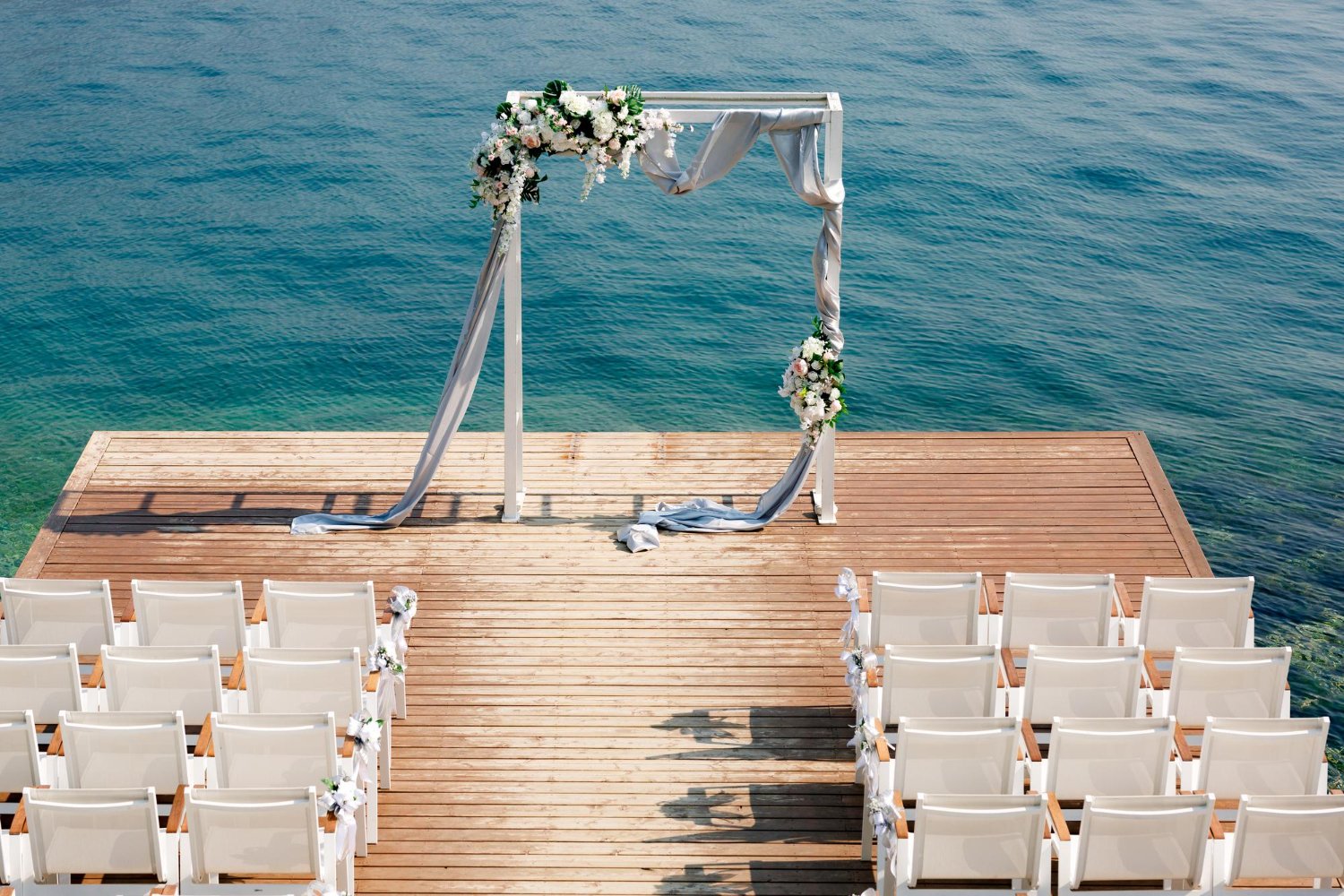
None of this means destination weddings are only for guests with unlimited budgets. A handful of practical strategies meaningfully lower the total cost. None of them require you to decline an invitation you genuinely want to accept. Stack two or three of them together, and you’ll often shave a genuinely surprising amount off your total destination wedding guest costs, without changing the trip itself at all.
Travel Hacks That Actually Move the Needle
Some cost-cutting advice sounds good but barely moves the number. These strategies tend to produce real, measurable savings instead.
Points, Miles, and Fare Alerts
Maybe you have accumulated airline miles or credit card travel points sitting unused. A destination wedding is exactly the kind of fixed, known-in-advance trip worth redeeming them for. Set a fare alert the moment you receive the save-the-date. Do this well before flights are even bookable for that date. You’ll catch the first pricing window, instead of checking sporadically and missing it.
Group Travel Discounts and Shared Airport Transfers
Ask the couple or the wedding planner whether other guests are flying the same route. A critical mass of guests on one flight sometimes unlocks a group booking discount through the airline directly. At minimum, coordinate airport transfers with other guests attending the same wedding. That splits a $60 to $100 private transfer cost across three or four people, instead of covering it solo.
Lodging and Spending Hacks
Lodging is usually the second-biggest cost after flights. It’s also the category with the most room to negotiate on your own terms.
Off-Block Hotels and Vacation Rentals
Maybe the room block rate doesn’t actually beat public pricing. A nearby hotel or a shared vacation rental with other guests can cost meaningfully less, sometimes 20% to 40% less during shoulder season, while still keeping you close to the wedding events. Just confirm transportation logistics with the couple first. Some venues are genuinely remote enough that staying off-property creates its own hassle.
Splitting Costs With Other Guests
Rental cars get cheaper split across a group. So do multi-bedroom Airbnbs, welcome bag contributions, and even a shared bachelorette or bachelor house rental. If you know other guests attending the same wedding, start a group chat. Coordinate logistics two or three months out. It routinely saves everyone real money.
Timing Strategies That Lower the Whole Trip Cost
Beyond how you book, when you commit to booking meaningfully affects the final number. This is especially true on flights and lodging, where prices move constantly between now and departure.
Book the Moment the Save-the-Date Arrives
Flight prices for destination wedding routes climb steadily as the date approaches. A cluster of guests searches the same route at once, which drives that climb. Book within the first few weeks of receiving the save-the-date, rather than waiting for the formal invitation. That routinely locks in fares well below what latecomers pay for the identical flight.
Watch for Shoulder-Season Advantage
Maybe the couple picked a wedding date just outside peak travel season. Early June instead of July. Late September instead of the December holidays. Lodging rates at the resort are often 20% to 30% lower than during absolute peak. The weather and experience barely differ. That’s good news worth knowing if you’re deciding how many extra nights to add onto the trip for yourself.
Ask About Add-On Nights Before You Book the Core Trip
If you’re already flying that far, a few extra nights before or after the wedding rarely add much to the airfare. They can, however, meaningfully lower your per-night lodging cost. Booking one longer stay at a shoulder-season rate often beats booking two separate trips to the same region later. It’s worth asking the resort about extended-stay pricing before you finalize your dates, especially for an international destination you might not visit again soon.
Frequently Asked Questions About Destination Wedding Guest Costs
How much should I actually budget to attend a destination wedding as a guest?
For a domestic destination wedding, budget $900 to $1,800 per person as a standard guest. For an international destination wedding, budget $1,500 to $3,000 or more. The exact figure depends on location, season, and length of the event. Wedding party members should budget closer to $2,500 to $4,000, once attire, pre-wedding events, and travel are all combined. Use the sample budgets earlier in this guide as a starting point. Then swap in your own real flight and hotel quotes once you have them.
Do I have to give a wedding gift if I’m already spending $1,500 to attend?
No single rule requires it. A modest gift alongside the significant cost of attending is widely considered appropriate and appreciated.
If You’re Close Family or Wedding Party
Close family and wedding party members are generally expected to give some gift, though it can be modest. A contribution of $75 to $200, alongside a heartfelt card, is well within the norm. That’s true even after covering substantial travel costs.
If You’re an Extended Guest on a Tight Budget
Maybe you’re an extended guest, a friend, or someone attending primarily because of the invitation. A card with a warm note and a smaller gift, or no material gift at all, is broadly accepted. More than half of surveyed guests now consider skipping a gift acceptable.
Is it rude to decline a destination wedding invitation because of the cost?
No. Destination weddings routinely see 50% to 70% attendance rates. A meaningful share of every guest list declines. Cost is one of the most common, well-understood reasons.
Scripts You Can Actually Use
Try something like: “We are so excited for you both, but we won’t be able to make the trip work. We’d love to celebrate with you in whatever way makes sense down the road.” Keep it warm. Keep it brief. Respond promptly.
What Not to Say
Avoid over-explaining your finances in detail. Don’t imply the couple did something wrong by choosing a destination wedding. A short, genuine decline lands far better than a long, defensive one.
What’s the difference between a save-the-date and an invitation for a destination wedding, and does the timeline change?
Yes, noticeably. Destination wedding save-the-dates typically go out eight to twelve months in advance. Local weddings only need four to six months. The extra lead time gives guests room to budget, request time off, and catch better flight pricing. Formal invitations with RSVP details usually follow three to four months before the event.
Do I have to stay at the host hotel, or can I book somewhere cheaper nearby?
In most cases, you’re free to book wherever you’d like. Compare the room block rate against public pricing first. Group discounts average around 15%, but they’re not automatically the cheapest option. If you do book elsewhere, confirm transportation to wedding events with the couple ahead of time. Also check whether the couple’s block is close to its occupancy minimum. That way your choice won’t accidentally cost anyone but you.
What should I ask the couple before I book anything?
A short list of direct questions clears up nearly every source of confusion before you spend a dollar:
- What’s covered by the wedding itself versus what’s simply included in the resort’s all-inclusive rate?
- Is the room block rate actually better than public pricing, and what’s the cutoff date to book through it?
- Is there a welcome event or farewell brunch, and is it optional or effectively expected?
- Is anyone else coordinating flights or shared transfers that you could join?
Most couples answer these within a few minutes over text. Ask early, rather than after you’ve already booked. That’s what actually saves money, not just information.
Destination wedding guest costs are manageable once you stop treating them as one mystery number. Start treating them as a list instead: flights, lodging, meals, a gift, attire, and time off, each with a realistic range you can plan around. None of these categories are secret. None of them require guesswork, once you know where to look and which questions to ask. The couple inviting you almost certainly understands that saying yes is a real financial decision on your end, not a small favor. A clear-eyed budget, built before you RSVP rather than after, is what turns a stressful invitation into a trip you’re genuinely glad you took. It beats one you spend the next six months quietly paying off.
Your one concrete next step: before you respond to that RSVP, open a note on your phone. Write out your own real total, using the ranges in this guide. Flight, four or five nights of lodging, meals, gift, and attire. Compare it honestly against what you can spend without touching savings or carrying a balance past the due date. That single number, sitting in front of you in black and white, will tell you more about your yes or your no than any amount of gut-feeling ever could.
