
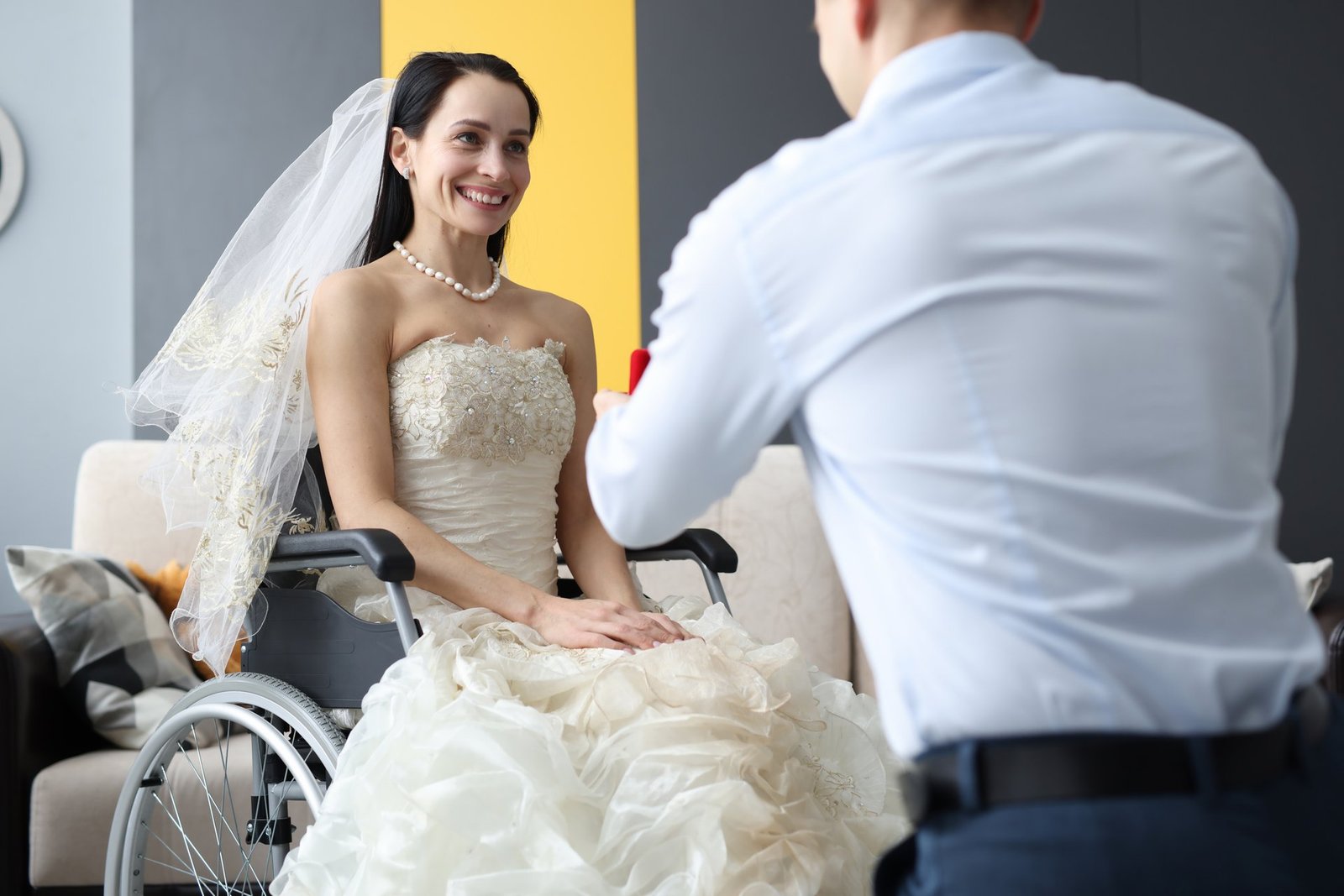
A bride who uses a power wheelchair posted her venue walkthrough story on a wedding forum last spring. It’s the kind of story that makes you wince, because nothing about it involved a villain. The barn looked stunning in photos. The coordinator was warm and enthusiastic on the phone. Then she arrived for the in-person walkthrough. She found a gravel parking lot, a single grass path to the ceremony spot, and two stairs into the reception hall with no ramp. The one accessible restroom stall turned out to be used as overflow linen storage. Nobody had lied to her. Staff hadn’t even clocked it as a problem, because every wedding they’d hosted before hers had guests who could climb two stairs without thinking twice.
That gap between “beautiful venue” and “venue that actually works” is what this guide is built around. Accessible wedding venue red flags are rarely about cruelty or bad intentions. They’re about assumptions nobody tested until a real guest, or a real couple, needed something the space didn’t have. A venue can be gorgeous, well-reviewed, and fully booked through next season. It can still fail the handful of practical checks that decide whether your day actually works. That means your grandmother’s walker, your best man’s service dog, your Deaf cousin, or your own mobility device if you’re the one getting married.
This isn’t a legal textbook, and it isn’t a guilt trip. It’s a working checklist for figuring out, before you sign a contract, whether a venue’s accessibility is real or just implied by one nice photo of a ramp. You’ll see what the Americans with Disabilities Act actually requires, and where it quietly doesn’t apply. You’ll see which questions get vendors to drop the marketing language and answer straight. You’ll see where a casual “we’re totally accessible” tends to fall apart once you check the details in person. An accessible wedding venue is one that still works after one unexpected problem, not a Pinterest board that assumed every guest moves, hears, and sees the same way.
Quick Answer
Quick answer first, details below: check the accessible route, the restroom fixtures, the seating plan, and the emergency exit plan before you book anything.
Accessible wedding venue red flags include a single entrance with no ramp option, one accessible restroom shared with storage, and no stable path between ceremony and reception. They also include fewer than two ADA hotel rooms in your block, and any vendor who turns vague or defensive when you ask direct accessibility questions. Green flags include a written accessibility page, and staff who’ve hosted guests with mobility devices before and can describe specifics. A good floor plan accounts for wheelchair turning space, not just wheelchair entry.
What Nobody Mentions Until It Happens
Wedding venue marketing photographs the parts of a space that photograph well: string lights, a sweetheart table, an aisle runner. It rarely photographs six inches of threshold between a patio and a dance floor. It never shows that the “accessible” restroom sits down a hallway cluttered with décor storage on the actual wedding day. These gaps surface only when someone who genuinely needs the accommodation tries to use it, and by then it’s too late to fix quietly.
The ADA Does Not Work the Way Most Couples Assume
Most couples planning an accessible wedding assume the Americans with Disabilities Act works like a stamp of approval. Either a venue has it, or it doesn’t. The real legal picture has more layers than that, and understanding those layers is what lets you ask sharper questions instead of accepting a vague “we’re ADA compliant” at face value.
Public accommodation status is what actually triggers the law
The ADA applies to venues operating as places of public accommodation: banquet halls, hotels, restaurants, and museums among them. Your wedding is a private event, but the building hosting it is very often a public accommodation in the legal sense. That means baseline standards for entrances, routes, and restrooms already apply, whether or not anyone is checking a guest list at the door.
Religious venues are fully exempt, without exception
Churches, synagogues, mosques, and other religious institutions sit entirely outside ADA requirements, regardless of age or how much wedding business they do. A gorgeous, century-old chapel can legally have zero ramps and zero accessible restrooms. If a religious venue happens to be accessible, that’s a choice the congregation made. It isn’t a legal requirement they had to meet.
Buildings from before 1990 get a flexible standard, not a hard mandate
Structures built before the ADA passed in 1990 don’t have to retrofit every element to current standards. They only have to remove barriers when it’s “readily achievable,” a deliberately loose phrase meaning affordable and feasible for that specific business. A small family-run barn and a large hotel chain will reach very different conclusions about what counts as achievable. Both can stay technically compliant while offering very different real-world access.
Historic designation can override accessibility upgrades entirely
Buildings with official historic status can get exemptions from accessibility changes when a state preservation officer decides the changes would damage the building’s historic character. This is exactly why some of the most heavily marketed historic wedding venues in the country are also some of the least accessible. Both facts are completely legal at the same time.
A Ramp at the Entrance Is Not the Same as an Accessible Venue
Venues that want to look accessible often solve the most visible barrier and stop there. A ramp at the front door photographs well, and it answers the most obvious question a couple might ask. It says nothing about what happens once a guest is actually inside.
The route between spaces matters as much as the entrance
A ceremony on a lawn and a reception in a converted barn fifty yards away sounds charming, right up until you’re the guest whose wheelchair sinks into damp grass. Ask exactly what the ground looks like along the entire path a guest would travel, not only at the front door.
Restroom fixtures need to be checked, not assumed
A restroom labeled “accessible” on a floor plan needs a correctly sized water closet, grab bars mounted at the right height, and enough clear floor space to turn a wheelchair around. A wide door alone doesn’t make a restroom accessible. Ask whether the fixtures actually meet current standards, or whether the room earned the label because it happens to have a wider door.
Staging and vendor areas need their own accessible route
Officiants, musicians, and speech-givers sometimes need a raised platform, and that route gets overlooked if you’re only picturing guest seating. If anyone in your wedding party or vendor team uses a mobility device, ask specifically how they’d reach any elevated area during your event.
Signage is the detail venues forget until someone asks
Braille and large-text signage for restrooms and exits is cheap compared to structural changes. Its absence is a fast, honest signal of how much genuine thought a venue has put into accessibility, versus how much they’re prepared to describe only when pressed.
The Accessible Route and Surface Check
Before you fall for a venue’s aesthetic, walk the exact path a guest using a wheelchair, walker, or cane would travel. Start at the parking area and go all the way to every space they’d need to reach that day. This single check surfaces more real problems than almost anything else on this list, and it takes fifteen minutes to run properly.
Parking to Entrance Is the First Test
Accessible parking needs to connect to the entrance through a route that skips unpaved lots, curbs without cuts, and any stretch of loose gravel. Ask how far the accessible spaces sit from the entrance in actual feet. “It’s close” is not an answer you can plan around.
Count the accessible spaces, don’t just confirm they exist
One accessible parking space works fine for a wedding with two hundred guests only on paper. Ask how many accessible spaces are reserved specifically for your event, and how that reservation gets enforced once wedding-day traffic actually shows up.
Surface transitions are where mobility devices actually get stuck
The failure point is rarely one big obvious step. It’s usually a transition: gravel to grass, pavers to lawn, a slightly raised threshold between a patio and an interior floor. Ask the venue directly whether a wheelchair, walker, or cane user has navigated that exact path before, and what happened when they did.
Slopes have a real, measurable maximum
A ramp that looks gentle to a walking guest can be unusable for a manual wheelchair if the grade runs too steep for the height it covers. Ask for the rise and run of any ramp. At minimum, ask whether a wheelchair user has used it successfully, rather than trusting that it merely passed an inspection.
Lighting after dark changes the entire equation
What looks fine at 2 p.m. can turn genuinely hazardous by 9 p.m. By then the reception is going strong, and the only outdoor lighting along that path is a string of café bulbs. Ask specifically about path lighting for any part of your event happening after sunset.
Testing the Full Path Beats Trusting a Floor Plan
A floor plan is a drawing. It doesn’t tell you how a door swings, how heavy it is, or whether the “clear” hallway is actually clear once guests, gifts, and coat racks show up.
Walk it yourself before you sign anything
If you or someone close to you uses a mobility device, walk the full route in person during your tour rather than relying on a description. If nobody in your immediate circle does, ask a staff member to walk it with a wheelchair or ask what specifically would change if a guest arrived using one.
Ask about wheelchair users before you, not just in general
“Have you hosted a wheelchair user at an event here?” gets you a specific, checkable answer. “Are you accessible?” gets you a reflexive yes almost every time, regardless of what’s actually true on the ground.
Get distances in feet, not in adjectives
“Nearby,” “close,” and “just around the corner” mean different things to different staff members on different days. A number in feet is something you can actually plan a shuttle, a rest stop, or a backup route around.
Put whatever they promise you in writing
Verbal reassurance during a tour has a way of evaporating by the wedding day, especially if the staff member you spoke with isn’t working your event. Ask for accessibility commitments in your contract or in a written email you can reference later.
Seating, Restrooms, and Quiet Space
Once someone can physically get into a venue, the next question is whether they can comfortably stay for four or five hours. Couples skip this category constantly, mostly because it requires imagining needs that aren’t their own.
Seating Needs to Account for More Than Wheelchair Entry
A wheelchair user needs a spot at a table with an actual gap where a chair would normally go. Being wheeled to the side of a table, present but functionally excluded from the conversation, doesn’t count as accessible seating.
Table height and knee clearance matter more than table location
Standard banquet tables are usually fine. Some venues lean on lower cocktail tables or tall high-tops for parts of a reception, and a wheelchair user simply can’t use either one at the right height. Ask what table styles appear throughout the space, not only at the head table.
Dance floor sightlines deserve a direct conversation
A guest who can’t stand for the first dance still wants to see it happen. Ask where wheelchair-accessible viewing spots sit relative to the dance floor, and whether that spot was an intentional choice or an afterthought stuck near the exit.
Restroom proximity affects who enjoys the night and who leaves early
An accessible restroom five minutes away by wheelchair effectively caps how long that guest can comfortably stay, especially at a long event with an open bar. Ask exactly how close the accessible restroom sits to the main event space.
Quiet space is not a luxury for some guests
Guests managing sensory sensitivity, chronic pain, or anxiety often need a low-stimulation space to step into for ten minutes without leaving the event entirely. Ask whether the venue has any room that isn’t running music at full reception volume.
Restroom Details Are Where Marketing Claims Fall Apart
“We have an accessible restroom” is the single easiest claim for a venue to make and the single easiest one to get wrong in the details. This is worth checking in person, every time.
Fixture height and grab bars need a direct look
Grab bars mounted at the wrong height or angle can be worse than no grab bars at all, since they create a false sense of support. Look at the fixtures yourself rather than accepting the word “accessible” printed on a door sign.
Turning radius decides whether the room actually works
A wheelchair needs real space to turn around inside a restroom, not just space to roll through the doorway. A room that’s wide enough to enter but too cramped to turn in fails the test that matters most.
Proximity to the reception changes the real experience
One accessible restroom tucked on the far side of a building means a much longer, much more public trip for that guest than everyone else is making. Ask whether there’s a closer option, even a portable one, for the actual event space.
Door weight and hardware are easy to overlook
A heavy door with a small round knob can be difficult or impossible for someone with limited hand strength to open alone. Ask whether restroom doors use lever handles, and whether the door itself opens with reasonable effort.
Temperature, Weather, and Exposure Risk
Outdoor and semi-outdoor venues carry an accessibility dimension that indoor spaces simply don’t: extended exposure to heat, cold, sun, or rain. Some guests are considerably more vulnerable to that exposure than others, and a pretty photo of an outdoor ceremony rarely accounts for it.
Heat and Sun Exposure Affect Guests Unevenly
A guest with a condition that affects temperature regulation, a guest on certain medications, or an older guest can be genuinely endangered by an hour of full-sun seating in July. A healthy twenty-five-year-old in the same seat barely notices.
Shade needs to be planned, not assumed
Ask specifically where shade falls during the hours your ceremony and cocktail hour will actually run. Tree cover and building shadows move throughout the day, and a shaded spot at 2 p.m. can sit in full sun by 4 p.m.
Cooling stations are a real, inexpensive accommodation
Misting fans, water stations, and a shaded rest area cost relatively little against most wedding budgets, and they meaningfully cut risk for heat-sensitive guests. Ask whether the venue offers this, or whether it’s an add-on rental you’d need to arrange yourself.
Medication and heat sensitivity are more common than couples expect
Certain heart, blood pressure, and psychiatric medications reduce a person’s ability to regulate body temperature, sometimes without an obvious outward sign. A shaded, cooler option nearby matters more than it looks like it should from the outside.
Hydration access needs to be built into the plan, not left to chance
Water should be genuinely easy to reach without waiting in a bar line, particularly for guests who can’t stand comfortably in a queue. Ask where water stations sit relative to ceremony seating specifically.
Cold and Rain Contingencies Need Their Own Accessibility Check
Cold and wet weather introduce a second, separate set of risks, and venues frequently solve for guest comfort in general while missing the accessibility angle entirely.
Cold exposure carries its own version of this risk
Guests with circulation conditions or limited mobility often can’t move around to warm themselves the way an able-bodied guest naturally does outdoors. Portable heaters and blankets become a genuine accessibility item here, not just a cozy extra.
Portable heaters need placement that doesn’t block a path
A heater positioned to warm a seating area can end up sitting directly in an accessible route if nobody plans the layout with both needs in mind together. Ask how heater placement gets decided, and by whom.
Rain contingency plans need an accessible version, too
A venue’s rain backup sometimes solves for keeping guests dry while quietly introducing new accessibility problems, like moving a ceremony onto grass that wasn’t built for wheelchair traffic. Ask what the accessible route looks like specifically under the rain plan.
Tent flooring is not automatically wheelchair-friendly
Tents set up directly over grass or gravel can shift and settle unevenly under foot and wheel traffic throughout an event. Ask whether flooring or a hard surface gets installed under the tent, not just a tent over the existing ground.
Emergency Power, Lighting, and Evacuation Planning
This is the category almost no venue brings up on its own, and it separates a venue that has thought seriously about accessibility from one that’s addressed only what’s visible.
Emergency Access Isn’t Just a Fire Code Checkbox
Ask what the evacuation plan looks like specifically for a guest who can’t use stairs. Many older buildings route fire exits through stairwells that a wheelchair user physically cannot use without direct staff assistance.
Elevator backup power is worth asking about directly
If your accessible route depends on an elevator, ask what happens to it during a power outage or a fire alarm. Elevators are frequently disabled automatically during alarms as a safety measure, which can strand a guest with no other way down.
Staff training on assisting evacuation is uneven across the industry
Ask directly whether staff have a specific, practiced plan for helping a guest with a mobility device during an emergency. “Someone would help” is not a plan, and it tends to fall apart exactly when it’s needed most.
Backup lighting matters more at night events than couples expect
A power failure during an evening reception can leave an unfamiliar space completely dark for guests who rely on visual cues, particularly guests with low vision. Ask whether emergency lighting covers accessible routes specifically, not only building exits.
Medical emergency access needs its own accessible path
Paramedics need to reach any guest quickly, including a guest already using a wheelchair in a far corner of the venue. Ask whether an emergency vehicle can actually reach every part of the space your guests will occupy.
What Pinterest Never Shows You Is the Exit Route
No wedding inspiration photo has ever included a fire exit sign or an evacuation diagram. This entire category lives in a blind spot for almost every couple, right up until it suddenly matters.
This blind spot exists because nobody photographs it
Inspiration boards train couples to picture florals, lighting, and table settings. They never train anyone to picture a blocked exit, so it simply doesn’t occur to most couples to ask.
Ask for the evacuation plan directly, not a summary of it
A confident verbal answer is not the same as an actual written plan. Ask to see it, or ask who specifically executes it if something goes wrong during your event.
Communicate the plan to one designated helper on your side
Tell one trusted person, ideally your planner or a steady family member, exactly which guests may need evacuation assistance. Venue staff will be busy managing dozens of things at once, and a dedicated point person closes that gap.
Revisit this if your venue changes layout close to the date
A last-minute floor plan change, like adding extra seating or a photo booth, can quietly block a route that was clear during your walkthrough. Confirm the evacuation route again during your final walkthrough, not just your first one.
Vendor and Venue Safety Responsibilities
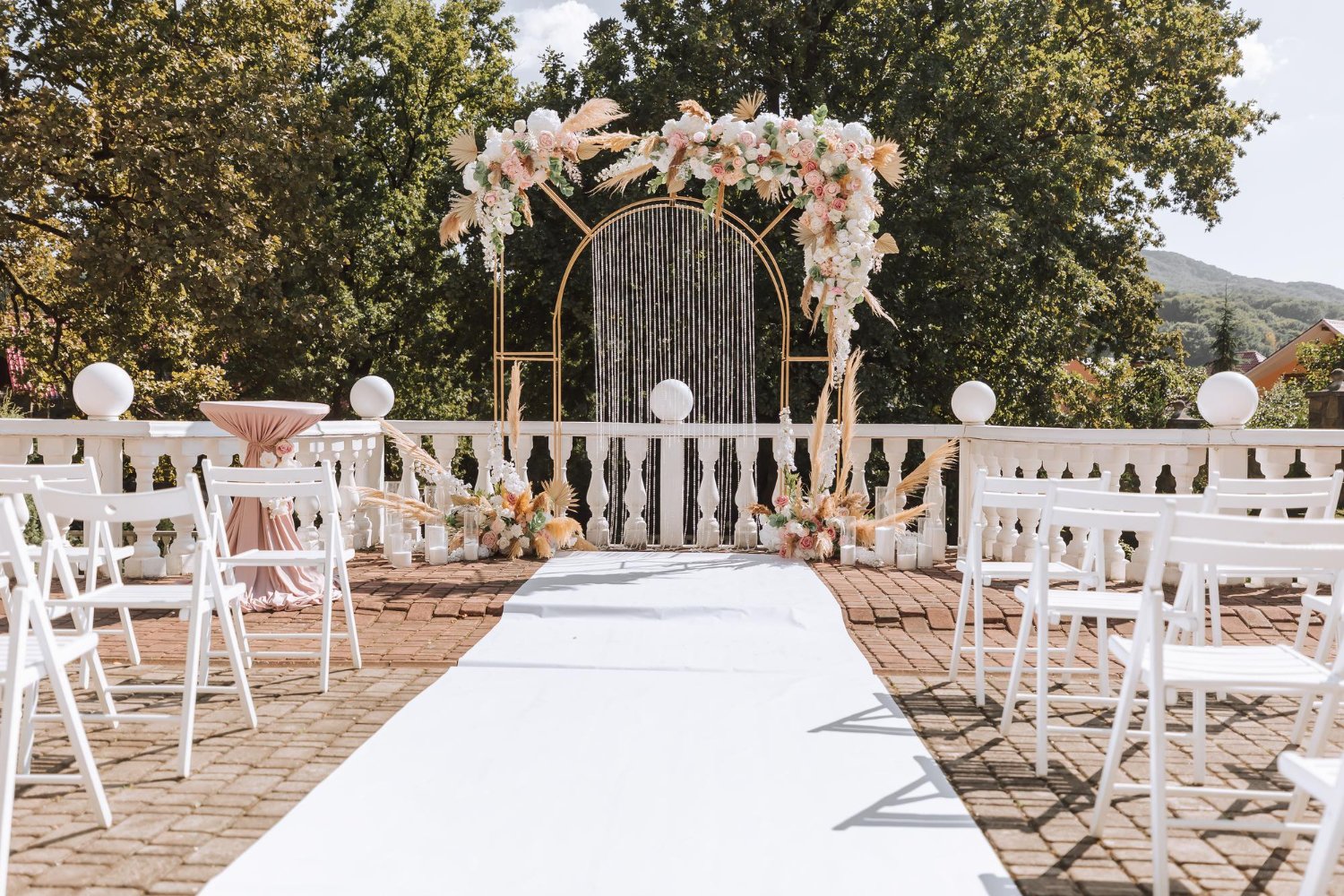
Accessibility isn’t only a venue question. Caterers, florists, and rental companies all interact with the same physical space, and their choices can quietly undo a venue’s accessibility work if nobody coordinates ahead of time.
Contracts Rarely Assign Accessibility Responsibility Explicitly
Most venue and vendor contracts stay silent on who’s responsible for keeping accessible pathways clear once décor, furniture, and equipment start arriving on the wedding day itself.
Décor placement can accidentally block an accessible route
A floral arch, a welcome sign easel, or a stack of extra chairs can look harmless during your walkthrough. On the day itself, that same item can end up sitting directly in a wheelchair’s path. Nobody assigned ownership of keeping that path clear, so nobody noticed until it mattered.
Low centerpieces and floor-level décor are genuine tripping hazards
Trailing floral installations and floor-level candle arrangements photograph beautifully and create real obstacles for guests with limited vision or unsteady balance. Ask your florist directly to keep pathways clear of anything below knee height.
Catering staff need briefing on ingredient transparency
Guests managing allergies or medical dietary needs overlap meaningfully with the disability community. They need staff who can answer specific ingredient questions, not a vague “I think it’s fine.” Confirm this expectation with your caterer directly instead of assuming it’s covered.
Vendor equipment cases and cords are an underrated hazard
DJ equipment cases, light stands, and extension cords running across a floor are common at weddings and genuinely dangerous for anyone using a mobility device or cane. Ask vendors to route cords along walls and completely out of primary walking paths.
Coordinating Multiple Vendors Around One Accessible Path
Each vendor optimizes for their own setup, on their own timeline, without necessarily thinking about the guest who needs a clear four-foot path through the middle of all of it.
Assign one day-of point person for accessibility specifically
Your planner, a coordinator, or a trusted friend should own this single job on the day itself. They confirm every accessible route is actually clear before guests arrive, rather than assuming it stayed that way since the morning walkthrough.
Run a walkthrough with all vendors present when possible
A shared walkthrough surfaces conflicts that individual vendor calls never do, like a florist and a rental company both planning to use the exact same hallway space for staging.
Build a timeline buffer specifically for accessibility checks
A fifteen-minute buffer before doors open, dedicated to walking the accessible route one final time, catches problems while there’s still time to fix them.
Know who fixes a blocked path same-day, and how fast
Say your point person finds a blocked pathway an hour before guests arrive. They need to know exactly who can move it, not spend precious time figuring that out on the spot.
Guest Experience Check
An accessible wedding venue isn’t only about whether a guest can physically enter. It’s about whether that guest actually enjoys the day, the same way everyone else does. That’s a higher bar, and it’s the right one.
Transportation and Arrival Set the Tone Early
Accessibility, for a guest, starts before they ever reach your ceremony seat. It starts with how they get to the venue in the first place.
Rideshare and taxi drop-off points need a real, level surface
A drop-off point that requires crossing a gravel lot or stepping over a curb undoes some of the accessibility work you did inside the venue. Check the drop-off zone with the same care you gave the entrance itself.
Shuttle service needs a wheelchair-accessible vehicle option
A standard shuttle van rarely fits a wheelchair as-is. If you’re running guest shuttles from a hotel, confirm at least one vehicle in rotation can actually accommodate one.
Service animals need a clear, simple entry policy
Staff should know, without hesitation, that service animals are welcome at an accessible wedding venue and don’t require advance paperwork under the ADA. Confirm your venue’s staff actually understands this distinction from pet policies.
Valet and parking staff need the same accessibility briefing everyone else gets
Front-of-house staff are often the last to get briefed on accessibility details, even though they’re the very first people your guests interact with. Make sure that briefing happens.
Genuine Inclusion Goes Beyond the Physical Checklist
A guest can clear every physical barrier on this list and still feel like an afterthought if the day’s design doesn’t consider them at all.
Photo moments shouldn’t require standing to participate
Group photos organized entirely around standing arrangements can leave a wheelchair user awkwardly placed at the edge of the frame. Ask your photographer to plan inclusive groupings in advance.
Seating charts deserve the same thought as the venue itself
Placing every guest who uses a mobility device at one single table, out of convenience, reads as segregation even when nobody intended it that way. Mix seating thoughtfully instead.
Toasts and speeches should stay audible throughout the room
Sound systems that work fine near the speakers often fail at the back of a large room, which disproportionately affects guests with hearing loss seated further away. Test audio levels from the farthest accessible seating spot specifically.
A genuinely accessible wedding venue treats these guests as full participants
The difference between meeting the legal minimum and actually welcoming every guest usually comes down to details like these, not the size of the ramp out front.
Guest Communication and Requesting Accommodations
Even a venue with strong accessibility infrastructure fails guests if nobody tells them what’s available or how to ask for what they need. This is the cheapest fix on this entire list, and the one couples skip most often.
Your Invitation Suite Can Do Real Accessibility Work
A simple line inviting guests to share accommodation needs ahead of time opens the door for people who might otherwise stay quiet and simply struggle through, or decline to attend at all.
Ask, don’t assume, what a guest specifically needs
Two guests who both use wheelchairs can have completely different needs depending on their specific device, strength, and comfort level. A general “we’re accessible” note helps far less than directly asking what would actually help.
Your wedding website is the natural place for these details
List parking distance, surface types along the path, restroom locations, and a contact method for accommodation requests directly on your website. Don’t make guests call and ask for basics you already know.
Give a real deadline and a real contact person
Accommodations like sign language interpreters often need real lead time to arrange. Tell guests exactly when you need to know by, and exactly who to tell, rather than leaving it as an open offer nobody follows up on.
Follow up personally with guests you already know need something
Maybe you already know a specific guest uses a mobility device, or is Deaf. A personal message asking what would help them feel comfortable does more than a generic line buried in your invitation ever will.
Handling Requests You Can’t Fully Meet
Sometimes a request comes in that your venue genuinely can’t accommodate, whether that’s budget, timing, or the physical space itself. How you handle that conversation matters as much as the accommodation itself.
Be honest about limits rather than overpromising
A guest who’s told the truth early can plan around it. A guest who’s told “it’ll be fine” and then discovers otherwise on the day feels dismissed, and reasonably so.
Offer a partial solution instead of no solution
If you can’t fully accommodate a request, look for what you can do. A ride from the parking lot in a golf cart isn’t a full fix for a long walking distance, but it genuinely helps.
Loop your venue in on accommodation requests early
Don’t wait until the week of the wedding to tell your venue that a specific guest needs a specific accommodation. Early notice gives them room to actually solve the problem instead of scrambling.
Don’t overpromise on behalf of vendors you haven’t confirmed with
Telling a guest “we’ll have an interpreter” before you’ve actually booked one sets up a failure that’s entirely avoidable. Confirm first, then communicate.
Hidden Costs to Check
Accessibility accommodations carry real costs that rarely show up in a venue’s base rental quote. Couples are frequently surprised by them late in planning, right when there’s little room left to budget or negotiate.
Costs That Rarely Appear in the Base Quote
These specific line items tend to arrive as a surprise during final vendor confirmations, well after a couple assumed their venue budget was locked.
Temporary modular ramp rental runs $150 to $600
The exact price depends on the rise being covered and how many days you need it. Booking early, rather than during your final month of planning, generally gets you a better rate and more availability.
An ASL interpreter for the ceremony runs $150 to $400
Short-notice bookings push toward the higher end of that range, and in some markets a qualified interpreter simply isn’t available at all without weeks of lead time.
A portable accessible restroom trailer runs $400 to $1,200
This becomes necessary at venues without a fixed accessible restroom, particularly at outdoor or tented events. Weekend rentals price differently than single-day rentals, so confirm exactly what window you’re paying for.
A golf cart or shuttle for long walking distances runs $200 to $500
Large venues with sprawling grounds often need this even when every individual space is technically accessible, simply because the distance between them is too far for some guests to cover comfortably.
Costs Tied to Timing, Not Just the Item Itself
Some of the biggest accessibility costs aren’t about what you’re booking. They’re about when you book it, and how much leverage you still have at that point.
Rush fees apply to late accessibility requests just like anything else
A ramp rental or interpreter booked with two weeks’ notice frequently costs more than the exact same service booked with two months’ notice. Treat accessibility planning like any other wedding vendor booking, with the same early timeline.
ADA hotel room scarcity means booking earlier, not paying more
Most hotels don’t charge extra for accessible rooms, but they typically hold very few of them. Waiting to reserve your room block means those specific rooms are often the first ones gone.
Insurance and liability add-ons sometimes apply to temporary structures
A rented ramp or a portable restroom trailer occasionally requires its own liability coverage, separate from your general wedding insurance. Ask the rental company directly whether this applies to your setup.
Overtime for extra accessible-route staffing adds up quickly
Some accessibility plans need a staff member stationed at a specific door or path for the full event. Confirm whether that’s already included in your venue fee, or billed separately as additional labor.
Green, Yellow, and Red Flags
Not every accessibility gap is a dealbreaker, and not every reassurance is trustworthy. Sorting what you hear on a venue tour into these three categories makes the decision much easier.
What a Trustworthy Answer Sounds Like
Trustworthy answers share a common trait: they get more specific the more you ask, instead of staying vague no matter how many follow-up questions you raise.
Specifics, not just a confident “yes”
A green-flag answer names an actual restroom location, an actual distance in feet, or an actual past guest experience, rather than repeating “yes, we’re accessible” a second time in slightly different words.
Willingness to show, not just tell
Staff who offer to physically walk the route with you, unprompted, are showing you something a brochure never can. That offer alone is a meaningful green flag.
Prior experience examples, offered without being pressed
Picture a venue that volunteers this: “we hosted a wedding last fall where the groom used a wheelchair, and here’s what we did differently.” That’s a venue telling you they’ve actually thought about this before you walked in.
Written documentation offered without a fight
Some venues have an accessibility page, a written policy, or a document they can simply hand you. That venue has clearly done this thinking in advance, not on the spot in front of you.
What a Warning Sign Sounds Like
Warning signs tend to sound reasonable in the moment, which is exactly what makes them easy to miss during a single tour.
Defensiveness when you ask a direct question
Watch for a staff member who bristles, gets short, or changes the subject when asked a plain accessibility question. That reaction tells you something real about your actual wedding day.
Only one workaround offered, with no alternatives
“We’ll just carry the chair up the stairs” as the sole answer to an entrance problem suggests nobody has thought past the very first solution that came to mind.
No follow-up when you ask the same question twice
If a question you raised in your first tour goes unanswered in your second conversation, that’s a preview of how accessibility requests get tracked, or don’t, once you’re an already-booked client.
Blaming guests for having “special requests”
Some language frames a reasonable accommodation as an inconvenient special request, instead of a normal part of hosting. That attitude tends to resurface later, usually at a worse time.
Questions That Feel Awkward but Are Worth Asking
Some of the most useful questions feel uncomfortable to ask a vendor you’re trying to build a relationship with. Ask them anyway, calmly and directly, and pay attention to how the answer is delivered, not just what it says.
Direct Questions Get Direct Answers
Vague questions produce vague answers almost every time. Specific questions are much harder to dodge, and that’s exactly the point.
“Has a wheelchair user actually used this space before?”
This question separates theoretical compliance from tested reality. A venue that answers with a specific example is telling you something a floor plan never could.
“What happens to your accessible route in the rain?”
That answer surfaces whether the backup weather plan quietly breaks the accessible route, which is one of the most common gaps on this entire list.
“Who’s responsible for keeping pathways clear once décor arrives?”
This tells you whether anyone has genuinely thought about vendor coordination, or whether that job will fall on you, unpaid, on your own wedding day.
“Can I see your written accessibility information?”
A venue with a written page or document has already done this thinking before you walked in the door. That’s meaningfully different from a staff member improvising an answer on the spot.
Questions Worth Asking Vendors, Not Just the Venue
Accessibility isn’t only a venue conversation. Your other vendors touch the same physical space, and a few direct questions to them close gaps the venue alone can’t.
Ask your caterer directly about ingredient transparency
“Can your staff answer specific ingredient questions during service, not just at a tasting?” tells you whether accessibility thinking extends past the venue walls into every vendor you hire.
Ask your florist to commit to pathway clearance in writing
A verbal agreement about keeping installations above knee height is easy to forget under wedding-day pressure. A written note in your contract or planning document holds up better.
Ask your DJ or band about volume near any quiet space
A “quiet room” fifteen feet from a subwoofer isn’t actually quiet. Confirm sound levels reach an acceptable range in any space meant as a sensory break.
Ask your photographer how they’ll navigate the accessible route
Photographers often move fast and improvise positioning, sometimes standing directly in a path that needs to stay clear. A quick heads-up in advance prevents an avoidable collision during your ceremony.
Legal Check
Understanding what you can and can’t act on legally helps you plan realistically, instead of assuming a complaint will fix a problem before your actual wedding date arrives.
What You Can Actually Act On
Some accessibility problems have real legal weight behind them, and knowing which ones do changes how you approach the conversation with a venue.
Public accommodation violations carry real legal weight
If a venue operating as a public accommodation refuses reasonable, readily achievable accommodations, that can be a genuine ADA violation worth raising, ideally months before your date rather than the week of.
“Readily achievable” gets tested against that specific business
A large hotel chain and a small family venue face different standards for what counts as affordable and feasible. Knowing this helps you calibrate what’s a fair ask versus an unreasonable one.
Timelines for complaints run far longer than your planning window
A formal ADA complaint process typically takes many months to resolve, which means it essentially never helps you before your specific wedding date. Treat this as leverage for future weddings, not a fix for yours.
Documenting requests in writing protects you either way
Whether or not you ever pursue a formal complaint, a written record of what you asked for and when creates clarity if a disagreement comes up later.
What the Law Won’t Fix for You
Some accessibility gaps are completely legal, however frustrating that is to sit with as a couple trying to plan an inclusive day.
Religious exemption is final, with no workaround
A religious venue’s lack of accessibility features isn’t a violation of anything. If accessibility is a priority, that reality needs to factor into your venue choice from the very start.
Historic exemption is final once it’s been granted
A documented historic exemption isn’t something you can successfully challenge in the weeks before your wedding. Plan around it, or choose a different venue entirely.
Private event nuance cuts both ways
Your wedding being a private event doesn’t remove the venue’s public accommodation obligations, but it also doesn’t create new obligations beyond what already applies to that building.
Choosing right beats fighting later, every time
The most reliable path to an accessible wedding is picking a venue that already works, not picking a beautiful one and hoping to negotiate access after the deposit’s already down.
Scam Check
Most accessibility gaps come from oversight, not deception. A smaller number come from marketing that’s stretched the truth on purpose, and an accessible wedding venue search is exactly the kind of search that attracts that stretch.
Marketing Claims That Sound Better Than the Reality
A website photo and an actual site visit sometimes describe two different buildings. Trusting the photo alone is how couples end up surprised on their wedding day.
Stock photos of ramps that aren’t actually at that venue
Some smaller venues use generic stock photography across their whole website, including for accessibility features. Ask whether the ramp or accessible entrance photo is genuinely of their property, and ask to see it during your tour.
“Fully accessible” claims with no specifics behind them
A phrase like “fully accessible” printed on a homepage costs nothing to write and means very little on its own. Push past the phrase and ask for the specific features that back it up.
Reviews that praise accessibility without any detail
One-line reviews saying “very accessible” tell you far less than a review describing an actual guest’s actual experience. Weight detailed reviews more heavily than short, generic praise.
Pressure to skip the in-person accessibility walkthrough
A venue that discourages a detailed accessibility walkthrough, or rushes you through one, is worth treating with real caution. A confident, accessible wedding venue has nothing to hide during that walk.
How to Verify Claims Before You Commit
Several simple verification steps catch most exaggerated claims before they become your problem on the actual wedding day.
Ask for recent guest references, not just testimonials
Willingness to connect you with a past couple who used specific accommodations shows real confidence in an accessible wedding venue. Deflecting this request tells you something too.
Cross-check claims against independent review sites
Search a venue’s name alongside words like “wheelchair” or “accessible” on independent review platforms, separate from the venue’s own curated testimonials page.
Request measurements, not adjectives, for anything critical
“Wide enough” and “close enough” are marketing language. A door width in inches, or a distance in feet, is something you can actually verify and plan around.
Trust your own walkthrough over anyone’s description of it
No amount of reassurance replaces walking the actual accessible wedding venue route yourself, or having someone you trust walk it on your behalf before you sign.
Worst-Case Scenario and the Backup Plan
The worst version of this problem isn’t a venue that’s imperfectly accessible. It’s discovering the gap on the wedding day itself, in front of your guests, with no way to fix it in the moment.
Picture a grandmother in a wheelchair arriving to find the only accessible entrance locked, because staff assumed the main doors would work for everyone. Or picture a Deaf guest realizing mid-ceremony that no interpreter showed up, despite an earlier request that got lost somewhere in vendor handoffs. These situations rarely come from malice. They come from nobody owning the follow-through between “we discussed this in March” and “this actually happened in September.”
The backup plan is procedural, not expensive. Assign one specific person, usually your planner or a trusted family member, whose wedding-day job includes confirming every accommodation you arranged is actually in place before guests arrive. Walk the accessible route yourself that morning if your timeline allows it. A ten-minute check is the difference between catching a blocked pathway quietly and hearing about it from an upset guest at 4 p.m.
Build a short, written list of every accommodation you arranged: the ramp, the interpreter, the accessible parking count, the shuttle, the quiet room. Hand that list to your point person the morning of the wedding. Ask them to physically confirm each item, one by one, rather than trusting that a conversation from three weeks ago still holds true.
If something is missing when they check, you still have time to react. A missing ramp can sometimes be solved with a folding table and two willing groomsmen. A locked accessible entrance can sometimes be solved with one phone call to the venue manager. None of these fixes work if nobody catches the gap until guests are already arriving.
This same list becomes useful again for your next big event, an anniversary party, a rehearsal dinner, or a future family wedding. Accessibility planning is a skill that transfers. Once you’ve learned to ask these specific questions for one event, asking them again gets faster and more natural every time.
Frequently Asked Questions
Do all wedding venues have to be ADA compliant?
No. Religious venues are fully exempt, and buildings from before 1990 only have to remove barriers when it’s “readily achievable” for that specific business, not to a universal standard.
Can I ask a venue directly whether they’ve hosted wheelchair users before?
Yes, and you should. It’s a completely reasonable planning question, and how a venue responds tells you as much as the answer itself.
Who pays for accessibility accommodations like ramps or interpreters?
In almost every case, the couple does, as an add-on cost outside the base venue rental. Confirm this early so it’s budgeted rather than discovered.
What if my venue is historic and legally exempt from ADA upgrades?
You can still ask what temporary accommodations they’re willing to arrange, like a portable ramp for the day, even without a legal obligation to make permanent changes.
How many accessible hotel rooms should I block for guests?
More than one. Ask your hotel block partner specifically how many ADA-compliant rooms they’re holding, and confirm that number actually matches your guests’ needs.
Is it rude to ask guests about their accessibility needs in the invitation?
No. A simple, respectful line inviting guests to share accommodation needs is considerate, not intrusive, and gives people permission to ask for what they need.
What’s the single most common accessibility mistake couples make?
Assuming an entrance ramp means the whole venue is accessible, without separately checking restrooms, seating, surface transitions, and emergency evacuation routes.
Should I still visit an “accessible” venue in person if I don’t personally need accommodations?
Yes, especially if any of your guests do. Photos and floor plans miss the details that matter most, like surface transitions and restroom fixture height.
Does rain backup planning need its own accessibility check?
Yes. A tent or indoor backup location can introduce new surface and pathway problems that didn’t exist in the original outdoor plan.
What should I do if a venue gets defensive about accessibility questions?
Treat it as real information. A vendor’s tone when discussing accessibility often predicts how well they’ll follow through on accommodations under wedding-day pressure.
Does a venue with a great accessibility reputation still need to be checked in person?
Yes. Reputation reflects someone else’s wedding, with someone else’s specific needs. Your guest list has its own requirements, and those deserve their own direct check.
What’s a fair way to bring up accessibility costs during a venue tour?
Ask which accommodations are included in the base rental and which are separate add-ons, the same way you’d ask about any other line item on a venue quote.
How do I know if “wheelchair accessible” in a listing is actually true?
Treat it as a starting point, not a guarantee. Verify it with the specific questions in this guide, and confirm with an in-person walkthrough before you rely on it.
What’s the fastest way to rule out an accessible wedding venue that isn’t a fit?
Ask about restroom fixtures and surface transitions first. These two checks eliminate more unsuitable venues, faster, than almost any other question on this list.
Do service animals count as an accessibility accommodation a venue must allow?
Yes. Service animals must be permitted under the ADA, without extra fees or advance paperwork. This is separate from any general pet policy a venue might have.
Should accessibility questions wait until after we’ve picked a venue?
No. Ask before you sign anything. A venue’s answers, and its tone while answering, should genuinely influence which venue you choose in the first place.
Can a small, budget-conscious venue still be a good accessible choice?
Yes. Budget and accessibility aren’t linked. A smaller venue with a thoughtful staff can outperform an expensive one that’s never seriously considered the question.
What if two guests need conflicting accommodations, like heat sensitivity and cold sensitivity?
Talk to both guests directly rather than guessing. Often a small adjustment, like seating placement near or away from a heat source, satisfies both without much extra cost.
Is it worth hiring an accessibility consultant for a large wedding?
For very large or complex weddings, yes. A consultant catches gaps that a couple, deep in a hundred other planning decisions, is likely to miss entirely.
Does an accessible wedding venue need to be indoors?
No. Many outdoor venues handle accessibility well, with the right ground surface and planning. Indoor venues can fail just as badly without the same care.
What’s a reasonable timeline for confirming accessibility details with a venue?
Start during your first tour, and confirm again in writing at least three months out. That gap gives everyone time to actually fix a problem, instead of scrambling.
Should the officiant know about accessibility accommodations in advance?
Yes. An officiant who knows the pace, seating, and any interpreter setup in advance runs a smoother ceremony for every guest, not only the ones who requested help.
Are destination weddings harder to make accessible?
Often, yes. Unfamiliar terrain, language barriers with local vendors, and limited advance walkthroughs all add friction. Build in extra time for verification if you’re planning one.
An accessible wedding venue is ready when it still works after one delay, one awkward guest problem, and one inconvenient surprise. Start with the questions in this guide during your very next venue walkthrough, and ask for specifics, not reassurance.
None of this requires turning your wedding planning into a full-time accessibility audit. It requires a handful of direct questions, one honest walkthrough, and one person willing to check the details before guests arrive. Most venues want to get this right. Giving them clear, specific questions is often all it takes to find out whether they actually can.
Sources: ADA.gov and the U.S. Access Board ADA Accessibility Standards, current as of September 2026. This guide is educational and general in nature, and is not legal advice specific to your situation.
