
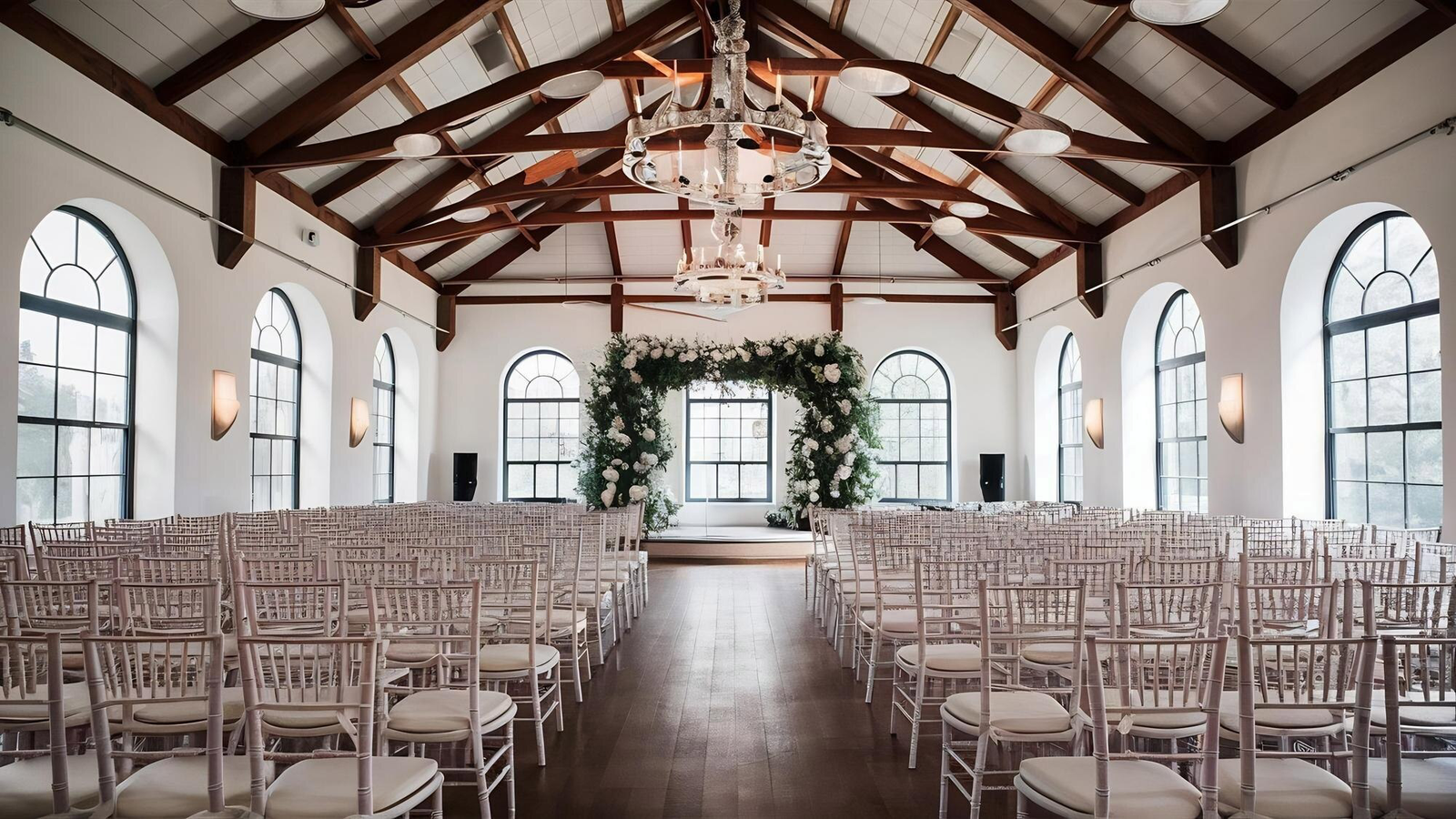
This scenario contains nearly every one of the wedding venue scam warning signs covered in this guide. A private estate outside Asheville shows up in a wedding-inspiration search: string lights over a stone terrace, a mountain view, a caption offering off-season dates well below anything else in the area. A message gets a fast, friendly reply. The date is available. A $2,000 deposit by Zelle holds it. The couple sends the money, relieved to have found something this beautiful for this little.
The property is real. The photos are real. Only the listing itself is fake. Someone copied both from a legitimate rental site and built a convincing profile around them. They then collected a deposit for a venue they have no connection to and no ability to actually provide. This is one of the clearest wedding venue scam warning signs the Better Business Bureau tracks, and it works precisely because everything about the listing looks normal until the money is already gone.
This guide teaches the verification habits that catch this pattern before a deposit leaves your account. How to confirm a business actually exists. Which payment methods protect you and which do not. How to check whether a portfolio is genuine, what documents to collect as evidence, how to read a complaint history without overreacting to one bad review, and what to do if you already paid. None of this requires treating every venue as a suspect. It requires the same handful of checks applied consistently, every time, before money changes hands.
Quick Answer: How to Tell a Real Wedding Venue Listing From a Fake One
Five checks catch nearly every version of this scam, and none of them take more than a few minutes.
Confirm the business exists independently of the listing itself, through a state business registry, an independent website, or a phone number that is not only a messaging app.
Never pay by a method you cannot dispute: wire transfer, cash app, gift card, or cryptocurrency all move money in a way that is extremely difficult to reverse.
Run a reverse image search on the venue’s key photos before sending anything, to check whether they appear elsewhere under a different name.
Get a written contract with a real business name on it, not just a friendly conversation in a messaging app.
Search the business name alongside “scam” or “complaint” before you commit any money at all.
The rest of this guide builds out each of these into something you can actually use. It starts with the single most reliable check: confirming the business is who it claims to be.
What Nobody Mentions Until It Happens
These are not dramatic, obviously suspicious situations. They are ordinary-feeling exchanges that only reveal themselves as fraud once the money is already gone.
The listing that is real, just not theirs
Scammers frequently copy photos and descriptions from a legitimate venue’s own website or a vacation-rental platform, then repost them with their own contact information. The property in the photos genuinely exists. The person you are messaging has no connection to it.
The fast, friendly reply that skips every real question
A scam listing often responds unusually quickly and agreeably, confirming availability for exactly the date you wanted without the scheduling friction a real, in-demand venue usually has. Genuine urgency exists in the wedding industry. Suspiciously frictionless urgency is worth a second look.
The “we only take Zelle for deposits” explanation
A request to pay by a peer-to-peer app, framed as standard business practice, is common enough in casual transactions that it does not always register as unusual. For a venue deposit specifically, it removes nearly all of your ability to recover the money if something goes wrong.
The listing still up weeks after being reported
Documented cases show fraudulent listings remaining live on major platforms for weeks after being reported, since moderation systems are inconsistent and slow. A listing’s continued presence on a reputable-seeming platform is not proof that it has been vetted.
Identity and Business Verification
This single check catches more fake listings than any other single step, and it takes only a few minutes.
Search the business name in your state’s registry
Every U.S. state maintains a public business registry, typically through the Secretary of State’s office. You can search for a business by name and confirm it is actually registered. A venue operating as a real business, even a small one, almost always appears here. A listing with no matching registration, or one registered to a name entirely unrelated to what you were told, is worth treating as a serious warning sign.
Confirm an address that is not just a pin on a map
Search the physical address separately from the listing itself. A real venue’s address typically connects to a business listing, a property record, or independent reviews mentioning that specific location. An address that only appears inside the listing you are questioning, with no independent trace anywhere else, deserves real caution.
Call a phone number that is not only a messaging app
A legitimate venue business typically has a phone number you can call directly, separate from a messaging platform’s internal chat. Ask to speak with someone by phone before sending any deposit, and treat a “we only communicate through the app” answer as a real limitation worth questioning.
Check for a website independent of the listing platform
A real venue business usually has its own website, its own domain, and a presence that existed before this specific listing did. Search the business name directly, separate from clicking any link inside the listing itself. A fake listing can include a link to a fake website built to look convincing.
Payment Method Warning Signs
How you pay determines whether you have any real path to recovering your money if something goes wrong, independent of how convincing the listing looked.
Credit cards offer real, practical protection
Paying by credit card preserves your ability to formally dispute a charge if a vendor fails to deliver. This typically applies within about 60 days of the statement date, depending on your card issuer’s specific policy. This protection exists precisely for situations like a venue that turns out not to exist.
Peer-to-peer apps are built for friends, not deposits
Zelle, Venmo, and Cash App transfers are treated as authorized transactions once sent, and are extremely difficult to reverse even when the transaction was fraudulent. Some banks will reverse a Zelle transfer specifically flagged as fraud within a short window, often 24 to 48 hours. This is not guaranteed, though, and varies by bank.
Wire transfers, gift cards, and cryptocurrency should stop you immediately
None of these payment methods offer meaningful consumer protection once the money has moved. Legitimate wedding venues have essentially no reason to require any of them for a standard deposit. A venue insisting on one of these specifically, with no alternative offered, is one of the clearest wedding venue scam warning signs covered in this entire guide.
A deposit request before any written agreement exists
A real venue typically sends a contract or a written agreement before or alongside a deposit request, not after. Being asked to pay first, with a contract to “follow later,” reverses the order that protects you. Treat this as a serious warning sign on its own.
Portfolio Review and Authenticity
Beautiful photos are the entire foundation a fake listing is built on, and they are also the easiest thing to verify.
Run a reverse image search before you fall in love with a photo
Save a few of the venue’s most distinctive photos and search them using a reverse image tool. The same images might appear attached to a different business name, a different location, or a vacation-rental listing entirely unrelated to weddings. If so, you have found a copied listing before spending anything on it.
Look for a venue in more than one context
A real venue with wedding history usually appears across multiple independent sources: a wedding blog feature, a photographer’s portfolio tagging the location, or guest photos on review platforms. A venue that exists only inside one listing, with no independent trace anywhere else online, is a real gap worth questioning directly.
Ask for a live video walkthrough
A legitimate venue can typically accommodate a live video call showing the actual space in real time, not just pre-recorded footage. A scammer working from stolen photos cannot produce this, since they have no access to the physical property at all.
Contract and Document Evidence
Every document you collect during booking becomes evidence if something goes wrong, and building this record from the very first conversation costs nothing.
Save every written communication
Keep emails, messages, and any written confirmation in a place you control. Do not rely only on a platform’s messaging system, which could disappear if an account gets suspended or deleted. Screenshot conversations as you go rather than assuming you can retrieve them later.
Insist on a real, signed contract
A legitimate venue contract names the actual business, states the specific date, price, and services, and includes a signature from a real, identifiable person. A “reservation confirmation” that is really just a casual message thread is not the same protection as an actual signed agreement.
Request a receipt for every payment
Ask for a dated, itemized receipt after any deposit or payment, separate from your own payment app’s transaction log. A legitimate business provides this routinely; a request that gets deflected or ignored is worth treating as a real answer in itself.
Complaint Pattern Check
Reading complaints well matters as much as finding them, since a single unhappy review says very little on its own.
Check the Better Business Bureau directly
Search the specific business name on bbb.org, not just a general web search. The BBB tracks patterns across complaints in a way scattered social media comments do not. Look specifically for a pattern of complaints describing the same core problem, not an isolated disagreement over an unrelated detail.
One bad review is not proof of fraud
A single negative review can reflect a genuine miscommunication, a one-time service failure, or a customer’s unrealistic expectation, none of which indicate a scam. Several independent reviewers describing the identical pattern, such as a deposit taken with no service ever delivered, is a very different and much more serious signal.
Search the business name alongside specific terms
Search the exact business name together with words like “scam,” “complaint,” or “never received.” Do not rely only on the venue’s own website or social media presence. It will never surface complaints against itself.
Check how long the listing or profile has actually existed
A business profile or listing created only weeks ago, with no history before that, is not automatically fraudulent. It does deserve extra scrutiny, though, particularly when combined with other warning signs from this guide.
Dispute and Recovery Records
If you already sent money to a listing that turns out to be fake, act quickly and in the right order. Doing so genuinely improves your odds of recovering some or all of it.
Contact your payment provider immediately
If you paid by credit card, start a formal dispute with your card issuer right away, and provide every piece of documentation you collected. If you paid by Zelle, Venmo, or a similar app, contact your bank immediately as well. Some institutions have a short window to reverse a transaction flagged as fraud.
Report it to the right agencies
File a complaint with the Federal Trade Commission at consumer.ftc.gov/scams, report it to the Better Business Bureau, and file a report with your local police department, even if recovery feels unlikely. Documentation helps if the same scammer is being investigated for other complaints, and a police report is sometimes required before a bank will pursue a fraud claim.
Warn other couples
Leave a detailed, factual account on the platform where you found the listing, and report the specific listing directly to that platform. This will not recover your money, but it can prevent the same listing from reaching the next couple searching the same way you did.
How Scammers Find Couples in the First Place
Understanding where these listings actually come from makes them easier to recognize before you are even deep into a conversation.
Search and social platforms surface listings with little vetting
A search for “unique wedding venue near me,” or a scroll through a wedding-inspiration hashtag, can surface a fraudulent listing alongside completely legitimate ones. Most platforms rank content by engagement and relevance, not by verified business legitimacy. A polished photo and a compelling caption are often enough to rank well regardless of whether the underlying business is real.
Local wedding groups create a false sense of vetting
Facebook groups and local wedding-planning communities can create an implicit sense that anything shared inside them has already been checked. In reality, most groups have no actual verification process at all. A listing shared inside a trusted-feeling community deserves the same verification as one found through a random search.
Paid ads do not guarantee legitimacy
Running a paid advertisement on a major platform requires payment, not proof of business legitimacy. A polished, well-targeted ad campaign is well within reach for a scammer working from a stolen photo set. Platform advertising review processes focus primarily on content policy, not fraud prevention.
Legal Check: What Happens if the Business Crosses State Lines
A surprising number of these situations involve a scammer operating from a different state than the venue they are impersonating. That adds real complexity if you need legal recourse.
Jurisdiction affects where you can realistically pursue a claim
Small claims court and most consumer protection remedies generally require some connection to the state where you file. That connection might be your own residence, the business’s actual location, or where the transaction occurred. A scammer operating from an unknown or false location can make this genuinely difficult. That is exactly why prevention matters more than recovery in this specific category of fraud.
Federal reporting still matters regardless of jurisdiction
The Federal Trade Commission collects fraud reports nationally, regardless of which state the victim or the scammer is in. It uses these reports to identify patterns across many complaints, even when individual recovery is difficult. Filing a report contributes to that pattern-recognition process even if it does not directly return your specific money.
Do Major Wedding Platforms Vet Listings for Wedding Venue Scam Warning Signs?
Couples often assume that a listing appearing on a recognizable, established platform has already been checked. This assumption deserves a closer, more honest look.
Most platforms rely on users, not independent verification
Major rental and marketplace platforms generally function as a connection point between buyers and sellers. They rely heavily on user reports and community moderation, rather than independently verifying every listing before it goes live. This structure works reasonably well at scale but leaves real gaps that a patient scammer can exploit.
A platform’s size is not the same as a platform’s vetting
A well-known, widely used platform can still host fraudulent listings, sometimes for weeks, before they are identified and removed. Treat a listing’s presence on a major platform as a mild positive signal at most, not a substitute for the verification steps covered throughout this guide.
Accessibility Check: A Fake Listing Cannot Answer Real Questions
Accessibility questions turn out to be an unusually effective verification tool, since they require genuine, specific knowledge of the actual physical space.
Ask about specific physical details a scammer cannot fake
Ask about step-free entrances, restroom locations relative to the reception space, and ground surface conditions for an outdoor area. A real venue representative answers these specifically and consistently. A scammer working from a stolen photo set typically gives vague, generic answers or simply avoids the question.
This protects real guests too, not just your deposit
If you do book a legitimate venue, these same accessibility questions matter for planning around real guests with real needs. This makes the verification step useful twice over: once to confirm the venue is real, and again to actually plan your wedding around it.
Guest Experience Check: What a Fake Booking Actually Costs Beyond Money
The financial loss from a fake venue booking is real and often substantial. The disruption to your actual guests is a separate cost worth naming directly.
A last-minute venue change affects far more than the couple
Guests who already booked travel, hotel rooms, and time off work around a specific date face real disruption. A venue falling through close to the wedding affects all of it. This is one more reason prevention matters more than recovery in this specific category of risk. Even a full refund does not undo the guest-side disruption of a late venue change.
Communicate early and honestly if this happens to you
If a venue falls through, tell guests as soon as you have a real update, even before every detail of a replacement plan is finalized. Guests generally respond far better to early, honest uncertainty than to a late, complete surprise.
A Closer Look: Private Estates, Barns, and “Hidden Gem” Listings
A specific category of venue is disproportionately targeted by this scam, and it is worth understanding why.
Unusual, less commercial venues are harder to independently verify
A private estate, a family barn, or a “hidden gem” property marketed directly by an individual owner often has less of an independent online footprint. This is especially true compared to an established banquet hall or hotel. This is exactly the profile scammers favor, since there is less existing information for a couple to cross-check against.
This does not mean avoid these venues entirely
Many genuinely wonderful, legitimate venues fit this exact profile, and the goal here is not to avoid unique or independently owned properties. It is to apply the verification steps in this guide more rigorously precisely because these listings offer fewer independent ways to confirm legitimacy on their own.
Green, Yellow, and Red Flags for a Wedding Venue Listing
Green flag: a business you can find registered in your state, with a working phone number, an independent website, and a willingness to do a live video walkthrough before any payment. Yellow flag: a newer business with limited online history that still answers every verification question directly and provides a real contract. Red flag: pressure to pay immediately by a peer-to-peer app, a listing with no independent trace anywhere outside itself, and evasiveness when you ask for a phone call or a live video tour.
Before You Pay Anything
- Confirm the business in your state’s registry.
- Call a real phone number, not just a messaging app.
- Reverse image search the venue’s key photos.
- Request a live video walkthrough of the actual space.
- Get a signed contract naming the real business before paying.
- Pay by credit card, never wire transfer, gift card, or cryptocurrency.
Questions That Feel Awkward but Are Worth Asking
- Can we do a live video call to see the actual space right now?
- What is the exact legal business name, and can you confirm it matches your contract?
- Can I call you directly at a phone number, not just message through this app?
- Can you send a written contract before we send any deposit?
- Do you accept credit card payment, even with a small processing fee?
- Can you provide a reference from a couple who held their wedding there in the past year?
A real venue answers all six without hesitation. Repeated deflection on more than one of these is worth treating as a genuine warning sign, not an oversight.
Common Scam Patterns Beyond the Copied-Listing Trick
The stolen-photo listing covered throughout this guide is common, but a few related patterns are worth recognizing too.
The double-booking scheme
Some fraudulent operators collect deposits from multiple couples for the same date at a venue they do control. They plan to cancel on whoever pays less or complains least, and refund selectively if caught. Documented enforcement cases describe operators running this exact pattern across thousands of listings on legitimate platforms.
The disappearing business
A real, previously operating venue or planning business sometimes takes new deposits while already planning to close, leaving recent couples with no service and no easy recovery path. This differs from a copied-listing scam, since the business itself is briefly real, which makes early warning signs harder to spot.
The urgency-driven pressure sale
Scammers increasingly target moments of genuine urgency, such as a couple searching quickly after another venue fell through. Urgency lowers the odds anyone will complete a careful verification process. Slow down specifically when you feel rushed, since that feeling is often the point.
Worst-Case Scenario — and the Backup Plan
Picture the Asheville scenario from this guide’s opening carried one step further: the deposit is sent, the messages stop, and the “venue” was never real to begin with. Four months before the wedding, the couple has no venue, no refund, and a growing sense that something needs to happen fast.
A workable response starts with the steps in this guide’s dispute section, pursued immediately and in order. Payment provider first. Then formal reports to the FTC, BBB, and local police. In parallel, begin a new, more cautious venue search. Use every verification step in this guide from the very first message, rather than repeating the same shortcut under pressure a second time. A lost deposit is a real financial setback. It does not have to become a lost wedding date if the search restarts immediately, with a tighter verification process this time.
A Wedding Venue Scam Warning Signs Verification Checklist
Run every new venue listing through this before you send a single dollar.
- ☐ Business name confirmed in state registry: ____________
- ☐ Independent website found, separate from the listing: ____________
- ☐ Phone call completed with a real person: ____________
- ☐ Reverse image search run on key photos: ____________
- ☐ Live video walkthrough completed: ____________
- ☐ BBB and “scam” search completed: ____________
- ☐ Signed contract received before payment: ____________
- ☐ Payment made by credit card, not a peer-to-peer app: ____________
Researching a Venue’s History Before You Reach Out
A few minutes of research before your first message can rule out a fake listing entirely, before you ever start a conversation worth verifying.
Check how long the property has been marketed as a venue
Search the property address alongside “wedding venue” and look at how far back results actually go. A property with a genuine multi-year history hosting weddings usually leaves a real trail: older blog posts, tagged photographer portfolios, or archived versions of its own website.
Look for the same listing under different names
Search a distinctive phrase from the listing’s own description, in quotation marks, to see whether identical wording appears elsewhere under a different business name. Scammers frequently copy not just photos but entire paragraphs of descriptive text.
Check whether the venue appears in real estate or event licensing records
Many jurisdictions require a commercial event space to hold specific permits or licenses. A property with no trace in local commercial records, despite claiming to host regular weddings, is worth a direct, specific question before you go any further.
Trusting Your Instincts Without Ignoring the Evidence
Verification steps matter more than a gut feeling, but the two are not in conflict. A nagging sense that something feels off is worth taking seriously enough to act on.
Slow down when something feels rushed
If a conversation is moving faster than feels comfortable, particularly toward a payment request, that discomfort is worth listening to rather than dismissing as nerves. A real venue with a genuine booking process can accommodate a couple who wants a day or two to verify details before committing.
A good feeling is not a substitute for a completed checklist
A friendly, responsive conversation can feel reassuring in exactly the way a scammer wants it to, since building quick rapport is a core part of how this pattern works. Run the actual verification steps in this guide regardless of how the conversation feels, rather than treating a pleasant interaction as proof on its own.
How do scam listings usually target couples in the first place?
Most surface through ordinary search and social media browsing rather than direct outreach. A search for “unique wedding venue near me.” A wedding-inspiration hashtag. A shared post in a local wedding-planning group. Search and social platforms rank content by engagement, not verified business legitimacy, which lets a fraudulent listing appear right alongside completely genuine ones.
Does a professional-looking website mean a wedding venue is legitimate?
No, not on its own. A convincing website is well within reach for anyone with basic design skills or a template, including a scammer working from a stolen photo set. Treat a polished website as one small positive signal, not a substitute for the independent verification steps covered throughout this guide.
What should I do if a venue refuses to do a live video walkthrough?
Treat this as a significant warning sign, particularly if combined with pressure to pay quickly or by an unreversible method. A legitimate venue with a genuine physical space rarely has a real reason to decline a live video call before a couple commits to a deposit.
Can scammers fake a business registration too?
It is far harder than faking a website or social media presence, since state business registries are independent government records the scammer does not control. This is exactly why a registry search is one of the strongest single verification steps in this entire guide, even though no single check is completely foolproof on its own.
How long should we wait before sending a deposit to a new venue we found online?
There is no universal number of days, but resist any pressure to skip verification steps to “lock in” a date immediately. A legitimate venue can accommodate a reasonable, brief verification period. A business unwilling to allow even a day or two for you to confirm basic details is itself a signal worth taking seriously.
What if the venue is legitimate but a middleman or planner is handling the transaction?
Confirm the relationship directly and in writing: is this person an employee, an independent planner, or someone with no formal connection to the venue at all? Request contact information for the venue itself, separate from the intermediary, and verify both independently before sending any payment through a third party.
Directory and “Featured Listing” Scams
A related pattern targets couples through paid directory placement rather than a social media post, and it deserves its own specific attention.
Paying to appear “featured” is not the same as being vetted
Some wedding-planning directories allow any business to pay for a prominent placement, sometimes with minimal or no verification of the underlying business. A “featured” or “top-rated” badge can reflect a marketing purchase rather than an independent quality assessment, and it is worth understanding which one applies before treating the badge as meaningful.
Ask the directory directly what verification they actually perform
A reputable directory can usually explain its own verification process specifically: what it checks, how often, and what happens when a complaint is filed. A vague or evasive answer to this question tells you as much about the directory’s own standards as it does about any individual listing.
A Realistic Comparison: Two Venue Conversations Side by Side
Here is what a legitimate conversation and a fraudulent one commonly look like next to each other, based on the patterns covered throughout this guide.
| Detail | Likely legitimate | Worth real caution |
|---|---|---|
| Response speed | Normal business hours, some delay | Instant, any time of day or night |
| Requested payment | Credit card, check, or invoiced payment | Zelle, Venmo, wire, or gift card only |
| Video walkthrough | Offered or arranged without hesitation | Declined or repeatedly delayed |
| Contract | Sent before or with deposit request | Promised “after” payment, or never sent |
| Phone contact | Real number, answers or returns calls | Messaging app only, no phone option |
If a Wedding Planner Is Handling Venue Selection
Delegating venue research to a planner does not remove the need for verification. It shifts where in the process it needs to happen.
Verify your planner before you verify the venues they suggest
Apply the same business-verification steps in this guide to your planner directly. Confirm their business registration, ask for references from recent, real weddings, and confirm how they are compensated for venue recommendations. A planner receiving an undisclosed commission from a specific venue has an incentive worth understanding upfront.
Ask to be included directly in venue verification, not just the final decision
Request to join at least one direct conversation or video call with any venue your planner recommends. Do not rely entirely on their account of it. This is not about distrusting your planner. It is about maintaining the same independent verification habit this entire guide recommends, regardless of who is doing the initial legwork.
Destination and Out-of-State Venue Verification
Verifying a venue you cannot easily visit in person adds real difficulty, and it deserves extra care rather than skipped steps.
A video walkthrough matters even more when travel is not practical
If an in-person visit is not realistic before booking, treat a live video walkthrough as close to non-negotiable. This single step does more to confirm a distant venue’s legitimacy than any other check in this guide, precisely because distance removes your ability to simply show up and look.
Consider a local contact for an independent check
A friend, family member, or a paid local scout can physically visit a distant venue on your behalf. This works well before you commit significant money to it. This is a genuinely useful option for a destination wedding where the couple cannot easily travel to verify a venue themselves before booking.
International venues add another layer of complexity
Business registries, consumer protection agencies, and dispute resolution processes vary significantly outside the United States. A scam involving an international venue can be considerably harder to pursue through U.S.-based channels. Apply every verification step in this guide with extra rigor for an international booking. Consider a destination wedding specialist with genuine, verifiable local experience in that specific country.
Do wedding venue scam warning signs look different for destination weddings than local ones?
The core warning signs stay the same, but distance removes your ability to simply visit in person, which makes a live video walkthrough and independent local verification considerably more important. Consider a local scout or a specialist with genuine local experience for any venue you cannot easily visit before booking.
Is a “featured” or “top-rated” badge on a directory site meaningful?
Sometimes, but not always. Some directories sell prominent placement with minimal underlying verification, meaning a badge can reflect a marketing purchase rather than an independent quality check. Ask the directory directly what verification process the badge actually represents before treating it as meaningful.
Professional Association Membership as a Verification Signal
Industry associations offer one more, often overlooked way to confirm a venue’s legitimacy, separate from the venue’s own claims about itself.
Check for real, verifiable association membership
Organizations related to hospitality, event venues, or wedding professionals often maintain public membership directories. A venue claiming membership can usually be checked directly against the association’s own listing, rather than taking the venue’s word for it. A claimed affiliation that does not appear in the association’s own records is worth a direct question.
Membership alone does not replace other verification steps
A legitimate association membership is a positive signal, not a complete guarantee, and it works best combined with the other checks throughout this guide rather than substituted for them. Treat it as one more data point in a broader verification process.
What Happens After You Verify a Venue Successfully
Verification does not end once you decide to move forward. A few habits carry the same protective value through the rest of your planning process.
Keep documenting even after you trust the venue
Continue saving contracts, receipts, and written confirmations throughout your planning process, not just during the initial verification stage. A legitimate relationship can still run into a genuine dispute later over a specific term. The same documentation habits that helped you verify the venue also protect you if a disagreement arises months later.
Revisit your verification if anything changes
If a venue changes ownership, changes its primary contact, or asks you to sign a new or different agreement partway through planning, treat this as a reason to repeat key verification steps. Do not just accept the change without question. A legitimate business explains a transition clearly; a red flag here deserves the same scrutiny as your original booking did.
How Common Is This, Really?
Wedding-specific fraud does not have one single, universally tracked national statistic, but the surrounding data paints a consistent picture worth taking seriously.
Rental fraud broadly is a large, growing problem
Industry survey data on rental fraud broadly, not limited to weddings, is telling. Roughly one in five renters report a personal financial loss connected to a fraudulent listing at some point, with estimated nationwide losses in the billions of dollars annually. Wedding venues share nearly every structural feature that makes general rental listings attractive to scammers: high-value transactions, emotional urgency, and a buyer who often cannot visit in person before paying.
The Better Business Bureau receives hundreds of wedding-vendor complaints every year
Complaints span the full range of wedding vendors, including venues, caterers, photographers, and planners, and represent only the fraction of cases that get formally reported. Many victims never file a complaint at all, whether from embarrassment, uncertainty about the process, or simply moving on after a difficult experience.
What this means for your own planning
This is not a reason to distrust the wedding industry broadly, since the overwhelming majority of venues and vendors operate honestly. It is a reason to treat verification as a normal, expected part of booking any venue, the same way you would check a contractor’s license before a major home renovation.
Helping the Next Couple After You
Whether your own search goes smoothly or you encounter a genuine warning sign along the way, a small amount of shared information helps the couples searching after you.
Leave specific, factual reviews either way
A detailed, factual positive review helps a legitimate small venue build the visible track record this guide recommends checking for. A detailed, factual negative review, focused on what actually happened rather than general frustration, helps the next couple recognize a pattern faster than you did.
Share what you learned with local wedding communities
If you identify a fraudulent listing, share specific, factual details in local wedding-planning groups. This can prevent the same listing from reaching another couple before platform moderation catches up, which documented cases show can take weeks.
A Final Word on Balancing Caution With Excitement
Verification can feel like it dampens the excitement of finding a beautiful venue, and it is worth saying directly: it does not have to. A legitimate business welcomes these questions because they protect the business too, from impersonation, from disputes over what was actually agreed to, and from the reputational damage a scammer using their stolen photos can cause. Asking to verify a business is not an accusation. It is simply how a five-figure transaction is supposed to work, whether it involves a wedding venue, a car, or a home renovation.
The couples who avoid this specific kind of loss are rarely the ones who found the most cautious-sounding listing. They are the ones who applied the same handful of checks to every venue they seriously considered, quickly and consistently, until it became routine rather than a chore.
Should we still get excited about a venue before we finish verifying it?
There is nothing wrong with feeling excited while you verify, and most legitimate venues will still be there once your checks are complete. The goal is not to suppress genuine enthusiasm. It is to make sure that enthusiasm is directed at something real before any money changes hands.
What is the very first check we should run on any new venue listing?
Search the exact business name in your state’s official business registry. This single check takes only a minute or two and rules out an entire category of fraud immediately, before you invest any more time in a conversation that may not be worth having.
Do these wedding venue scam warning signs apply to other wedding vendors too?
Yes, largely. The same verification habits, business registry checks, reverse image searches, live video calls, written contracts, and safe payment methods apply just as well to photographers, caterers, and other vendors as they do to venues, since the underlying fraud pattern is nearly identical across categories.
Why Urgency Is the Scammer’s Real Tool, Not the Photos
Beautiful photos get a listing noticed. Manufactured urgency is what actually gets a deposit sent before anyone stops to verify.
Genuine scarcity and manufactured scarcity look similar on the surface
Real, in-demand venues do sometimes book quickly. That makes an artificial sense of urgency easy for a scammer to imitate convincingly. The difference usually shows up not in the claim itself, but in how the business responds when you ask for a small amount of time to verify. A legitimate venue can typically accommodate a short delay. A scam listing often escalates pressure specifically when that delay is requested.
A specific tactic worth naming directly
Watch for a version of this exchange. You ask for a day to think it over or verify a few details, and the response shifts from friendly to insistent. Sometimes it mentions another interested couple, or a deadline that suddenly cannot move. This escalation, in direct response to a reasonable request for time, is itself one of the more reliable warning signs covered in this guide.
Build a personal rule and stick to it
Decide in advance that you will not send a deposit to any new venue within the first conversation. Hold to this regardless of how the day goes or how perfect the space seems. A rule set calmly in advance is much easier to hold onto in the moment than a judgment call made under pressure.
Frequently Asked Questions
What are the most common wedding venue scam warning signs?
Several signals stand out clearly. Pressure to pay quickly by wire transfer, Zelle, Venmo, or another peer-to-peer app. A listing with no independent trace anywhere outside itself. Refusal to do a live video walkthrough or phone call. Photos that reverse-image-search to a different business or location. Several of these together, not just one, are the strongest indicator.
How do I verify a wedding venue is legitimate before booking?
Search the business name in your state’s official registry. Confirm an independent website and working phone number. Run a reverse image search on the venue’s photos, and request a live video walkthrough before sending any payment. Each check takes only a few minutes and together they catch nearly every version of this scam.
Is it safe to pay a wedding venue deposit with Zelle or Venmo?
Generally, no, for a first-time deposit to a business you have not fully verified. These apps treat transfers as authorized once sent and offer little to no recourse if the recipient turns out to be fraudulent. Credit card payment, even with a small processing fee, preserves your ability to formally dispute the charge.
What should I do if I already sent a deposit to a fake wedding venue?
Contact your payment provider immediately to start a dispute or fraud claim. File a report with the FTC at consumer.ftc.gov/scams, report it to the Better Business Bureau, and file a police report, even if recovery feels unlikely. Act quickly, since some payment reversal windows are measured in days, not weeks.
Can a reverse image search really catch a fake wedding venue listing?
Often, yes. Scammers frequently reuse real photos from legitimate rental or venue websites. A reverse image search can reveal the same images attached to a different business name or an unrelated property listing, sometimes even a vacation rental with no wedding connection at all.
Are fake venue listings only a problem on social media, or also on wedding-specific platforms?
Both. Facebook and Instagram are commonly reported sources of copied listings. Established wedding-planning and rental platforms are not immune either, since most rely heavily on users to verify details themselves, rather than independently confirming every listing.
Is a venue with few or no online reviews automatically a scam?
No. A newer or smaller business can be entirely legitimate with limited online history. Treat a thin review history as one factor among several, not a conclusion on its own. Weigh it against how the business responds to your direct verification questions.
What is the single most useful habit for avoiding wedding venue scam warning signs?
Requesting a live video walkthrough of the actual space before sending any payment. A scammer working from stolen photos cannot produce this, since they have no access to the physical property. That makes this single request one of the fastest ways to separate a real venue from a fake listing.
How can I tell if a listing’s reviews are fake?
Look for a cluster of reviews posted within a short window, generic praise with no specific details, and reviews that cannot be verified on an independent platform. Genuine review histories tend to be spread out over time and include specific, varied details about real events.
Should I trust a venue just because it appears on a well-known platform?
Appearing on a recognizable platform is a mildly positive signal, not a guarantee. Most platforms rely heavily on users to verify listings themselves, and documented cases show fraudulent listings remaining live for weeks after being reported. Apply the same verification steps regardless of where you found the listing.
What if the venue is real but the person I’m talking to might not be who they claim?
Ask to speak directly with the business by phone, using a number you found independently rather than one only provided inside the listing itself. A legitimate business representative can confirm this without difficulty, while a scammer impersonating a real venue typically cannot.
What if a venue changed ownership recently — is that automatically suspicious?
Not automatically, since real ownership changes happen for entirely ordinary business reasons. It is worth confirming the new ownership through an independent source, such as an updated business registry filing. Do not rely only on what the venue itself tells you about the transition.
Does membership in a wedding industry association guarantee a venue is legitimate?
No, but it is a genuinely useful additional signal. Check the claimed membership directly against the association’s own public directory, rather than taking the venue’s word for it. Treat this as one factor among several, not a standalone guarantee.
Should we still verify a venue that a trusted friend recommended?
A personal recommendation is a meaningful positive signal, but it does not replace independent verification. Even a friend’s information can be outdated, or based on a different point of contact than the one you are now dealing with. Confirm the same details directly, even for a warmly recommended venue.
What is a reasonable amount of time to ask for before sending a deposit?
Even 24 to 48 hours is enough to complete every verification step in this guide, and a legitimate venue can generally accommodate this without issue. Treat significant pushback against even this short a delay as meaningful information about how the business, or the person you are actually dealing with, operates.
How do we bring this up with a venue without sounding accusatory?
Frame it around your own process rather than their honesty: “We’re finalizing details on our end and want to make sure we have everything in writing before sending payment” is a normal, unremarkable thing to say to any vendor. A professional business hears this constantly and will not be offended by it.
The Decision Principle, and Your Next Step
Fake wedding venue listings succeed by looking exactly like real ones. The property is often genuinely beautiful. The photos are often genuinely real. What separates a real listing from a fake one is not how it looks. It is whether it survives a handful of independent checks: a business registry search, a phone call, a reverse image search, a live video walkthrough, and payment by a method you can actually dispute. Learning to recognize wedding venue scam warning signs is a skill you use once per venue, not a permanent state of suspicion.
Before you send any deposit to any venue, no matter how far along the conversation feels or how beautiful the photos are, run it through the verification checklist in this guide. Five minutes of checking protects a decision that often carries thousands of dollars in nonrefundable risk. It becomes second nature after the first time you use it deliberately.
Your next step
Before sending your next venue deposit, do one thing: search the exact business name in your state’s official business registry. If it does not appear, stop and ask why before you send anything else. If it does appear, move on to the phone call, the reverse image search, and the video walkthrough. Only send a deposit once every step is genuinely complete.
