

Three weeks before her wedding, a bride in Ohio learned her florist had closed. Not “gone quiet.” Closed. The business phone was disconnected, the website was down, and the $2,800 deposit was gone with it. This is exactly the kind of wedding vendor contract red flags this guide exists to catch before they cost anyone a deposit. Wedding vendor contract red flags are critical to understand, especially when it comes to the details that are often overlooked. The contract she had signed, the one she barely skimmed before signing, said nothing about what happened if the business simply stopped existing. No refund clause anywhere in the document. Nothing about a named backup. Not one line explaining what “confirmed” actually guaranteed.
Nothing about that contract was unusual. It was a standard, professional-looking document, the kind most couples sign without a second read because the florist seemed lovely and the flowers looked perfect in the portfolio. A wedding vendor contract rarely fails because it was dishonest. It fails because nobody asked what happens when things do not go as planned, and the contract, written to protect the business, never had to answer that question either.
This section discusses common wedding vendor contract red flags that couples should be aware of to avoid losing their deposits.
This guide walks through exactly what to check before you sign anything. What scope and deliverables actually mean in writing. How deposit and refund terms work, and what a cancellation or substitution clause needs to say. Where insurance and liability questions belong, how to verify a vendor is who they claim to be, and the specific questions worth asking even when they feel awkward. None of this requires suspicion of every vendor you meet. It requires the same habit a good contract lawyer applies to any agreement: read what is actually written, not what you assume it means. Understanding wedding vendor contract red flags can save you from unexpected issues.

Quick Answer: What Makes a Wedding Vendor Contract Safe to Sign
Identifying wedding vendor contract red flags early in your planning process ensures you are protected from potential pitfalls.
A safe contract does four things clearly, in writing, before you pay anything.
It defines scope specifically. Exact hours, exact deliverables, exact staffing, named rather than implied.
It states what happens to your money under every scenario: on schedule, cancelled by you, cancelled by them, or if the vendor cannot perform.
It names a real, verifiable business behind the signature, not just a first name and a phone number.
It survives a direct question about what is not included, without the vendor growing vague or defensive.
The rest of this guide builds out each of these four checks in enough detail to actually use them, starting with the one couples skip most often: reading what “scope” really covers.
What Nobody Mentions Until It Happens
Most contract problems are not dramatic. They are small, specific gaps that only matter once a specific situation exposes them.
Being aware of wedding vendor contract red flags is essential to avoid last-minute surprises.
The photographer whose “assistant” was never named
A couple books a well-known photographer, sees a decade of gorgeous work, and signs. On the wedding day, a different person shows up, introduced as “part of the team.” The contract never named who would actually shoot the wedding, only the business. This is not always a problem. It becomes one when a couple specifically chose a vendor for one person’s particular style, and the contract gave them no legal ground to expect that person specifically.
A wedding vendor contract red flags checklist can help ensure you are prepared.
The “confirmed” date that was never actually locked
Some vendors use “confirmed” loosely in email before a signed contract and deposit exist. A couple who treats an email exchange as a booking can learn a hard lesson later. If a more committed couple signs first, the date was never actually reserved. That is the difference between a conversation and a contract.
The rehearsal that quietly cost extra
The rehearsal is often overlooked, which is one of the wedding vendor contract red flags couples should be aware of.
A contract covers the wedding day. It says nothing about the rehearsal the week before. A couple assumes their officiant or planner will simply be there, only to find an unexpected invoice line item for an event the contract never mentioned at all.
The verbal promise that never made it into writing
“We’ll throw in an extra hour” or “don’t worry, we’ll figure out the flowers you mentioned” are common, well-intentioned comments during a sales conversation. Without appearing in the signed contract, they are not enforceable, and a vendor’s own memory of a casual promise can differ considerably from a couple’s memory of the same conversation.

Contract Scope and Deliverables
Scope is the single most important section of any wedding vendor contract, and it is also the section most couples skim fastest.
Understanding the wedding vendor contract red flags that can arise in this section is crucial for couples.
What “specific” actually looks like
A strong scope section names exact hours of coverage, exact deliverables, and exact staffing. “Wedding photography package” is not specific. “Eight hours of photography coverage, one photographer plus one second shooter, 500 edited digital images delivered within eight weeks” is specific. If your contract reads closer to the first example than the second, ask your vendor to add the missing detail before you sign.
Named individuals versus named businesses
If you chose a vendor specifically for one person’s style or personality, confirm the contract names that person, not just the business. A studio with multiple photographers can substitute freely under a contract that only names the company. That substitution might be perfectly fine for you. It should be your choice, made knowingly, not a surprise on the wedding morning.
What “included” quietly excludes
Rehearsal attendance, travel beyond a stated radius, a second location, overtime, and delivery are common examples of services couples assume are included until a separate invoice says otherwise. Ask directly: “Is there anything a typical wedding like ours usually needs that is not already in this scope?”
Deposit and Refund Terms
This section aims to highlight the wedding vendor contract red flags that couples must consider before signing.
A deposit is not just an upfront payment. It is the specific moment a contract’s fine print starts to matter.
What a clear deposit clause states
Look for the exact deposit amount, the exact date the remaining balance is due, and the exact conditions under which any portion of the deposit is refundable. A contract that states only “deposit is non-refundable” without further detail is common, and not automatically a problem. It does mean you are accepting real financial risk in exchange for holding your date.
Partial refunds and their real conditions
Some contracts offer a partial refund if you cancel a set number of days out, scaling down as the wedding date approaches. Confirm the exact day counts and exact percentages, in writing, rather than assuming a generous interpretation that the contract does not actually state.
What happens if the vendor cancels, not you
This is the clause most contracts handle worse than the couple-initiated cancellation terms. A contract silent on vendor-side cancellation is a genuine gap. Ask directly what happens to your deposit and your date if the vendor cancels on you, and get the answer added to the contract in writing if it is not already there.
Cancellation and Substitution Clauses
Vendors get sick. Businesses close. A named photographer sometimes cannot make your date after all. A strong contract answers these possibilities before they happen, not during a scramble the week of your wedding.
What a real substitution clause says
Look for language stating whether the business must provide a comparable substitute if the named individual cannot perform. Confirm what “comparable” means in practice, and whether you have any say in who that substitute is. A contract that stays silent here leaves you negotiating from a position of weakness at the worst possible moment.
Postponement versus cancellation
Many contracts treat a postponed wedding very differently from a cancelled one, sometimes preserving your deposit toward a new date and sometimes not. Read this distinction specifically. Do not assume the more generous interpretation applies if the contract does not actually say so.
Force majeure, in plain language
A force majeure clause addresses events genuinely outside anyone’s control: severe weather, a natural disaster, a widespread public health emergency. Confirm what this clause actually covers and what it does not, since some contracts define it narrowly enough that fairly common disruptions fall outside its protection entirely.
Insurance and Liability
Insurance questions feel unnecessary right up until the moment they are not.
Being informed about wedding vendor contract red flags helps couples ask the right questions and protect themselves.
General liability coverage
Many venues require vendors to carry their own liability insurance and to provide proof before setup. Ask your vendor directly whether they carry it, and ask to see a certificate if your venue requires one. A vendor unable to produce proof of insurance they claim to carry is worth a second look.
Who is liable for equipment or property damage
Confirm who is responsible if a vendor’s equipment damages venue property, or if venue conditions damage a vendor’s equipment. This detail rarely comes up until an actual incident forces the question, and a contract that addresses it in advance protects both sides from an uncomfortable argument later.
Your own liability as the couple
Some contracts include language making the couple responsible for damage caused by guests, not just the vendor’s own actions. Read this section carefully, and consider event insurance if your specific contracts carry meaningful liability exposure you would rather not absorb personally.

Vendor Verification: Confirming Who You Are Actually Signing With
A polished website and a strong portfolio prove someone can design a good page. They do not prove the business is real, stable, or the same entity described in the contract.
Noticing wedding vendor contract red flags early can guide you towards safer choices.
Check the business name against the contract
Confirm the legal business name on the contract matches the name on the website, the payment instructions, and any reviews you found. A mismatch is not automatically fraud, but it deserves a direct question before you send money.
Look for a real, verifiable address
A business with a genuine physical address, even a home studio, is easier to verify than one operating entirely through a phone number and a social media page. Search the address alongside the business name to confirm it connects to a real, ongoing operation.
Ask for a recent reference, not just old reviews
Reviews from years ago describe a business that may have changed ownership, staff, or reliability since. A reference from a couple married in roughly the past year gives you a far more current picture of what to expect.
Verify portfolio images actually belong to them
A reverse image search on a few signature portfolio photos takes minutes and occasionally reveals a portfolio borrowed or stolen from someone else’s work. This is not a common problem, but it is a real one, and it costs nothing to check.
A vendor’s history can reveal potential wedding vendor contract red flags.
Questions Before Signing
Bring this list to any vendor conversation before a contract is signed, not after.
- Who specifically will be performing this service on our wedding day?
- What happens to our deposit if you become unable to work before our date?
- What happens if we need to postpone rather than cancel entirely?
- Do you carry liability insurance, and can you provide proof?
- What is not included in this contract that most real couples end up needing?
- Who is our point of contact if something needs to change close to the wedding?
Understanding wedding vendor contract red flags is key to navigating your vendor relationships more effectively.
A professional vendor answers these directly, often with language already sitting in their standard contract. Repeated deflection tells you more than any single answer could.
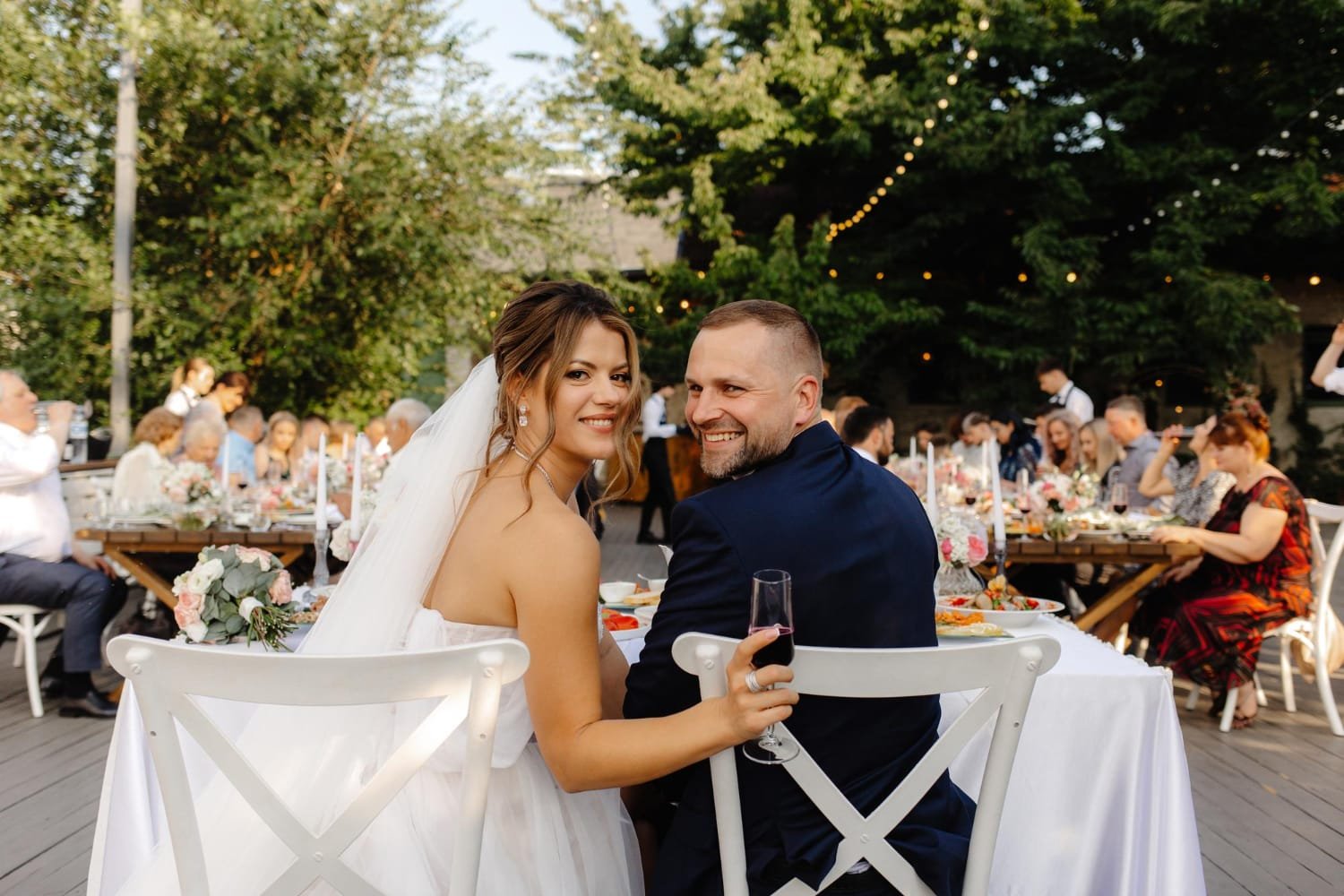
Wedding Vendor Contract Red Flags by Vendor Type
General principles apply everywhere. A few categories have their own specific patterns worth knowing before you sign.
Photography and videography
Watch for a contract that never names who is actually shooting, only the studio. Watch too for vague digital-file delivery language, with no firm count or delivery date specified anywhere.
Catering
Confirm the contract states an exact per-person price including tax and service charge, not a range that leaves the final number uncertain until the invoice arrives. Confirm what happens if your guest count changes after the contract is signed.
Florists
Look for delivery and setup times stated explicitly, not left as “day of, as scheduled.” Confirm what happens if specific flowers become unavailable close to your date, and whether substitutions require your approval first.
Music, DJs, and bands
Confirm the contract names the actual performer, not just the booking agency. Ask what backup equipment exists if primary gear fails, and whether that contingency is written into the agreement or simply assumed.
Hair and makeup
Confirm whether the artist you met at your trial is contractually guaranteed for the wedding day itself, since some studios assign a different artist without that detail being obvious from the booking process.
Cake and dessert vendors
Confirm the exact serving count and slice size the contract assumes. A lower price sometimes reflects a smaller serving cut rather than a better deal. Ask whether delivery and setup are itemized separately, and what happens if a specific design element becomes impractical close to your date.
Stationery and invitation designers
Confirm the exact quantity, paper stock, and printing method named in the contract. Confirm too a firm delivery date that gives you enough runway for addressing and mailing. Ask what happens if you need a rush reprint due to a typo or a late guest-count change, since this is a common, avoidable point of friction.
Transportation vendors
Confirm whether gratuity is already included in the quoted rate or billed separately. Confirm the overtime rate too, if your timeline runs long. Ask specifically what happens if the vehicle breaks down or is delayed, since transportation failures directly affect your entire day’s schedule in a way few other vendor issues do.
Rental companies
Recognizing wedding vendor contract red flags, especially in the catering section, is essential for a successful event.
Confirm the exact delivery and pickup windows, and whether a damage waiver is included or a separate optional add-on. Ask what happens if an item arrives damaged or the wrong item is delivered. This is one of the more common, entirely avoidable disputes in this category.
Green, Yellow, and Red Flags in a Wedding Vendor Contract
Learning to sort these three categories quickly is the single most useful skill in this entire guide.
Green flags
A vendor who hands you a full written contract before asking for any payment. Specific scope language naming hours, deliverables, and staffing. A clear, written answer to what happens if they cannot perform. These are the marks of a genuinely well-run business, not just a lucky find.
Yellow flags
A vendor who answers your questions honestly but only when you ask directly, never proactively. A standard, somewhat vague contract that is still willing to be customized when you request specific language. Neither of these is automatically concerning, but both deserve a direct follow-up conversation before you sign.
Red flags
Pressure to pay in full before any contract exists. A request for payment by wire transfer, cash, gift card, or cryptocurrency as the only accepted method. Evasiveness when asked what happens if they cannot perform. A business with no verifiable address, no recent references, and portfolio images that turn out to belong to someone else. Any one of these wedding vendor contract red flags on its own deserves a pause. Several together are a genuine reason to walk away.
A red flag is information, not a verdict
A newer business without years of history is not automatically a scam. Plenty of excellent vendors are new, small, or simply do not prioritize a polished web presence. Treat a single warning sign as a reason to ask more questions, not an automatic disqualifier.
Scam Check: When Wedding Vendor Contract Red Flags Point to Fraud
Most contract problems reflect ordinary business gaps, not deception. A smaller number cross into something closer to fraud, and it helps to know the difference clearly.
Take note of wedding vendor contract red flags that might arise during discussions about postponement.
Patterns worth real caution
- A website or listing that only recently appeared, with no verifiable business history.
- Pressure to pay the full amount immediately, before a written contract exists.
- A request for wire transfer, cash, gift cards, or cryptocurrency as the only accepted payment.
- Reviews that all appeared within a short window, using suspiciously similar phrasing.
- A refusal to provide a written contract at all, even after repeated requests.
What to do if you already paid
Act quickly. If you paid by credit card, contact your card issuer immediately to dispute the charge, since most issuers set a limited window, often around 60 days, for filing a dispute. Report the business to your state’s consumer protection office. The Federal Trade Commission’s consumer protection resources maintain general, current guidance on recognizing scam patterns and your options if a payment already went through.
What the Contract May Not Make Obvious
A contract can be entirely honest and still bury real consequences in language you would only catch by reading closely.
What counts as “on time” for final payment
Confirm the exact final payment deadline and what happens if it is missed by even a day. Some contracts treat a late final payment as grounds for cancelling your entire booking, a consequence that is rarely obvious from a casual read.
What “satisfaction guaranteed” actually guarantees
This phrase sounds reassuring and often means very little in practice. Ask specifically what recourse exists if you are unhappy with the final product, since a vague promise of “satisfaction” without a defined remedy is not the same as an enforceable guarantee.
Before You Pay Anything
Run this check before sending a deposit to any vendor, regardless of how much you trust them.
- Confirm scope in writing: exact hours, deliverables, and named staff.
- Confirm deposit and refund terms under every scenario, including vendor-side cancellation.
- Confirm insurance coverage if your venue requires it.
- Verify the business address and a recent reference.
- Ask what is not included that most real couples end up needing.
Worst-Case Scenario — and the Backup Plan
Picture the Ohio florist again: three weeks out, a business gone, a deposit gone with it. This happens more often than couples expect, particularly with smaller, independent operators running close to the edge financially.
What a real backup plan contains
Keep a running list of two or three alternative vendors in each major category, even ones you did not book, along with their general price range. Keep every contract and payment record in one accessible place, since disputing a charge requires documentation you do not want to search for under pressure. If you paid by credit card, you likely have a real path to recovering some or all of a lost deposit. If you paid by wire transfer or cash, recovery becomes considerably harder.
None of this means you should expect your vendors to fail. Most do not. It means a plan that only works if nothing goes wrong is not really a plan, and identifying wedding vendor contract red flags early costs far less than discovering them during a crisis.
A Sample Contract Audit, Line by Line
Here is a worked example: a photography contract, read the way this guide recommends reading every one.
| Clause | What it should specify | Red flag if missing |
|---|---|---|
| Scope | Named photographer, exact hours, deliverable count | Only “wedding package” listed |
| Deposit | Exact amount, refund conditions | Only “non-refundable,” no detail |
| Substitution | Who replaces the photographer if needed | No mention at all |
| Insurance | Liability coverage confirmed | Vendor cannot provide proof |
| Cancellation | Terms for both sides, including vendor-initiated | Only covers couple-initiated cancellation |
A contract missing two or more of these is not automatically fraudulent. It is, however, worth a direct conversation before you sign, using the questions earlier in this guide as your script.
Red Flags Before a Contract Even Exists
Some warning signs show up during the sales conversation itself, well before any paperwork appears.
Urgency that feels manufactured
“This price is only good if you book today” is a common sales tactic, and it is not automatically dishonest. It does deserve a pause. A legitimate vendor with genuine limited availability can usually explain specifically why, in terms of actual dates already booked, rather than a vague sense of urgency designed to rush your decision.
Reluctance to put anything in writing before you commit
A vendor who answers your questions verbally but resists sending even a basic outline by email, before you have paid anything, is showing you how they will likely handle disagreements later. Professional vendors are generally comfortable documenting their own answers.
A price that seems too good relative to comparable vendors
A significantly lower quote than every other vendor you contacted in the same category is not automatically a scam. It is, however, worth understanding specifically why: a newer business building a portfolio, a slower season, or genuinely a red flag about experience, insurance, or reliability. Ask directly rather than assuming either explanation.
Mapping Your Payment Schedule Across Every Vendor
Individual contracts rarely show you the combined picture of when money is actually due across your entire wedding.
Build one combined calendar
List every vendor’s deposit and final payment dates in a single place, not scattered across separate contracts and emails. This reveals whether multiple large payments cluster in the same month, a timing problem no individual contract would show you on its own.
Confirm what “due date” actually means
Some contracts specify the final payment must be received by a certain date. Others specify it must be postmarked or initiated by that date. This distinction matters if you are cutting a payment close to a deadline, and it is worth confirming directly rather than assuming the more forgiving interpretation applies.
Weather Check: How Contracts Handle Outdoor Risk
An outdoor ceremony or reception introduces a specific contract question many couples never think to ask until a forecast turns.
Whose responsibility is the weather backup
Weather-related challenges present their own wedding vendor contract red flags that need addressing.
Confirm whether your venue’s contract includes an indoor or covered backup space, or whether that is a separate rental you need to arrange yourself. Confirm the deadline for deciding to activate that backup, and who makes that call: you, your planner, or the venue.
What vendors do differently outdoors
Some photography and florist contracts include separate language for outdoor conditions, since extreme heat, cold, or precipitation can affect equipment, flowers, and timeline in ways an indoor event does not face. Ask directly whether your specific contract addresses this, particularly if your date falls in a season with real weather risk.
Accessibility Check: Contract Terms Couples Forget to Ask About
Accessibility accommodations are rarely addressed in a standard vendor contract unless a couple specifically raises them.
What to confirm in writing
If a guest or wedding party member has a mobility need, confirm in writing whether your venue and vendors can accommodate it. Ramp access, ground-floor options, accessible restrooms, and space for a wheelchair or mobility device near the ceremony and reception areas all matter. A verbal assurance during a tour is not the same as a written commitment in the contract.
Negotiating Contract Terms Before You Sign
More contract language is negotiable than most couples assume, particularly before a signature exists.
What tends to be genuinely flexible
Adding a substitution clause, clarifying vague scope language, and adjusting a payment schedule to better fit your own cash flow are all reasonable requests most professional vendors will consider. Asking for these changes before signing costs you nothing and often succeeds.
What tends not to move
Core pricing and the fundamental deposit structure are less likely to shift for an established, in-demand vendor. Frame your request around clarity and fairness rather than pure cost reduction, and you are more likely to get a genuine yes.
Digital Contracts and E-Signatures: What Still Applies
Most wedding vendors now use digital contract platforms rather than paper. The same scrutiny still applies, and a polished digital interface can make a weak contract look more official than it actually is.
A clean interface is not the same as clear terms
An e-signature platform with a professional design says nothing about whether the underlying scope, deposit, and cancellation language is actually specific. Read the full document the platform generates, not just the summary screen it shows you before signing.
Save your own copy, every time
Download and save a PDF copy of every signed contract immediately, rather than relying on being able to log back into a vendor’s platform later. Businesses close, platforms get discontinued, and access you assumed would remain available sometimes does not.
Multi-Vendor Contracts and Coordination Gaps
Individual contracts rarely address what happens at the seams between vendors, and this is where real confusion tends to happen on the wedding day itself.
Who is responsible for what, between vendors
If your florist needs venue access at 9 a.m. and your caterer needs the same space until 8 a.m. the night before, no single contract addresses that conflict. Confirm your venue’s own access schedule separately, and share it with every vendor whose setup depends on timing you do not fully control.
A single point of contact matters more than any one contract
Designate one person, whether that is you, a planner, or a trusted family member, as the day-of contact for every vendor. A contract cannot resolve a real-time scheduling conflict. A person empowered to make quick decisions can.
Reading Vendor Reviews Without Getting Fooled
Reviews shape which vendors couples even consider, which makes them a real target for manipulation, both fake positive reviews and occasionally coordinated negative ones from a competitor.
Signs a review pattern deserves skepticism
A cluster of five-star reviews posted within days of each other, especially with generic praise and no specific details, deserves a second look. Reviews spread naturally over months or years, with specific details about real weddings, are a stronger signal than a suspiciously perfect, uniform rating.
Spotting wedding vendor contract red flags in reviews can save you time and money.
One bad review rarely means avoid a vendor entirely
A repeated, specific pattern across multiple independent reviewers, describing the same kind of problem, deserves real attention. A single negative review, especially one the vendor addressed professionally, tells you less than how they responded to it.
How Wedding Vendor Contract Red Flags Vary by State
Contract law is largely a matter of state jurisdiction, and a few specific protections genuinely differ depending on where you live and where your vendor operates.
What this means practically
Consumer protection agencies, small claims court processes, and certain deposit-related consumer laws vary by state. If a significant dispute ever arises, your state’s attorney general or consumer protection office is a reasonable first stop for guidance specific to your situation. Do not assume a rule you read online applies uniformly everywhere.
What Happens During an Actual Contract Dispute
Most contract concerns never escalate into a real dispute. Knowing the realistic path if one does happen removes some of the anxiety around the process.
Start with the vendor directly, in writing
Most disagreements resolve at this stage. State the specific issue, reference the exact contract language, and propose a specific resolution. A calm, documented request often succeeds where a heated phone call does not.
Direct communication can help clarify wedding vendor contract red flags before they escalate.
Escalate through your payment method
If direct resolution fails and you paid by credit card, a formal dispute through your card issuer is a real, practical option, particularly within their standard dispute window. Provide the contract, your written communication, and a clear timeline of what happened.
Small claims court, realistically
For a dispute involving a moderate dollar amount, small claims court is designed to be navigated without a lawyer, with filing fees typically well under $100. This is a genuinely accessible option for many wedding-related contract disputes, though the specific process and dollar limits vary by state.
Building Your Own Contract Tracking Document
Everything in this guide points toward one practical output: a single document where you track every contract’s key terms in one place.
What belongs in it
- Vendor name, contact, and the specific individual named in the contract, if applicable.
- Deposit amount, final balance, and both due dates.
- Cancellation, substitution, and refund terms, summarized in your own words.
- Insurance confirmation, if applicable to your venue.
- A saved PDF copy of the signed contract itself.
Collecting references can help identify potential wedding vendor contract red flags.
A tracking document does not replace the actual contract. It gives you a single place to see your whole wedding’s contractual picture at once, rather than reconstructing it from a dozen separate emails when a question comes up.
Contract Considerations for Non-Traditional Weddings
Standard vendor contracts are sometimes written with a fairly narrow, traditional wedding in mind, and a few situations deserve extra attention.
Multi-day and multi-location weddings
If your celebration spans more than one day or more than one venue, confirm your contract’s scope explicitly covers every date and location. A single generic “wedding day” reference is not enough. A contract written for a single-day event can leave real ambiguity about coverage for a welcome party or a second-day brunch.
Same-sex and non-traditional couples
Most standard contracts translate cleanly regardless of the couple involved, though some older templates use gendered language, such as “bride” and “groom” fields, that may not fit your situation. This is rarely a legal problem. It is worth raising, though, if it feels relevant, since a vendor’s willingness to adjust template language is itself a small signal about how they will handle your specific event.
Blended families and multiple decision-makers
If more than one person, such as both partners and a contributing family member, is involved in decisions or payments, confirm the contract names who has actual authority to make changes. A contract signed by one person but funded by another can create confusion about who a vendor should actually take direction from.
Guest Experience: What a Vendor Contract Cannot Fix
Even a perfectly written contract cannot guarantee your guests have a good experience, and it helps to know where contractual protection ends and planning judgment begins.
A contract protects you; it does not run your event
A well-written photography contract guarantees hours and deliverables. It does not guarantee your photographer navigates a large, unfamiliar venue smoothly, or handles a difficult family member gracefully. These are judgment and experience questions, better assessed through references and a real conversation than through contract language alone.
A Second Scenario: The Contract That Actually Worked
Not every story in this guide should be a cautionary one. Here is what a well-handled situation actually looks like.
A DJ’s illness, two weeks out
A couple’s booked DJ was hospitalized twelve days before their wedding. Their contract named a specific substitution process: the agency would provide a comparable replacement, with a portfolio review offered to the couple before the swap was finalized. The couple reviewed two options, chose one, and the wedding proceeded with barely a hiccup in planning.
What made the difference
The couple had asked about substitution specifically before signing, months earlier, and the agency had written a real answer into the contract rather than leaving it to a phone call during a crisis. Nothing about this story is dramatic. That is exactly the point: a well-written contract turns a potential disaster into a manageable Tuesday.

Legal Check: Translating Common Contract Language
Wedding vendor contracts often reuse legal phrasing that sounds more intimidating than it needs to be. A working translation removes some of that friction.
“Time is of the essence”
This phrase means deadlines in the contract are strictly enforceable, not just suggested targets. If your contract includes this language near a payment deadline, treat that date as genuinely firm rather than assuming informal flexibility exists.
“Liquidated damages”
This refers to a specific, pre-agreed dollar amount owed if one side breaks the contract, rather than a court later deciding actual damages. Confirm the specific amount named, since this clause can work in your favor or against you depending on how it is written.
“Indemnification”
This means one party agrees to cover certain costs or legal claims on behalf of the other under specific circumstances. Wedding contracts sometimes include this around property damage or injury. Read exactly what triggers it, since broad indemnification language can expose you to more liability than you realized you were accepting.
Understanding indemnification in your contract helps avoid wedding vendor contract red flags.
“Sole and exclusive remedy”
This limits your recourse if something goes wrong to only the specific remedy named in the contract, often a partial refund, rather than broader legal options. Confirm what that named remedy actually is, since a vague or minimal one significantly limits your protection if a real problem occurs.
When to Ask for a Contract Amendment
Plans change after a contract is signed, and knowing when that change genuinely requires an update in writing prevents a lot of confusion later.
Guest count changes
A meaningful shift in guest count, particularly for catering, rentals, or any per-person pricing, should trigger a written update to the contract. A verbal heads-up is not enough. Ask your vendor specifically how and when they want guest-count changes communicated, and confirm the update in writing once it happens.
Timeline changes
If your ceremony time, venue, or overall schedule shifts significantly after booking, confirm with each affected vendor whether their contract terms still apply as written. An amendment may be needed instead. A vendor’s availability and pricing can genuinely depend on timing details that changed after you signed.
Added services
Any service added after the original contract, from extra hours to an additional product, deserves its own written addendum rather than a verbal add-on tracked only in a text message thread. This protects both you and the vendor if a question arises later about what was actually agreed to.
How to request an amendment without friction
Most professional vendors handle amendment requests routinely and without issue. Frame the request clearly: what changed, what you need updated, and why. A vendor who resists a reasonable, clearly explained amendment request is showing you something worth noting about how they handle change in general.
A Complete Pre-Signing Checklist
Use this as your final pass before signing any wedding vendor contract, pulling together everything covered in this guide.
- ☐ Scope names exact hours, deliverables, and staff: ____________
- ☐ Deposit amount and refund conditions confirmed: ____________
- ☐ Vendor-side cancellation terms addressed: ____________
- ☐ Substitution process named specifically: ____________
- ☐ Insurance confirmed, if required by venue: ____________
- ☐ Business identity verified (address, reference, reviews): ____________
- ☐ Signed copy saved to your own device: ____________
Seven checks, five minutes per vendor. This is a small amount of time against the real financial and logistical risk this entire guide has walked through.
Does a Wedding Planner Catch These Red Flags for You?
An experienced planner often does, though not automatically, and the answer depends on what kind of planning service you actually hired.
What a good planner adds
Planners who have reviewed dozens of contracts recognize vague scope language and missing substitution clauses quickly, often catching issues a first-time couple would miss entirely. Many also maintain vendor relationships that come with more favorable, more clearly written standard contracts already.
What a planner does not automatically do
Full-service planning typically includes contract review as part of the package. Day-of coordination usually does not, since that role begins much closer to the wedding itself, after most contracts are already signed. Confirm specifically what your own planner’s scope includes before assuming contract review is part of it.
Contracts for Destination and Out-of-State Vendors
Special considerations for out-of-state vendors can reveal additional wedding vendor contract red flags.
Hiring a vendor who does not live near your venue adds a few contract questions most local hires never raise.
Confirm which state’s law governs the contract
Many contracts include a governing law clause specifying which state’s laws apply if a dispute arises. This can matter genuinely if you live in one state, your vendor operates in another, and your wedding happens in a third.
Travel and accommodation costs, confirmed specifically
Confirm exactly what travel costs are included in the quoted price versus billed separately, and what happens if travel is disrupted by weather or another delay outside anyone’s control. A vendor traveling a significant distance carries more that can go wrong logistically, which makes a clear contingency plan more important, not less.
Emergency Contact Protocols: A Contract Detail Worth Confirming
Most contracts name a business phone number. Fewer name what happens if that number does not get answered on the wedding day itself, when timing matters more than any other day of the relationship.
Ask for a real, wedding-day-specific contact method
Confirm a direct cell number for whoever is actually on-site, not just the business’s general line, which may route to voicemail during business hours on a Saturday. This matters most for any vendor whose timing genuinely counts, such as a photographer, caterer, or transportation service. A single missed call at the wrong moment can throw off an entire timeline.
Clear communication about contact methods can help avoid wedding vendor contract red flags on the wedding day.
Share this information with your day-of point of contact
Whoever is managing logistics on your wedding day, whether that is you, a planner, or a trusted family member, should have direct contact information for every vendor in one place. Do not leave it scattered across your own phone, which you will not be checking during the ceremony itself. This is a small piece of preparation that pays off disproportionately if anything needs a quick resolution.
What Skipping This Review Actually Costs
Reading a contract closely takes perhaps twenty minutes per vendor. Skipping that step does not save time in any meaningful sense. It moves the cost of that missing twenty minutes to a much worse moment. Three weeks out, during a crisis, with far fewer options and far more stress than a calm read-through would have required.
A rough comparison
Twenty minutes reading a contract, asking two or three direct questions, and getting answers in writing costs you nothing but a small amount of time during an already busy planning process. The Ohio bride’s alternative looked very different. Discovering a closed business and a lost deposit three weeks before her wedding cost her $2,800. It also cost her a scramble to find a replacement florist on short notice, and a level of stress no amount of planning should have to include this close to a wedding day.
This habit compounds across every vendor you hire
A wedding typically involves eight to twelve separate vendor contracts. Applying this same twenty-minute review to each one adds up to roughly two to four hours across an entire engagement, spread over many months rather than concentrated into one overwhelming task. Compare that modest time investment to the alternative: even one contract gap discovered at the worst possible moment can cost far more in money, stress, and lost time than the entire review process for every vendor combined.
The math is not close. A consistent habit of reading contracts closely, applied to every vendor from the very first booking, is the single least expensive form of protection covered anywhere in this guide.
Time invested in identifying potential wedding vendor contract red flags pays off in the long run.

Frequently Asked Questions
What are the most common wedding vendor contract red flags?
Several patterns count among the most consistent warning signs. Pressure to pay in full before a contract exists. Vague scope language that never names specific hours or deliverables. Silence on what happens if the vendor cannot perform, and a refusal to provide proof of insurance when requested. None of these alone proves fraud, but each deserves a direct follow-up question before you sign.
Is it normal for a contract to not name who specifically performs the service?
It is common, particularly for larger studios or agencies with multiple staff members. Whether it is a problem depends on why you booked that vendor. If a specific person’s style or personality was the reason you chose them, ask the contract to name that person directly, rather than assuming they are guaranteed.
What should we do if a vendor refuses to provide a written contract?
Treat this as a genuine red flag and consider it a reason to look elsewhere. A verbal agreement offers essentially no protection if something goes wrong, and a professional vendor with nothing to hide has no real reason to avoid putting standard terms in writing.
How do we verify a wedding vendor is a legitimate business?
Confirm a real, verifiable business address, search the business name alongside “complaint” as a quick check, and ask for a reference from a couple married within roughly the past year. A reverse image search on a few portfolio photos can also confirm the work actually belongs to them.
What is the safest way to pay a wedding vendor deposit?
Credit card generally offers the strongest protection, since it preserves your ability to dispute a charge if a vendor fails to deliver, typically within about 60 days of the statement date. Wire transfers, cash, and payment apps generally do not offer that same recourse once the money has moved.
Should we hire a lawyer to review every wedding vendor contract?
For most standard vendor contracts, a careful read using the checklist in this guide is sufficient for the average couple. For a particularly large contract, such as a venue rental with significant financial exposure, a brief consultation with a lawyer is a reasonable, inexpensive precaution rather than an overreaction.
What happens if our vendor’s business closes before our wedding?
Review your contract’s cancellation and substitution language immediately for any relevant terms. If you paid by credit card, contact your card issuer promptly to explore a dispute. Report the closure to your state’s consumer protection office, and check your backup vendor list, built in advance, for a realistic replacement on short notice.
Are digital contracts as legally binding as paper ones?
Generally, yes, in the United States, provided the platform meets standard e-signature requirements. This does not make the underlying terms any more or less protective. Read the full document a digital platform generates with the same scrutiny you would apply to a paper contract.
What if we already signed a contract and later found a concerning clause?
Raise it directly and calmly with the vendor rather than assuming it is unchangeable. Many vendors will amend a contract before the wedding date if you ask specifically and early, particularly for a genuinely reasonable request like adding cancellation clarity that benefits both sides.
Do all wedding vendors require a deposit?
Nearly all professional vendors do, typically 25 to 50 percent of the total at booking. A vendor requesting full payment upfront, well before any service is rendered, is a pattern worth extra scrutiny, even though it does not automatically indicate a problem.
How many backup vendors should we keep in mind for each category?
Two or three per major category is a reasonable, manageable number. You do not need a fully vetted alternative for every vendor. Knowing roughly who you would call, and what they generally charge, saves real time if you ever need to activate that backup plan under pressure.
What if a vendor asks us to sign a contract with blank sections?
Do not sign it. Every material term, including price, date, and scope, should be filled in before you sign, not added later by either party. A vendor asking you to sign first and “fill in the details after” is asking you to accept terms you cannot actually verify.
Can we spot wedding vendor contract red flags without any legal background?
Every couple should be prepared to recognize wedding vendor contract red flags throughout the planning process.
Yes, in most cases. The checklists and worked examples in this guide are designed for exactly that: a couple with no legal training, applying a consistent set of specific questions to any contract. Genuine legal complexity is rare in standard wedding vendor agreements. The habit of reading closely and asking directly covers the vast majority of real situations.
Does a wedding planner review contracts for us?
Often, but not automatically. Full-service planning typically includes contract review as part of the package, while day-of coordination usually does not, since that role begins after most contracts are already signed. Confirm specifically what your own planner’s scope covers before assuming contract review is included.
What is the realistic cost of taking a vendor dispute to small claims court?
Filing fees are typically well under $100, and the process is designed to be navigated without a lawyer. The specific dollar limits and procedures vary by state, so check your own state’s small claims court guidelines if a dispute reaches this point.
Understanding the costs involved can help identify wedding vendor contract red flags sooner rather than later.
Should we worry if a vendor’s price is much lower than everyone else’s?
Not automatically, but it is worth understanding why. A significantly lower quote might reflect a newer business building a portfolio, a slower season, or genuinely a gap in experience, insurance, or reliability. Ask directly rather than assuming either explanation without checking.
What is the single most useful habit for avoiding wedding vendor contract red flags?
Reading the actual contract language, not the vendor’s verbal summary of it, before you sign. Most gaps and vague terms are visible on the page if you read it closely. Asking direct questions about anything unclear costs nothing, and it protects you far more than assuming good faith will cover every scenario. Build this into your process from the very first vendor you book, and it becomes second nature for every one after it.
Building a habit of identifying wedding vendor contract red flags can enhance your planning process.
Should we worry about a governing law clause if our vendor is out of state?
It is worth understanding, though not automatically a reason for concern. This clause specifies which state’s laws apply if a dispute arises, which can matter if you, your vendor, and your venue are spread across different states. Ask your vendor to explain it in plain language if the clause is unclear.
What should we confirm before hiring a vendor who is traveling a long distance?
Confirm exactly what travel costs are included versus billed separately. Confirm too the contingency plan if travel gets disrupted by weather or another delay. A vendor traveling a significant distance introduces more that can go wrong logistically, which makes a clear, written backup plan more important than it would be for a local hire.
What if we need to cancel our wedding entirely due to a family emergency?
Contact every vendor directly and as early as possible once you know cancellation is necessary. Review each contract’s specific cancellation terms. Some include compassionate exceptions for genuine emergencies, while others apply the same policy regardless of circumstance. A vendor is not obligated to waive a standard cancellation fee, but many will work with you in good faith when approached directly and honestly about the situation.
The Decision Principle, and Your Next Step
Wedding vendor contract red flags are rarely about dishonest people. They are about gaps: scope left vague, cancellation left unaddressed, a business’s identity left unverified. The fix is not suspicion of every vendor you meet. It is a consistent habit: read the actual document, ask the specific questions in this guide, and get every important answer in writing before you pay.
Pick the contract you are closest to signing right now, and run it through the audit table in this guide. Confirm scope, deposit terms, substitution language, and insurance, in writing, before any money changes hands. That single habit, repeated across every vendor, is what actually protects a wedding from the kind of surprise that closed one bride’s florist three weeks before her wedding day.
Ultimately, recognizing wedding vendor contract red flags helps ensure a smooth planning experience.
Your next step
Pull out your most recent vendor contract and run it against the five-row audit table in this guide: scope, deposit, substitution, insurance, and cancellation. Any row you cannot answer confidently is exactly where to direct your next question, before you sign anything else. Do this once, for one vendor, and the habit will carry naturally into every contract you sign after it.
