
A couple standing at a jewelry counter hears the same line most couples hear: a ring should cost roughly two months’ salary. It sounds old, almost ceremonial, the kind of rule that must trace back centuries. It does not. An advertising copywriter wrote that specific number in the twentieth century, for a company trying to sell more diamonds during a slow decade. The circle-shaped ring itself really is ancient. The salary formula attached to it is a marketing slogan wearing a costume.
This is the pattern running through almost everything people think they know about engagement and wedding rings. Some of it is genuinely old: a documented Roman betrothal custom, a specific vein-based myth traceable to one seventeenth-century English lawyer, a diamond ring given to a duchess in 1477. Some of it is recent and manufactured. Which finger, which metal, which stone, and how much to spend, all get shaped less by tradition than by a hundred years of jewelry industry marketing that worked extraordinarily well.
This guide separates the two, then gets practical. It covers documented history, cultural and religious variation, and what a ring’s design elements actually mean. It covers a full breakdown of engagement ring and wedding band choices, realistic 2026 pricing with real ranges rather than one misleading average, etiquette for every situation from same-sex couples to second marriages to family heirlooms, and a buying guide that will not leave you guessing what you actually paid for. Read it start to finish, or use it as a reference for the one section you need right now.
Whether you are looking for classic or contemporary designs, understanding the factors influencing the choice of engagemets rings is essential.
Quick Answer: What You Actually Need to Know
If you read nothing else, these five facts reshape almost every other decision in this guide about engagemets rings.
Start with this: “two months’ salary” is not a tradition. It is a 1980s revision of a 1930s advertising slogan. A diamond company’s ad agency wrote it, with no historical basis whatsoever.
Most couples spend far less than the advertised “average” implies. The median engagement ring purchase sits around $3,000 to $4,000. A smaller number of expensive purchases pull the widely quoted average toward $5,200 to $6,500. That gap matters more than the headline number itself.
Skip the ring-finger vein myth’s Roman origin story. The specific term and romantic explanation trace to an English legal text published in 1686, retroactively attributed to unnamed ancient sources.
Wedding bands cost meaningfully less than engagement rings. Most couples spend $400 to $1,800 per band, considerably less than the engagement ring’s central stone commands.
No tradition older than 1938 requires a diamond. Before that year’s advertising campaign began, most American engagement rings held no diamond at all.
The rest of this guide builds out each of these into something you can actually use, starting with the documented history underneath all of it.
Documented History: What the Evidence Actually Shows
Ring-giving traditions span thousands of years. The documented evidence, though, is narrower and more specific than most popular retellings suggest.
Ancient Egypt: rings as a practical starting point
The earliest wearable rings trace to ancient civilizations of the Near East and North Africa. They were originally used as seals, not romantic tokens. Some historians connect Egyptian ring-wearing to marriage customs, though the documentation here is genuinely thinner than the later Roman evidence. Treat the Egyptian connection as plausible background, not confirmed fact.
Ancient Rome: the actual documented starting point
By the second century BCE, Roman betrothal customs included a specific, recorded practice. A man proposing to a woman gave two rings: one gold, worn publicly as a display of wealth, and one iron, worn at home during daily household work. Pliny the Elder, writing in the first century CE, directly described an iron ring sent to a woman upon betrothal, without any stone. These betrothal rings even had their own name: annuli pronubi.
This exchange happened at an event called the sponsalia, an informal arrangement to marry, typically negotiated between the groom and the bride’s father. Roman and Greek art also shows rings bearing clasped hands. This was a shared symbol between the two cultures, representing the same betrothal concept. Classicists studying Roman marriage customs, including Temple University’s Karen Klaiber Hersch, describe this as genuine, multi-source evidence. Rings were given as a sign of a formal promise, not simply a modern retelling projected backward onto antiquity.
The vena amoris myth: traced to a specific, much later source
Here is where popular history and documented history diverge sharply. Many retellings state confidently that ancient Romans placed the ring on the fourth finger because they believed a vein, the vena amoris, ran directly from that finger to the heart. The actual paper trail tells a different story.
According to a well-cited historical record, the earliest known use of the specific term vena amoris appears in a work by Henry Swinburne, an English ecclesiastical lawyer, published posthumously in 1686. Swinburne cited unnamed ancient sources and claimed an Egyptian connection, likely referencing the fourth-century Roman writer Macrobius. Modern anatomy later confirmed no such special vein exists, formally established through William Harvey’s seventeenth-century work on circulation. Every vein leads to the heart eventually. None does so exclusively from one finger.
A related, older idea does appear in ancient sources. The Roman writer Aulus Gellius, quoting the Egyptian writer Apion, describes a nervus, a word meaning nerve or sinew, not specifically a vein of romantic significance. The specific romantic vein story, as commonly told today, is a seventeenth-century English construction layered onto older, looser ideas. It is not a documented ancient Roman belief stated in those terms.
The Middle Ages and Renaissance: rings become more personal
Through medieval Europe, the church began formalizing engagement rituals, moving rings further from a purely legal-family arrangement toward personal, emotional significance. The first recorded diamond wedding ring dates to the late 1300s or early 1400s, left by an English widow in her will. In 1477, Archduke Maximilian of Austria gave Mary of Burgundy a diamond ring spelling her initial in small flat diamonds. This is widely cited as the first famous diamond engagement ring, a specific, documented, dated event.
The gimmel ring: a genuine 16th and 17th century European custom
European husbands of this period sometimes gave wives a gimmel ring. This design used interlocking bands that separated during the engagement and reunited into one piece at the wedding itself. It is a real, documented design tradition, distinct from the modern single-band custom.
The Manufactured Tradition: How Diamonds Became “Required”
This is the single most important, most documented, and most surprising piece of engagement ring history. It is also the least often told accurately.
Before 1938, most American engagement rings held no diamond
As late as 1939, roughly 10 percent of American engagement rings contained a diamond. Couples commonly gave a locket, a strand of pearls, a colored gemstone, or a family heirloom instead. Diamonds existed in jewelry, but they were not the default engagement stone most people assume today.
De Beers, the Great Depression, and one advertising agency
De Beers, founded in 1888, had built dominant control over the global diamond supply by the early twentieth century. The Great Depression hit diamond sales hard. In 1938, De Beers hired the advertising agency N.W. Ayer & Son to solve a genuine business problem: how to convince ordinary consumers to buy something they had never particularly wanted.
Rather than advertising diamonds directly, the campaign told stories. Ayer placed articles in newspapers and magazines romanticizing diamond engagement rings, quietly normalizing the idea among the American middle class. The agency also began lending diamonds to Hollywood starlets for events like the Academy Awards, tying the stone to celebrity glamour, a practice that continues in some form today.
“A Diamond is Forever”: one copywriter, one year, one slogan
In 1947, N.W. Ayer copywriter Frances Gerety wrote the line “A Diamond is Forever.” It first appeared in De Beers advertising in 1948 and has run in every De Beers engagement campaign since. In 1999, Advertising Age named it the top advertising slogan of the entire twentieth century, a distinction Gerety learned of shortly before her death.
The salary rule: invented, then revised, then revised again
De Beers’ original 1930s guidance suggested spending roughly one month’s salary on an engagement ring. By the 1980s, facing softer sales, the campaign revised this upward to two months, framed in ads with lines like “how else could two months’ salary last forever?” Some more recent commentary describes a further drift toward three months in certain marketing contexts. None of these specific numbers existed before the campaign invented them. There is no historical tradition, anywhere, that ties ring price to income in this way.
The results, measured directly
American diamond sales grew from roughly $23 million in 1938 to $2.1 billion by 1979. Diamond engagement ring adoption climbed from about 10 percent of American brides in 1940 to roughly 80 percent by 1990. In Japan, where De Beers later expanded the same campaign, adoption rose from under 5 percent in 1960 to about 60 percent by 1981. This was not organic cultural evolution happening on its own timeline. It was a deliberate, well-documented, extraordinarily successful advertising campaign, and understanding this does not diminish anyone’s real ring or real relationship. It simply means the specific rules around cost and stone choice are optional marketing conventions, not inherited obligations.
Cultural and Religious Traditions Around the World
Ring customs vary considerably by culture and faith. No single practice represents a universal rule, despite how confidently some sources present one version as standard.
Which hand and finger: genuinely split by region
The United States, United Kingdom, Australia, and much of Western Europe place the wedding ring on the left hand’s fourth finger. Many Central and Eastern European countries, along with Orthodox Christian traditions, including Russia, Greece, and parts of Germany, place it on the right hand instead. Neither placement is more correct historically. Both trace to different regional interpretations of the same general finger-symbolism idea.
Jewish wedding ring customs
Traditional Jewish weddings often specify a plain, unbroken metal band without stones or engravings for the ceremony itself, symbolizing an unbroken circle. The ring is traditionally placed on the index finger during the ceremony under the chuppah, sometimes moved to the conventional ring finger afterward. Practices vary by community and denomination.
Hindu wedding traditions
Hindu weddings incorporate a range of marriage markers beyond a ring alone, including the mangalsutra, a necklace symbolizing marital status, and sindoor, a red pigment applied to the hair part. Ring exchange has become common in many contemporary Hindu weddings, often blended with these older markers rather than replacing them.
Christian and Catholic customs
Christian wedding traditions generally involve a ring exchange during the ceremony itself, with the specific liturgical wording and symbolism varying by denomination. Catholic ceremonies typically include a formal ring blessing as part of the rite.
Muslim wedding customs
Ring exchange is common in many contemporary Muslim weddings, though it is a cultural addition rather than a specifically required religious element in most interpretations. Practices vary considerably by region and specific community.
Avoid treating any single tradition as universal
Every specific custom in this section reflects one community’s practice, not a global standard. If a specific cultural or religious tradition matters to your own wedding, research that tradition directly, ideally with guidance from someone knowledgeable in that community, rather than a general overview like this one.
What the Design Actually Means
Beyond the history of giving rings at all, specific design elements carry their own layers of meaning worth understanding.
The circle: the most consistently documented symbolism
A ring’s circular shape, with no beginning and no end, is widely and consistently interpreted across cultures and centuries as a symbol of eternity and unbroken commitment. This is one of the more reliably documented pieces of ring symbolism, appearing consistently across historical sources rather than a single retroactive interpretation.
Metal symbolism
Gold has represented wealth, permanence, and value across most of ring history. Silver, historically more accessible, often symbolized a more modest, practical commitment. Platinum, a comparatively modern jewelry metal, has become associated with durability and rarity, reflecting its industrial-age discovery and processing rather than ancient symbolism.
Stone symbolism and birthstones
Diamonds carry associations with strength and permanence, reinforced considerably by the modern marketing history covered above. Sapphires connect to loyalty and wisdom in various traditions. Rubies connect to passion. Emeralds connect to rebirth and hope. A birthstone-based engagement ring, using the wearer’s actual birth month stone, has become a genuinely popular modern personalization choice, worth considering as an alternative to a default diamond.
The Complete Engagement Ring Guide
Once history and meaning are settled, the practical decisions begin. This section covers every major choice an engagement ring involves.
The 4Cs: what they actually measure
Cut, clarity, color, and carat are the four standard factors used to grade a diamond, a framework GIA helped formalize decades ago. Cut measures how well a stone’s proportions and angles allow it to reflect light, and it affects visual brilliance more than any other single factor. Clarity measures internal and surface imperfections, invisible to the naked eye in many grades but measurable under magnification. Color measures the presence or absence of yellow tint, graded on a letter scale from colorless to noticeably tinted. Carat measures weight, not size directly, though the two correlate.
Carat weight drives price more than any other single factor
Diamond cost increases considerably as carat weight rises, and not in a straight line. A larger stone of the same quality costs disproportionately more per carat than a smaller one, since larger rough diamonds are genuinely rarer.
Diamond alternatives worth genuine consideration
Lab-grown diamonds share the same chemical composition and visual properties as natural diamonds, at meaningfully lower cost, commonly 30 to 50 percent less than a comparable natural stone. Moissanite offers similar brilliance at an even lower price point, though with different optical properties a trained eye can sometimes distinguish. Colored gemstones, sapphires, rubies, and emeralds among them, offer genuine alternatives with their own historical precedent, not a compromise choice.
Certification: GIA and IGI, and why the distinction matters
GIA, the Gemological Institute of America, remains the primary certification standard for natural diamonds. IGI, the International Gemological Institute, has become the primary certifier for most lab-grown diamonds, particularly since GIA replaced its full lab-grown grading scale with two broader descriptive tiers in October 2025. An IGI-certified diamond has historically cost roughly 10 to 12 percent less than a GIA-certified stone of the same stated grade, a gap reflecting brand perception more than measurable quality difference. Confirm which certification applies to any specific stone you are considering.
Metal choices for the ring itself
| Metal | Durability | Maintenance | Relative cost |
|---|---|---|---|
| Platinum | Very high | Low; develops patina, not tarnish | Highest |
| White gold | High | Needs occasional rhodium replating | Mid-high |
| Yellow gold | High | Low; naturally colored, no replating | Mid-high |
| Rose gold | High | Low; naturally colored | Mid-high |
| Sterling silver | Lower | Tarnishes; needs regular polishing | Lowest |
Setting styles compared
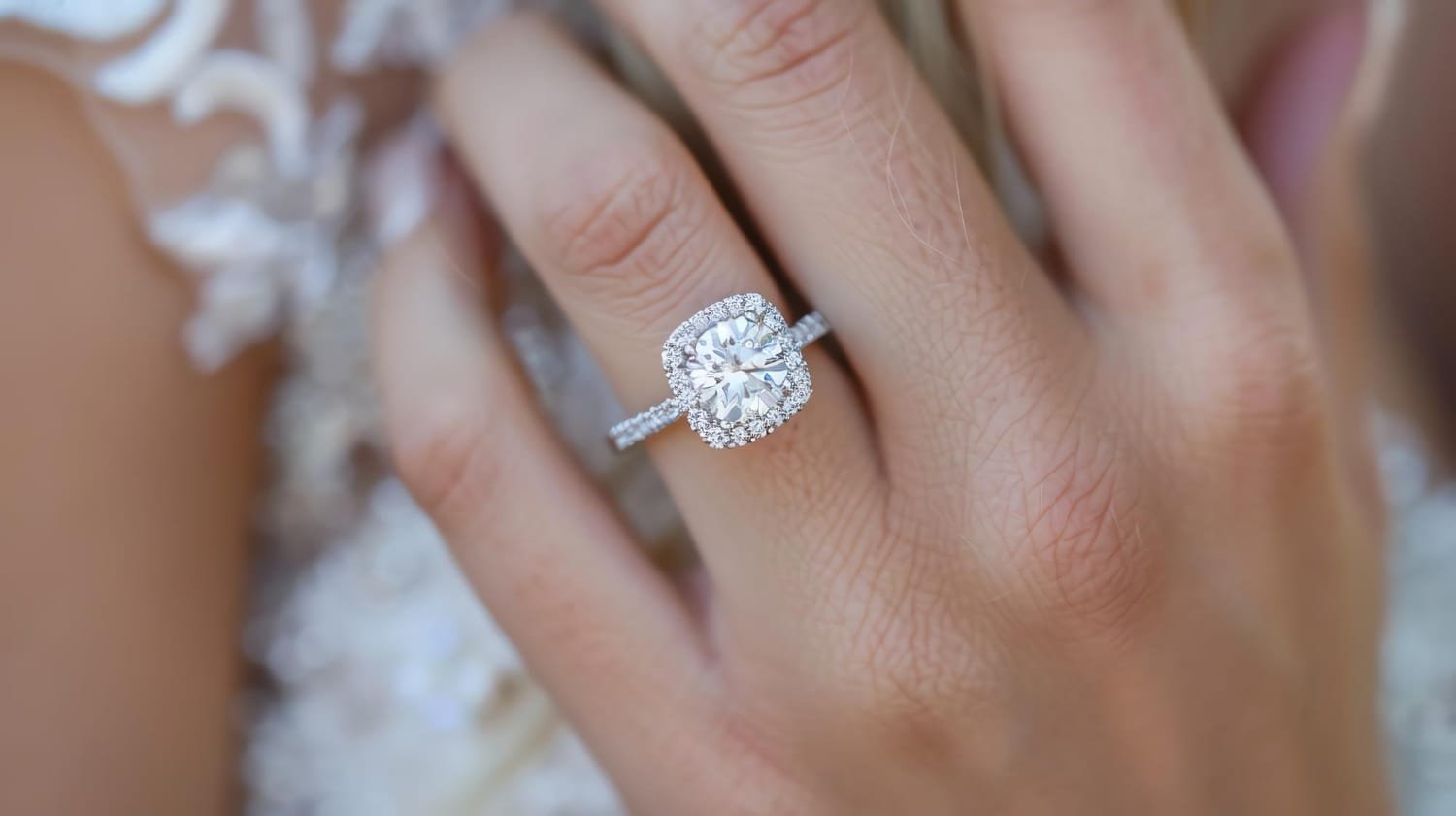
A solitaire setting features one center stone alone, offering maximum light exposure and a classic, versatile look. A halo setting surrounds the center stone with smaller accent stones, visually increasing apparent size. A three-stone setting represents past, present, and future in common modern interpretation, though this specific symbolic framing is a relatively recent marketing addition, not ancient tradition. Pave settings cover the band itself with small stones for continuous sparkle. Vintage-inspired settings borrow design elements from specific historical periods, particularly Art Deco and Edwardian styles.
Ring sizing: getting it right the first time
Ring size can be measured discreetly by borrowing an existing ring the wearer already owns and having a jeweler size it, or through a direct conversation if secrecy is not a priority. Most reputable jewelers, including many online retailers, offer free or low-cost resizing within a specific window after purchase. Confirm this policy before buying, since sizing genuinely does change slightly over time and after the actual proposal.
Engagement & Wedding Rings — The Ultimate Guide
The Complete Wedding Ring and Band Guide
The wedding band gets far less attention than the engagement ring, despite being the piece both partners typically wear every single day for decades.
Wedding bands versus engagement rings: a different purpose entirely
An engagement ring typically centers on one focal stone and gets worn from proposal through the wedding and beyond. A wedding band is simpler by design, meant to sit comfortably against daily wear. It sits sometimes alongside the engagement ring, sometimes alone. Many couples choose a wedding band that complements their engagement ring’s metal and style without matching it exactly.
Materials for men’s wedding bands
Traditional precious metals, gold, platinum, and silver, remain popular for men’s bands. Alternative metals have grown considerably in popularity over the past two decades. Tungsten carbide offers exceptional scratch resistance at a lower price point, though it cannot be resized once made. Titanium offers a lightweight, durable, hypoallergenic option. Cobalt chrome combines durability with a bright, white finish similar to platinum at a fraction of the cost.
Materials for women’s wedding bands
Women’s bands commonly use the same precious metal as the engagement ring for visual consistency, though this is a preference, not a rule. Many women’s bands incorporate small diamonds or other stones along the band itself, sometimes called a diamond band or accent band. This adds cost above a plain metal band.
Matching sets versus independent choices
Some jewelers sell an engagement ring and wedding band as a pre-designed matching set, sometimes called a bridal set, ensuring the two pieces fit together seamlessly. Other couples choose each piece independently, prioritizing individual fit and comfort over a perfectly matched appearance. Neither approach is more correct. Confirm your engagement ring’s actual dimensions before ordering an independent wedding band, so the two sit comfortably together on the finger.
Eternity bands: what they actually are
An eternity band features stones continuously around the entire circumference of the ring. A half-eternity band, by contrast, covers only the front-facing portion visible when worn. Full eternity bands cost more and cannot typically be resized without disrupting the continuous stone pattern. Confirm this before choosing this style if your ring size might change.
Do both partners need to wear a wedding band?
This is a genuinely personal choice with no universal requirement. Some couples both wear bands. Some have only one partner wear a visible ring, often due to profession, personal preference, or practical daily-wear considerations. Some skip wedding bands entirely in favor of another meaningful symbol. All of these are legitimate choices.
Realistic Pricing: What Rings Actually Cost in 2026
This section exists specifically to replace marketing-driven expectations with real, current, sourced numbers, presented as honest ranges rather than one misleading average.
Average versus median: why this distinction genuinely matters
An “average” can mislead badly when a small number of expensive purchases exist alongside many modest ones. A handful of five-figure custom rings pulls the mathematical average upward, even though most actual couples spend considerably less. The median, the true middle point of all purchases, gives a more honest picture of what a typical couple actually spends.
Engagement ring costs: the real range
| Measure | 2026 figure |
|---|---|
| National average (The Knot, industry-cited) | $5,200–$6,500 |
| Median (typical middle spend) | $3,000–$4,000 |
| Couples spending under $2,500 | About 1 in 5 |
| Couples spending under $3,000 | About one-third |
| Couples spending $2,000–$8,000 | About 70% |
| Natural diamond ring average | $7,000–$10,000 |
| Lab-grown diamond equivalent | Roughly 30–50% less |
Engagement ring costs by state: real regional variation
| Region | Approximate average |
|---|---|
| Washington State (highest) | ~$10,100 |
| California | ~$9,500 |
| Illinois | ~$9,200 |
| Virginia | ~$7,900 |
| South Dakota (lowest) | ~$3,000 |
These regional averages are illustrative, not a target. Cost of living, local income levels, and regional norms all drive this variation. Your specific budget should reflect your own finances, not a number tied to your zip code.
Engagement ring costs by component
| Component | Typical range |
|---|---|
| Diamond, per carat | $4,000–$10,000 |
| Solitaire setting | $1,000–$3,000 |
| Halo / three-stone / pavé setting | $2,000–$7,000 |
| Platinum band | $1,000–$2,500 |
| Gold band | $1,000–$1,200 |
| Silver band | $200–$1,000 |
| Custom design, full ring | $5,000–$10,000+ |
Wedding band costs: consistently lower than engagement rings
| Band type | Typical range |
|---|---|
| Men’s band, average | $600–$700 |
| Women’s band, average | $1,200–$1,400 |
| Basic gold band | $300–$800 |
| Platinum band | $500–$1,500 |
| Diamond-accented band | $1,000–$5,000 |
| Total, both partners’ bands combined | ~$1,500 typical |
What to budget beyond the ring price itself
The sticker price is rarely the complete total. Sales tax applies in most states, sometimes adding a meaningful percentage. Insurance, covered in detail later in this guide, typically runs 1 to 2 percent of the ring’s value annually. Resizing, if not included free by your jeweler, can add $50 to $150. Custom design work, if you choose it, adds real time and cost beyond a pre-made setting.
There is no correct amount to spend on a ring. The historically accurate answer to “how much should we spend” is: whatever genuinely fits your actual finances and values, informed by real data rather than a decades-old advertising slogan.
Etiquette: Every Situation, Covered Honestly
Ring etiquette generates more anxious questions than almost any other wedding topic. Most of these questions have more flexible answers than tradition suggests.
Who buys the engagement ring?
Traditional Western etiquette assumes one partner buys and presents the ring to the other, historically framed around a man proposing to a woman. Modern couples increasingly shop together, split the cost, or handle the entire process as a joint decision. None of these approaches is more correct. Choose whatever genuinely reflects your own relationship.
Who pays for wedding bands?
Convention in many Western contexts has each partner’s family or the partner themselves purchasing the band the other partner will wear, though this varies considerably and has never been a strict, universal rule. Many modern couples simply purchase both bands from a shared budget.
Engagement rings for men and non-binary partners
Men’s engagement rings have grown considerably more common and accepted, particularly since the legalization of same-sex marriage broadened who proposes to whom and with what. A gender-neutral or unconventional ring choice reflects contemporary practice, not a break from any binding historical rule, since historical ring-giving customs were themselves considerably more varied than modern retellings suggest.
Same-sex couple ring etiquette
Same-sex couples navigating ring etiquette face genuinely fewer inherited “rules” than different-sex couples, since most traditional etiquette assumed a specific gendered proposal structure. This creates real freedom: choose who proposes, who wears what, and what the rings look like, based entirely on what fits your specific relationship.
Second marriages and existing rings
A second marriage does not require abandoning meaningful jewelry from a first marriage, though many people do choose new rings to mark a genuinely new chapter. Some choose to have an existing stone reset into a new design, preserving sentimental value while creating something new. There is no obligation either way.
Family heirloom rings
Wearing a family heirloom carries real emotional significance many new rings cannot replicate. Confirm the ring’s actual condition and any needed resizing or restoration well before you need it, since older settings sometimes require specialized jeweler attention. Consider having a valuable heirloom formally appraised and insured separately, since its sentimental value does not automatically match its insurable value.
When to start wearing the wedding band
Convention places the wedding band on during the ceremony itself, worn from that point forward, typically alongside the engagement ring once the ceremony concludes. Some couples choose to wear the wedding band on the right hand until the ceremony, then move it to the left hand alongside the engagement ring afterward, a small, optional gesture some find meaningful.
How to handle a “no thank you” reaction to a proposed ring style
If a partner’s actual taste differs from what was purchased, most reputable jewelers offer an exchange or return window specifically for this situation. Choosing a ring together, or at minimum discussing general style preferences before a surprise purchase, meaningfully reduces this risk in the first place.
Sharing your ring on social media: no obligation either way
There is no etiquette requirement to post an engagement ring publicly, immediately, or ever. Personal comfort with sharing, privacy concerns, and simple preference all matter more than any assumed social expectation.
The Complete Buying Guide
Where and how you buy affects price, protection, and peace of mind as much as the ring itself.
In-store versus online: real trade-offs, not a clear winner
In-person shopping lets you see and try on stones and settings directly, genuinely valuable for a purchase this personal. Online retailers commonly offer lower prices, since they carry less physical inventory overhead, along with broader selection and increasingly sophisticated virtual try-on tools. Many couples now research online, then visit a physical store to confirm details before purchasing either in-store or online.
Verify certification directly, not just a jeweler’s claim
Ask to see the actual certification document for any diamond above a modest size, confirming it matches the specific stone you are purchasing, not a generic reference. GIA remains the gold standard for natural diamonds; IGI has become the standard reference for most lab-grown stones. A jeweler unable or unwilling to provide this documentation deserves real scrutiny.
Scam patterns worth knowing directly
Be wary of pressure to decide immediately, a common tactic separating buyers from the comparison shopping that would reveal an inflated price. Be skeptical of a “certification” from an unfamiliar, unverifiable lab rather than GIA or IGI. Verify any online retailer’s actual business legitimacy independently, through reviews and business registration records, before sending payment for a significant purchase.
Financing: understand the real terms
Many jewelers offer financing plans, sometimes with promotional zero-interest periods. Confirm the actual interest rate that applies after any promotional period ends, and confirm the specific payment schedule required to avoid retroactive interest charges, a common structure in deferred-interest financing that can cost considerably more than expected if a payment is missed.
Return and exchange policies: confirm before you buy
Ask directly about the specific return window, whether it covers the full purchase price or a restocking fee applies, and whether custom or resized rings are eligible for return at all. This detail matters more than it seems until you actually need it.
Ring insurance: what it actually covers
Standard homeowners or renters insurance often covers jewelry only up to a modest limit, sometimes just a few hundred dollars, far below a typical engagement ring’s value. A dedicated jewelry insurance policy or a scheduled rider added to an existing policy covers the ring’s full appraised value specifically, commonly costing 1 to 2 percent of that value annually. Confirm whether your policy covers loss, theft, and accidental damage, or only a subset of these.
Appraisal: a separate step from certification
A certification document describes a diamond’s objective characteristics. An appraisal assigns a specific dollar value for insurance purposes, typically performed by an independent appraiser rather than the selling jeweler, to avoid a conflict of interest. Get this done specifically for insurance purposes, not assumed to be included with your certification paperwork.
Care and Maintenance
A ring worn daily for decades needs real, ongoing care, not a one-time purchase decision followed by neglect.
Cleaning at home safely
Warm water, a small amount of mild dish soap, and a soft-bristled brush safely clean most diamond and precious metal rings at home. Avoid household cleaners containing chlorine or harsh chemicals, which can damage certain metals and settings over time. Dry thoroughly with a soft, lint-free cloth after cleaning.
Professional cleaning and inspection
Most jewelers offer complimentary cleaning and prong inspection, worth using every six months to a year even if you clean at home regularly. This catches a loosening stone or worn prong before it results in a lost gem, a genuinely preventable loss.
When to remove your ring
Remove rings before activities involving harsh chemicals, heavy impact, or significant swelling risk: cleaning with bleach, weightlifting, swimming in chlorinated pools, or extended sun exposure causing hand swelling. Store removed rings in a dedicated, secure location rather than a pocket or loose surface, where they are genuinely easy to lose.
Metal-specific care notes
White gold benefits from occasional professional rhodium replating to maintain its bright white finish, since the underlying metal has a naturally warmer tone. Platinum develops a soft patina over time that many wearers find attractive, requiring less frequent professional attention than white gold. Sterling silver tarnishes with air exposure and needs more frequent polishing than other precious metals.
Resizing: how often it’s actually needed
Finger size can change meaningfully due to weight fluctuation, pregnancy, temperature, and simple aging. Confirm your specific ring’s resizing limits, since some designs, particularly full eternity bands and certain tension settings, cannot be resized without significant redesign or cannot be resized at all.
Modern Trends Worth Understanding
Beyond history and etiquette, a few genuinely modern shifts affect how couples approach rings today.
Lab-grown diamonds: a real, growing shift
Lab-grown diamond adoption has increased considerably over the past several years, driven by lower cost and growing interest in the environmental and labor concerns sometimes associated with mined diamond sourcing. A lab-grown diamond is chemically and optically identical to a natural one; the difference lies entirely in origin, not composition.
Ethical sourcing and conflict-free certification
The Kimberley Process, an international certification scheme, addresses conflict diamond sourcing at a broad level, though critics note real limitations in its scope and enforcement. Ask your jeweler directly about specific sourcing practices if this matters to you, rather than assuming any single certification fully resolves every ethical concern.
Colored gemstone engagement rings
Sapphires, in particular, have grown considerably in popularity as center stones, partly inspired by high-profile non-diamond engagement rings in popular culture. This is a genuine return to older historical practice, not a modern deviation, given how recently diamonds became the default choice in the first place.
Minimalist and non-traditional designs
Thin bands, unconventional stone shapes, and asymmetrical designs have grown in popularity, reflecting a broader shift toward personal expression over a single standardized look. None of this represents a break from “real” tradition, since the specific look most people associate with tradition is itself a relatively recent, marketing-influenced standard.
Proposal planning and the ring itself
Some couples plan the proposal moment and ring purchase together, removing surprise entirely in favor of shared decision-making. Others maintain the traditional surprise structure. Both approaches are equally valid, and an increasing number of couples openly discuss ring preferences in advance specifically to avoid the size, style, and stone-preference mismatches that surprise proposals sometimes create.
Common Mistakes Worth Avoiding
A few specific mistakes account for most real regret couples report after buying a ring.
Buying based on carat size alone
A larger, lower-quality stone can look worse than a smaller, well-cut one, since cut quality affects visible brilliance more than raw size. Prioritize cut quality over maximizing carat weight within a fixed budget.
Skipping independent appraisal
Relying solely on the selling jeweler’s stated value, without an independent appraisal, leaves you vulnerable to both overpayment and inadequate insurance coverage later. This is a small additional step relative to the protection it provides.
Guessing at ring size
An incorrectly sized ring creates real inconvenience, and repeated resizing can weaken certain settings over time. Take the extra step to get an accurate size before purchasing, using an existing ring or a direct, honest conversation.
Ignoring lifestyle fit
A delicate, high-set ring can genuinely struggle with an active lifestyle, frequent hand-washing job, or manual daily tasks. Discuss realistic daily wear honestly before choosing a design that looks stunning but proves impractical.
Assuming a specific price is required
As this guide has covered at length, no ring price is historically required or universally expected. Basing a purchase decision on perceived social expectation rather than your own actual finances is one of the most common, most avoidable sources of buyer’s remorse.
Not asking about the return policy until after purchase
Confirm return, exchange, and resizing policies before you buy, not after you discover you need them. This single question prevents a genuinely common source of post-purchase frustration.
A Practical Timeline: When to Buy What
Ring-related decisions follow a loose but genuinely useful sequence for most couples.
| Stage | What typically happens |
|---|---|
| Pre-proposal | Engagement ring researched, sized, and purchased |
| Engagement | Ring insured and appraised within weeks |
| 3–6 months before wedding | Wedding bands researched and ordered |
| 4–8 weeks before wedding | Bands finalized, allowing time for engraving or resizing |
| Wedding day | Bands exchanged during ceremony |
| After wedding | Insurance policy updated to reflect both rings |
Documented Fact vs. Popular Myth: A Direct Comparison
Here is a side-by-side summary of everything this guide has covered, separating what the actual evidence supports from what popular retellings simply repeat.
| Claim | Documented status |
|---|---|
| Romans exchanged betrothal rings by 200 BCE | Documented in Pliny and confirmed by classicists |
| The vena amoris vein justified the ring finger in ancient Rome | False; term traces to 1686 England, not Rome |
| A ring should cost two months’ salary | 1980s De Beers marketing copy, no older basis |
| Diamonds are the traditional engagement stone | Only since a 1938 ad campaign; before, most rings held no diamond |
| The ring’s circle shape symbolizes eternity | Widely and consistently documented across cultures |
| Left hand is the universal ring hand | False; many countries use the right hand |
A Decision Framework: Which Approach Actually Fits You
With history, meaning, and pricing all covered, here is a practical way to narrow down your own actual decision.
If budget flexibility matters most
Consider lab-grown diamonds or moissanite for meaningful savings at similar visual impact, and prioritize cut quality over carat size within your chosen budget.
If durability for an active lifestyle matters most
Platinum and tungsten resist damage exceptionally well. Avoid delicate, high-set prongs if your daily life involves frequent manual activity.
If personal, non-traditional meaning matters most
Consider a birthstone, a colored gemstone, or a family heirloom reset into new work, none of which represents a lesser or incomplete choice compared to a traditional diamond solitaire.
If low-maintenance daily wear matters most
Yellow and rose gold require less upkeep than white gold, which needs periodic replating. Platinum requires the least overall maintenance among precious metals.
If ethical sourcing matters most
Ask direct questions about specific sourcing practices, consider lab-grown options, and research Kimberley Process limitations honestly rather than assuming any single certification fully resolves the concern.
Diamond Shapes: A Visual and Practical Comparison
Shape affects both appearance and practical daily wear, worth understanding beyond simple aesthetic preference.
| Shape | Character | Practical note |
|---|---|---|
| Round brilliant | Maximum sparkle, most popular | Highest per-carat cost due to cutting waste |
| Oval | Elongating, appears larger than actual carat | Can show a “bowtie” shadow effect |
| Cushion | Soft, rounded-square, vintage feel | Good at hiding minor inclusions |
| Emerald | Elegant step-cut, understated sparkle | Shows inclusions more visibly than brilliant cuts |
| Princess | Modern, angular square shape | Pointed corners are more prone to chipping |
| Pear | Teardrop shape, distinctive | Point requires protective setting for durability |
| Marquise | Elongated, maximizes apparent size | Two pointed ends need protective prongs |
| Radiant | Square or rectangular, brilliant faceting | Combines emerald-cut outline with brilliant sparkle |
No shape is objectively superior. Cost, durability for your lifestyle, and simple personal taste should drive this choice more than any trend.
Ring Size: A Practical Reference
Ring sizing varies by country, adding real confusion for couples buying internationally or researching across regions.
| US size | UK size | Diameter (mm) |
|---|---|---|
| 5 | J ½ | 15.7 |
| 6 | L ½ | 16.5 |
| 7 | N ½ | 17.3 |
| 8 | P ½ | 18.1 |
| 9 | R ½ | 19.0 |
| 10 | T ½ | 19.8 |
This chart is a general reference, not a precise measurement. Get an actual, professional sizing before purchasing, since finger shape and width vary in ways a simple chart cannot fully capture.
Accessibility and Practical Wearability
Some couples face genuine, specific practical considerations beyond general style preference, worth direct attention.
Rings and prosthetic or differently-shaped hands
A ring can be worn on a chain, adapted for a prosthetic, or replaced entirely with another meaningful symbol, such as a bracelet or pendant, for anyone whose hand shape or use makes a traditional ring impractical. No specific format is required for a ring to carry genuine meaning.
Rings and manual labor or frequent hand use
Certain professions and hobbies, including manual trades, healthcare work involving frequent glove use, and competitive athletics, make a traditional ring genuinely impractical or unsafe during specific activities. Silicone ring alternatives, worn during these specific activities and swapped for a traditional ring otherwise, have become a popular, practical solution.
Rings and skin sensitivities
Nickel allergies, common in some lower-quality gold alloys, can cause genuine skin irritation. Platinum and higher-karat gold generally cause fewer reactions. Confirm your specific metal composition if you have a known sensitivity, and consider a patch test before committing to a full purchase.
International and Destination Proposal Considerations
A proposal or ring purchase abroad adds real, specific logistics worth understanding in advance.
Traveling internationally with a ring
Declare valuable jewelry appropriately when crossing international borders if required by your specific destination’s customs rules, and keep your ring in a carry-on rather than checked luggage. Confirm your specific airline and destination country’s actual current requirements before traveling, since these do change.
Buying a ring in a foreign country
Certification standards and consumer protection laws vary considerably by country. Confirm any foreign purchase includes internationally recognized certification, such as GIA, and understand your actual recourse if a dispute arises, which may be more limited than a domestic purchase offers.
Customs duties on ring purchases abroad
Some countries assess duty on jewelry purchased abroad and brought back, above a certain declared value threshold. Confirm your home country’s specific current rules before assuming a foreign purchase is automatically duty-free.
A Complete Ring and Jewelry Glossary
Jewelry terminology can feel like a separate language. Here is a direct reference for the terms this guide, and most jewelers, actually use.
| Term | Plain-language meaning |
|---|---|
| Prong | Small metal claw holding a stone in place |
| Bezel setting | Metal rim fully surrounding a stone’s edge |
| Pavé | Small stones set closely together, “paved” appearance |
| Halo | Ring of smaller stones surrounding the center stone |
| Shank | The band portion of the ring, worn around the finger |
| Karat | Gold purity measure; 24K is pure gold |
| Carat | Diamond and gemstone weight unit, not size directly |
| Inclusion | Internal characteristic affecting a diamond’s clarity grade |
| Fluorescence | A diamond’s glow under UV light, noted on certification |
| Solitaire | A setting featuring one single center stone |
Sustainability: A Direct, Honest Look
Environmental and ethical concerns around ring materials deserve genuine, specific attention rather than a vague gesture toward “responsible sourcing.”
Mined diamond environmental impact
Traditional diamond mining involves significant land disturbance and energy use. Larger mining operations have made real, documented improvements in environmental management over recent decades, though impact varies considerably by specific mine and region.
Lab-grown diamond environmental considerations
Lab-grown diamonds avoid the land disturbance of mining but require significant energy input to produce, since the process replicates the pressure and heat conditions that form natural diamonds underground. The net environmental comparison between mined and lab-grown depends considerably on the specific energy source powering the lab-grown production facility.
Recycled and vintage metal options
Choosing a ring made from recycled precious metal, or a vintage or estate ring entirely, avoids new mining impact altogether. Many jewelers now explicitly offer recycled-metal options, worth asking about directly if this matters to you.
Ask specific questions, not just for a general label
A jeweler’s genuine, specific answer about sourcing practices tells you more than a general “ethically sourced” marketing claim on its own. Ask directly where a specific stone and metal actually originated.
Frequently Asked Questions
Is the “two months’ salary” rule real?
No. It originated as roughly “one month’s salary” in 1930s De Beers advertising, then was revised to “two months” in 1980s campaigns. Some later marketing pushed toward three months. There is no historical or cultural tradition behind any specific number.
How much should we actually spend on an engagement ring?
Whatever genuinely fits your finances and values. The median American couple spends $3,000 to $4,000, while a widely quoted “average” of $5,200 to $6,500 gets pulled upward by a smaller number of expensive purchases.
Did ancient Romans really believe in a “vein of love”?
The specific term and romantic vein explanation trace to a 1686 English legal text by Henry Swinburne, not documented ancient Roman belief. Modern anatomy has since confirmed no such special vein exists.
Why is the ring worn on the fourth finger?
This varies by country and culture. Many nations use the left hand’s fourth finger; many Central and Eastern European and Orthodox Christian countries use the right hand instead. Neither is more historically correct.
Do we have to get a diamond engagement ring?
No. Before a 1938 advertising campaign, most American engagement rings held no diamond at all. Colored gemstones, lab-grown diamonds, moissanite, and family heirlooms are all genuinely valid choices.
What is the difference between a lab-grown and natural diamond?
Chemically and optically, nothing; both are genuine diamonds. The difference is origin: one forms underground over geologic time, the other in a controlled lab environment replicating the same conditions. Lab-grown stones typically cost 30 to 50 percent less.
How much does a wedding band typically cost?
Most couples spend $400 to $1,800 per band, with a combined total around $1,500 for both partners. Men’s bands average $600 to $700; women’s bands average $1,200 to $1,400.
Should the engagement ring and wedding band match?
This is entirely optional. Some couples buy a pre-matched bridal set; others choose each piece independently based on individual fit and preference.
Who traditionally pays for the wedding rings?
Convention varies and has never been a strict universal rule. Many couples today simply purchase both rings from a shared budget, regardless of older gendered conventions.
What is the GIA, and why does it matter?
The Gemological Institute of America is the primary certification standard for natural diamonds, providing an objective, independent grade for cut, clarity, color, and carat. Always confirm a diamond’s actual certification matches the specific stone you are buying.
Is IGI certification as reliable as GIA?
IGI has become the primary certifier for most lab-grown diamonds, particularly since GIA simplified its own lab-grown grading scale in October 2025. IGI-certified stones have historically cost 10 to 12 percent less than comparable GIA-certified stones, reflecting brand perception more than measurable quality difference.
How is engagement ring insurance different from homeowners insurance?
Standard homeowners or renters policies typically cover jewelry only up to a modest limit, often just a few hundred dollars. A dedicated jewelry policy or scheduled rider covers the ring’s full appraised value, commonly costing 1 to 2 percent of that value annually.
Can men wear engagement rings too?
Yes, and this has become considerably more common and accepted in recent years, particularly following broader legal recognition of same-sex marriage and shifting gender norms around proposals generally.
What is an eternity band?
A ring featuring stones continuously around its entire circumference, as opposed to a half-eternity band covering only the front-facing portion. Full eternity bands typically cannot be resized without disrupting the stone pattern.
Should we buy our rings online or in a physical store?
Both are legitimate options with real trade-offs. Online retailers often offer lower prices and broader selection; in-person shopping lets you see and try pieces directly. Many couples research online, then visit a store to confirm before purchasing.
How do we avoid engagement ring scams?
Be wary of pressure to decide immediately, verify certification directly rather than trusting a verbal claim, confirm any online retailer’s legitimacy independently, and be skeptical of certification from an unfamiliar, unverifiable lab.
What is the Kimberley Process?
An international certification scheme addressing conflict diamond sourcing at a broad, systemic level. It has genuine, documented limitations in scope and enforcement, so ask jewelers direct sourcing questions rather than relying on this certification alone.
Do we need to get our ring appraised?
Yes, specifically for insurance purposes, ideally by an independent appraiser rather than the selling jeweler, to avoid a conflict of interest. A certification document alone does not assign the dollar value your insurance policy needs.
Can rings be resized after purchase?
Most standard rings can be resized within a reasonable range, though some designs, including tungsten bands and full eternity rings, cannot be resized at all or only with significant limitations. Confirm this specifically before purchasing if resizing might matter later.
What should we do if our ring finger size changes over time?
Visit a jeweler for professional resizing rather than continuing to wear a ring that no longer fits comfortably or securely. Weight fluctuation, pregnancy, and simple aging all commonly affect finger size.
Is it disrespectful to reset a family heirloom stone into a new setting?
No, this is a common, respectful way to honor sentimental value while creating a design that fits your own style. Many jewelers specialize specifically in this kind of heirloom transformation work.
How should we handle differing family expectations about ring cost?
Have this conversation directly and honestly between partners first, then communicate a unified decision to family if needed, rather than letting external expectations from either side drive a decision that should reflect your own actual finances and values.
What is the actual difference between white gold and platinum?
White gold is a gold alloy plated with rhodium for its bright white finish, requiring periodic replating as that finish wears. Platinum is naturally white and does not require replating, though it costs meaningfully more and develops a soft patina over time.
Should same-sex couples follow traditional ring etiquette?
There is no obligation to follow etiquette built around a specific gendered proposal structure. Same-sex couples can decide who proposes, who wears what, and what style fits their relationship without inherited rules dictating the answer.
What is a bridal set?
A pre-designed engagement ring and wedding band sold together, engineered to fit seamlessly against each other. This is a convenience option, not a requirement; many couples choose pieces independently instead.
How do we know if a diamond price is fair?
Compare multiple quotes for stones with the same certified grade from the same lab, GIA to GIA or IGI to IGI, rather than comparing across different certification standards, which can differ meaningfully in stated grade for similar-looking stones.
Does ring insurance cover accidental loss?
This depends on your specific policy. Confirm directly whether your coverage includes loss, theft, and accidental damage, or only a subset of these categories, before assuming full protection exists.
What is the single most important thing to know from this entire guide?
That almost every “rule” around engagement and wedding rings, the required stone, the expected price, the specific finger, traces to a much more recent, more commercial, and more flexible origin than popular retellings suggest. Real history exists, and it supports far more freedom than most couples assume.
Ring Engraving: A Small Detail Worth Getting Right
Engraving adds a personal, permanent touch many couples choose, worth understanding the practical side of before you commit.
Common engraving choices
Dates, initials, a short phrase, or coordinates of a meaningful location are among the most common engraving choices. Keep text genuinely short; most bands accommodate only a limited character count inside the band itself.
Timing matters for engraving
Engraving typically adds one to two weeks to production or delivery time. Confirm this timeline against your actual wedding date, particularly if you are ordering bands close to your final deadline.
Engraving affects resizing later
A ring engraved on the interior can be more difficult to resize without affecting the engraving’s legibility or position. Confirm this with your jeweler if future resizing is a realistic possibility.
Beyond Rings: Alternative Symbols of Commitment
Not every couple centers their commitment symbol on a traditional ring, and this deserves genuine, respectful mention rather than treating rings as the only valid option.
Tattoos as a ring alternative
Some couples choose matching tattoos instead of, or alongside, traditional rings, particularly appealing for those whose profession or lifestyle makes ring-wearing impractical. This carries the same genuine symbolic weight as a ring for couples who choose it deliberately.
Other jewelry as a primary symbol
Necklaces, bracelets, and other jewelry pieces sometimes replace rings entirely, particularly meaningful for hand-use-intensive professions or personal preference. There is no requirement that commitment be symbolized specifically by a ring.
No physical symbol at all
Some couples choose not to wear any physical symbol of engagement or marriage, a genuinely valid choice reflecting personal values rather than any specific replacement item. Commitment does not require external, visible representation to be real.
Anniversary Bands and Upgrading Over Time
Some couples add to or replace their original rings over the course of a marriage, worth understanding as a genuine, common practice.
Anniversary bands as a milestone tradition
An anniversary band, often given at a significant milestone like a fifth, tenth, or twenty-fifth anniversary, adds to an existing ring collection rather than replacing the original pieces. This is a modern, optional tradition, not an ancient requirement.
Upgrading an original ring
Some couples choose to upgrade their original engagement ring’s center stone or setting at a later point, once finances allow for something they could not originally afford. This is an increasingly normalized choice, not a statement about the marriage’s value or the original ring’s inadequacy.
What a Well-Informed Ring Decision Actually Looks Like
Not every story needs to be cautionary. Here is what genuine research and honest budgeting produce in practice.
A specific, worked example
A couple sits down together before any ring shopping begins. They discuss their actual combined monthly budget, agree on $2,800 as a genuinely comfortable amount, and research lab-grown diamond options together, since neither partner feels strongly about a natural stone specifically. They find a well-cut, GIA-graded lab-grown diamond in a simple solitaire setting that fits their budget with room left over for proper insurance. Neither partner ever felt pressure to match a number from a magazine or a friend’s ring.
What made the difference
Nothing about this required unusual financial resources. It required an honest conversation before shopping, and accurate information about what a “typical” purchase actually looks like, rather than an inherited number from a decades-old advertising campaign neither partner had ever questioned.
Bringing It Together
Every section in this guide points toward the same underlying practice: separate documented history from repeated marketing, then make your own specific decision based on accurate information rather than inherited assumption. A ring’s meaning comes from the relationship it represents, not from matching a specific price, stone, or metal that a well-funded advertising campaign decided was standard eighty years ago.
The Roman betrothal ring genuinely existed. The circle’s symbolism genuinely spans cultures and centuries. The specific expectations around diamonds, cost, and finger placement that feel like ancient tradition are, for the most part, considerably younger and more commercial than they appear. Both things are true at once, and understanding the difference gives you real freedom in a decision that deserves to reflect your actual relationship, not a slogan.
More Questions, Answered Directly
What is the actual origin of engagement rings?
The most reliable documented evidence traces to ancient Rome by the second century BCE, where betrothal customs involved a dual iron-and-gold ring exchange. Earlier Egyptian ring-wearing may connect to marriage customs too, though that evidence is considerably thinner.
Why do people say “a diamond is forever”?
This is a specific advertising slogan written in 1947 by N.W. Ayer copywriter Frances Gerety for De Beers, first used in 1948, and named the top advertising slogan of the twentieth century by Advertising Age in 1999.
Were diamonds always the standard engagement stone?
No. As late as 1939, only about 10 percent of American engagement rings contained a diamond. Adoption climbed to roughly 80 percent by 1990, directly following a sustained, deliberate advertising campaign.
What percentage of couples now choose lab-grown diamonds?
This share has grown considerably in recent years, driven by lower cost and identical visual and chemical properties compared to natural stones. Exact current percentages vary by source and continue shifting as the category matures.
How long does it typically take to have a ring custom made?
Custom engagement rings commonly take several weeks to a few months from design approval to completion, depending on complexity. Confirm your specific jeweler’s realistic timeline well before any deadline, such as a planned proposal date.
Can we return an engagement ring if the proposal doesn’t happen?
This depends entirely on your specific retailer’s return policy, confirmed before purchase. Some offer full refunds within a window; others charge a restocking fee or offer store credit only.
Is it normal to feel pressure about ring cost from social media?
This is an extremely common feeling, though it reflects curated, often unrepresentative content rather than typical real spending. The actual median spend is considerably lower than what social media commonly displays.
What questions should we ask a jeweler before buying?
Ask for the diamond’s actual certification, the specific return and resizing policy, whether the setting can be resized and how many times, and what warranty or lifetime service the piece includes.
Do wedding rings need to be the same metal as the engagement ring?
No, though matching metals is a common aesthetic choice for a cohesive look when worn together. Mixed metals have also become an accepted, popular style choice.
What is a promise ring, and is it different from an engagement ring?
A promise ring generally signals commitment without a formal engagement to marry, often given earlier in a relationship. It carries no fixed design requirement and is a distinct tradition from a formal engagement ring.
How do we budget for a ring alongside our overall wedding costs?
Treat the ring as its own separate budget line, decided before broader wedding planning begins, since it is typically purchased months before other wedding vendor costs are finalized.
What should we do if family offers to help pay for the ring?
Have a direct, honest conversation about any conditions or expectations attached to the contribution, and confirm this is genuinely a gift rather than an arrangement carrying implicit strings, before accepting.
Is it okay to buy a less expensive ring now and upgrade later?
Yes, this is an increasingly common and completely legitimate approach, allowing a couple to get engaged without financial strain while planning a future upgrade once finances allow.
How does GIA’s October 2025 grading change affect lab-grown diamond shopping?
GIA moved from a full detailed grading scale to two broader descriptive tiers for lab-grown stones specifically, leaving IGI as the primary source for familiar, detailed lab-grown grades. Confirm which certification system applies to any specific lab-grown stone you are considering.
What is the difference between carat and karat?
Carat measures gemstone weight. Karat measures gold purity, with 24 karat representing pure gold. The similar spelling causes genuine, common confusion.
Should we buy ring insurance immediately after the proposal?
Yes, ideally within the first few weeks, since a ring is uninsured against loss, theft, or damage until coverage actually begins. Get an independent appraisal completed promptly to support this.
Can antique or vintage rings be certified and appraised like new ones?
Yes, an independent appraiser or gemological lab can assess an antique stone’s characteristics and assign current value, though older stones sometimes carry different cut styles than modern grading systems were designed around.
What is a “cluster” setting?
A cluster setting groups several smaller stones together to create the visual impact of one larger stone, often at meaningfully lower cost than a single large center stone of equivalent visual size.
Do rings need to be cleaned before a professional appraisal?
Generally, no. An appraiser can assess a ring in its current condition, though a clean ring does allow easier inspection. Follow your specific appraiser’s preference if they have one.
What happens to a ring’s value if a diamond has a visible flaw?
Visible inclusions or flaws generally lower a diamond’s clarity grade and corresponding value. This does not necessarily make the stone a poor choice, particularly if the flaw is genuinely invisible without magnification and the price reflects the lower grade fairly.
Is it worth negotiating the price of an engagement ring?
At many independent jewelers, yes, some negotiation room genuinely exists, particularly on setting costs rather than certified stone prices. Large chain retailers and online platforms with fixed, published pricing typically offer less room for direct negotiation.
Regional American Ring Traditions and Modern Blends
American ring customs reflect a genuine blend of immigrant traditions layered onto the mainstream commercial standard this guide has described, worth acknowledging directly.
Immigrant and diaspora community traditions
Many American families maintain specific ring or marriage-marker customs tied to their own cultural or religious heritage, genuinely distinct from the general diamond-solitaire convention popularized during the twentieth century. These traditions deserve research on their own terms, not treatment as a variation of one “standard” American practice.
The mainstream American standard is itself a recent blend
What gets presented as “the traditional American engagement ring,” a diamond solitaire on the left hand’s fourth finger, reflects a blend of English common-law hand convention, a specific and well-documented twentieth-century advertising campaign, and decades of jewelry industry marketing, not one continuous, ancient lineage.
Talking to Family About Ring Choices
Ring decisions sometimes involve real family opinions, worth navigating thoughtfully.
Handling unsolicited advice about ring cost or style
A relative offering strong opinions about what a ring “should” look like or cost is worth a calm, direct response acknowledging their input without necessarily changing your own decision. Your relationship and your budget are yours to decide.
Involving family in the actual selection process
Some couples genuinely want family input, particularly around an heirloom stone or setting with real sentimental history. This is a personal choice, not an obligation extended to every family member who offers an opinion.
Managing differing expectations between two families
If both partners’ families hold different assumptions about what is “normal” for ring cost or style, address this directly as a couple first, then communicate a unified decision rather than letting either family’s expectations quietly dictate the outcome.
Ring Photography and Documentation
Beyond the physical ring itself, a few practical documentation habits protect your investment.
Photograph your ring clearly for insurance purposes
Take clear, well-lit photos of your ring from multiple angles immediately after purchase, kept alongside your appraisal and certification documents. This genuinely helps in the rare event of a loss or theft claim.
Store documentation separately from the ring itself
Keep your certification, appraisal, and receipt in a secure location separate from where you store the physical ring, so a single incident does not compromise both the item and its supporting documentation simultaneously.
Legal Check: Who Actually Owns the Ring If an Engagement Ends
This is a genuinely common question few couples think to research until they actually need the answer, worth covering directly and carefully.
Engagement rings are often treated as conditional gifts
Many U.S. states treat an engagement ring as a conditional gift, given specifically in contemplation of marriage. If the marriage does not happen, courts in these states commonly rule the ring returns to the giver, regardless of who ended the engagement.
Some states apply different rules based on fault
A smaller number of states historically considered which party ended the engagement when determining ring ownership, though this approach has become less common as more states adopt the no-fault conditional gift standard.
Wedding bands are generally treated differently
A wedding band exchanged during an actual completed marriage ceremony is typically treated as a completed, unconditional gift, distinct from an engagement ring given before a marriage that never occurred.
This varies genuinely by state, so verify directly
Family law varies by state, and this summary is general information, not legal advice specific to your situation. Consult a family law attorney directly if this question ever becomes practically relevant to your circumstances.
Choosing a Jeweler: What Actually Matters
The specific jeweler you work with affects your experience as much as the ring itself.
Look for genuine transparency, not just a polished showroom
A jeweler willing to explain certification, sourcing, and pricing clearly, without evasion or pressure, is worth more than an impressive physical space alone. Ask direct questions and notice how directly they get answered.
Check independent reviews, not just testimonials on the jeweler’s own site
Search independent review platforms and Better Business Bureau records for any specific jeweler you are considering, rather than relying solely on curated testimonials the business itself selected.
Confirm after-purchase support before you buy
Ask specifically about cleaning, resizing, and warranty service after your purchase, since a jeweler’s actual long-term support matters over the decades a ring gets worn, not just at the moment of sale.
A family jeweler versus a large chain versus online: real trade-offs
Independent jewelers often offer more personalized service and negotiation flexibility. Large chains offer standardized pricing and broad brand recognition. Online retailers commonly offer the lowest prices and broadest selection, with the trade-off of not physically seeing the piece before purchase. None is universally superior; match the choice to what actually matters most to you.
Real Budget Scenarios: Three Realistic Approaches
Numbers in the abstract are harder to apply than a concrete example. Here are three genuinely realistic, composite budget scenarios illustrating how the same principles play out differently.
Scenario one: a tight, thoughtful budget
Picture a couple setting a firm $1,200 total budget. They choose a moissanite center stone in a simple solitaire setting, sterling silver band, purchased from a reputable online retailer with strong return policies. They skip a large custom design in favor of a well-reviewed pre-made setting. The result looks polished and intentional, at a fraction of the “average” figure quoted in most articles.
Scenario two: the median, typical American couple
Another couple budgets $3,500, close to the actual national median. They choose a modest natural diamond, around half a carat, in a white gold halo setting, purchased in-store after comparing several options. They add jewelry insurance immediately after the proposal, budgeting an additional $50 to $70 annually.
Scenario three: a larger, more flexible budget
A couple with more financial flexibility budgets $8,000. They choose a one-carat natural diamond with strong cut grade, GIA-certified, in a custom platinum setting designed with a jeweler directly. They also purchase a matching platinum wedding band for the diamond-wearing partner and a tungsten band for the other, spending an additional $1,800 combined on both bands.
None of these three approaches is more correct than the others. Each reflects a different, genuinely reasonable set of priorities and financial circumstances. The specific number matters far less than whether it was chosen deliberately, informed by real data, rather than borrowed from an inherited assumption.
Ring Shopping Etiquette: Practical, Not Ceremonial
A few practical habits make the actual shopping experience smoother, regardless of budget or venue.
Bring reference images, not just a vague description
Saved images of styles you like help a jeweler understand your actual taste far more efficiently than a verbal description alone, whether shopping together or shopping alone for a surprise.
Ask for time to think before committing
A reputable jeweler will not pressure an immediate decision on a purchase this significant. If you feel rushed, it is entirely reasonable to leave and compare elsewhere before returning.
Get every verbal promise in writing
A specific return policy, resizing offer, or warranty promise made verbally should appear in your written receipt or contract. Verbal-only assurances are difficult to enforce if a disagreement arises later.
Third-Party FAQ Batch: Practical Ring Ownership
How often should we get our ring professionally inspected?
Every six months to a year, even with regular at-home cleaning. Professional inspection catches a loosening prong or weakening setting before it results in a lost stone.
Can we clean our ring with toothpaste?
This is not recommended, since toothpaste contains mild abrasives that can scratch certain metals and settings over time. Stick to mild dish soap, warm water, and a soft brush instead.
What should we do if a stone falls out of our ring?
Contact your jeweler immediately, and if the ring is insured, your insurer as well. Most settings can be repaired, and if the original stone is recovered, it can often be reset.
Is it safe to wear rings while swimming?
Chlorinated pool water can dull certain metals over time, and cold water can cause fingers to shrink slightly, increasing the risk of a ring slipping off. Removing rings before swimming is a reasonable precaution.
Should we take our rings off before going to sleep?
This is a personal preference with no universal rule, though some people find rings more comfortable removed at night, and it reduces wear on delicate settings over the course of thousands of nights over a lifetime.
What is a “GIA report number,” and why does it matter?
This is a unique identification number tied to a specific diamond’s certification report, allowing you to verify the report matches your actual stone through GIA’s own database. Always confirm this number matches before finalizing a purchase.
Can we buy a diamond without any certification at all?
You can, but this is genuinely risky for any diamond above a modest size, since you have no independent verification of the stone’s actual characteristics or value. Certification protects both your purchase and your future insurance and resale options.
Do smaller, independent jewelers offer the same certification standards as large retailers?
Reputable independent jewelers commonly work with the same GIA or IGI certification standards as larger retailers. Certification quality depends on the specific lab used, not the size of the store selling the stone.
What is the difference between a jeweler’s “in-house appraisal” and an independent one?
An in-house appraisal, provided by the same business selling you the ring, carries a genuine conflict of interest, since that business benefits from a higher stated value. An independent appraiser, with no stake in the original sale, provides a more objective valuation for insurance purposes.
How much does a professional ring appraisal typically cost?
This varies by region and appraiser, but commonly runs $50 to $150 for a standard engagement ring appraisal, a modest cost relative to the insurance protection it enables.
Ring Design Through the Decades
Beyond ancient history, ring design has moved through distinct, recognizable eras over the past century and a half, each with real, identifiable characteristics.
Victorian era (roughly 1837–1901)
Victorian rings favored intricate metalwork, colored gemstones alongside or instead of diamonds, and romantic motifs like flowers, snakes, and hearts. Mourning jewelry, incorporating dark stones or even hair from a deceased loved one, was also common during this period, reflecting the era’s particular relationship with death and remembrance.
Edwardian era (roughly 1901–1915)
Edwardian design introduced delicate platinum filigree work, made possible by advances in metalworking technology that allowed platinum to be worked into intricate, lace-like patterns for the first time. Diamonds set in this airy platinum work created a lighter, more elegant look than heavier Victorian gold settings.
Art Deco era (roughly 1915–1935)
Art Deco brought geometric shapes, bold contrasts, and a distinctly modern aesthetic influenced by the era’s broader design movements. Emerald cuts, baguette accents, and symmetrical geometric patterns define this genuinely distinctive period.
Retro era (roughly 1935–1950)
Wartime platinum shortages pushed jewelers toward yellow and rose gold, along with larger, bolder designs reflecting the era’s optimism following difficult years. This period directly overlaps with the early years of the De Beers campaign covered earlier in this guide.
Mid-century and beyond
Post-war design gradually shifted toward the classic solitaire and simpler settings that became the mainstream standard through the later twentieth century, the direct result of the sustained marketing campaign this guide has covered in detail.
Modern and contemporary trends
Recent decades have seen a genuine return to some earlier eras’ aesthetics, vintage-inspired settings, colored stones, and non-traditional designs, alongside continued innovation like lab-grown diamonds and alternative metals unavailable to any earlier generation.
A Deeper Look at Alternative Gemstones
Beyond diamonds, several gemstones offer genuine historical precedent and real practical advantages worth understanding specifically.
Sapphire
Extremely durable, ranking just below diamond on the hardness scale, sapphires come in a range of colors beyond the classic blue, including pink, yellow, and white. This durability makes sapphire a genuinely practical daily-wear choice, not just an aesthetic alternative.
Ruby
Sharing sapphire’s mineral family and similar durability, rubies bring a deep red associated with passion in many cultural traditions. Their durability makes them similarly practical for daily wear.
Emerald
Softer and more prone to internal inclusions than diamond or sapphire, emeralds require more careful daily handling. Their rich green color carries genuine historical significance across multiple cultures, tied to renewal and growth in various traditions.
Morganite
A softer pink gemstone that has grown considerably in popularity for its romantic color at a meaningfully lower price point than comparable diamonds or sapphires, though it requires more careful handling given its lower hardness rating.
Moissanite
Technically a diamond simulant rather than a genuine alternative gemstone, moissanite offers exceptional brilliance and hardness at a fraction of diamond’s cost, a genuinely practical choice for a couple prioritizing budget without sacrificing durability or sparkle.
Timeline: Ring History at a Glance
| Period | Documented development |
|---|---|
| 2nd century BCE | Roman iron-and-gold betrothal ring custom established |
| 1st century CE | Pliny the Elder directly describes the iron betrothal ring |
| Late 1300s–1400s | First recorded diamond wedding ring, English widow’s will |
| 1477 | First famous diamond engagement ring, Maximilian to Mary of Burgundy |
| 1686 | Term “vena amoris” first documented, English lawyer Henry Swinburne |
| 1888 | De Beers founded |
| 1938 | De Beers launches diamond engagement ring marketing campaign |
| 1947–1948 | “A Diamond is Forever” slogan written and first used |
| 1980s | “Two months’ salary” guidance introduced in advertising |
| 1990 | ~80% of American engagement rings contain a diamond |
| October 2025 | GIA simplifies its lab-grown diamond grading scale |
Understanding Diamond Color and Clarity Grades
These two of the 4Cs generate the most confusion, worth a direct, plain-language explanation.
The color scale, explained
GIA’s diamond color scale runs from D, completely colorless and the rarest grade, through Z, showing noticeable yellow or brown tint. Most engagement ring buyers choose somewhere in the G to J range, where color is not visible to the naked eye in a mounted setting, at meaningfully lower cost than a D-grade stone.
The clarity scale, explained
GIA’s clarity scale runs from Flawless, showing no inclusions even under magnification, down through Included grades, showing inclusions visible without magnification. Most buyers find genuine value in the VS1 to SI1 range, where inclusions are invisible to the naked eye but the price sits considerably below a flawless stone.
Where to actually spend your budget
Cut quality affects visible brilliance more than color or clarity grade, meaning a well-cut stone in the G-J color range and VS-SI clarity range often looks more impressive than a poorly-cut, higher-graded stone costing considerably more.
Final Round of Practical Questions
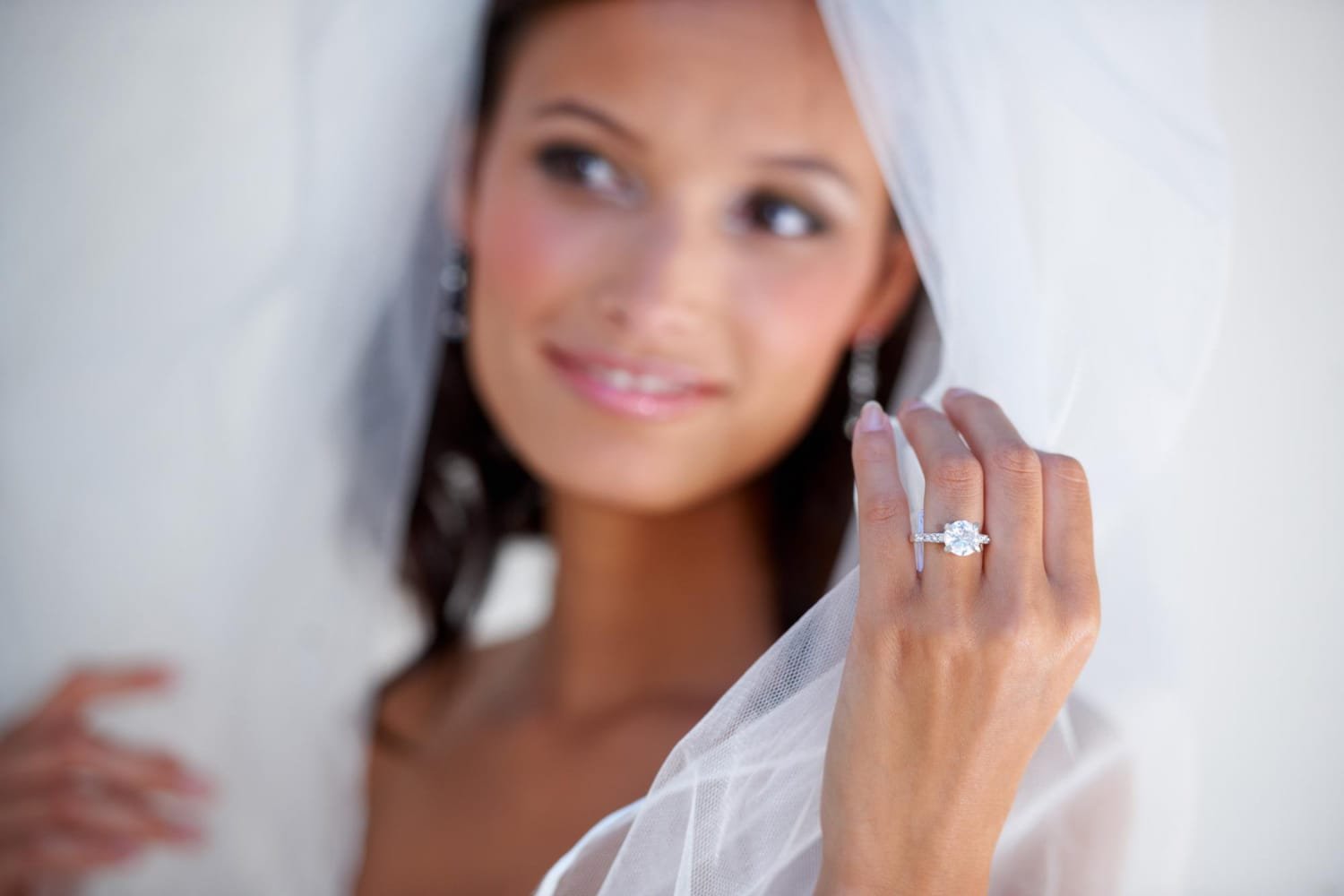
What is a bezel setting, and is it more secure than prongs?
A bezel setting fully surrounds a stone’s edge with metal, generally offering more protection against chipping or loosening than exposed prongs, a genuinely practical choice for an active lifestyle.
How many prongs does a typical solitaire setting have?
Commonly four or six, with six generally offering slightly more security at a small cost to how much light reaches the stone, a minor trade-off between protection and maximum brilliance.
What is a “tension setting”?
A tension setting holds a stone in place using the band’s own spring-like pressure rather than visible prongs, creating a striking, modern look. These settings typically cannot be resized without specialized, often costly work.
Should we buy a ring insurance policy from the jeweler or a separate company?
Both options exist; compare coverage terms, cost, and claims process between jeweler-offered and independent insurance providers before choosing, rather than assuming the jeweler’s offering is automatically the best or only option.
Is a “certified” diamond always genuinely certified by a real lab?
Not always. Some sellers use the word “certified” loosely or reference unfamiliar, less rigorous labs. Confirm the specific certifying organization directly, and verify the report through that lab’s own database when possible.
What does “conflict-free” actually guarantee?
This term generally references Kimberley Process compliance, which addresses diamonds funding armed conflict specifically, not broader labor or environmental practices. Ask more specific questions if broader ethical sourcing genuinely matters to you.
How do we know if a lab-grown diamond will look identical to a natural one?
It genuinely will, to the naked eye and even under most standard jeweler equipment, since lab-grown diamonds share the same chemical and optical properties as natural stones. Specialized equipment can distinguish origin, but visual appearance is identical.
What is the realistic resale value of an engagement ring?
Diamonds typically resell for considerably less than retail price, commonly around 50 percent or less, since retail pricing includes markup that resale markets do not recover. This is worth knowing honestly, though most couples do not buy a ring primarily as a financial investment.
Should we tell our jeweler our exact budget upfront?
This is generally a reasonable, practical approach, helping the jeweler show you genuinely relevant options rather than wasting time on pieces outside your actual range.
What is the difference between an engagement ring and a promise ring in terms of formality?
An engagement ring signals a specific, formal intent to marry. A promise ring signals commitment without that specific formal marriage intent, often given earlier in a relationship with no fixed design or cost convention attached.
Wedding Ring Traditions Beyond the United States
American conventions dominate much of the English-language content on this topic, worth balancing with a genuinely broader view.
Scandinavian bridal crown traditions
Some Scandinavian wedding traditions incorporate a bridal crown alongside rings, a distinct, documented regional custom with its own separate history from the ring-focused traditions this guide has centered on.
Chinese wedding traditions
Traditional Chinese weddings sometimes incorporate ring exchange alongside older, culturally specific customs like tea ceremonies and specific jewelry gifts from the groom’s family. Modern Chinese weddings increasingly blend Western ring conventions with these older practices.
African wedding traditions vary enormously by region and culture
The African continent encompasses an enormous range of distinct cultures, each with its own marriage customs, some incorporating rings, many centering entirely different symbols and ceremonies. Avoid treating any single tradition as representative of “African wedding customs” broadly.
Consistent theme: ring exchange has spread globally, but unevenly
Globalization has spread Western-style ring exchange to many parts of the world over the past century, often blended with, rather than replacing, older regional customs. This is an ongoing, uneven process, not a completed global standard.
A Note on This Guide’s Own Limitations
This guide covers an enormous amount of ground, and it is worth being direct about what it does not, and cannot, fully capture.
Pricing figures are national averages, not your specific market
Every price range in this guide reflects broad national data current as of 2026. Your specific local market, specific jeweler, and specific stone will differ from any general figure. Confirm current, specific pricing directly before making any purchase decision.
Cultural and religious summaries are necessarily brief
Every cultural and religious tradition mentioned in this guide deserves far more depth than a general overview can provide. If a specific tradition matters to your own wedding, research it directly and specifically, ideally with guidance from someone knowledgeable in that community.
Legal information is general, not a substitute for professional advice
Any legal information in this guide, including the ring-ownership discussion above, is general and educational. Consult a licensed professional directly for guidance specific to your actual situation and jurisdiction.
Ring Guards, Enhancers, and Stacking
Beyond the core engagement ring and wedding band, several additional pieces have become popular ways to personalize a ring collection over time.
Ring guards
A ring guard sits alongside the engagement ring, often filling a gap left by a curved wedding band or simply adding extra sparkle. This is a genuinely modern accessory, not a required piece.
Ring enhancers
An enhancer wraps around or beside the original engagement ring, effectively transforming a simple solitaire into a more elaborate design without altering the original piece itself. This has become a popular way to update a ring’s look for a significant anniversary without fully replacing it.
Stacking multiple bands
Some wearers stack several thin bands together over time, each potentially representing a different milestone or simply a personal aesthetic preference. There is no fixed number or specific meaning required; this is purely a personal styling choice.
Questions to Ask Yourselves Before Shopping
Before visiting a single jeweler, a few honest internal conversations save considerable time and prevent later disagreement.
What is our actual, comfortable budget, not an aspirational one?
Base this on real, current finances, not a number borrowed from a friend’s ring or a magazine spread, and not a figure stretched uncomfortably thin to match some external expectation.
Does the stone type matter to us, or only the overall look?
Some people have a genuine, specific attachment to natural diamonds specifically; others care only about achieving a certain visual effect regardless of stone type. Knowing which applies to you narrows your options considerably and saves real shopping time.
How important is daily durability versus maximum visual impact?
An active lifestyle genuinely benefits from prioritizing durability, sometimes at the cost of a more delicate, dramatic design. Be honest about your actual daily life, not an idealized version of it.
Do we want to shop together, or maintain some surprise?
Both approaches work well for different couples. Decide this explicitly rather than assuming the other partner shares your own preference on this specific question.
Weather, Travel, and Practical Proposal Logistics
Beyond the ring itself, practical proposal logistics deserve genuine attention, since a beautifully chosen ring can still meet a poorly planned moment.
Weather contingency for an outdoor proposal
An outdoor proposal location deserves the same weather contingency thinking as any outdoor wedding moment: a backup indoor location, and a genuine plan if conditions turn unfavorable on the actual day.
Keeping the ring secure until the actual moment
A ring transported in a pocket, without a secure case, risks loss during travel to the proposal location. Use a genuinely secure case or container, and consider a small, deliberate test run of wherever you plan to store the ring during the proposal itself.
Photography and videography planning
If you plan to capture the proposal moment, whether through a hidden photographer or a friend with a phone, confirm this logistics detail well in advance, including a realistic backup plan if the primary capture method fails.
What Pinterest and Social Media Do Not Show You About Rings
A styled photo shows a stunning ring in perfect lighting. It never shows the actual price paid, the actual insurance arranged, or the actual daily wear a ring experiences.
Styled photos rarely disclose actual cost
A dramatically lit ring photo tells you nothing reliable about what was actually spent, since styling, photography, and even borrowed pieces for content creation all shape what gets shown publicly.
Social comparison distorts realistic expectations
Repeated exposure to curated, often unrepresentative ring content can shift what feels “normal,” even though the actual median spend, covered earlier in this guide, sits considerably lower than what social media commonly displays.
A ring’s real value lives in daily life, not one photograph
The photograph capturing a proposal moment lasts seconds. The ring itself gets worn through thousands of ordinary days: cooking, working, sleeping, living. Choose based on that daily reality, not one carefully staged image.
Final FAQ Section: Everything Else Worth Knowing
What is the actual current global average price for a diamond per carat?
This varies enormously by carat weight, cut, color, and clarity combined, typically ranging from roughly $2,000 to $20,000 per carat depending on these factors. A single “average” figure is not particularly useful given this range; request pricing for your specific desired specifications directly.
Do wedding rings ever get blessed as part of the ceremony?
Many religious ceremonies, including Catholic, Orthodox Christian, and various other traditions, include a formal ring blessing as part of the wedding rite. Confirm this with your specific officiant if it matters to your ceremony.
Can we use a family heirloom ring as our actual wedding band, rather than the engagement ring?
Yes, there is no rule dictating which specific ring must serve which role. A cherished heirloom can become the wedding band just as easily as the engagement ring, based entirely on your own preference.
What should we do if we lose an engagement ring before the wedding?
File a police report if theft is suspected, contact your insurance provider immediately if the ring was insured, and communicate openly with your partner about the loss and next steps, since this is a stressful but survivable situation many couples have navigated.
Is it appropriate to wear an engagement ring to a job interview or professional setting?
Generally, yes, an engagement ring is considered appropriate professional jewelry in most contexts, though personal judgment about your specific industry and setting always applies.
How do we handle a ring that no longer feels like “us” years into the marriage?
Consider a redesign, a reset into a new setting, or simply continuing to wear it as a meaningful piece of shared history regardless of changing taste. All are legitimate responses to a genuinely common feeling.
What is the difference between yellow gold, white gold, and rose gold in terms of actual gold content?
All three can share the same underlying gold purity, such as 14K or 18K; the color difference comes from the specific alloy metals mixed with the pure gold, not from a difference in actual gold content or value at the same karat rating.
Should we buy travel insurance specifically covering our rings for a honeymoon?
Confirm whether your existing jewelry insurance policy covers travel, since some policies restrict coverage to your home location. If not covered, ask your insurer about temporary travel coverage before an international honeymoon specifically.
What is the realistic lifespan of a well-made engagement ring?
With proper care, professional maintenance, and reasonable daily wear, a well-made ring in a durable metal can genuinely last multiple lifetimes, which is why understanding maintenance, covered earlier in this guide, matters as much as the initial purchase decision.
Is there a “right” order to shop for stone, setting, and metal?
Most jewelers recommend choosing the center stone first, since this drives the overall budget and style direction, then selecting a setting and metal that complements it. This is a practical convention, not a strict requirement.
Safety Check: Protecting Your Ring in Daily Life
Beyond insurance and cleaning, a few genuinely practical safety habits protect a ring from the most common causes of loss or damage.
Cooking and food preparation
Rings can trap bacteria in prongs and settings during food handling, and cold or wet ingredients can cause temporary finger shrinkage that increases slip risk. Many people remove rings for extended cooking sessions specifically for this reason.
Exercise and gym environments
Weightlifting, in particular, poses real risk of both ring damage and, more seriously, a rare but documented injury pattern involving a ring catching on gym equipment during a fall or sudden movement. Many gyms and trainers now actively recommend removing rings before serious weight training.
Gardening and manual outdoor work
Soil, chemicals, and physical impact during gardening or yard work all pose real risk to both the ring’s finish and its structural integrity over repeated exposure. Removing rings for extended outdoor manual work is a reasonable precaution.
Cold weather and glove use
Cold weather causes fingers to shrink, increasing the risk of a ring slipping off inside a glove or mitten without the wearer noticing immediately. Be especially mindful of this risk during winter activities.
Ring Warranties and Lifetime Service Plans
Many jewelers offer warranty or lifetime service plans worth understanding in detail before assuming what they actually cover.
What a typical lifetime warranty actually includes
Common inclusions are annual inspection, prong tightening, and cleaning at no additional cost. Confirm whether your specific plan covers this indefinitely or for a limited number of years, since terms genuinely vary between retailers.
What warranties typically exclude
Most warranties exclude accidental loss, theft, and significant damage from an accident, distinct from normal wear and tear. This is precisely the gap dedicated jewelry insurance, covered earlier in this guide, is designed to fill.
Confirm warranty transferability and registration requirements
Some warranties require registration within a specific window after purchase to remain valid. Confirm this requirement directly and complete it promptly, since a missed registration deadline can void coverage you assumed you had.
Understanding Diamond Pricing: Why Two Similar-Looking Stones Cost Differently
Two diamonds that look nearly identical to an untrained eye can carry meaningfully different prices, worth understanding why.
Certification grade differences drive real price gaps
A half-grade difference in color or clarity, invisible to most observers, can meaningfully affect price, particularly at larger carat weights where percentage differences translate to larger dollar amounts.
Cut quality is the least visible factor with the biggest visual impact
Two diamonds of identical carat, color, and clarity grade can look noticeably different in actual brilliance based on cut quality alone, a factor many buyers underweight relative to the other three Cs.
Certification lab reputation affects price independent of stone quality
As covered earlier, IGI-certified stones have historically priced lower than GIA-certified stones of the same stated grade, reflecting market perception of certification rigor rather than an actual quality difference in the stone itself.
Retailer markup varies considerably
Different retailers apply different markup percentages above their wholesale cost, meaning the same actual stone can carry different retail prices at different sellers. This is precisely why comparison shopping across multiple retailers, using matched certification grades, genuinely pays off.
A Word on Emotional Pressure and Genuine Readiness
Beyond the practical and financial guidance this article has focused on, one honest note belongs here too.
Ring shopping sometimes happens under real emotional pressure
Family expectation, social comparison, and internalized timelines can all create pressure around ring shopping and proposal timing that has nothing to do with genuine readiness. Notice if this pressure is driving decisions that do not actually reflect your own pace or values.
There is no “correct” timeline for any of this
How long a couple dates before engagement, how long they stay engaged before marrying, and how they choose to mark either milestone are entirely personal decisions. No external timeline, however commonly repeated, is a genuine requirement.
Ring Metals in Depth: A Closer Technical Look
The metal table earlier in this guide covered the basics. Here is a deeper, more technical look at what actually distinguishes each option.
Platinum: composition and characteristics
Jewelry-grade platinum is typically 95 to 98 percent pure, among the purest metals commonly used in fine jewelry. This purity contributes to its hypoallergenic properties, genuinely valuable for anyone with metal sensitivities. Platinum is also notably denser and heavier than gold, giving rings made from it a distinctive substantial feel on the hand.
Gold alloys and karat ratings explained
Pure gold, 24 karat, is too soft for durable everyday jewelry, which is why rings use alloyed gold mixed with other metals for strength. 18 karat gold contains 75 percent pure gold; 14 karat contains about 58 percent; 10 karat, the lowest karat commonly used in fine jewelry, contains about 42 percent. Lower karat ratings offer more durability but slightly less rich color and value.
How rose and white gold get their color
Rose gold’s pink tone comes from a higher proportion of copper in the alloy mix. White gold typically combines pure gold with palladium, nickel, or silver, then commonly receives a rhodium plating for its bright white finish, which is why white gold needs periodic replating as that plating naturally wears.
Palladium: a less common but genuine option
Palladium shares many of platinum’s desirable properties, including natural white color and hypoallergenic characteristics, at a meaningfully lower price point. It remains less commonly used than platinum or gold but represents a genuine, practical alternative worth asking about directly.
A Guide to Setting Height and Practical Daily Comfort
How high a stone sits above the band affects daily comfort and practicality as much as any other design choice, worth its own direct attention.
Low-set settings
A lower setting sits closer to the finger, offering better protection against snagging and impact during daily activities, a genuinely practical choice for hands-on work or an active lifestyle.
High-set settings
A higher setting allows more light to reach the stone from multiple angles, often increasing visible brilliance, at some cost to practical daily durability and an increased risk of catching on clothing, hair, or other objects.
Finding the right balance for your actual life
Consider your specific daily activities honestly when choosing setting height, rather than optimizing purely for how a ring photographs or looks in a showroom display case.
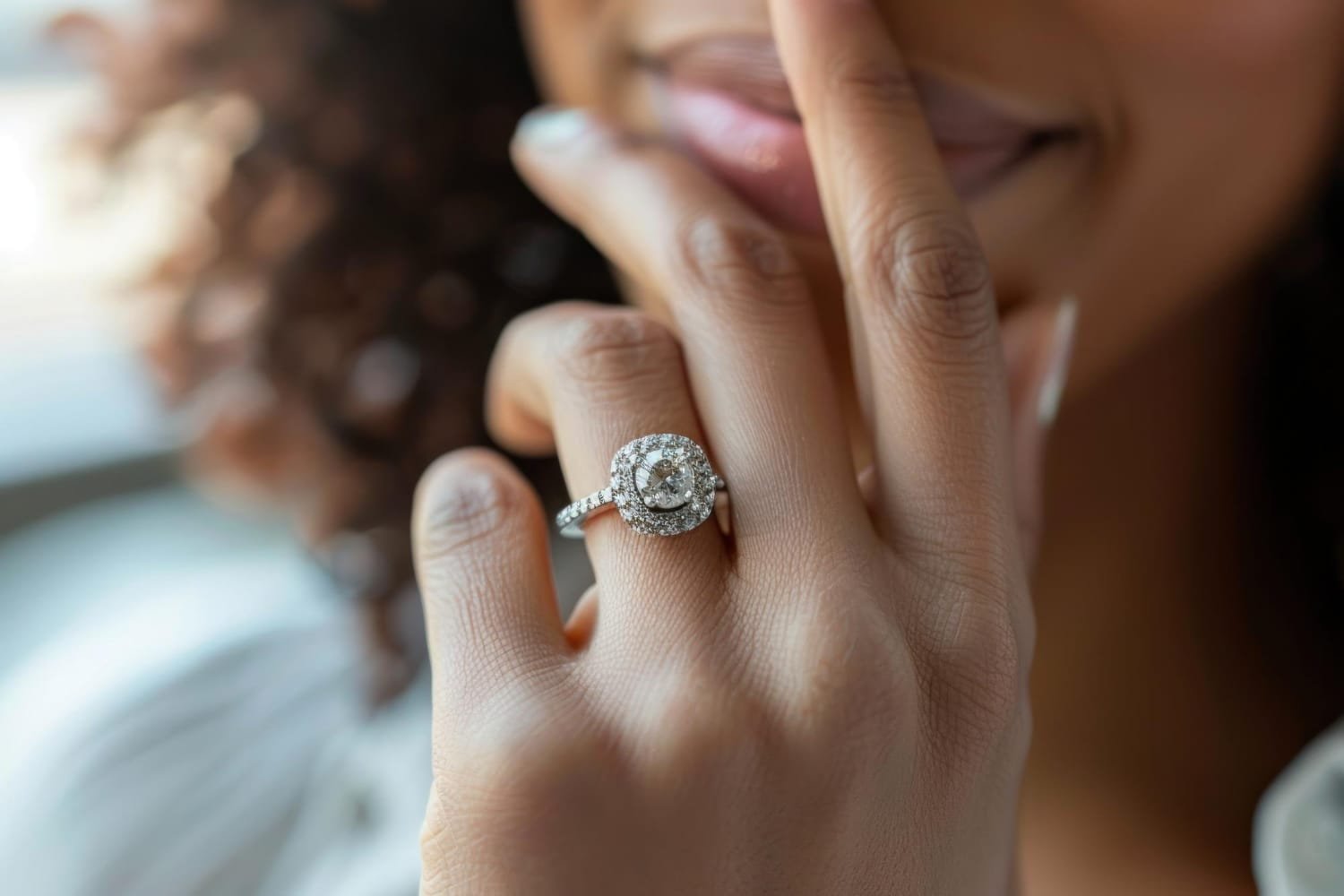
One More FAQ Batch: Odds and Ends Worth Covering
What is the difference between a jeweler and a goldsmith?
A jeweler typically sells and may design jewelry, often working with a range of materials and stones. A goldsmith specifically specializes in working and shaping precious metals, sometimes as an independent craftsperson creating custom pieces directly.
Can we design a completely custom ring from scratch?
Yes, many jewelers offer full custom design service, typically starting with a consultation about your preferences, followed by sketches or digital renderings before any physical work begins. This process commonly takes several weeks to a few months and costs more than a pre-made setting.
What is a CAD rendering in the context of custom ring design?
Computer-aided design software lets jewelers create a detailed digital preview of a custom ring before any physical metal is shaped, letting you review and request changes before committing to the final physical piece.
Do all diamonds have a certification number that can be verified online?
Most GIA and IGI certified stones include a report number searchable directly on that lab’s own website, letting you independently confirm the certification matches the specific stone. Confirm this number and verify it yourself before finalizing any significant purchase.
Is a diamond’s fluorescence something we should worry about?
Fluorescence, a diamond’s glow under UV light, generally has minimal visible effect in normal lighting for most stones, though very strong fluorescence can occasionally give a diamond a slightly hazy appearance. This is a minor factor worth understanding but rarely a primary purchase concern.
What does “eye-clean” mean when a jeweler describes a diamond?
This means any inclusions are not visible to the naked eye under normal viewing conditions, even though they may be visible under magnification. An eye-clean stone in a lower clarity grade often represents genuine value, since the visual difference from a higher grade is effectively invisible.
Should we buy a ring during a sale event, like Black Friday?
Sale events can offer genuine savings, though confirm the specific stone’s certification and quality independently rather than assuming a sale price alone guarantees good value. Compare the sale price against the same stone’s standard price and against other retailers before assuming it is genuinely a good deal.
What happens to unused warranty coverage if we sell or pass down a ring?
This depends on the specific warranty’s transferability terms, confirmed directly with the issuing jeweler. Some warranties transfer with the piece; others remain tied specifically to the original purchaser.
Comparing Three Popular Ring Shopping Paths
| Path | Best for | Real trade-off |
|---|---|---|
| Online retailer | Budget-conscious, tech-comfortable buyers | Cannot physically inspect before buying |
| Independent local jeweler | Personalized service, custom work, negotiation room | Often higher baseline price than online |
| Large chain retailer | Standardized pricing, broad brand recognition | Less room for negotiation or true customization |
Final Practical Checklist Before You Buy
- ☐ Actual comfortable budget confirmed, based on real finances: ____________
- ☐ Certification lab and report number confirmed and verified: ____________
- ☐ Accurate ring size confirmed, not guessed: ____________
- ☐ Return, exchange, and resizing policy confirmed in writing: ____________
- ☐ Independent appraisal scheduled for insurance purposes: ____________
- ☐ Jewelry insurance policy or rider confirmed and active: ____________
- ☐ Photos and documentation saved in a secure, separate location: ____________
Every item on this checklist traces directly back to a specific section of this guide. Working through it deliberately, rather than relying on memory or assumption, is the single most practical step you can take before making this purchase.
Understanding Diamond Origins: Natural Formation Explained
Beyond the marketing history covered earlier, the actual science of how natural diamonds form adds genuine context to why they carry the value and rarity perception they do.
How natural diamonds actually form
Natural diamonds form roughly 100 to 150 miles below the earth’s surface, under extreme heat and pressure conditions sustained over one to three billion years, then transported toward the surface through deep volcanic eruptions. This genuinely ancient, geologically rare process is part of why natural diamonds carry real scarcity value, independent of any marketing narrative.
How lab-grown diamonds replicate this process
Lab-grown diamonds use one of two methods: high-pressure high-temperature technology, replicating the earth’s natural conditions in a controlled setting, or chemical vapor deposition, building a diamond crystal layer by layer from carbon-rich gas. Both methods produce genuine diamond, chemically identical to natural stones, in a matter of weeks rather than eons.
Why this distinction matters for genuinely informed buyers
Understanding the real difference, origin and formation time rather than composition or appearance, helps you make a genuinely informed choice between natural and lab-grown options, rather than choosing based on vague impressions about which is “more real.”
A Final Comparison: What Changed and What Stayed the Same
After everything this guide has covered, here is a direct summary of what genuinely persists from ancient ring tradition, and what is a considerably more recent addition.
| Element | Genuinely ancient | Considerably more recent |
|---|---|---|
| Ring as betrothal symbol | Yes, documented by 200 BCE | — |
| Circle symbolizing eternity | Yes, widely documented across cultures | — |
| Specific vein justifying ring finger | — | 1686, English legal text |
| Diamond as expected stone | — | 1938 onward, advertising campaign |
| Salary-based price guidance | — | 1980s, revised advertising copy |
| Lab-grown diamond option | — | 21st century, accelerating recently |
Wedding Band Selection: A Deeper Practical Guide
Choosing a wedding band deserves more than an afterthought decision made quickly after the engagement ring is settled.
Comfort fit versus standard fit
A comfort-fit band has a slightly rounded interior, generally easier to slide on and off and often feeling more comfortable during long-term daily wear, though it typically runs slightly larger than a standard-fit band of the same stated size. Confirm which fit style you are trying on, since the two are not directly interchangeable in sizing.
Band width and daily comfort
Wider bands generally feel more substantial and can be more durable, while narrower bands feel less noticeable during daily activities. Try on multiple widths directly before deciding, since this is a genuinely personal comfort preference that photographs cannot convey.
Matching metal hardness between engagement ring and wedding band
Two rings worn together on the same finger, made from metals of different hardness, can cause the softer metal to wear against the harder one over years of daily contact. Ask your jeweler directly whether your specific metal combination poses a genuine long-term concern.
Trying before buying: why this matters more for bands than it seems
A band worn daily for decades deserves an in-person trial if at all possible, even if you ultimately purchase online, since comfort and fit are genuinely difficult to judge from a photograph or description alone.
When Wedding Planning Timelines and Ring Shopping Collide
Ring shopping does not happen in isolation from the rest of wedding planning, and a few genuine scheduling conflicts deserve direct attention.
Custom ring work and wedding date pressure
A custom-designed wedding band can take several weeks to a few months to complete. Confirm this timeline against your actual wedding date early, rather than discovering a genuine scheduling conflict close to the deadline.
Engraving deadlines specifically
As covered earlier, engraving adds real production time. If your wedding date is close, confirm your jeweler’s actual current turnaround time before assuming standard timelines apply during a potentially busier season.
Insurance updates around the wedding itself
Once wedding bands join the engagement ring in daily wear, update your insurance policy to reflect the combined value of all pieces, rather than assuming your original engagement-ring-only policy automatically extends coverage to the new bands.
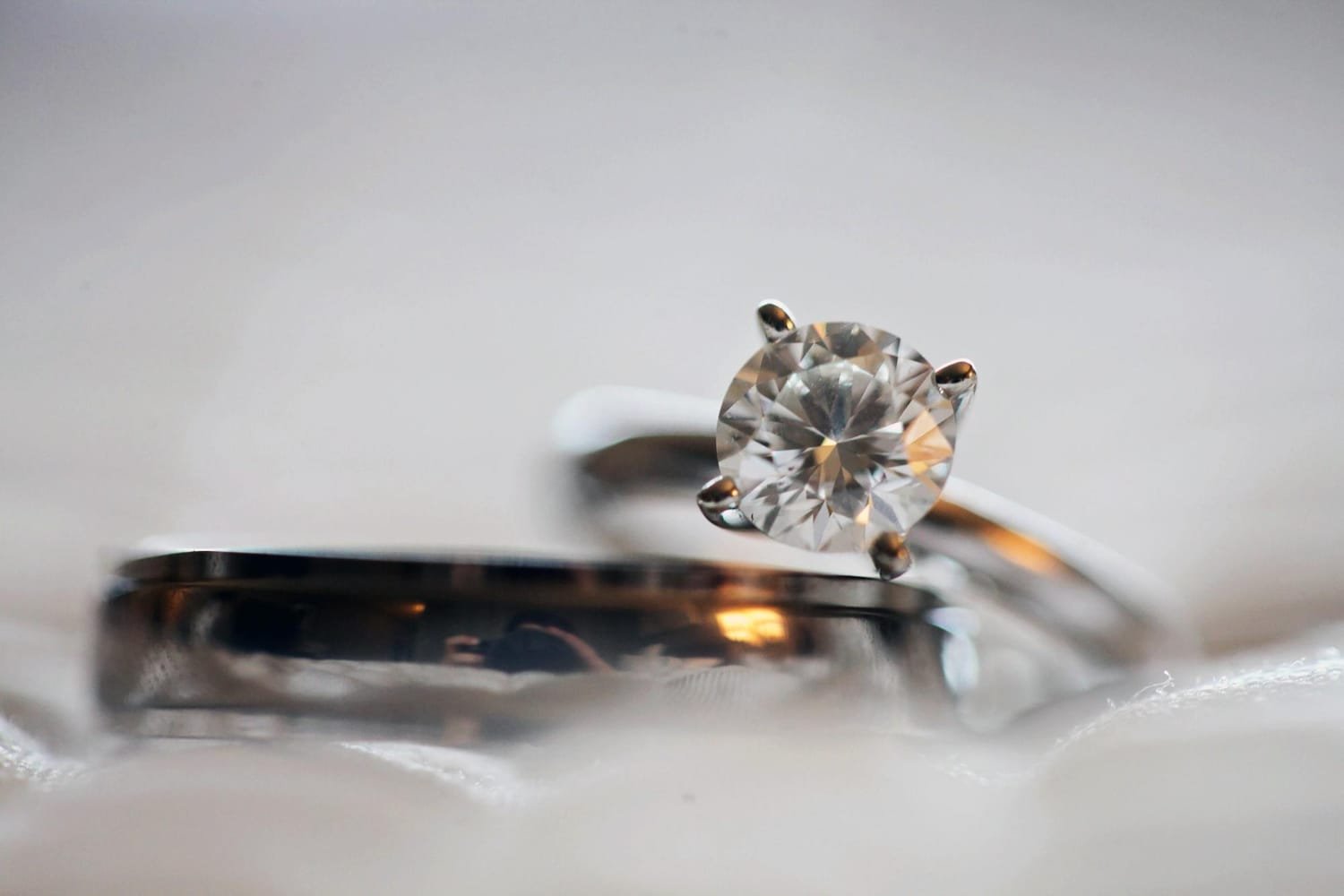
A Last Set of Honest Answers
Why does so much “ring tradition” content online repeat the same unverified claims?
Much of this content gets copied and lightly rewritten from earlier articles that themselves never traced claims back to primary sources, allowing an unverified claim, like the vena amoris origin story, to circulate for years as though it were settled historical fact.
Does knowing the marketing history behind diamond rings mean we shouldn’t buy one?
Not at all. A diamond ring, chosen deliberately and honestly budgeted, is just as meaningful as any other choice. Understanding the marketing history simply removes the false pressure that a diamond is the only “real” or “traditional” option.
What is the best single source to verify a specific historical claim about rings?
Primary historical texts where available, reputable gemological organizations like GIA for technical and historical diamond information, and peer-reviewed historical scholarship rather than general wedding blog content, which frequently repeats unverified claims without tracing their actual origin.
How can we tell if a “fact” about ring history is actually documented?
Look for a specific named source, a specific date, and ideally a direct quotation or citation trail, rather than a vague reference to “ancient tradition” or “historians believe” without further detail. This guide has aimed to model that standard throughout.
Is it disrespectful to question ring traditions our families hold dear?
Understanding a tradition’s actual historical origin does not diminish its personal or family significance. A tradition can be relatively recent in origin and still carry genuine, real meaning for the people who practice it; both things are true at once.
This guide’s purpose has never been to tell you what to choose. It has been to make sure whatever you choose, diamond or sapphire, platinum or silver, a five-figure custom design or a modest thoughtful band, comes from accurate information and genuine choice, not an inherited assumption nobody ever actually checked.
A Note on Non-Diamond Center Stones and Long-Term Practicality
Choosing a non-diamond center stone deserves a genuinely practical, not just aesthetic, look at long-term daily wear.
Hardness matters for a stone worn every single day
The Mohs hardness scale, running from 1 to 10, measures scratch resistance. Diamond sits at 10, the hardest natural material known. Sapphire and ruby sit at 9, genuinely close to diamond’s durability. Morganite and many other popular colored stones sit considerably lower, around 7.5 to 8, meaning they scratch more easily during ordinary daily activities.
Softer stones need more protective settings
A softer center stone benefits genuinely from a protective setting style, such as a bezel or a setting with a protective metal edge, reducing daily impact risk compared to fully exposed prongs.
Softer stones need more frequent professional inspection
Confirm a shorter inspection interval with your jeweler if you choose a softer stone, since minor damage can accumulate more quickly than with a harder stone like diamond or sapphire.
None of this means avoiding softer stones entirely
A softer stone chosen with informed awareness of these practical trade-offs, and cared for accordingly, remains a genuinely valid, beautiful choice. The goal is informed decision-making, not steering every couple toward the hardest available option regardless of personal preference.
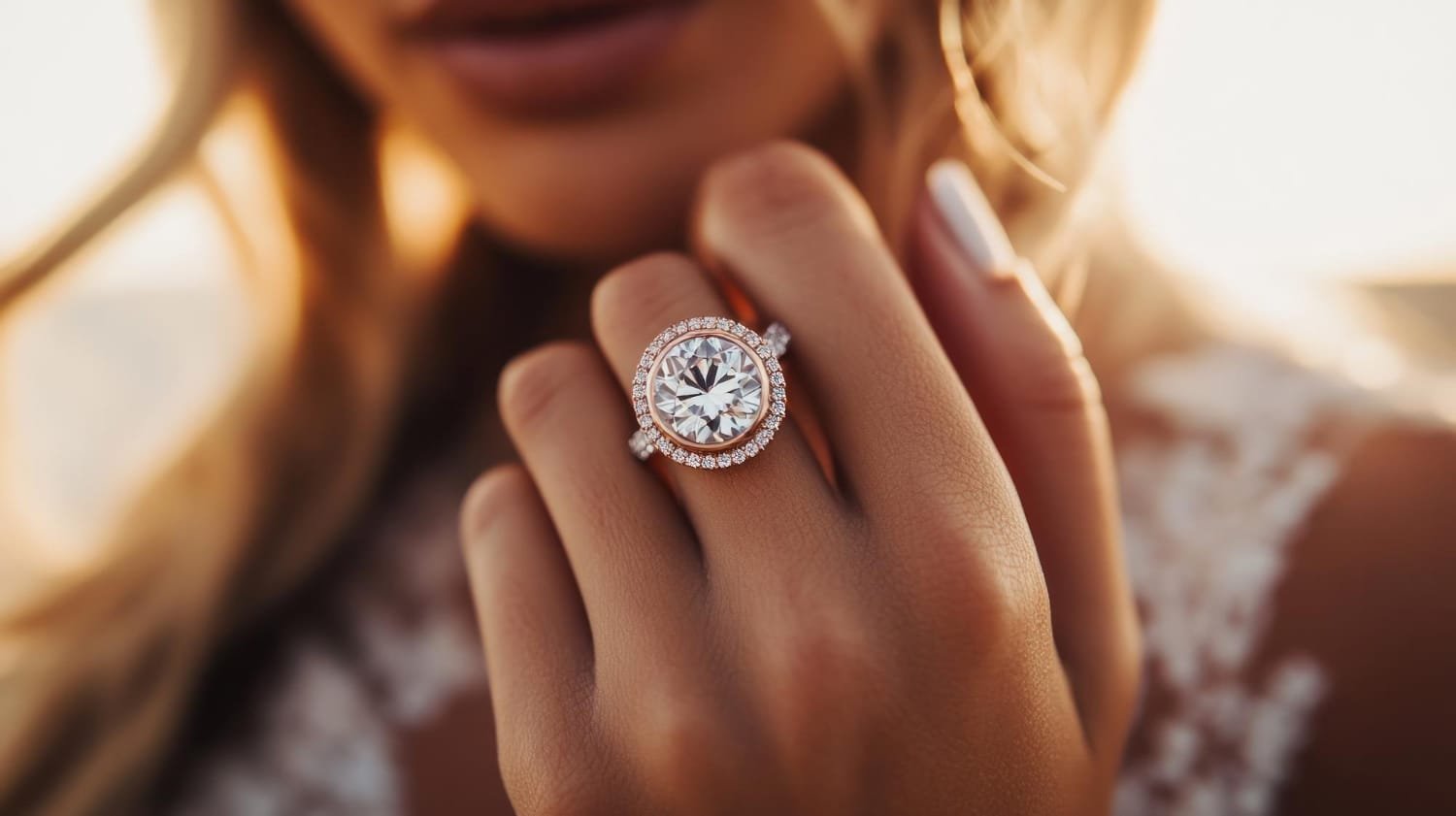
Where to Go From Here
This guide has covered documented history, cultural variation, design meaning, complete engagement ring and wedding band guidance, realistic 2026 pricing across multiple detailed tables, etiquette for every situation this guide could reasonably anticipate, a full buying guide, care and maintenance, and close to a hundred direct, specific answers to real questions couples actually ask.
Use it as a genuine reference, not a one-time read. Return to the specific section relevant to whatever decision is actually in front of you right now, whether that is understanding a certification report, budgeting honestly, or simply confirming that the assumption you walked in with is actually documented history rather than inherited marketing. Either way, you are now equipped to make that decision on your own terms.
A Few Final Direct Questions
Is there a “best” time of year to buy an engagement ring for better pricing?
Some retailers offer promotional pricing around major sales events, though the actual best approach remains comparing certified stones across multiple sellers year-round rather than timing a purchase around a specific calendar date alone.
How do we know when we’re actually ready to start ring shopping?
There is no external checklist for this; readiness is a personal, relationship-specific feeling, not a milestone with universal criteria. Trust your own timeline over any external pressure or comparison to other couples’ pace.
What is the most important single piece of advice in this entire guide?
Separate what is genuinely documented from what is repeated marketing, then make your own decision from real information. That single habit, applied to a ring purchase or any other significant decision, tends to produce genuinely better outcomes than following inherited assumptions.
Should this guide’s pricing figures be treated as fixed, unchanging numbers?
No. Pricing shifts with market conditions, diamond supply, and broader economic factors. Treat every figure in this guide as a 2026 snapshot, worth reverifying against current sources as your actual purchase date approaches.
A Closing Perspective on Everything This Guide Has Covered
Two things are true at once about engagement and wedding rings, and holding both simultaneously is the most useful takeaway this entire guide can offer.
The first: rings carry genuine, documented history. Roman betrothal customs really happened. The circle’s symbolism really does span cultures and centuries. A specific duchess really did receive a specific diamond ring in 1477, an actual, dated, historical event. None of this is invented or exaggerated.
The second: much of what feels like ancient, binding tradition today is considerably younger, more commercial, and more flexible than it appears. The specific vein justifying the ring finger traces to one seventeenth-century English lawyer’s unverified claim. The diamond requirement traces to one twentieth-century advertising campaign, run by one company, written by identifiable copywriters, with measurable, documented results. The salary formula was invented, then revised upward, entirely within living memory.
Both of these facts can be true simultaneously, and understanding the difference does not diminish either your ring or your relationship. It simply means the decisions in front of you, what stone, what metal, what price, what finger, what hand, carry far more genuine flexibility than most couples assume walking into their first jewelry store visit. Use that flexibility deliberately, informed by real history and real current data, rather than by an inherited assumption nobody actually verified.
Your next step
Before you shop, sit down together and set an honest budget based on your own finances, not a number from a magazine or a decades-old slogan. That single conversation, grounded in the real data this guide has provided, will shape every decision that follows more than any other single factor.
